REVIEW · EDFU
Luxor: Edfu, Kom Ombo, Abu Simbel Private Tour & Entry Fees
Book on GetYourGuide →Operated by Nice Tours · Bookable on GetYourGuide
A big ancient power trip, all in one day. This Luxor-to-Aswan route strings together Edfu, Kom Ombo, and Abu Simbel with an English Egyptologist guide, so you get more than sightseeing—you get sense-making for what you’re seeing.
I especially like the way the day is structured around the temples themselves, not just driving. Two things I’d call out: skip-the-line entry for smoother starts at the sites, and the fact that you’re guided at each stop with in-the-moment explanations (people have had guides like Hani and Mohamed).
The main drawback is simple: it’s a long day and the early pickup can feel brutal. Add in potential extra pickup fees if your hotel is outside the standard zones (like the West Bank or certain island areas), and you’ll want to confirm the logistics before you wake up at 5am.
In This Review
- Key Points You’ll Care About
- Luxor to Aswan: The Long Drive Part That You Should Plan For
- Edfu Temple of Horus: Why the Roof-Intact Feeling Matters
- Kom Ombo’s Two-Deity Layout: Sobek and Har Wer in One Stop
- Abu Simbel Great Temples: The Scale of the Rock Cut and Those Guarding Statues
- Lunch in Abu Simbel and How to Avoid Getting Hangry
- Entry Fees, Skip-the-Line Access, and What You’re Really Paying For
- Guides and Drivers: The People Factor That Keeps the Day From Falling Apart
- Price and Logistics: When It’s a Smart Buy and When It’s Not
- Who This Tour Fits Best (And Who Should Choose Something Else)
- Should You Book This Luxor to Edfu to Kom Ombo to Abu Simbel Day?
- FAQ
- What temples are included in the tour?
- How long is the tour?
- Is there an English guide?
- Are entry fees included?
- Is lunch included?
- Are snacks and water included?
- Are drinks included with lunch?
- Is pickup and drop-off always free at all hotels?
- What is the cancellation policy?
Key Points You’ll Care About
- Three major temples in one 12-hour stretch: Edfu, Kom Ombo, and Abu Simbel without backtracking.
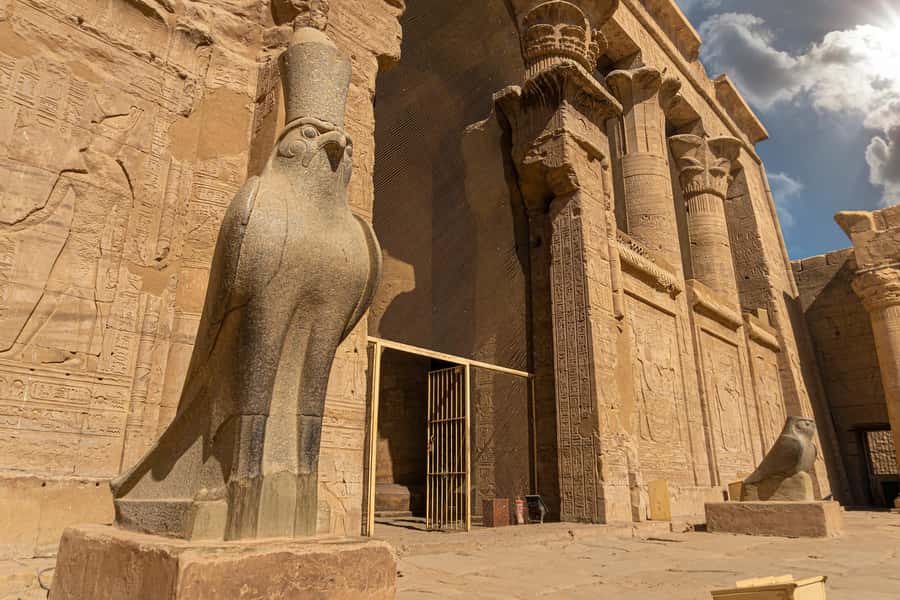
- Edfu’s Horus Temple with its roof intact: one of the most atmospheric stops on the route.
- Kom Ombo’s dual-deity plan: Sobek and Har Wer (Horus the Elder) in one layout.
- Abu Simbel is the star for scale: two rock-cut temples and the famous guarding statues.
- You’re not stuck at ticket counters: entry fees are handled and you’ll use skip-the-line access.
- Real-world coordination matters: drivers like Amir, Phillip, and George are repeatedly praised for keeping the day moving.
Luxor to Aswan: The Long Drive Part That You Should Plan For
This is a 12-hour day built for efficiency. You’ll leave Luxor early (some pickups are around 5am), then spend the bulk of the day on the road between temples and finally reach Aswan in the evening (one itinerary ran roughly 5am to 9pm).
That schedule can be a deal-breaker if you’re the type who hates long car time. But if you’re short on days—or you’re trying to hit the biggest temple sites without losing a whole second day—this format is exactly what makes sense. You’re trading comfort and sleep for serious temple coverage.
Practical tip: bring layers. Even with an air-conditioned vehicle, desert mornings can still feel cool, and temple entrances can shift the temperature fast.
Edfu Temple of Horus: Why the Roof-Intact Feeling Matters
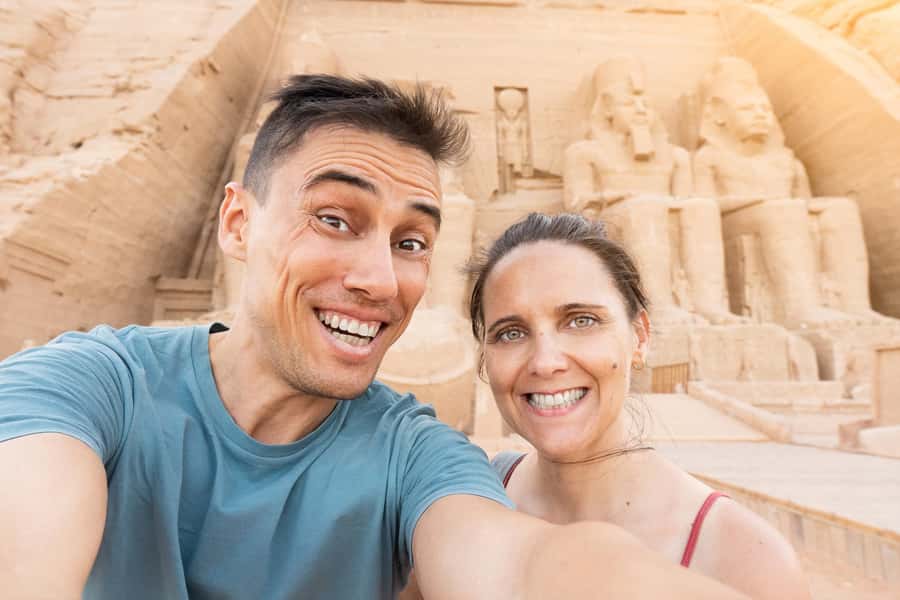
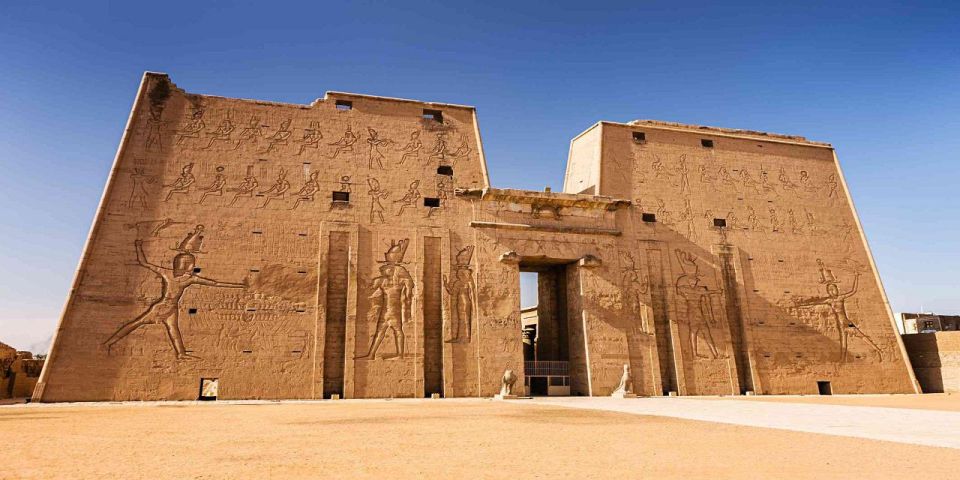
Edfu is where the day starts paying off fast. You’ll visit the Temple of Horus, dedicated to the avenging son of Isis and Osiris, and it’s famous for being one of the most atmospheric ancient buildings because its roof is intact.
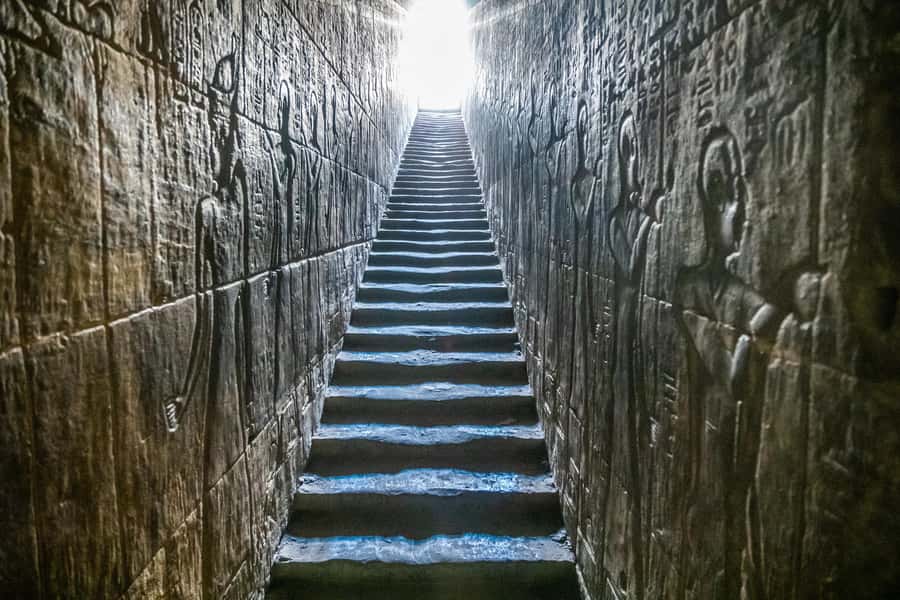
What you’ll likely notice first is scale. Edfu isn’t just a pretty ruin; it’s a structured experience. The carvings and layout make it easier to understand how ancient Egyptians “read” the temple—movement, symbols, and worship spaces all tied to the deity.
This is also one of the best stops for photos, simply because the temple gives you strong lines and clear sight angles. If you like walking at your own pace after a guided intro, Edfu can give you that balance: you get context, then you can look longer at the details that catch your eye.
Common consideration: the guided portion can make the visit feel a bit time-pressured if you’re a slow wanderer. If you like to soak, you may want to focus on a few standout areas instead of trying to see everything.
Kom Ombo’s Two-Deity Layout: Sobek and Har Wer in One Stop
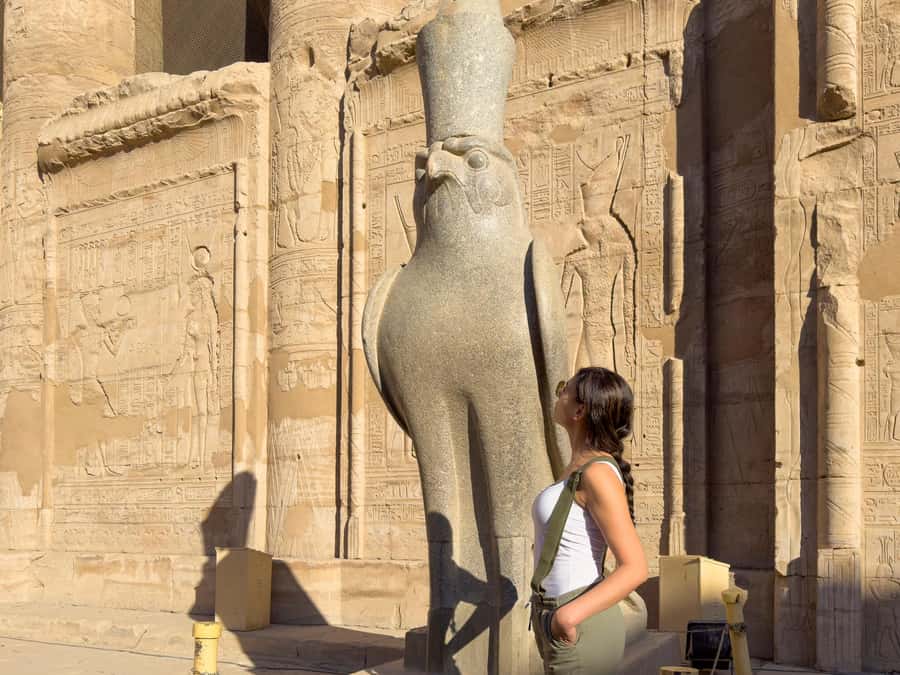
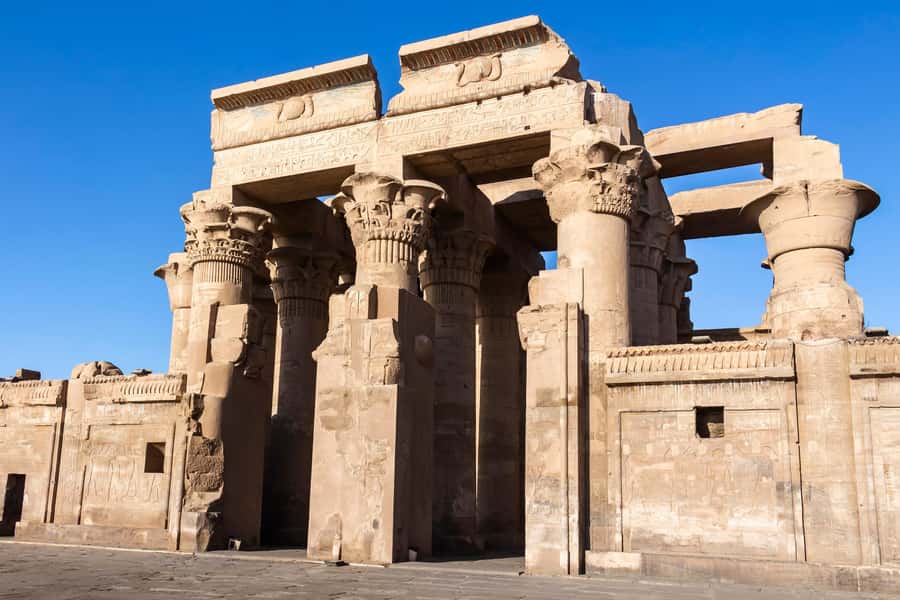
Next comes Kom Ombo, and it’s different in a way that makes the whole day feel less repetitive. The Temple of Kom Ombo is dedicated to two deities: Sobek, the crocodile god, and Har Wer (Horus the Elder).
This dual dedication is the point. Instead of one main storyline, you get a temple designed with two devotional directions. That changes how you move through the space because you’ll be comparing, noticing, and trying to match symbols to each god rather than following one steady theme.
With an Egyptologist guide, you’ll get help decoding the unique structure. The layout can seem confusing at first glance, but the explanations typically make it click: where you are in the temple starts to feel like it has a job to do.
Kom Ombo often reads like a “short stop” compared to Abu Simbel, but it still earns its place. It’s the one that trains your eye to look for structure and meaning, not just stone-and-statue scale.
Practical note: in some places the road can be rough, so Kom Ombo can be when you’ll feel the day catch up with you. A quick rest stop mindset helps.
Abu Simbel Great Temples: The Scale of the Rock Cut and Those Guarding Statues
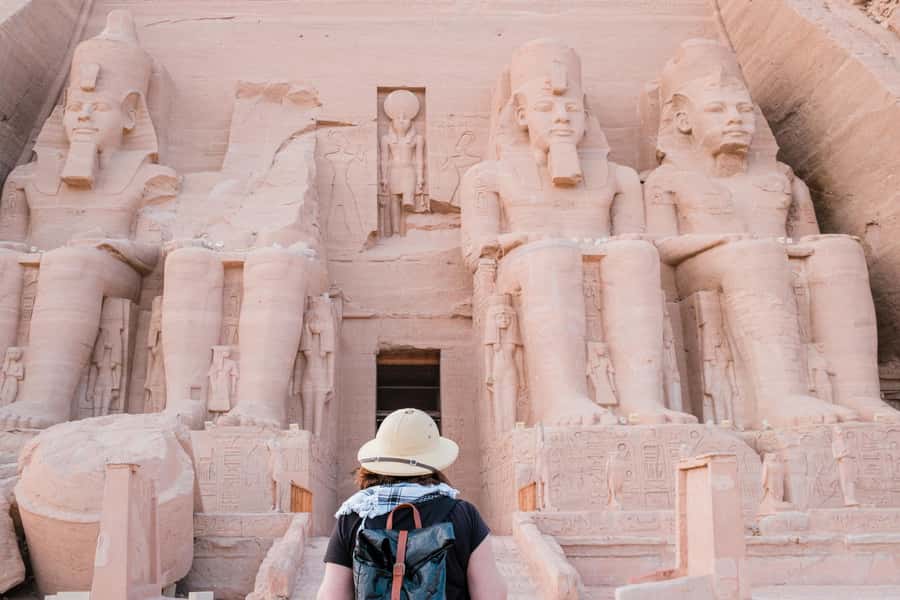
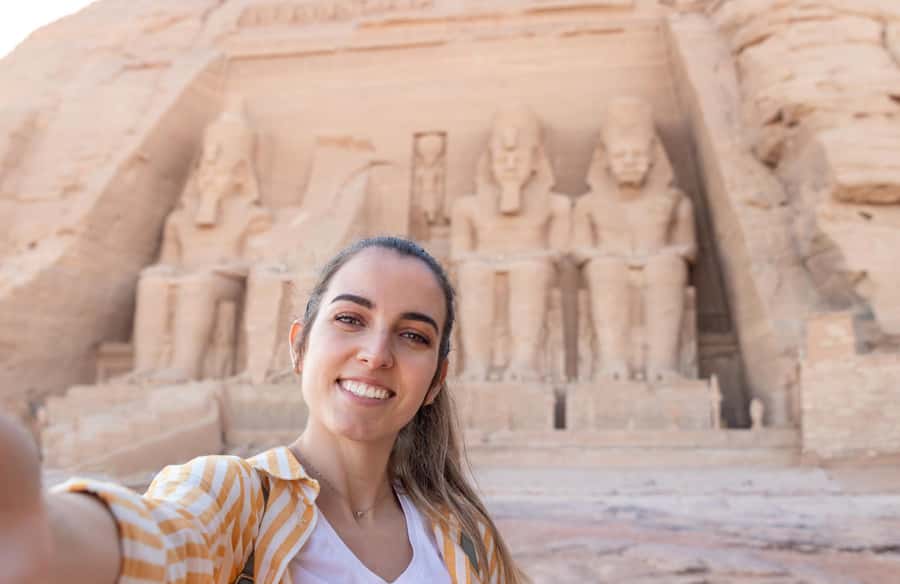
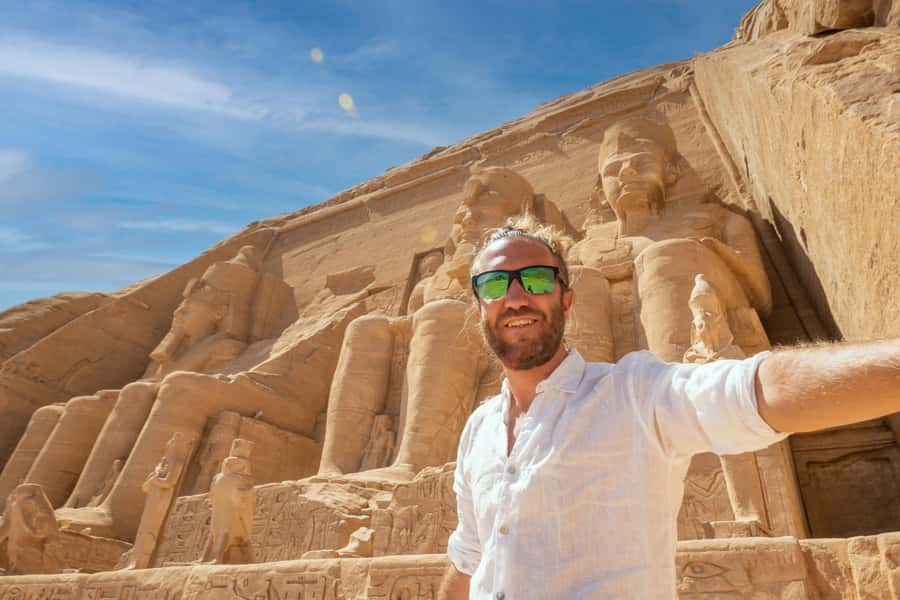
Then you reach the headline: Abu Simbel. You’ll visit the Great Temples of Abu Simbel, which are actually two rock-cut temples built to project the power of Egypt’s rulers to anyone who could see them.
The first thing to understand is what rock-cut really means here: these temples weren’t added later like freestanding buildings. They were carved into the living cliff, and that makes the experience feel heavier and more permanent than typical museum-size history.
The iconic detail is the entrance area of the larger temple, guarded by four colossal statues. One reason people get emotional about this site is that these sculptures are the largest surviving statues from the ancient Pharaonic era. Even if you don’t memorize dates, you can feel the message: authority made physical.
Timing can also work in your favor. On at least one schedule, Abu Simbel was reached around 2:30pm and the larger crowds had already thinned, which meant time to explore on your own after the guided portion. You can’t count on crowd levels being identical every day, but aiming for flexibility in your Abu Simbel viewing helps.
Tip for the most satisfying visit: after your guide’s overview, slow down. Abu Simbel rewards patient looking—stone texture, carved forms, and the sheer stubbornness of how long it survived.
Lunch in Abu Simbel and How to Avoid Getting Hangry
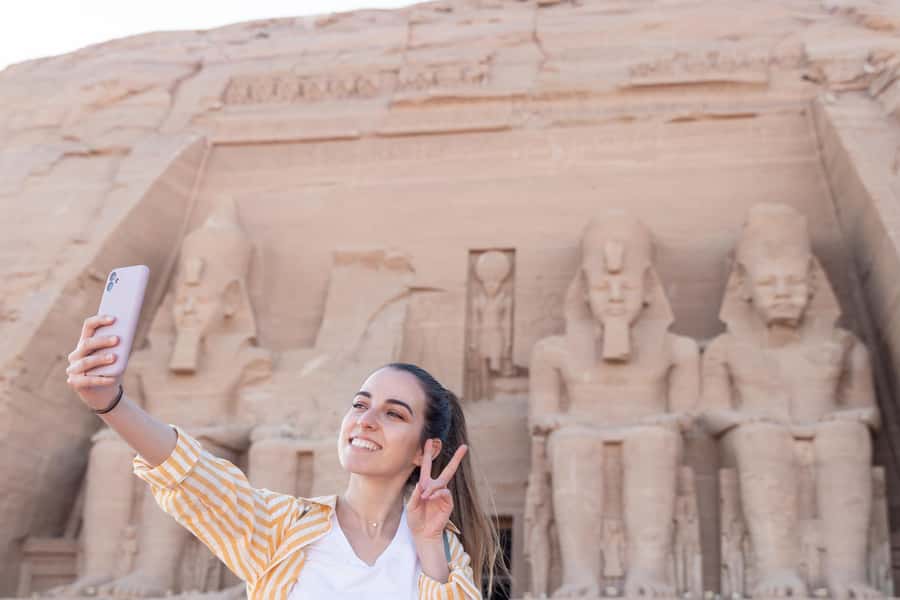
Lunch is included, and you’ll eat at a local restaurant in Abu Simbel. The value here is that you’re not hunting for food during prime site time. When your day is stacked with temples, that’s not a small thing.
Still, plan for long gaps between meals. The day starts early, and the drive can be substantial. Water and snacks are included in the tour setup, but drinks at lunch are not included.
Practical move: if you tend to get hungry fast, treat the included snacks as helpful but not “meal replacement.” One itinerary included snack packs with water and even small souvenirs (bracelet-style tokens), which can make the early portion feel friendlier. If you’re sensitive to timing, pack a simple snack of your own too.
If you have a late flight in Aswan, be ready for the possibility that lunch timing or eating style may shift. Some schedules have had late lunch handled inside the car en route to the airport.
Entry Fees, Skip-the-Line Access, and What You’re Really Paying For
The listed price is $208 per person for a 12-hour day. Here’s where the value math gets interesting: you’re paying for (1) transportation by air-conditioned vehicle, (2) entry fees, (3) an English guide, and (4) lunch plus snacks and bottle water.
That bundle matters in Egypt. Temple entry fees alone add up, and the time you save from skip-the-ticket-line access can be the difference between a relaxed visit and a rushed one.
You’re also paying for coordination. This tour is built around meeting guides at each site, so you’re not trying to piece together who to hire and when. That’s especially helpful for places like Abu Simbel where timing can be tight.
What’s not included is also worth knowing. Drinks aren’t included. And there are extra pickup/drop-off fees if your hotel is in certain areas outside the standard zones—specifically the West Bank ($5 extra per person) and additional locations such as the island areas, Nagaa al-Mahatta, or New Aswan ($10 extra per person).
If you’re staying in central Aswan and Luxor hotels that are within normal pickup coverage, you’ll feel more of the value. If you’re in a more “special” location, confirm the fee early so there are no surprise costs.
Guides and Drivers: The People Factor That Keeps the Day From Falling Apart
This trip runs on people: driver + guides. The best days are when the driver is calm, the route timing is managed, and the guides know how to explain without turning your visit into a lecture.
From real-world patterns, drivers like Amir and Phillip have been praised for driving skill and good humor. George also comes up in accounts as attentive and great company, with guides such as Hani for Abu Simbel and Mohamed for key temple explanations. At Edfu and Kom Ombo, names like Ahmed Ashraf and Amr Diffalah show up with a consistent theme: guides who meet you at the site and talk through what you’re looking at.
One small detail I like in this kind of setup: you usually get water and snack support at the start, not just at the end. That helps you stay functional when you’re leaving Luxor early.
Potential friction points do exist. Some schedules have had moments like snack/water not being provided initially, or a guide moving things along in a way that felt a little too eager about leaving quick feedback. None of that ruins the temples—but it can affect how smooth the day feels.
Also keep an eye on transportation consistency. There’s at least one report where a late-stage vehicle change happened to a tuktuk due to safety/route concerns for the drop-off. That’s not something you want to learn at the last minute, so it’s worth asking what the final drop-off transport will be like for your exact hotel.
Price and Logistics: When It’s a Smart Buy and When It’s Not
At $208, this is not a “grab it last minute” cheap day, but it’s also not overpriced for what’s included. You’re paying for a full Luxor-to-Aswan day with three major temple stops plus entry fees, lunch, and an English guide.
It’s a smart buy if:
- You have limited time between Luxor and Aswan.
- You want Abu Simbel without trying to manage the day yourself.
- You care about explanations, not just photos.
- You prefer skip-the-line convenience.
It might not be the best fit if:
- You’re sensitive to early mornings and long drives.
- You hate schedule pressure and feel miserable in cars for half the day.
- Your hotel pickup is outside standard zones and extra fees add up.
- You need a lot of unstructured free time at each stop.
Also consider your comfort level with rest stops. Some roads can be rough in parts, and the trip is long enough that you’ll want to plan your water and bathroom breaks around real stops rather than hoping the schedule stays flexible.
Who This Tour Fits Best (And Who Should Choose Something Else)
This tour is ideal for first-time visitors who want the “greatest hits” of Upper Egypt temple culture without turning the trip into a jigsaw puzzle. If you’re a history fan, the guide-led structure makes the carvings and layouts easier to interpret. If you’re a casual admirer, you still get huge scale and iconic moments.
I’d also recommend it to solo travelers who value being taken care of. The day is organized around meeting points and guide handoffs, and driver experience can make you feel less stressed about timing. People have even mentioned feeling reassured and comfortable during the day, especially when the driver stayed attentive.
You should think twice if:
- You’re traveling with mobility limitations and don’t know how walking distances will feel at each site.
- You prefer a slower, multi-day temple approach.
- You’re traveling with a very tight evening flight window and need total control over every timing detail.
If you’re flexible and want maximum temple time for one day, this is a strong match.
Should You Book This Luxor to Edfu to Kom Ombo to Abu Simbel Day?
Yes, if your goal is to see Abu Simbel plus two other major temples in a single Luxor-to-Aswan day with entry fees handled and an English guide at the sites. This format is for people who want momentum and clarity, and who can handle an early start.
Book it if you:
- Want the roof-intact atmosphere at Edfu, the Sobek and Har Wer dual focus at Kom Ombo, and the scale of Abu Simbel’s rock-cut temples.
- Appreciate skip-the-line access and a guided structure that makes symbols make sense.
- Are okay with a long car day and evening arrival.
Don’t book it if you:
- Need a relaxed pace, lots of downtime, and minimal driving.
- Are unsure about pickup zones and extra fees for your exact hotel location.
If you do book, do one thing that pays off instantly: confirm your hotel pickup/drop-off area in advance. It’s the easiest way to protect your schedule and avoid last-minute surprises.
FAQ
What temples are included in the tour?
You’ll visit Edfu Temple (Temple of Horus), Temple of Kom Ombo (dedicated to Sobek and Har Wer), and the Great Temples of Abu Simbel (two rock-cut temples).
How long is the tour?
The duration is 12 hours.
Is there an English guide?
Yes. The tour includes a live tour guide in English.
Are entry fees included?
Yes, entry fees are included.
Is lunch included?
Yes, lunch is included during the day (served at a local restaurant in Abu Simbel).
Are snacks and water included?
Yes. Snacks and bottled water are included.
Are drinks included with lunch?
No. All drinks are not included.
Is pickup and drop-off always free at all hotels?
Not always. West Bank hotel pickup and drop-off has an extra $5 per person, and some additional areas (like the island, Nagaa al-Mahatta, or New Aswan) have an extra $10 per person.
What is the cancellation policy?
Free cancellation is available up to 24 hours in advance for a full refund.