REVIEW · ABU SIMBEL
Abu Simbel temples by Private air-conditioin Vehicle
Book on Viator →Operated by Gate 2 Egypt Tours · Bookable on Viator
Abu Simbel is one of those places that stops time. This full-day private tour from Aswan gives you the big UNESCO temples of Ramses II and Queen Nefertari, plus the story of how they were found in 1813 and saved in 1960 when the Nile threatened them. I like the calm, personalized pace of a private vehicle and the fact that your Egyptologist focuses your visit with real context before you go looking for details yourself.
One thing to consider: inside the temples, guidance is limited. You’ll get explanations, but you’re not going to have a guide narrating every single chamber while you walk—so if you want constant in-room commentary, a different style of tour might suit you better.
In This Review
- Key highlights you’ll care about
- Why Abu Simbel Is Worth the Long Aswan-to-Abu Simbel Drive
- Sun Temple of Ramses II: What You’ll See and What to Look For
- Queen Nefertari’s Temple: Sand, Discovery, and the “Saved From Oblivion” Feeling
- The 1960 Temple Move: How UNESCO and Egyptians Saved Abu Simbel
- Private Vehicle, Timing, and On-Site Pace (What 11 Hours Feels Like)
- What’s Included in the Ticket Price (And Whether $120 Feels Fair)
- Tips I’d Follow Before You Go (So You Get More Out of the Temple Time)
- Who This Tour Fits Best (And Who Should Consider Another Style)
- Should You Book This Private Abu Simbel Day Trip?
- FAQ
- How long is the Abu Simbel private day trip from Aswan?
- What do I visit during this excursion?
- Is hotel pickup included, and how do I get to the temples?
- Are entrance fees included?
- Do you provide tickets on the day?
- Are drinks included?
- What is the cancellation situation if the weather is bad?
Key highlights you’ll care about
- UNESCO Abu Simbel: Sun Temple of Ramses II and the temple linked to Queen Nefertari
- The 1960 temple rescue story: moved to beat rising Nile water
- Egyptologist-led orientation so your visit makes sense fast
- Comfort on the road with pickup and an air-conditioned private vehicle from Aswan
- What’s included: entrance fees and soft drinks on board, plus bottled water
Why Abu Simbel Is Worth the Long Aswan-to-Abu Simbel Drive
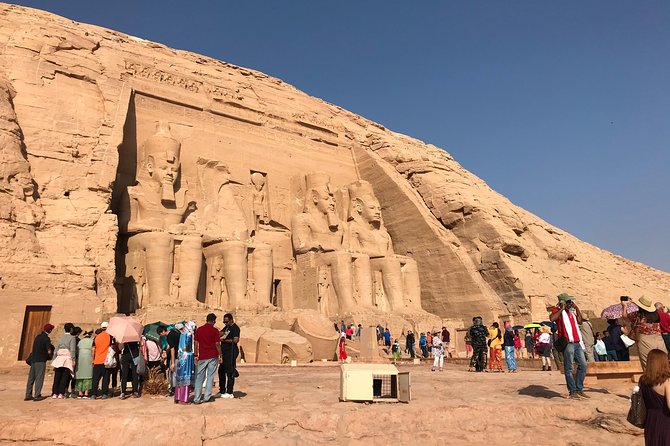
Let’s be honest: Abu Simbel is a commitment. The trip out of Aswan takes time, and you’ll spend a good chunk of your day in transit. But that’s also the magic of it. When you’re finally facing those rock-cut façades, you understand why people make the effort.
I like that this is structured as a full-day excursion, roughly 11 hours total. It’s long enough to make the temples feel like more than a quick photo stop. And because it’s private, you’re not juggling your schedule with other groups that move at different speeds.
You’ll start with pickup from your hotel area in Aswan. The drive happens in an air-conditioned private vehicle, and that matters because temperatures in Egypt can be rough, especially if you’re going in hotter months. Then you get your on-site time at Abu Simbel—enough to actually read the story the stone is telling.
Also, you won’t be left trying to coordinate tickets and logistics yourself. You get a mobile ticket, and entrance fees are handled. That turns a complicated day into something that feels straightforward.
You can also read our reviews of more private tours in Abu Simbel
Sun Temple of Ramses II: What You’ll See and What to Look For
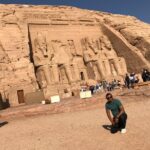
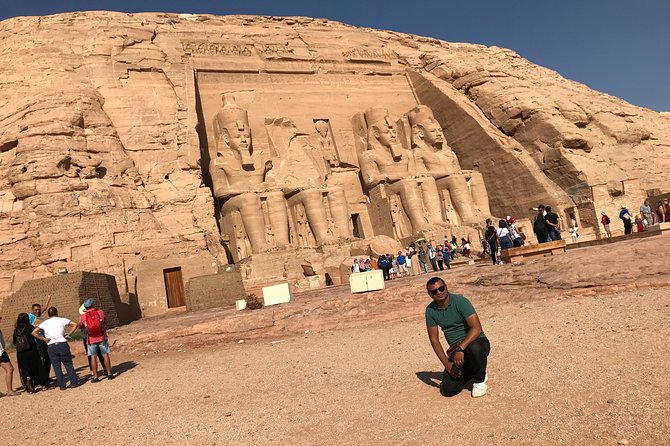
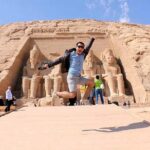
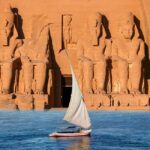
The main moment is the Sun Temple of Ramses II. This is the temple most people picture when they think of Abu Simbel: a monumental rock façade and the kind of scale that makes your brain pause mid-sentence.
What I found most useful here is the way the visit is framed. You learn that Ramses II built the temple mostly to honor himself. That might sound self-promotional (because, yes, ancient kings did that), but it becomes clearer when you’re standing in front of the carvings and realizing this wasn’t made for casual tourists. It was made to communicate power.
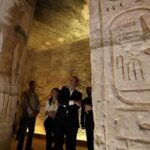
Inside, there’s a mural depicting Ramses II’s famous victory at the Battle of Kadesh. That’s a detail worth aiming for. If you know what you’re looking at, the walls stop being “cool drawings” and start feeling like political messaging.
Timing matters too. This tour is private, but your on-site flow is still designed so the Egyptologist can set context and then you can enjoy the temple spaces without constant interruptions. One practical consideration: if you’re the type who wants a guide constantly narrating while you walk, you may feel the time with explanation is shorter than you hoped. The upside is that you get a bit more freedom to look slowly and soak it in.
Queen Nefertari’s Temple: Sand, Discovery, and the “Saved From Oblivion” Feeling
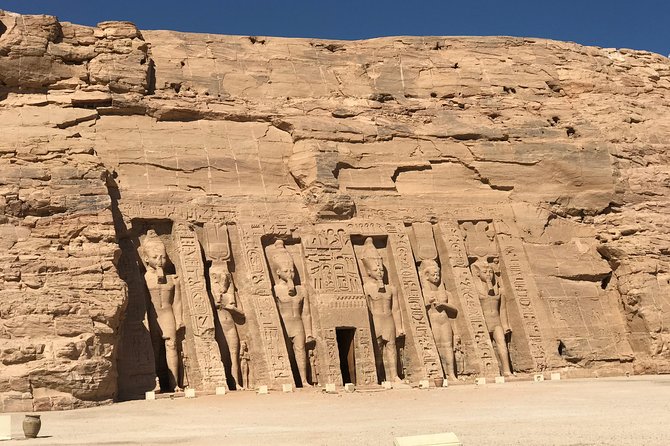
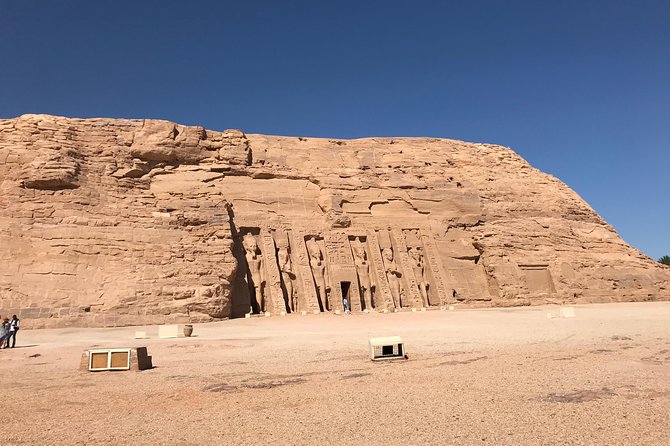
Right alongside the Sun Temple is the temple linked to Queen Nefertari. It’s easy to treat this as a secondary stop, but it shouldn’t be. When you walk into these spaces, the contrast between royal self-image and the artistry of queenly symbolism becomes part of the experience.
Here’s one detail that makes the whole visit hit harder: both temples were discovered in 1813, and they were almost completely covered with sand. That’s not a minor footnote. It means these places were hidden for a long time, surviving under layers of Egypt’s shifting desert conditions, until people uncovered them again.
So when you’re standing there, it isn’t just about ancient Egypt. It’s about rediscovery and survival across centuries. You can almost feel the timeline in your head: built as monumental statements, lost in sand, rediscovered, then later threatened again by modern water levels.
If you’re the type who likes having a little story attached to what you’re seeing, the Egyptologist explanations here give you a framework. Then your job is simply to look for how the carvings and layout communicate meaning.
The 1960 Temple Move: How UNESCO and Egyptians Saved Abu Simbel
The most “how is this real?” part of Abu Simbel is the 1960 relocation. The Nile’s rising levels threatened the temples, and in response, the Egyptian government worked with UNESCO to move them.
This tour makes that rescue story clear because it’s central to why Abu Simbel exists in the form you can visit today. It’s one thing to admire ancient architecture. It’s another to learn that modern engineering and international cooperation physically saved the monument you’re walking through.
When that story clicks, the visit changes mood. You stop thinking only about what Ramses II carved, and you start thinking about what generations later did to protect those carvings from disappearing. That perspective also helps with patience. You’ll understand why the experience is managed carefully and why certain rules exist around conservation.
It’s also one of the reasons UNESCO status isn’t just a label here. Abu Simbel isn’t only a masterpiece of the ancient world—it’s also a conservation story of the modern world.
Private Vehicle, Timing, and On-Site Pace (What 11 Hours Feels Like)
A private day trip sounds simple until you’re dealing with long driving distances. This one is about 11 hours in total, and your day runs on a transport rhythm: pickup, drive, time on site, then the return.
The benefit of the private vehicle is control. You’re not waiting as people pile in and out, and you can generally expect the schedule to run as planned for your group. That’s especially helpful for a site like Abu Simbel, where you don’t want to lose time to confusion.
On site, the experience is built around the two main temples. Your on-site time isn’t presented as an all-day wandering session with endless commentary. Instead, it’s more like: learn the core story, then explore. There’s a “go look for it” feeling to it.
Here’s the practical takeaway from a balance point of view: if you’re comparing private vs group and you care most about lots of guided time inside every corner, a private tour may feel short on explanation. One person even found the Egyptologist’s inside-temple time brief. The other side of that coin is that guidance is kept limited, which can make the actual temple time feel less disrupted and more reflective.
So think of this as a private-history orientation plus self-paced temple time. That’s a good fit for many visitors. It might not be your favorite style if you want a constant narrator.
What’s Included in the Ticket Price (And Whether $120 Feels Fair)
At $120 per person, the biggest value point isn’t just “you pay for a seat.” It’s what’s wrapped into the day.
You get:
- air-conditioned private transportation
- hotel pickup and return from Aswan
- entrance fees to the historical sites mentioned
- bottled water and soft drinks on the car
- all fees and taxes
- a mobile ticket
- a private setup where only your group participates
When you price this against what it would cost you to handle transport, tickets, and entry management on your own, the price starts to make sense. Abu Simbel logistics aren’t something most people want to DIY. Long-distance travel plus site entry fees plus a dedicated guide-friendly schedule is exactly the kind of problem private tours solve.
Also, there’s mention of group discounts, which can help if you’re traveling with friends or family and want to lower the per-person cost.
One more value angle: your Egyptologist isn’t just reading off facts. The explanations add meaning to what you see, especially for the 1813 discovery and the 1960 move. That’s hard to replace with a phone app unless you’re really disciplined about reading every panel.
Tips I’d Follow Before You Go (So You Get More Out of the Temple Time)
You’ll be happier if you plan for the practical reality: you’re doing a long day. So bring the basics that help you enjoy the visit even when you’re tired.
- Plan for heat if you’re going in hotter months. One review noted visiting in July and suggested staying a bit longer for a quieter feel. That lines up with what you’d expect: cooler mornings and a bit of patience can make the experience more relaxed.
- Dress comfortably for temple walking. Abu Simbel is rock-carved spaces, and you’ll want shoes you trust.
- Let the guide set the stage, then look. Since guiding inside is limited, you’ll get more out of the visit if you treat the Egyptologist explanations as your map. Then you follow the map with your eyes.
- Bring your curiosity. The murals and royal themes are much more rewarding when you know what they’re about. The Battle of Kadesh detail is one of those things you’ll remember because it turns the carvings into a story.
- Take breaks where you can. You’re in a long drive day. The soft drinks and bottled water are included, but you still want to stay comfortable so you can enjoy rather than just endure.
Who This Tour Fits Best (And Who Should Consider Another Style)
This private trip is a strong match if:
- you want a private air-conditioned vehicle and direct hotel pickup/return
- you like having an Egyptologist guide you through the main story points (1813 discovery, Ramses II focus, the 1960 rescue)
- you want to explore at your own pace once the context is set
It’s less ideal if:
- you expect the guide to provide extended, continuous commentary inside every chamber
- you mainly want maximum guided narration and don’t care as much about having time to look and think
If you’re traveling in a group and want to reduce costs, private can still work well—especially since there’s mention of group discounts. If you’re extremely time-sensitive and want only the shortest possible explanation, a different tour style might feel better. But for most people, this balance of guided context plus temple time is exactly the right mix.
Should You Book This Private Abu Simbel Day Trip?
If you’re choosing between doing Abu Simbel “your way” and letting a team manage the hard parts, I’d lean toward booking. The combination of private comfort, entrance fees handled, and an Egyptologist explanation that gives you meaningful anchors (Ramses II, Battle of Kadesh, the sand discovery in 1813, and the 1960 move with UNESCO) is a solid value for a long-distance day.
My main caution is about expectations. This isn’t a nonstop guided tour inside every room. If you want constant in-temple narration, you may feel shortchanged. But if you enjoy a guided setup followed by time to explore quietly, you’ll probably come away with the thing Abu Simbel is famous for: that moment when you step in and realize you’re standing in history that should not have survived.
FAQ
How long is the Abu Simbel private day trip from Aswan?
It runs about 11 hours in total (approx.), including pickup, driving time, and time at Abu Simbel.
What do I visit during this excursion?
You visit Abu Simbel’s Sun Temple of Ramses II and the temple linked to Queen Nefertari, both UNESCO World Heritage sites.
Is hotel pickup included, and how do I get to the temples?
Yes. You’re picked up from your hotel in Aswan and returned afterward using a private, air-conditioned vehicle.
Are entrance fees included?
Yes. Entrance fees to the mentioned historical places are included in the price.
Do you provide tickets on the day?
You receive a mobile ticket.
Are drinks included?
Bottled water and soft drinks are included on board the car.
What is the cancellation situation if the weather is bad?
The experience requires good weather. If it’s canceled due to poor weather, you’ll be offered a different date or a full refund. You can cancel up to 24 hours in advance for a full refund.