REVIEW · SHARM EL SHEIKH
Sharm El Sheikh: Trip to Luxor & Tutankhamun Tomb by Plane
Book on GetYourGuide →Operated by FTS Travels · Bookable on GetYourGuide
Luxor by plane turns a long, grindy journey into a clean day of monuments. You get a full guided walkthrough of the east and west banks, with flights from Sharm that save you hours. The plan is built around the big hitters: Karnak, the Valley of the Kings, Hatshepsut’s temple, and the Memnon Colossi.
What I like most is that you’re not just checking boxes. You’re guided through the sites in a logical flow—east first, then west—so the story of New Kingdom Egypt actually clicks. Second, I love the focus on real, physical scale: 134 columns at Karnak, three tombs in the Valley, and those two 60-foot Memnon statues that feel oddly personal once you’re standing in front of them.
One drawback to plan for: it’s a long, hot day. Pickup can be very early, and once you’re out at the Valley of the Kings there’s limited shade, so your comfort depends on heat management and good shoes.
In This Review
- Key moments that make this day trip work
- Price and what you’re really paying for
- Flying from Sharm to Luxor: early starts, smooth logistics
- Your east-bank anchor: Karnak Temple complex
- The west bank payoff: Valley of the Kings and tomb interiors
- Mortuary Temple of Hatshepsut: walking through limestone cliffs
- Memnon Colossi: two 60-foot guardians of the necropolis
- Tutankhamun’s tomb: the “icon” option and how to decide
- Lunch in Luxor: plan around what’s not included
- Heat, timing, and pacing: how to enjoy a long day
- Who this day trip suits best
- Small add-ons and the “watch the shops” reality
- What to bring and what to double-check
- Should you book this Luxor by plane day trip?
- FAQ
- Is lunch included on this Luxor trip?
- Does the tour include flights from Sharm El Sheikh?
- Which sites are covered during the day?
- How many tombs do you enter in the Valley of the Kings?
- Is Tutankhamun’s tomb included?
- Are entrance fees included?
- Is there an optional Nile cruise?
- What documents do I need to bring?
- How does hotel pickup work in Sharm El Sheikh?
- Is this tour suitable for everyone?
- What languages is the tour offered in?
Key moments that make this day trip work
- Skip the bus grind with round-trip flights from Sharm El Sheikh to Luxor
- A tight, expert-guided circuit across east and west bank highlights
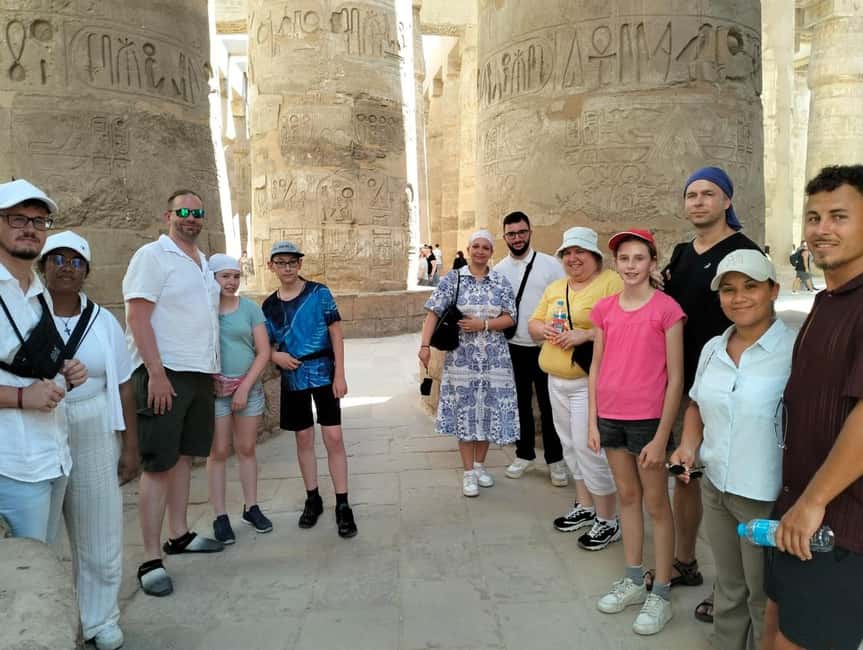
- Karnak Temple’s scale: the Avenue of Sphinxes and the Great Hypostyle Hall’s 134 columns
- Three Valley of the Kings tombs with surviving hieroglyphs and burial chambers
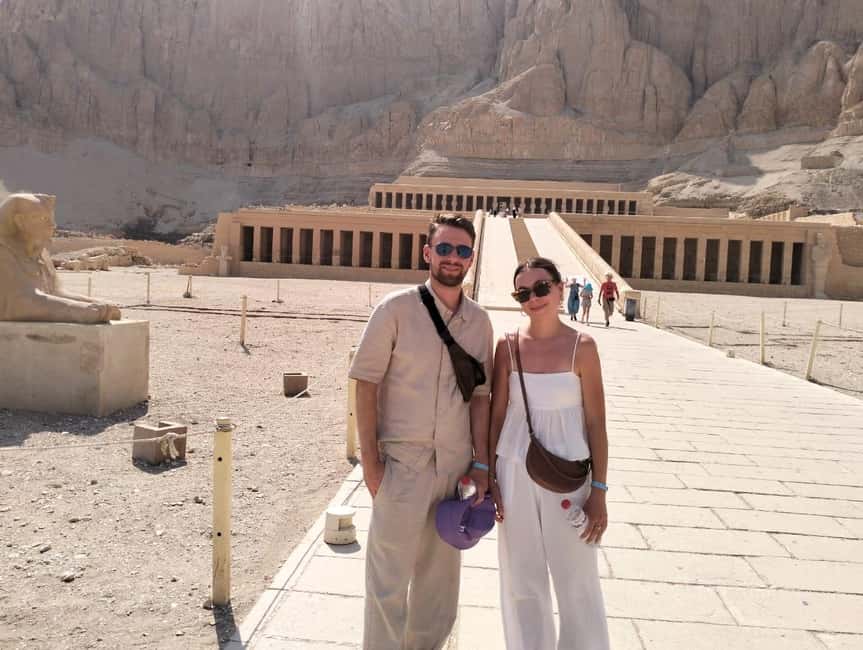
- Hatshepsut’s mortuary temple carved into the limestone cliffs at Deir el-Bahari
- Optional Tutankhamun’s tomb if you choose the add-on
Price and what you’re really paying for
This tour is listed at $343 per person, and the value isn’t just the sightseeing. It’s the way the day is assembled: you’re paying for round-trip domestic flights between Sharm El Sheikh and Luxor, plus a guide, hotel pickup/drop-off, private air-conditioned transfers, lunch, and entrance fees for the named sites.
That matters because Luxor visits can get expensive fast when you start piecing things together: transport, guides, and museum entry fees stack up. Here, the big cost drivers are handled up front, so you can focus on experiencing, not budgeting minute-by-minute during the day.
If you’re the kind of traveler who hates wasted hours, this is also a smart match. Flights mean less sitting in traffic and more time on temple floors and tomb steps—where the real magic is.
You can also read our reviews of more tours and experiences in Sharm El Sheikh.


Flying from Sharm to Luxor: early starts, smooth logistics
Expect the day to run like a machine. You’ll get hotel pickup in Sharm at the street-side main entrance. You’ll want to be ready 10–15 minutes early, because delays can happen, but they try to keep things moving. Pickup time is confirmed 24 hours before via email or WhatsApp, and you should act fast if you don’t get that confirmation by the night before.
Then it’s off to the airport and into Luxor mode. Flight times can shift with the season, and the tour provider sends the full details 24 hours in advance. If you’re choosing between return options, note this: a 7PM flight is the direct airport route, while a 9PM return adds extra time for shops/cafes.
A small but very practical tip: keep any ticket stub you’re handed for the flight. Some people get burned by not realizing they’ll need it for the return process.
Your east-bank anchor: Karnak Temple complex
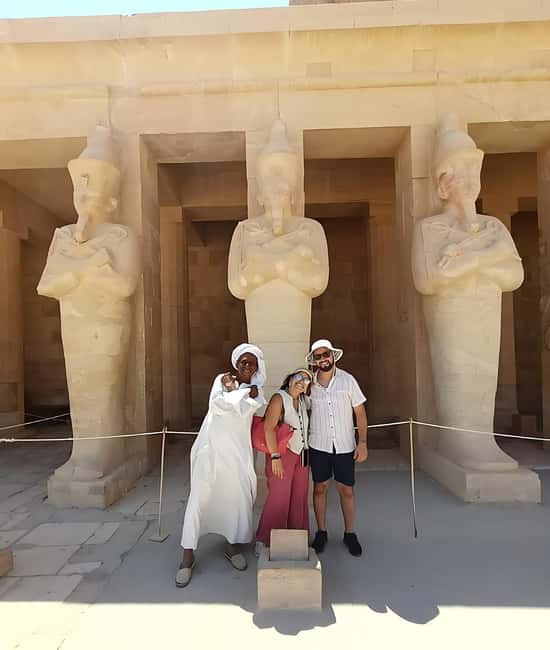
Most days in Luxor feel like a lot at once. Karnak is where that changes from overwhelming to understandable. The complex is one of the largest religious sites ever built, and your guide helps you read it instead of just walking past stone.
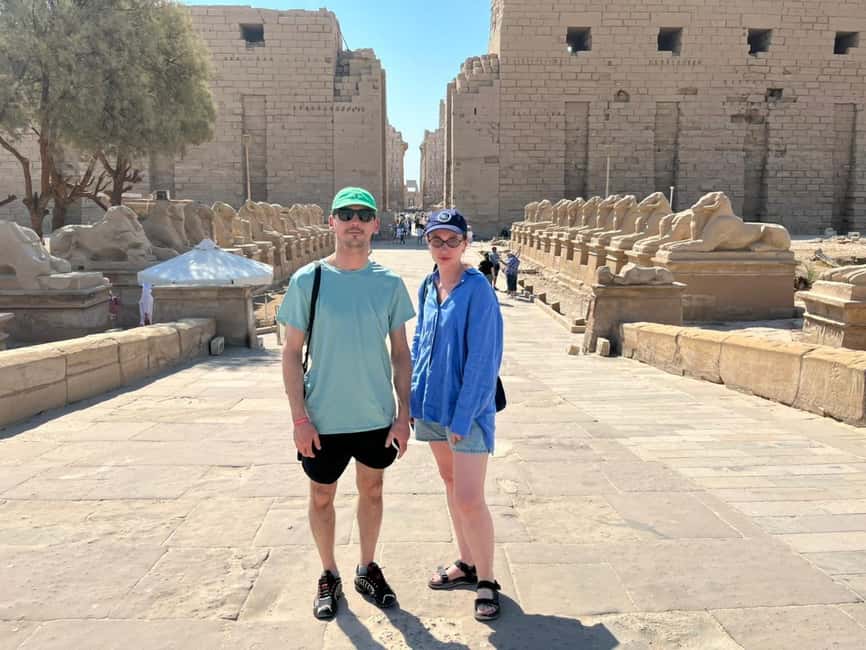
You’ll start along the Avenue of Sphinxes, then head into the heart of it: the Great Hypostyle Hall. This is the room that looks like it couldn’t possibly have been built by humans—134 massive columns support the ceiling and stretch your sense of scale upward. It’s easy to forget to look up until your guide nudges you.
You’ll also see towering obelisks tied to famous rulers, including Queen Hatshepsut’s and Thutmose I’s. This is where context matters. When you know who commissioned what, the stone stops being decoration and starts being political messaging: power carved into place.
Why it’s worth the time: Karnak is a living lesson in how Egyptians built complexity over centuries. You’re not just seeing one temple—you’re seeing layers of ambition.
Watch-outs: Karnak can get crowded around the most famous photo spots. I’d plan your photos early, and then let your guide lead you to the less obvious angles so you’re not stuck in line.
The west bank payoff: Valley of the Kings and tomb interiors
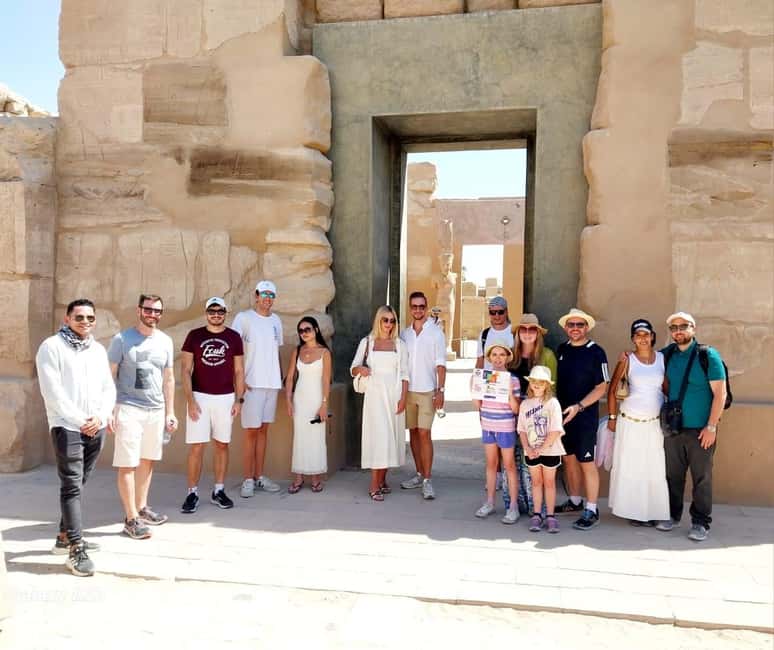
Then you cross to the west bank of the Nile. This is where Luxor stops being just impressive and starts becoming intimate: burial chambers you can step into, walls covered with hieroglyphic scenes, and narrow spaces that make the past feel close.
In this program, you enter three different tombs, which is a great ratio for a one-day trip. Too many tomb stops can turn into blur. Three gives you enough variety—different eras, different styles—without racing.
The Valley of the Kings is the royal burial ground of Egypt’s New Kingdom pharaohs. Your guide’s job is to help you spot the patterns: who’s represented, what the scenes mean, and how the tombs function as carefully designed journeys for the dead.
Why you’ll feel it in person: these chambers are old enough to be called permanent, yet they still feel strangely fragile. The paint, carvings, and structure survived because people cared enough to protect them. When you’re inside, you get the sense of how precise those burial plans were.
Heat reality check: this is open-air archaeology. If it’s running hot—some past days have hit around 42°C—you’ll appreciate stopping when you can, drinking when available, and keeping your body cool while you tour.
Comfort tip: comfortable shoes are non-negotiable. You’ll be walking, climbing stairs, and moving between tomb entrances.
Mortuary Temple of Hatshepsut: walking through limestone cliffs
Next comes the Mortuary Temple of Queen Hatshepsut, carved directly into the limestone cliffs at Deir el-Bahari. This site is not just “another temple.” It’s a whole design concept: terraces, symmetry, and a bold statement of authority by a ruler who wanted to be remembered.
Your guide’s storytelling really matters here. Hatshepsut isn’t just a name on a plaque. In person, you can see why she became one of Egypt’s most striking figures: the temple’s layout is designed to project strength, control, and legitimacy.
What to focus on: take a slow moment on the terraces and look at how the architecture sits in the cliff face. If you rush, you miss the sensation of stone being “built into” the landscape rather than placed on top of it.
Why it’s a standout: Karnak is monumental in a wide, sprawling way. Hatshepsut is powerful in a vertical, cliff-side way. It balances the day.




Memnon Colossi: two 60-foot guardians of the necropolis
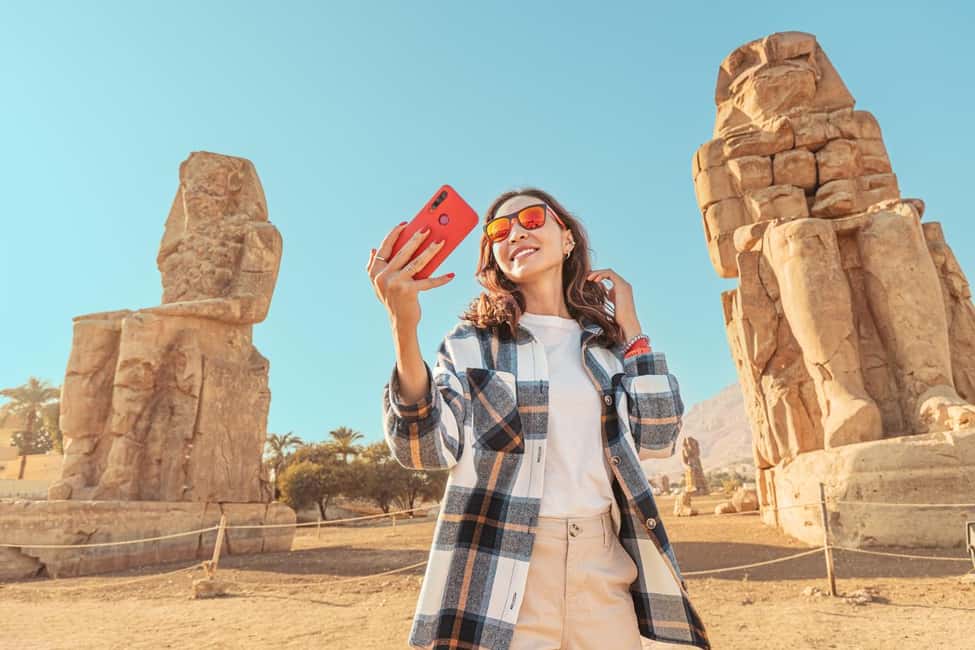
Then it’s the Colossi of Memnon—two statues, each around 60 feet tall. They’re known for having guarded the Theban Necropolis for more than 3,400 years, and they once marked the entrance area to the mortuary temple of Amenhotep III.
Standing in front of them changes your scale instantly. A lot of famous statues are impressive because they’re smooth and clean. These feel impressive because they look like time has chewed on them and they still refuse to shrink.
Your guide’s explanations help connect the statues to the bigger map of the necropolis. You’re not just seeing two standing figures. You’re seeing an entry point, a boundary marker, and part of a monumental system.
Photo tip: try a slightly angled shot rather than the classic straight-on. With a little movement, you can capture the statues’ height without everything becoming a flat silhouette.
Tutankhamun’s tomb: the “icon” option and how to decide
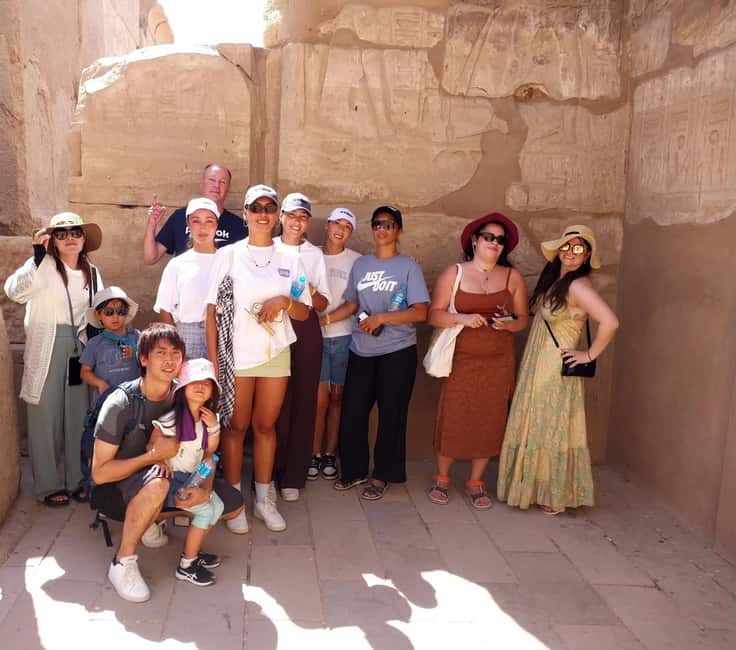
This tour includes Tutankhamun’s tomb if you select the option. It’s the famous boy king burial site in the Valley of the Kings, linked to Howard Carter’s discovery in 1922.
If you choose it, you’ll be guided into the burial chamber and see the golden sarcophagus that once held the mummy. This is one of the most globally recognized names in Egypt, and it carries a very particular weight because of what became known afterward.
How I’d decide: if you’re a “one must-see, no regrets” type of visitor, including Tutankhamun’s tomb is often worth it because the recognition is real—you know what you’re looking at, even if you’re seeing it for the first time. If you’re more interested in broad archaeology and the variety of tomb art, you might decide to skip the extra stop and spend more time where your guide has the most momentum.
Either way, you’ll still be spending your main Valley-of-the-Kings time inside three tombs, so you’re not losing the core experience.
Lunch in Luxor: plan around what’s not included

Lunch is included and described as a traditional Egyptian meal at a local Luxor restaurant. That’s a plus because it avoids the “random tourist meal” trap that can happen on long days.
Just know what’s missing: drinks aren’t included at the restaurant. So don’t assume water will be part of lunch. If you’re heat-sensitive, plan for hydration as a separate step.
Also, the midday break is one of the few chances to reset your energy. Use it to cool down, eat at your pace, and then head back out with fresh legs for the afternoon archaeology.
Heat, timing, and pacing: how to enjoy a long day
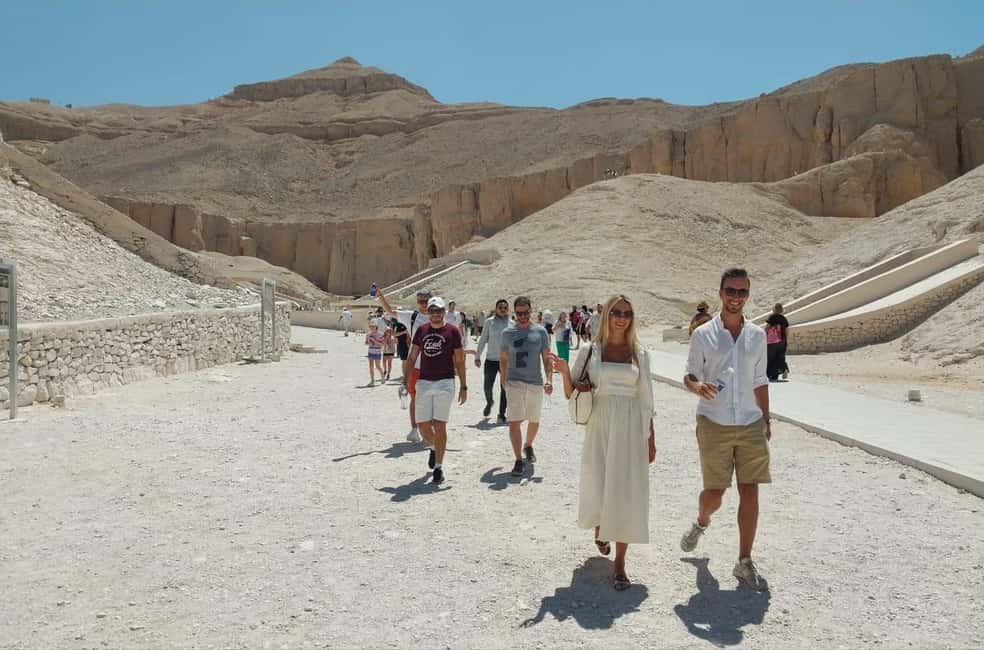
This is a full-day tour with a lot of walking. Even when everything runs smoothly, it can feel long because the schedule has multiple major sites stacked back-to-back.
Some helpful real-world pointers:
- Start mentally prepared for an early pickup and morning flight rhythm.
- Wear comfortable shoes and light clothing.
- Bring sun protection and accept that shade is limited at open-air stops.
- If the day feels stretched, use your guide’s stops strategically—take short pauses for photos, then get back into listening mode.
A good guide makes pacing feel less like rushing. Names you might be guided by include Waleed, Doa, Aziz, Omran, Nana, Dody, and Ohda—and the common thread is that they explain what you’re seeing instead of just moving you along.
Who this day trip suits best
This tour fits best if you want:
- Major Luxor highlights in one day without the hassle of long overland travel
- A guided experience with context at Karnak and inside the Valley of the Kings
- A comfortable day setup: private air-conditioned transfers, expert Egyptologist guide, and included entrance fees
- The option to include Tutankhamun’s tomb if it’s on your personal must-do list
It may not be the best fit if:
- You’re pregnant
- You have mobility impairments
- You have pre-existing medical conditions
- You strongly dislike early starts and intense sun
Small add-ons and the “watch the shops” reality
There’s mention of an optional 20-minute cruise (about €10 paid in cash onsite). If you’re trying to add a cooler break between stops, it can be a nice reset—especially if the heat is a factor.
There’s also an add-on about a travel scarf, if selected. It’s not essential to the day’s core value, but it’s there.
One more practical thing: some returned schedules include extra time for shops/cafes. If you know you’d rather spend that time resting, consider choosing the return that keeps you focused on getting back to the airport.
What to bring and what to double-check
Bring:
- Your passport or ID card
- Comfortable shoes
- Comfortable clothes
For paperwork: you’ll need a passport copy for permissions, and a visa may be required depending on your broader itinerary. The info states a visa amount of $35 USD paid in cash onsite for Cairo travel, so double-check your own travel plan.
Pickup is the big timing risk. You’ll get confirmation 24 hours before via email/WhatsApp. If you don’t get it by 6PM the night before, contact the provider right away.
Should you book this Luxor by plane day trip?
If you want the biggest Luxor sites with guide-led storytelling, this is a strong value play for the time you spend. You’re paying for flights, private transfers, a real itinerary, and included entries—not just a vehicle to a couple of monuments. The format is especially good for first-timers who don’t want to figure out how to connect Karnak to the Valley on their own.
Book it if you can handle a long day and you’re ready for early morning timing and heat. If you’d rather travel slower, with fewer stops, or you’re sensitive to walking/climbing, you may want a different pace.
If your goal is: Karnak, tombs, Hatshepsut, and Memnon in one day, this setup is built for exactly that.
FAQ
Is lunch included on this Luxor trip?
Yes. Lunch is included at a local Luxor restaurant. Drinks at the restaurant are not included.
Does the tour include flights from Sharm El Sheikh?
Yes. The experience includes round-trip domestic flights from Sharm El Sheikh to Luxor and back.
Which sites are covered during the day?
You’ll visit the Karnak Temple complex, the Theban Necropolis, the Valley of the Kings, and the Memnon Colossi. You also visit the mortuary temple of Queen Hatshepsut. Tutankhamun’s tomb is included only if you select the option.
How many tombs do you enter in the Valley of the Kings?
You enter three different tombs during the Valley of the Kings portion.
Is Tutankhamun’s tomb included?
Tutankhamun’s tomb is included if the Tutankhamun Tomb option is selected.
Are entrance fees included?
Yes. Entrance fees are included according to the listed program (if that option is selected as part of the program).
Is there an optional Nile cruise?
Yes. There is an optional 20-minute cruise that costs €10, paid in cash onsite.
What documents do I need to bring?
You should bring your passport or ID card. A passport copy is required for permissions.
How does hotel pickup work in Sharm El Sheikh?
Pickup is arranged in a private vehicle. Pickup time is confirmed 24 hours before via email/WhatsApp. You meet at the hotel main entrance (street-side) and should be ready 10–15 minutes early.
Is this tour suitable for everyone?
No. It is not suitable for pregnant women, people with mobility impairments, or people with pre-existing medical conditions.
What languages is the tour offered in?
The tour is available in English, French, German, Italian, Russian, and Spanish.