REVIEW · LUXOR
From Luxor: 8-Day Nile Cruise with Entry Tickets
Book on GetYourGuide →Operated by Nice Tours · Bookable on GetYourGuide
Sunrise over the Nile sets the tone for this trip. I like the VIP hot air balloon at sunrise and I like that you get private Egyptologists in the temples; the downside is that a few departures may feel more chaotic than you’d expect. Still, if you want major sights, good pacing, and enough time to actually look (not just pose), this Luxor-to-Aswan cruise is a strong way to do it.
What stands out is how much is packed into an 8-day flow without making you constantly switch hotels. You’re picked up in Luxor, sleep on a 5-star cruise with full-board, and keep moving along the river with guides waiting at each stop. Just know that a tiny bit of front-loading your own expectations helps, especially around timing.
There’s also a very real contrast between different parts of the experience. The temple days can be smooth and inspiring, while some land stops and onboard details can be hit-or-miss depending on the exact staff and timing that week.
In This Review
- Key things worth knowing before you book
- The Luxor-to-Aswan route: why this cruise format works
- Luxor Temple and Karnak: Divine Birth stories and Opet festival clues
- Valley of the Kings plus a sunrise balloon: the early-day magic
- Edfu Horus Temple and Kom Ombo: symmetry on one side, two gods on the other
- Aswan highlights: High Dam, the unfinished obelisk, and Philae’s rebuilt island
- Abu Simbel day trip: Ramses II, colossal facades, and sun rays on schedule
- Nubian village and camel ride: the human scale between big monuments
- The sailing day plus Dendera and a felucca return to Luxor
- On-board life: 5-star cruise comfort, Egyptian cuisine, and cabin checks
- Guides and organization: where the value can shine or wobble
- Price and value for a $750 person package
- Should you book this 8-day Nile cruise?
- FAQ
- Is hotel pickup and drop-off included?
- What’s included in the cruise package?
- Are entry tickets covered for all the major sights?
- What languages are available for the guide?
- Does the tour include meals and drinks?
- Where does the trip end?
Key things worth knowing before you book
- Sunrise VIP balloon early: you start the week with one of the most memorable views in Egypt, before the day gets full.
- Private guidance where it matters: Luxor Temple, Karnak, Valley of the Kings, and the big stops are explained by an English Egyptologist.
- Big-ticket sites on the route: Valley of the Kings, Hatshepsut, Horus at Edfu, Kom Ombo, Philae, Abu Simbel, and Dendera.
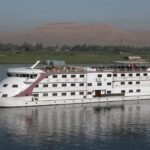
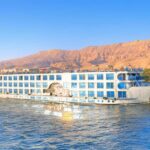
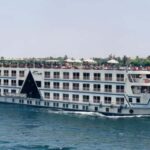
- Two boat styles, one cruise base: you’ll have the main cruise ship plus a felucca ride and other boat transfers.
- Timing can swing: some departures have reports of schedule improvisation, which is worth watching closely.
The Luxor-to-Aswan route: why this cruise format works
An 8-day Nile cruise is basically an Egypt greatest-hits playlist, but with an important advantage: you sleep in the same moving base. Instead of bouncing hotels after every day of temples, you get the rhythm of sailing between stops, then brief land excursions with private guides.
This itinerary also leans into variety. You get the dramatic royal tombs near Luxor, then temple architecture across the river corridor—Edfu, Kom Ombo, Aswan—then the famous showpiece of Abu Simbel, and finally Dendera before returning to Luxor. If you like travel that feels organized and you hate lugging luggage, this setup fits.
The tradeoff is that you’ll still have early starts, long drive days, and days where your schedule is shared with other groups. The upside is that you spend less time figuring logistics and more time standing in front of the monuments with a guide explaining what you’re looking at.
You can also read our reviews of more tours and experiences in Luxor

Luxor Temple and Karnak: Divine Birth stories and Opet festival clues
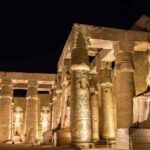
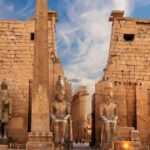
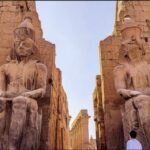
Day 1 starts on the east bank with Luxor Temple first, then Karnak. Even if you’ve seen photos, there’s a different feeling in person: the scale is quieter than the pyramids, but the details are more human. A private Egyptologist is the key here, because you’re not just looking at walls—you’re learning what the scenes are saying.
At Luxor Temple, the highlight is the Divine Birth series inside an inner room. The story links a king’s true father to Amun-Ra, which turns what might look like decoration into political theology. It’s the kind of context that makes the rest of the day click.
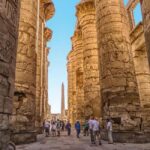
Then you move to Karnak, where the tour isn’t only about columns and scale. You’re guided through the idea of the sacred barges used by the Theban Triad during the annual Opet festival. There’s also the backstory of the lake, storerooms, priest quarters, and even an aviary for aquatic birds. It’s one of those details that helps you see Karnak as a working religious complex, not just a pile of ruins.
After all that, you’re dropped at the cruise for lunch and downtime. This is smart pacing. Temple days can burn your brain quickly; a quiet reset on the ship makes the next morning’s big sights feel possible.
Valley of the Kings plus a sunrise balloon: the early-day magic
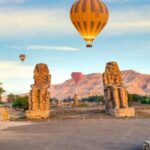
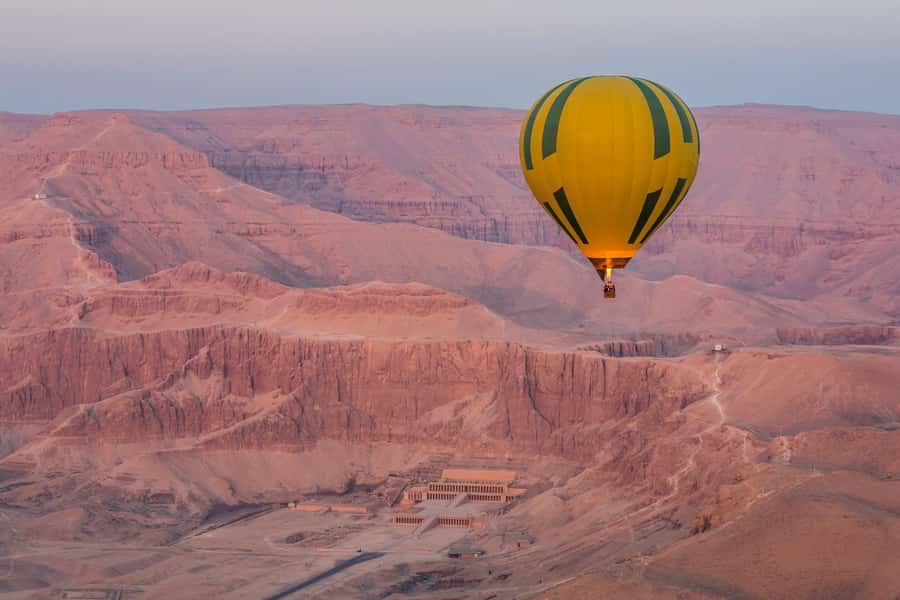
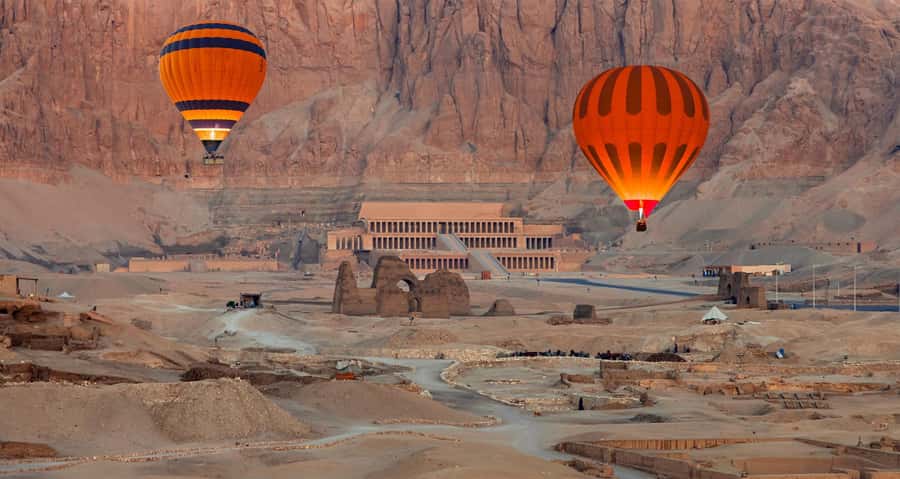
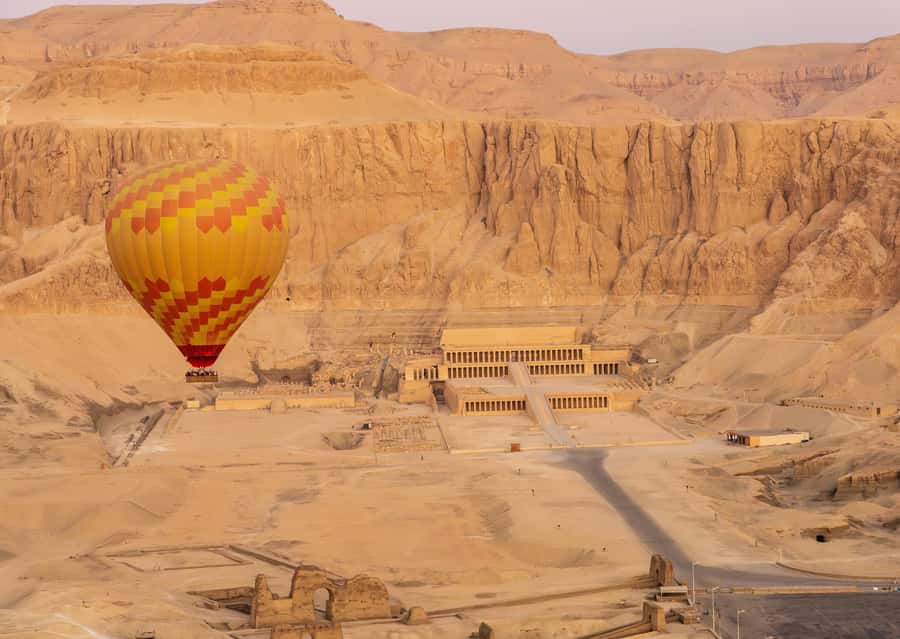
Day 2 is built for one thing: getting to the iconic Luxor sites before the crowds and heat. The sunrise VIP hot air balloon ride goes first, and that sets a mood you’ll feel all week. After that high, you meet your private guide and step into the real Egypt mood: tombs.
At the Valley of the Kings, the tour context matters. You learn why this was chosen as a burial ground—pharaohs wanted to reduce tomb-robbing compared to earlier targets. You see the logic behind the location, then you’re guided through what you’re looking at, instead of just reading the names and moving on.
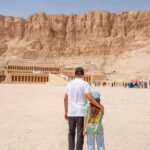
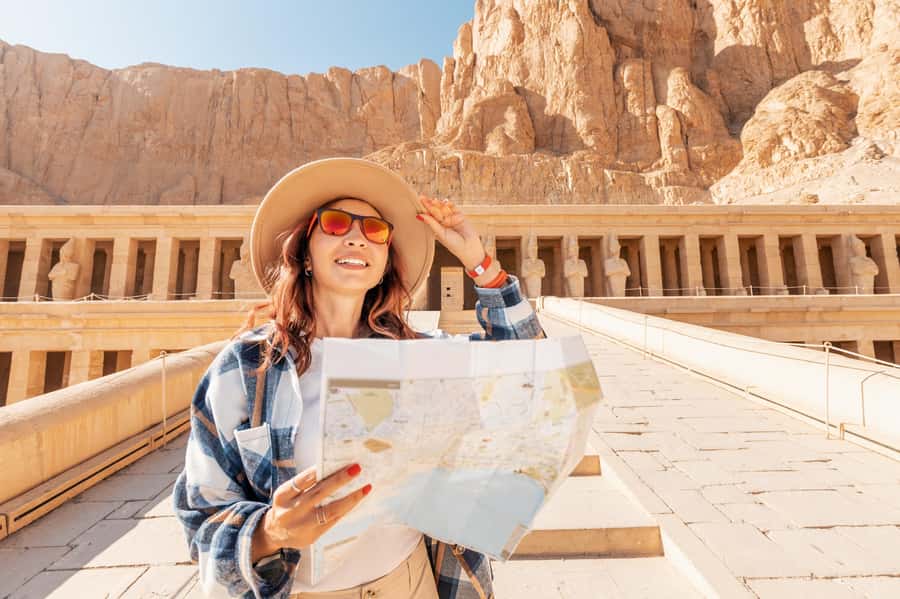
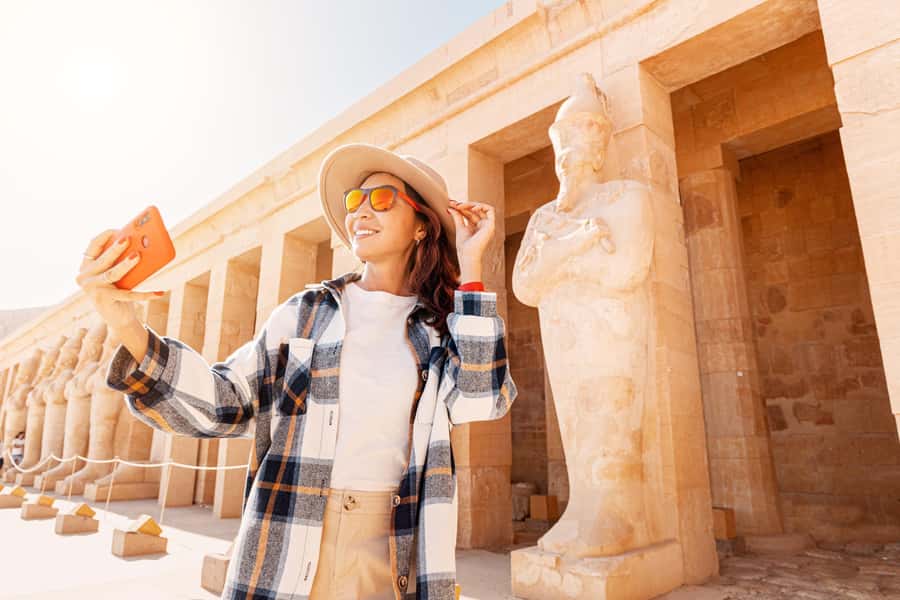
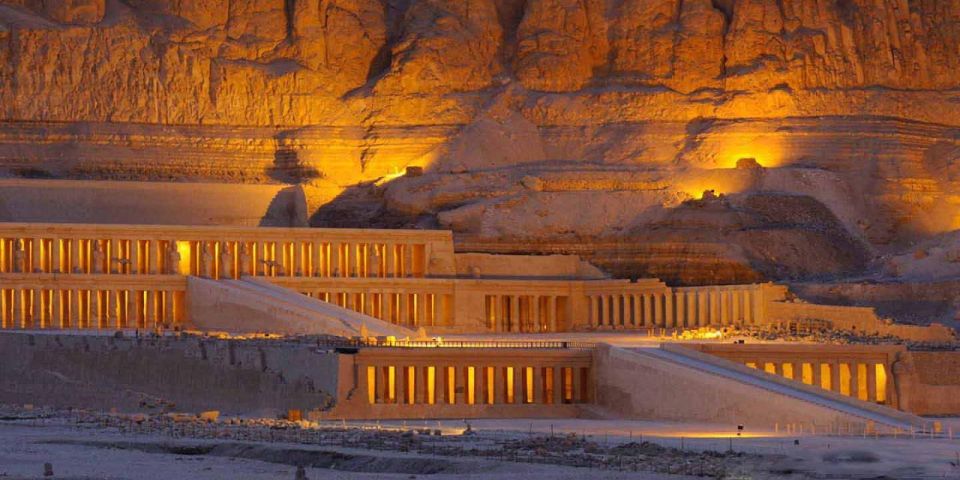
Next comes the Mortuary Temple of Hatshepsut. The tour explanation focuses on how it was designed by Senenmut, described as a courtier at Hatshepsut’s court. Even if you think you know Hatshepsut, this stop tends to feel like a crash course in how power was displayed in stone.
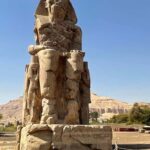
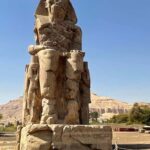
Then you finish with the Colossi of Memnon: two massive twin statues of Amenhotep III, plus smaller figures by his feet. It’s a simple ending after a dense day, and that helps you actually absorb the space around the monuments.
Practical note: balloon timing and permits can be sensitive. One departure reported issues that affected balloon scheduling, so if this is your must-do, treat the day-one and day-two timing as something to confirm in advance rather than assume it will run perfectly.
Edfu Horus Temple and Kom Ombo: symmetry on one side, two gods on the other
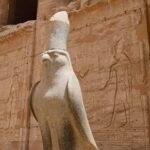
In the morning, when the ship arrives at Edfu, your guide picks you up from the port area and takes you to the Temple of Horus. The big wow-factor is the temple’s axial symmetry, with eastern and western parts acting like mirror images. When you’re shown where to stand and what alignments mean, the architecture stops being random. It becomes a designed system.
After the Edfu visit, you return to the ship for lunch, then sailing continues toward Kom Ombo. Here the temple design is unusual in a way that’s easy to miss if you don’t have guidance. The temple is dedicated to two gods, and that shows up in the layout: two parallel axial passages, two sanctuaries, and the southern axis for Sobek versus the northern axis for Harwer.
That twin-design detail is why Kom Ombo feels different from other stops. You’re not just seeing more carved stone. You’re seeing a structure built to serve two cults side by side.
If you like architecture and want your brain to keep working between tombs and royal monuments, this day hits a sweet spot. It’s less about dramatic narratives and more about “how did they build this on purpose?”
Aswan highlights: High Dam, the unfinished obelisk, and Philae’s rebuilt island
Day 4 in Aswan balances engineering history with temple wonder. You start with the Aswan High Dam, completed in 1971, with the reservoir named for President Nasser finishing its filling in 1979. This stop can feel like a curveball compared with temples, but it adds a necessary modern layer: Egypt’s river isn’t frozen in time.
Then you visit the unfinished obelisk, connected to Hatshepsut’s reign. The fact that it was constructed during the joint rule of Hatshepsut and the young Thutmose III gives you a sense of timeline and ambition—why this project was started, and why it didn’t finish.
After that, you reach the Temple of Philae, dedicated to Isis. The tour emphasizes the setting: the island was leveled to resemble the original Philae, and the temples were rebuilt, reopening in 1980. This matters because you’re seeing a protected and reconstructed sacred site, not an untouched ruin. It’s a reminder that even ancient places can get reshaped by modern water management.
If you want a calmer, more scenic feeling day compared with Luxor, Philae usually delivers. The light and the river setting make the temple feel less like a checklist and more like a place you could sit and watch for a while.
You can also read our reviews of more boat tours in Luxor
Abu Simbel day trip: Ramses II, colossal facades, and sun rays on schedule
Abu Simbel is one of those rare stops that earns the hype with math. You drive out early on Day 5 to see the four seated colossal statues of Ramses II carved into the mountain, forming a bold temple facade.
The key detail is alignment. The temple is arranged so the sun’s rays illuminate Ramses’ sanctuary twice a year—on October 22 and February 22. Even if you’re not there on those specific days, the point of the design is easier to understand when you know the goal.
Logistically, this is a full-day commitment. It’s an early start, a drive, and a return around 2:30 pm for lunch and rest. That afternoon downtime on the ship is not optional if you want your energy to last through the later stops.
Nubian village and camel ride: the human scale between big monuments
Day 6 brings a shift in tone. You’re driven to a Nubian village to see colorful houses, meet local people, and ride a camel. The tour also mentions the cataract views and the way Nubian language is spoken rather than written.
You’ll explore one house, and there’s an option for henna tattoo while you’re there. This is the kind of stop where your expectations matter. You’re looking for human-scale culture, not another temple complex. One caution from past experiences: this can feel more commercial or money-focused in some weeks, and that can dull the charm.
Still, the mix of village life, views, and the camel ride can break up the monotony of temples and carvings. If you need a change of pace, this is that day.
The sailing day plus Dendera and a felucca return to Luxor
Day 7 is the “let your feet recover” day. It’s a relaxing time on the ship. With this kind of itinerary, that pause can be the difference between enjoying the last day and feeling done before you reach it.
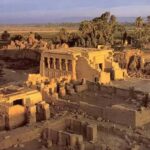
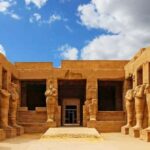
On Day 8, you go back to land with the Temple of Dendera. The site is described as large, with a basilica, two birth houses, a sacred lake, and many other temples and shrines within the complex. What I like about this stop is that it isn’t pinned to a single era. The structures span Middle Kingdom, Ptolemaic, and Roman provincial rule. That gives you a sense of how sacred places can keep getting reused and rebuilt over centuries.
After Dendera, you’re taken back to Luxor and treated to a felucca ride and lunch at a local Egyptian restaurant. Then you’re dropped at your accommodation in Luxor after you check out earlier in the morning. It’s a fitting ending: the last temple day, then a slower, river-only moment.
One practical note: felucca experiences can vary. There have been reports of a short ride led by a guide named Mena that felt more like a quick transfer than a scenic sail. Ask what the timing will be and don’t be afraid to request a proper ride rather than a rushed stop.
On-board life: 5-star cruise comfort, Egyptian cuisine, and cabin checks
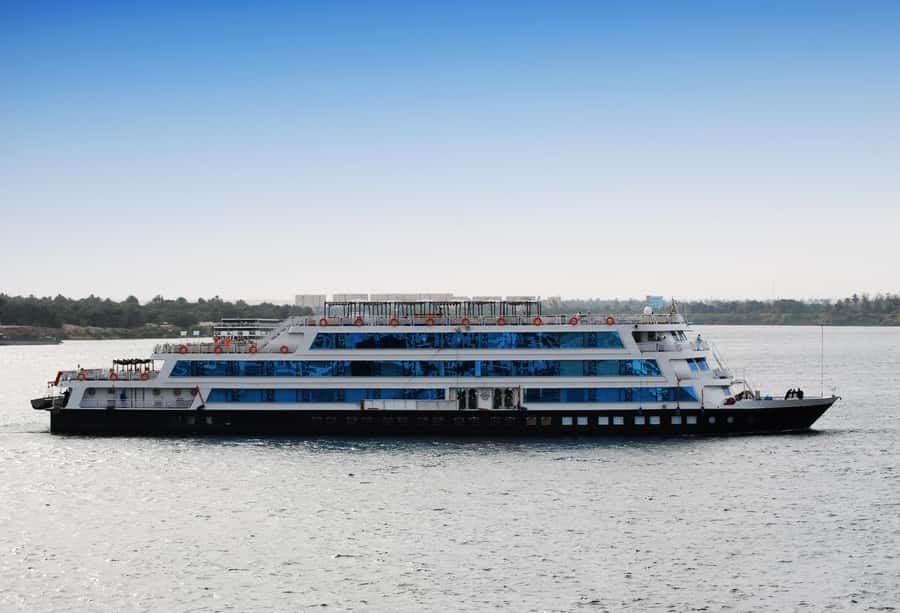
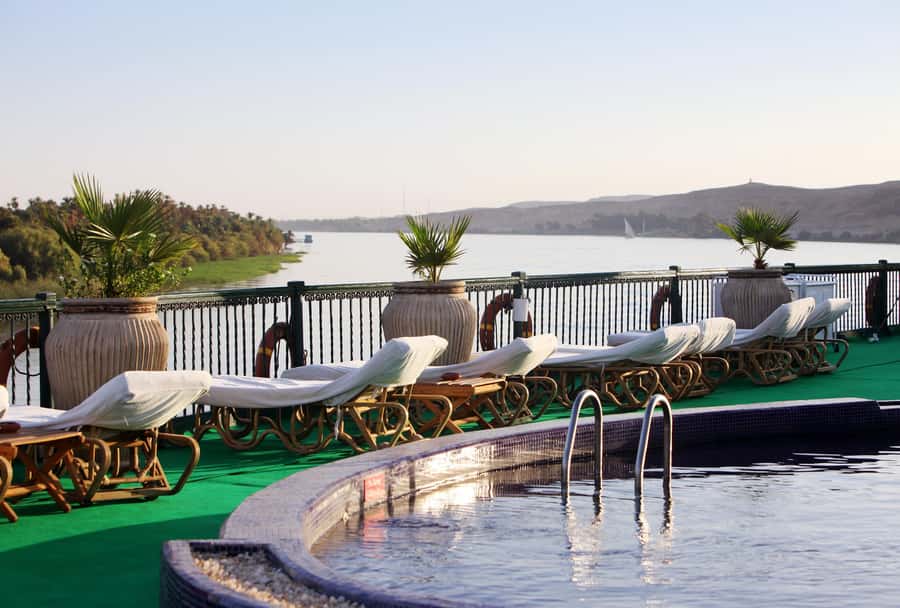
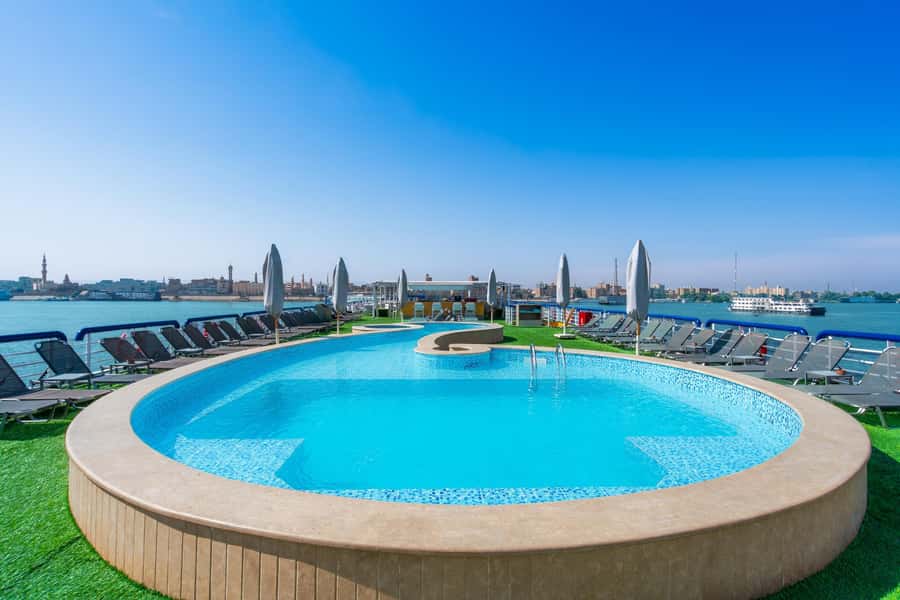
This cruise is marketed as a 5-star ship with cabin facilities and full-board. In plain terms: breakfast and lunch are handled with the ship rhythm, and you’ll have time to rest on your ride days.
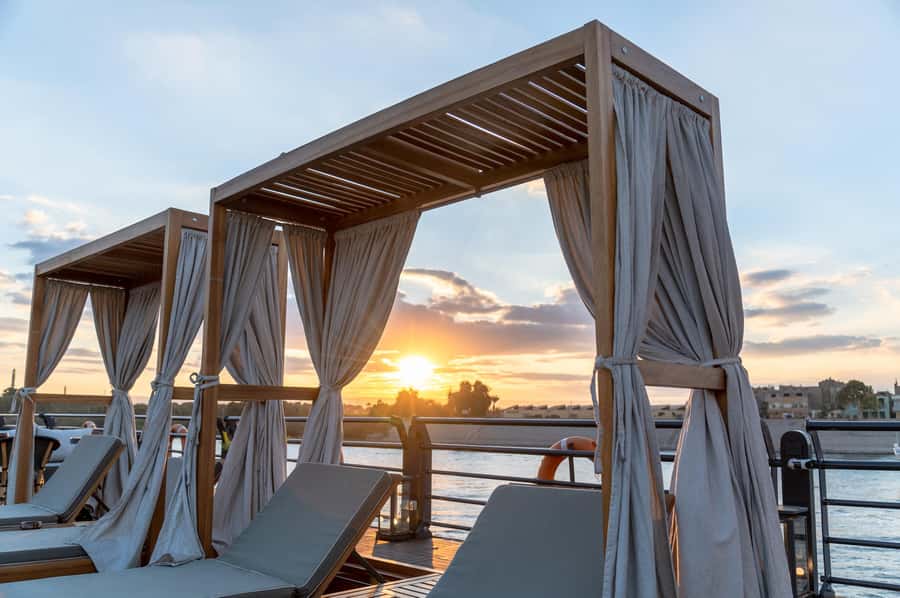
The best onboard part for many people is the simple rhythm of seeing the Nile change as you sail. The itinerary also promises sunrise and sunset moments over the river, and that matches the biggest advantage of a cruise: you don’t have to travel to get the view.
Food expectations are mixed. The experience includes Egyptian cuisine, but some departures have reported it as average rather than standout. So I’d treat dining as functional with occasional good moments, not as the main event.
Cabin standards can also vary. One report mentioned the cabin not being very clean. When you arrive, do a quick check: bathroom, bed setup, and overall cleanliness. If something is off, tell the staff early while you still have time to fix it before the schedule piles up.
Guides and organization: where the value can shine or wobble
This is where the reviews point to two different realities. When the guides click, the experience gets much better. People have been guided by professionals like Beshoi in Luxor and Osama in Dendera, and others mention knowledgeable staff such as Ms Esraa, Mr Abonub, Mrs Heba, and also Mr Ahmad, Mr Peter, and Mr Mario. In those cases, explanations were praised for being clear and engaging, and there was enough room to take pictures.
But there are also warnings about organization. Some departures reported constant improvisation, guides not being fully informed about included excursions, and schedule updates arriving late at night. There were even cases of almost missing activities because the group didn’t know exactly when a motorboat would leave. Balloon timing was also reported as affected by permits and permissions in one situation.
Here’s the practical way to protect yourself:
- Confirm your pickup times and meeting points the night before each big day.
- Keep your day’s priorities written down in your phone (balloon, Valley of the Kings, Abu Simbel, etc.).
- If something feels off, ask the guide to repeat the schedule in plain language before you separate for meals.
This won’t eliminate every chaos moment, but it reduces the chance that you lose an hour you can’t get back.
Price and value for a $750 person package
At around $750 per person, what you’re buying is not just a boat ride. The package includes:
- 5-star cruise with full-board
- private pickup and drop-off in Luxor
- entry fees
- private guided visits across the major temples
- a sunrise VIP hot air balloon ride
- felucca ride and local restaurant lunch
- camel ride and Nubian village visit
- Abu Simbel day trip with its major viewing focus
If you tried to piece together a similar route on your own—hotel, entry fees, licensed guides, and the big day trip to Abu Simbel—you’d likely spend more and fight more logistics. That said, the value depends on smooth execution. When the guidance and timing are well handled, this feels like a solid deal for a lot of iconic stops.
When timing slips or staff communication fails, you can feel the cost in frustration. So yes, it’s good value on paper, but you should book with eyes open and a plan to confirm daily schedules.
Should you book this 8-day Nile cruise?
Book it if you want an efficient Luxor-to-Aswan overview with private temple guidance, a sunrise balloon, and the big names like Valley of the Kings, Philae, and Abu Simbel—all without switching hotels every night. It’s also great if you like having someone else handle transportation and entry tickets.
I’d think twice or choose carefully if timing-sensitive activities are your only priority, since some departures have reported organization gaps and balloon permit issues. Also consider inspecting the ship cabin early and setting expectations for food quality.
If you’re flexible, ask questions early, and come ready for early starts, this cruise can deliver that classic Egypt feeling: the temples, the river light, and enough guidance to understand what you’re seeing.
FAQ
Is hotel pickup and drop-off included?
Yes. You get pickup from your accommodation in Luxor and drop-off back in Luxor at the end. Transfers are by private air-conditioned vehicle, and the tour also includes transportation at the destination.
What’s included in the cruise package?
The cruise includes accommodation on a 5-star ship with full-board, a cabin with all facilities, entry fees, and private guided visits for the listed sites. It also includes a sunrise VIP hot air balloon ride and a felucca ride.
Are entry tickets covered for all the major sights?
Yes. Entry fees are included for the sights listed in the program.
What languages are available for the guide?
Arabic and English are available, and German, French, or Spanish can also be selected for an additional cost.
Does the tour include meals and drinks?
Meals are included as full-board on the cruise. Drinks are not included.
Where does the trip end?
It ends back in Luxor on Day 8 after visiting Dendera, with a felucca ride and lunch, followed by drop-off to your accommodation in Luxor.