REVIEW · LUXOR
From Hurgada: Full-Day Small-Group Luxor Tour with Lunch
Book on GetYourGuide →Operated by Mody Egypt Tours · Bookable on GetYourGuide
Luxor in one day is a workout. This small-group trip from Hurghada strings together the big-ticket sights: the Valley of the Kings, Karnak’s temple complex, and stops on the West Bank and at Deir el Bahari. You get an English live guide and enough structure to make sense of what you’re seeing, even when the schedule moves fast.
I love that it’s built around a small group and a qualified Egyptologist guide who’s there to explain what matters, not just point. I also like that lunch is included, so you’re less stuck figuring out food during a day that already has you on the move.
The main drawback is the 14-hour pace. It’s a lot of walking and a lot of waiting around for the next stop, and if you’re sensitive to language or group noise, you may find the explanations harder to hear at times.
In This Review
- Key takeaways before you go
- Why this Luxor day trip feels like time travel
- Getting to Luxor: the comfort you do (and don’t) get
- Valley of the Kings: the tombs that still surprise people
- Colossi of Memnon: a quick stop with a memorable payoff
- Karnak Temple Complex: where “most sacred” becomes visible
- Deir el Bahari and Hatshepsut: terraces that read like a lesson
- Lunch in Luxor: fuel for the grind
- Price and what $55 really buys you
- The real pacing issue: seeing highlights while staying present
- Who this Luxor tour fits best
- Should you book this Luxor day trip?
- FAQ
- What is the duration of the Luxor tour?
- Is lunch included?
- Are entrance fees included?
- What about drinks during lunch?
- Do I get hotel pickup and drop-off?
- What language is the tour guide?
- How much does the tour cost?
- Is free cancellation available?
Key takeaways before you go
- Hotel pickup and drop-off keep the day-trip logistics simple
- English Egyptologist guidance helps you connect tombs, temples, and Egyptian beliefs
- Valley of the Kings includes the story of Howard Carter’s 1922 find of Tutankhamun
- Karnak’s Hypostyle Hall is the “forest of giant pillars” moment you came for
- Deir el Bahari and Hatshepsut make more sense with a guide reading the terraces with you
- Entrance fees and drinks aren’t included, so budget extra on the day
Why this Luxor day trip feels like time travel
This is the kind of tour that compresses Egypt’s ancient world into one long push. You leave Hurghada, drive to Luxor, and spend the day rotating through the West Bank and the temple complex at Karnak. The big value here is guided context: the “what you’re looking at” part matters as much as the “where” part.
You also get a full day structure with hotel pickup and drop-off. That removes a huge headache because Luxor sites are spread out, and you don’t want to gamble with transport when your time window is limited. With lunch included, you’re not forced to make food decisions while you’re already tired.
The trade-off is that you’re not doing this at a slow museum pace. This isn’t a relaxed stroll. It’s more like a highlights tour with real explanations—sometimes squeezed between crowds, timing, and travel time.
You can also read our reviews of more tours and experiences in Luxor
Getting to Luxor: the comfort you do (and don’t) get
A major part of the experience is the transport. You ride in an air-conditioned vehicle with pickup and drop-off included. That matters because the day stretches long, and you’ll feel it if you’re stuck in uncomfortable heat on the road.
The “small-group” promise is part of the appeal. In practice, small groups can still feel busy once you hit major sights. One thing I’d plan for: schedules like this often mean lots of people entering and exiting in waves, and your guide is working against time.
Here’s the practical tip: if you care about hearing every word, position yourself where you can see and stay close to the person doing the main talking. I’ve learned that on mixed-language days, the loudest voice doesn’t always win. You’ll have the best shot at good audio and clear explanations when you’re near the front.
Valley of the Kings: the tombs that still surprise people
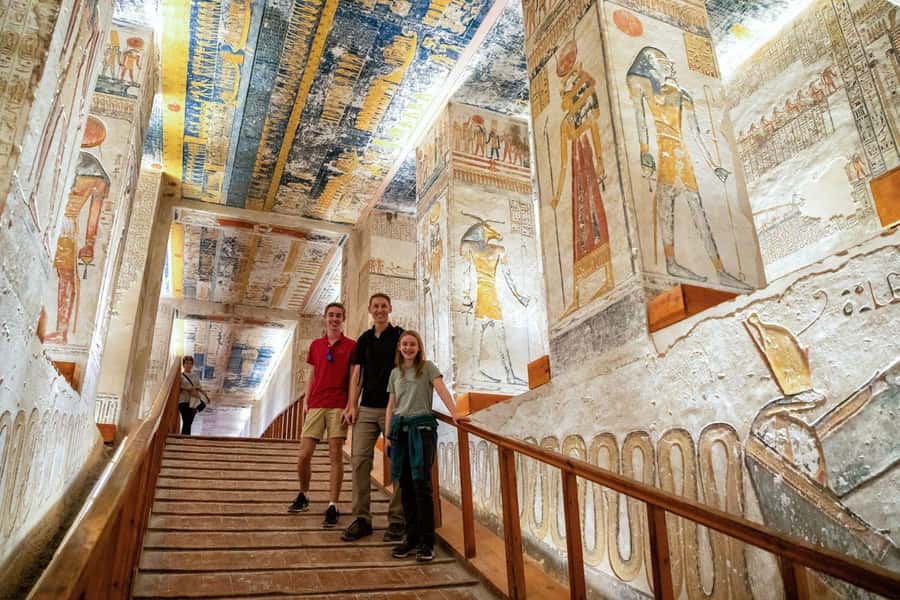
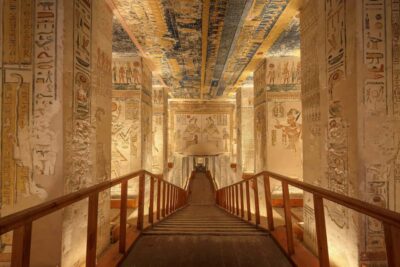
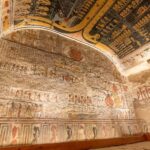
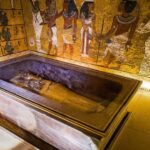
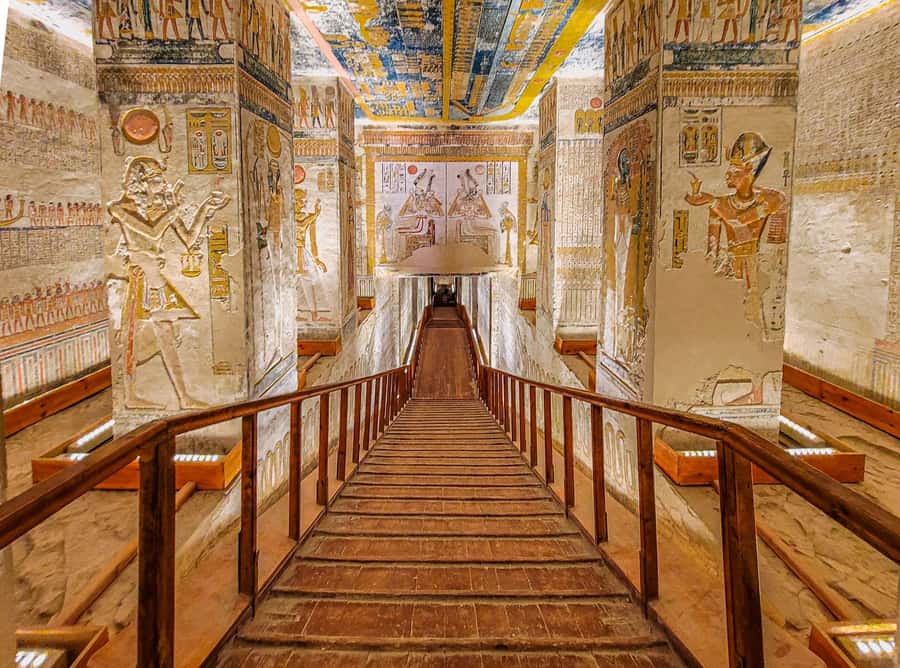
The Valley of the Kings is one of those places that feels instantly serious. These tombs were carved deep into desert rock, decorated for the afterlife, and designed to hold treasures for the pharaohs’ next world. What really helps is knowing the scale: the valley is said to contain 63 tombs and chambers, ranging from simple pits to complex tombs with over 120 chambers.
Your guide’s job here is crucial, because the valley is big and it’s easy to get lost in the visuals. With the right explanation, you start noticing patterns—why locations were chosen, what the tomb design communicates, and how the Egyptians pictured life after death. Even if you only have a short window, you’ll walk away with a framework that makes the walls and openings feel less random.
One detail that makes the site more than a list of graves is the story of Howard Carter. It was long believed the valley’s secrets were already uncovered, until Carter found King Tutankhamun’s tomb in 1922. That single “there might still be something” moment is exactly the kind of context that turns photos into understanding.
Watch-out: since entrance fees are not included, you may spend extra time (and money) on-site figuring out what’s covered. Confirm what you’ll be paying for the moment you arrive so you don’t lose momentum mid-day.
Colossi of Memnon: a quick stop with a memorable payoff
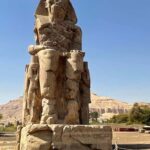
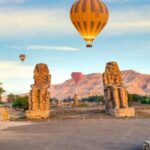
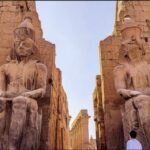
Before leaving the West Bank, you’ll see the Colossi of Memnon. These are two massive statues, and the tour includes the story of who they are and how they’ve stood for thousands of years in the Theban necropolis.
This is a short stop compared with the valley and Karnak, but it’s a smart one. It gives you a visual anchor—big, iconic, and instantly recognizable. You also get a chance to take a memorable picture there, which helps if the rest of the day feels like a blur of entrances and exits.
If you’re the type who likes knowing what you’re photographing, this stop is worth your attention. The story adds weight to the image and keeps you from just collecting another landmark shot.
Karnak Temple Complex: where “most sacred” becomes visible
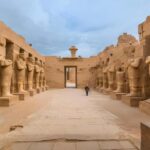
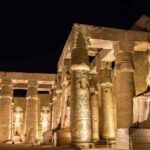
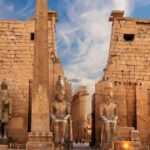
Karnak is the kind of place where the scale hits you in the face. This temple complex is described as the largest place of worship ever built, and its ancient name, Ipet-isut, is said to mean the most sacred of places. You’re not looking at one building here. You’re walking through a long-running project by generations of pharaohs, built over more than two thousand years.
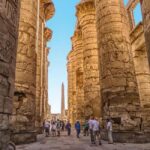
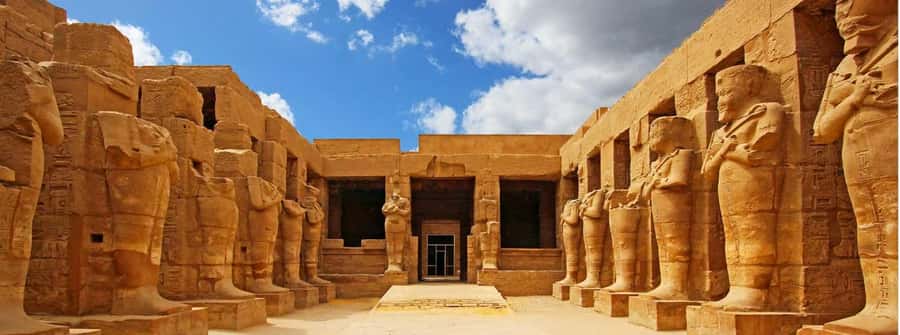
The headline moment is the Hypostyle Hall. Your guide explains what you’re seeing in plain terms, and the room becomes a forest of giant pillars. That’s the “wow” factor, but the context matters too. With the right framing, you start understanding how space, columns, and ritual design shaped the experience for worshippers.
Karnak also helps you shift your mindset. After the tombs of the West Bank, Karnak is about living power—temples, gods, kingship, and public religious life. It’s a different emotional register, and that contrast is one reason this tour works.
Practical consideration: Karnak is complex, and a day-trip pace means you may not get to wander freely. If you hate feeling rushed, treat Karnak as your priority stop for photos and the most important bits of learning. Focus on understanding the big ideas rather than trying to memorize every carved detail.
You can also read our reviews of more tours and experiences in Luxor



Deir el Bahari and Hatshepsut: terraces that read like a lesson
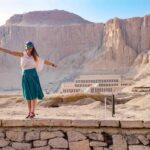
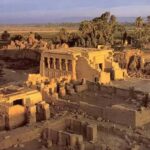
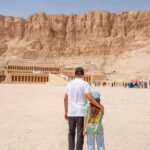
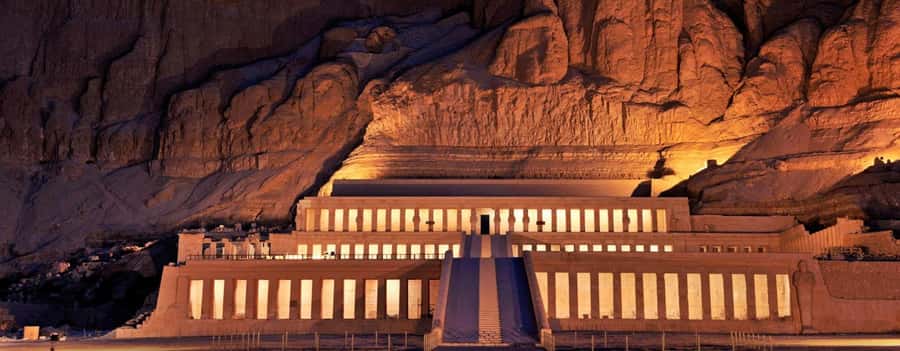
At Deir el Bahari, you’ll visit the Temple of Hatshepsut, often described as the funeral temple of Queen Hatshepsut. This is also a standout architecturally because it rises out of the desert landscape in long terraces split over three levels.
The tour’s guide helps you understand why it’s historically and architecturally important, and that part matters a lot here. The temple isn’t just pretty steps. It’s a carefully staged statement. And the fact that Hatshepsut is the only female pharaoh, as your guide explains, adds a layer of meaning you’ll want to catch while it’s being explained.
Deir el Bahari is where your day shifts from “see the famous sights” to “make sense of the narrative.” You start connecting the dots between tomb culture, temple culture, and how rulers wanted their legacy to survive.
If you’re traveling with limited time, this temple is a great choice because it’s visually clear. The terraces create a natural way to look at the building from multiple angles, even without lingering for hours.
Lunch in Luxor: fuel for the grind
Lunch is included, which is a real value on a 14-hour day. When food is handled for you, you keep your energy up and you avoid the stress of finding a proper meal between major sites.
Just keep expectations realistic: lunch won’t turn this into a slow travel day. It’s part of keeping you on schedule so you can cover the major stops without cutting corners on time at the sights themselves.
Also note that drinks are not included. So if you’re the kind of person who needs water with every meal, plan to pay for it during the day. A little extra budgeting here prevents an unpleasant surprise later.
Price and what $55 really buys you
At $55 per person, this tour is positioned as a budget-friendly way to get Luxor’s essentials with guide support. That price covers hotel pickup and drop-off, air-conditioned transport, lunch, and an Egyptologist guide—plus taxes and service charges.
The big thing to price-check is what’s not included: entrance fees to the sites mentioned, plus drinks and any optional activities. Since entrance fees can vary based on what you choose to enter or how the day is managed, your final total will depend on on-site charges.
In plain terms: you’re paying for the “getting there and making it make sense” package. You’ll likely pay extra at the door for access. If you’re on a tight budget and you’re okay with that trade-off, the tour can feel like a solid deal because the major logistics are handled.
If you want maximum flexibility inside each site—more time, fewer group constraints—then a different format, like a private plan, might be worth considering, because this one is clearly designed for coverage.
The real pacing issue: seeing highlights while staying present
This is a fast schedule by definition. You’re stacking multiple major stops into one day, and that affects how deeply you can absorb each site. The guide can only do so much while time ticks forward, and you might notice that some explanations are shorter than you’d want.
One experience that stands out from earlier visitors is how group organization can affect the quality of the listening time. If the bus includes people choosing different language options, it can get loud and the English narration may not land as clearly as you’d hope. If you’re going for the learning, not just the photos, it helps to choose positions where you can hear and see the guide well.
My advice is to treat this trip as a “first contact” Luxor day. You’re getting orientation: what the Valley of the Kings is, what Karnak’s Hypostyle Hall represents, why Hatshepsut at Deir el Bahari matters, and what Memnon adds to the West Bank picture. Then, if you fall in love with the place, you can come back with more time for deeper visits.
Who this Luxor tour fits best
This is a good fit if you want a guided highlights loop and you don’t want to manage travel between sites yourself. The included pickup, transport, and Egyptologist guide are especially useful for first-time visitors from Hurghada.
You’ll probably enjoy it most if you’re comfortable with a long day and you like having someone translate the meaning of what you’re seeing. The stops are chosen because they tell the big story of Egypt’s burial beliefs and temple power in a tight sequence.
On the other hand, it’s not ideal if you need slow pacing, quiet audio, or lots of unstructured time. Also, if you’re extremely sensitive to schedule changes or pickup timing, make sure you have clear expectations for how hotel pickup works the day before.
Should you book this Luxor day trip?
Book it if your priority is seeing the big Luxor hits with a guide who explains the why behind the what. At $55 with pickup, lunch, transport, and an English Egyptologist, it’s strong value for people who want a smart day trip rather than a DIY scramble.
Skip it or rethink it if you know you won’t cope well with a packed 14-hour day, or if you’re relying on perfect audio for every explanation. Also budget for entrance fees and drinks so the day stays smooth instead of surprise-spendy.
If you’re a first-timer heading to Luxor from Hurghada, this tour is a practical starting point. You’ll come away oriented, impressed, and ready to plan a return—this time at a tempo that feels more like you.
FAQ
What is the duration of the Luxor tour?
The tour runs for 14 hours.
Is lunch included?
Yes, lunch is included.
Are entrance fees included?
No. Entrance fees to the mentioned places are not included.
What about drinks during lunch?
Drinks are not included.
Do I get hotel pickup and drop-off?
Yes, hotel pickup and drop-off are included.
What language is the tour guide?
The live tour guide is English.
How much does the tour cost?
The price is $55 per person.
Is free cancellation available?
Free cancellation is available up to 24 hours in advance for a full refund.