REVIEW · LUXOR
Luxor: Shared Full-Day Tour to Luxor West and East Banks
Book on GetYourGuide →Operated by Nice Tours · Bookable on GetYourGuide
Eight hours, two banks, one unforgettable Luxor. What makes this tour especially interesting is the way it strings together the West Bank necropolis with the East Bank temple complexes, all with an Egyptologist guide explaining the stories behind the stones. I really like how the day mixes guided interpretation with breathing room to look, take photos, and absorb the scale.
The other thing I like: the guide work. People often mention guides who keep the explanations clear and engaging, like Alaa Hassan, Ahmed bahaa, and Gabriel—exactly what you want when you’re staring at centuries of carved symbolism. The main consideration is that it’s a shared, packed schedule—so it can feel long, and you’ll want to handle the morning start and the mid-day heat with patience.
In This Review
- Key things that make this Luxor day work
- A smart way to see Luxor: both banks, one guided day
- Valley of the Kings: the necropolis behind the name
- Deir el-Bahari and Hatshepsut: the terraces that climb into the cliffs
- Colossi of Memnon and Amenhotep III’s footprint
- Lunch in Luxor: a needed reset between temples
- Karnak Temple: worship at full volume
- Luxor Temple: from Amenhotep III to Ramses II
- Price and logistics: what $90 buys you
- What I’d recommend it for (and who should skip it)
- Booking tip: choose a guide style you’ll enjoy
- Should you book this Luxor West and East Banks tour?
- FAQ
- How long is the Luxor West and East Banks tour?
- Where does pickup happen?
- What sites are included in the tour?
- Is lunch included?
- Is an English-speaking guide included?
- Are entrance fees included?
- What other languages are available for guides?
- Is the tour shared or private?
- Is free cancellation available?
- Can I pay later?
Key things that make this Luxor day work
- West Bank highlights without the guesswork: Valley of the Kings plus the Hatshepsut story in Deir el-Bahari
- Karnak Temple explained like a living system: Amun, Mut, and Khonsu (the Theban triad)
- Two royal eras in one visit: Amenhotep III foundations, then Ramses II completing the Luxor Temple
- A practical lunch stop: a local restaurant break so you don’t run on fumes
- Guides who manage time: plenty of people praise getting in and out efficiently and still having time to see
A smart way to see Luxor: both banks, one guided day
Luxor is the kind of place where you can easily spend a whole week and still feel like you barely scratched the surface. This tour is the opposite approach: it prioritizes the big monuments on both banks, so you get a coherent picture of how ancient Egyptians built their world.
You’re on the move for about 8 hours, traveling between the West Bank and East Bank with a guide. That makes this a strong pick if you’re short on time, or if you want one structured day that covers the most iconic sights.
One note I appreciate: it’s shared, which usually means the pacing is built for groups and logistics. In practice, that can be smooth if your guide is organized—many guides are praised for planning routes to help avoid long delays.
You can also read our reviews of more tours and experiences in Luxor

Valley of the Kings: the necropolis behind the name
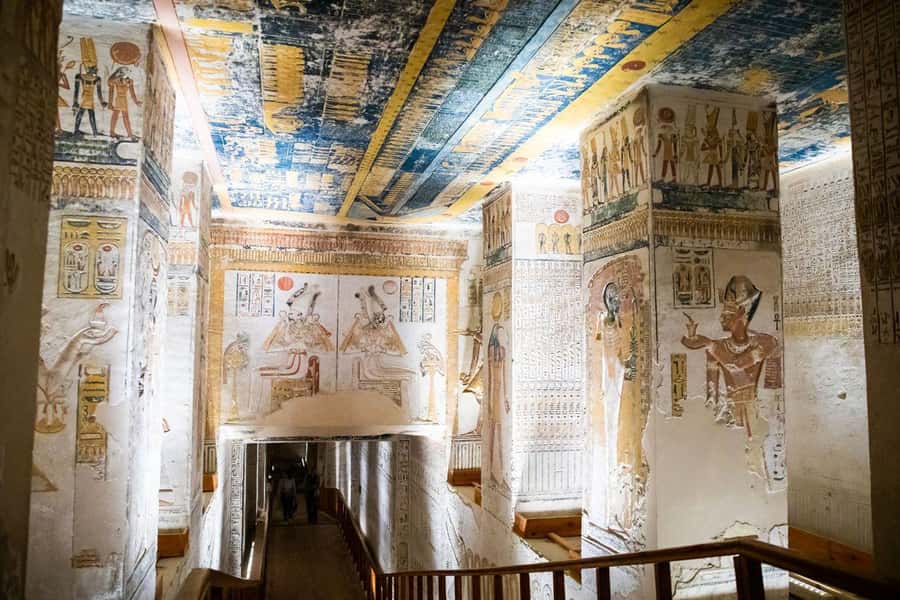
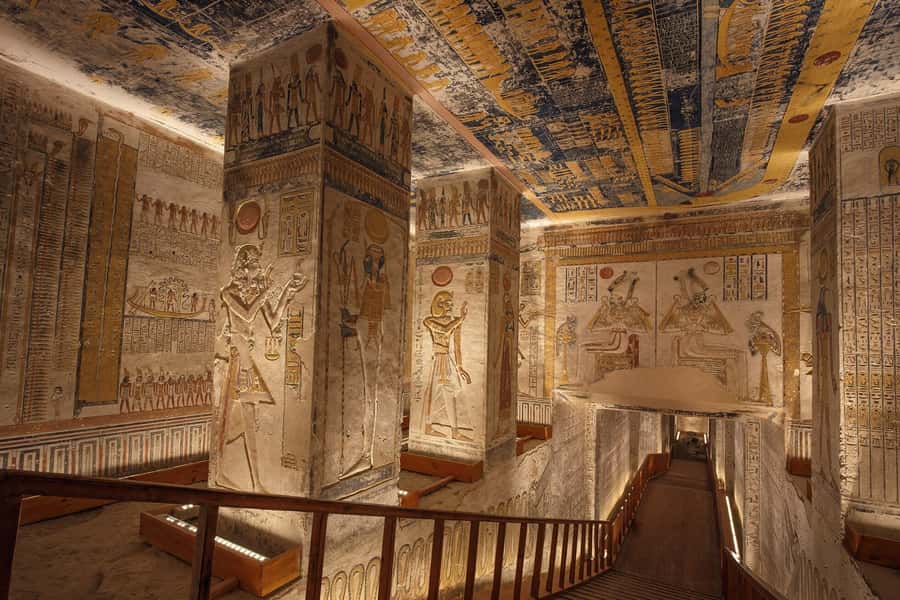
Your day starts on the West Bank at the Valley of the Kings (also known as the Valley of the Gates of the Kings). Even before you get to any specific tomb interiors, the setting does something important: it makes you understand why this place became a royal burial landscape.
Here’s what to focus on while you’re there. Look for the contrast between the modern tourist space and the older purpose of the valley: this was built for secrecy, protection, and the afterlife. A good guide will tie those ideas to what you’re seeing on the ground, not just recite dates.
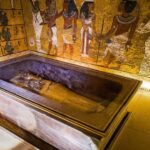
One practical tip: if you’re the type who wants to add an extra tomb (like the King Tut tomb), ask in advance what’s possible timing-wise. In the feedback I’ve seen, people love having the option to add an extra ticket at the Valley, and that can be a memorable upgrade.
Deir el-Bahari and Hatshepsut: the terraces that climb into the cliffs
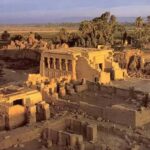
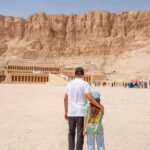
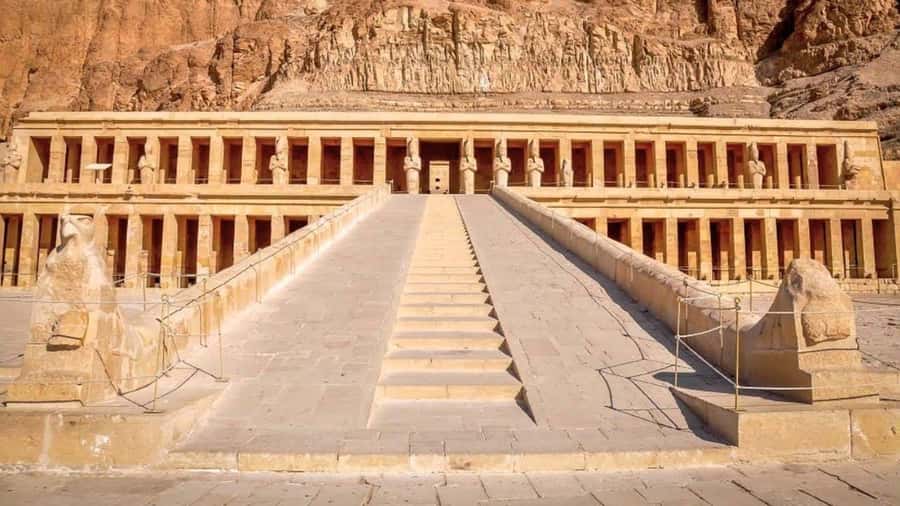
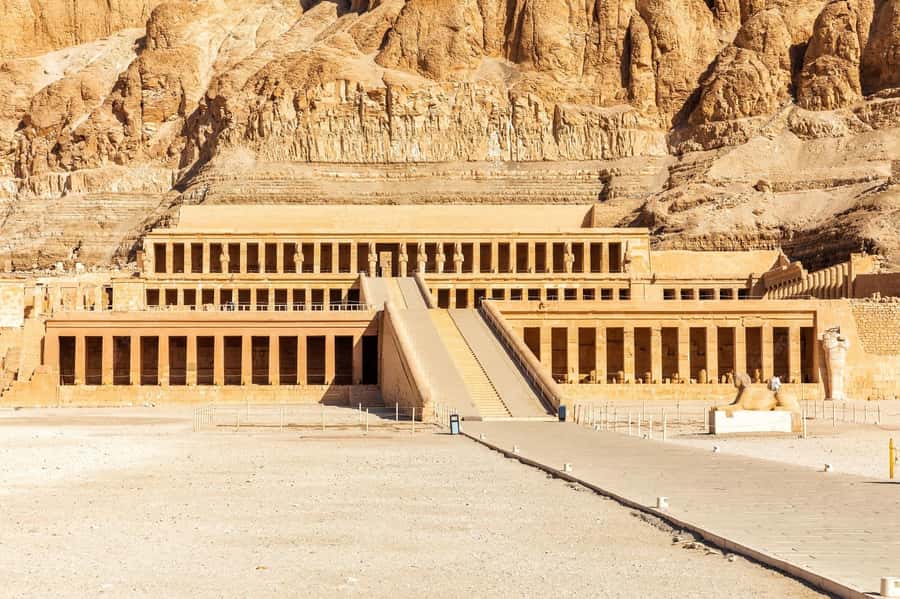
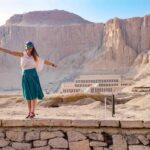
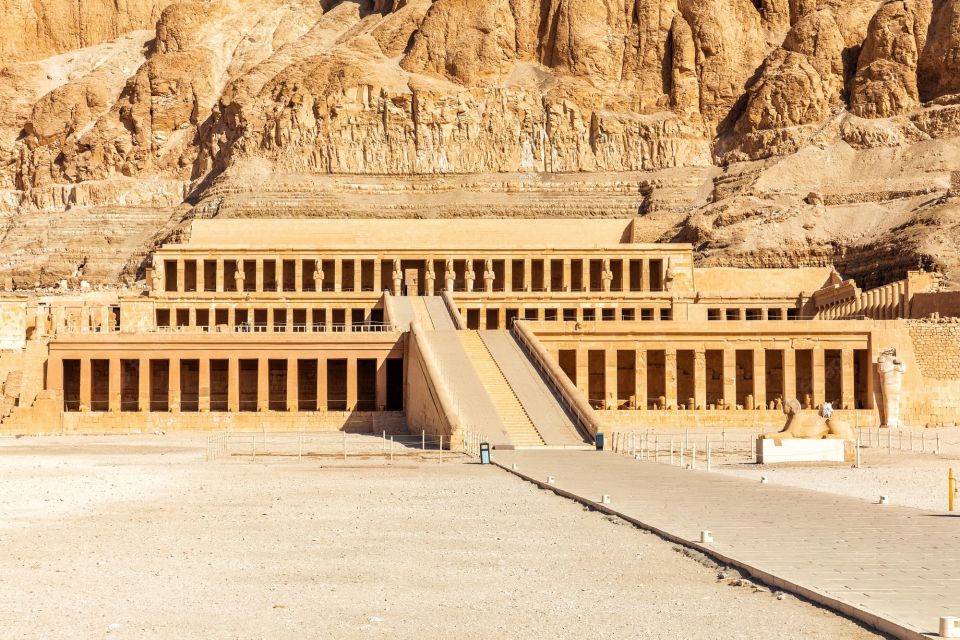
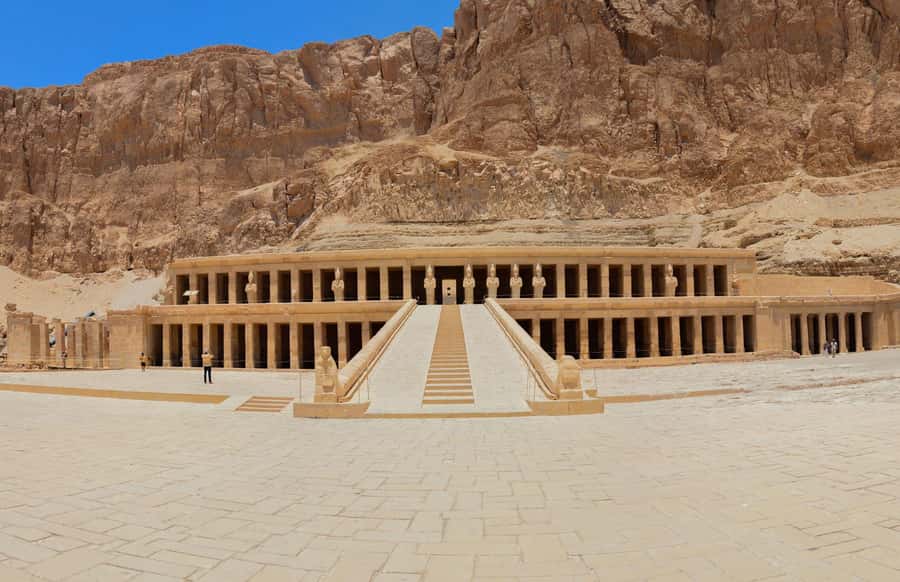
Next comes one of Luxor’s most dramatic sights—the Mortuary Temple of Queen Hatshepsut, set in the cliffs of Deir el-Bahari. This is not a temple you feel quietly in the background. The layout rises in major terraces, so you experience it like a staged landscape.
What I like about Hatshepsut here is how visually legible her temple is. You can track the architecture like steps in a story: from the desert floor upward, the design keeps pulling your eyes toward the cliff face. It’s also a great stop for symbolism because the temple’s form reflects big ideas about power and legitimacy.
A guide matters a lot at this point. Without explanation, it can look like “just a very impressive set of ruins.” With solid interpretation, you start seeing the logic of the design—why those terraces exist, how the temple functions in the broader West Bank setting, and how Hatshepsut used architecture to project authority.
Colossi of Memnon and Amenhotep III’s footprint
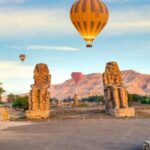
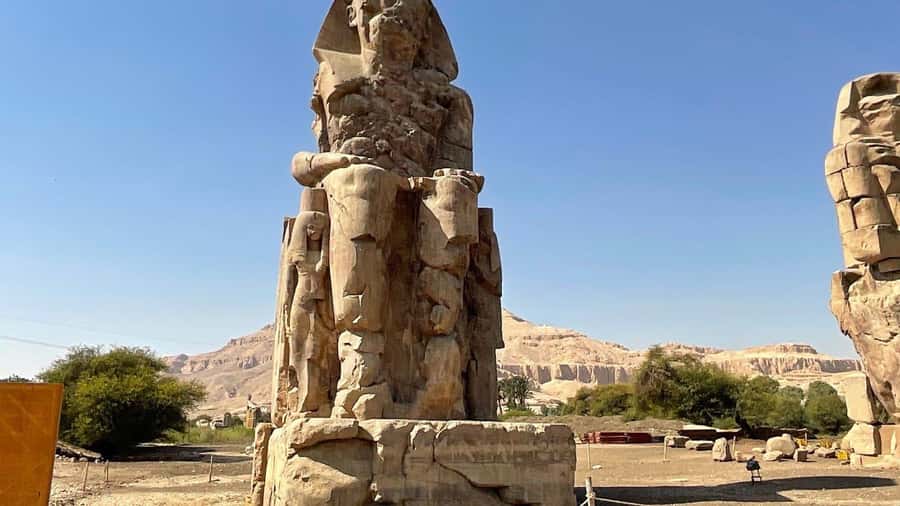
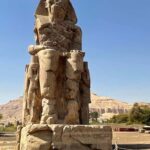
The tour then moves to the Colossi of Memnon. These are two giant statues that survive where so much else has vanished. When you’re standing in front of them, you realize how huge ancient monuments must have been to begin with—and how little is left after millennia.
People often link this stop to the mortuary temple of Amenhotep III, which is referenced as being connected to the area around the Colossi. Even if you can’t see everything the way ancient visitors did, you can still use this point to build the big picture: the West Bank was a whole ecosystem of royal commemoration, not one isolated site.
What to do here is simple but effective: pause and look at proportions. These figures help you reset your sense of scale, which makes the next temples feel even more astonishing.
Lunch in Luxor: a needed reset between temples
After the West Bank circuit, you’ll get a lunch stop at a local restaurant. This matters more than it sounds. Luxor temples are long-walk environments with bright light, so a real break keeps the day from becoming a blur.
Try to eat like you’re planning your afternoon photos: steady, not heavy. If you’re sensitive to heat, ask your guide if there’s shaded seating available before you sit. Some lunches have included terrace-style views in the experience people describe, so it can be more than just a meal.
A practical mindset helps here. You’re not only refueling—you’re resetting your attention so Karnak and the East Bank feel meaningful, not exhausting.

Karnak Temple: worship at full volume
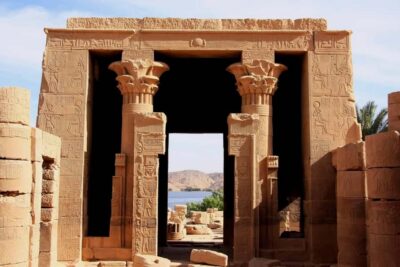
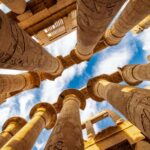
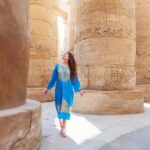
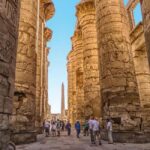
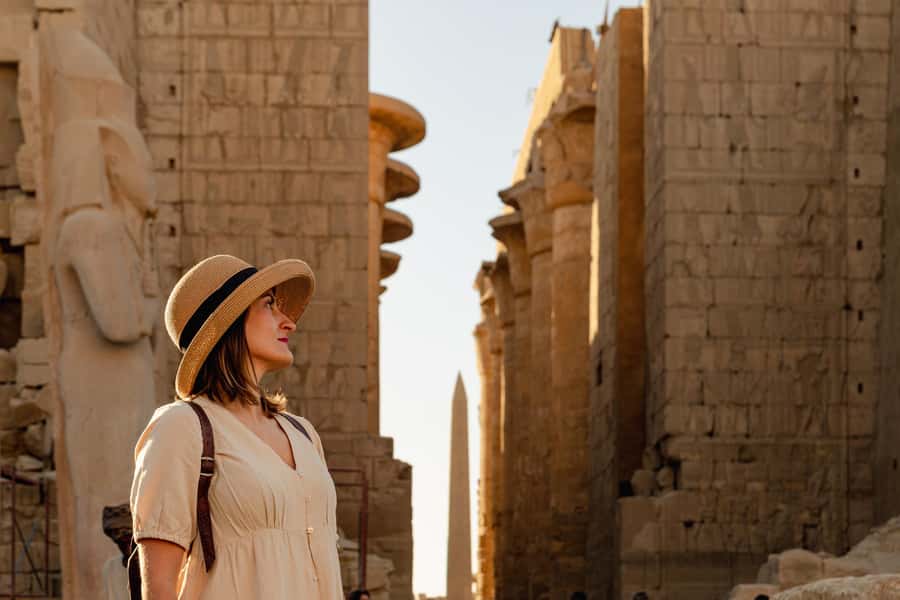
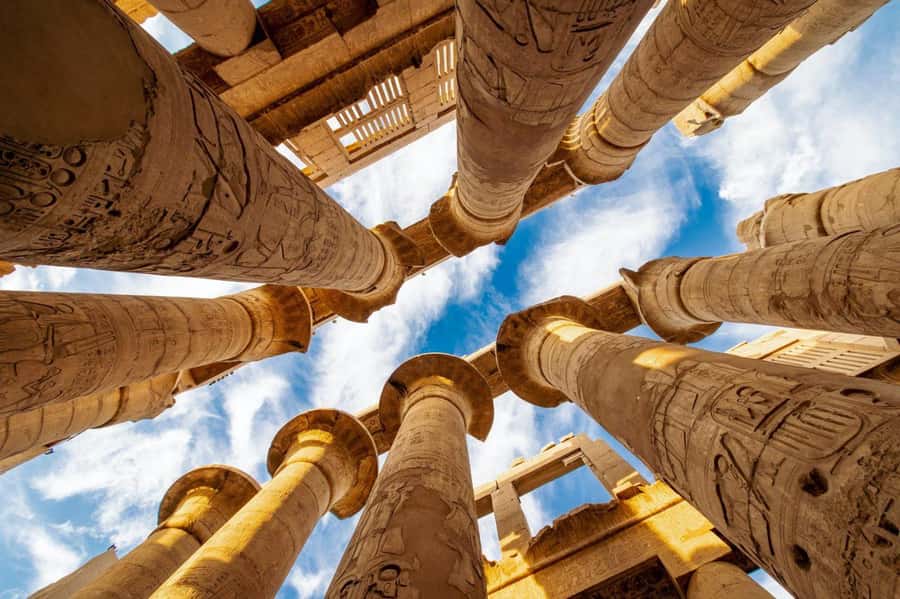
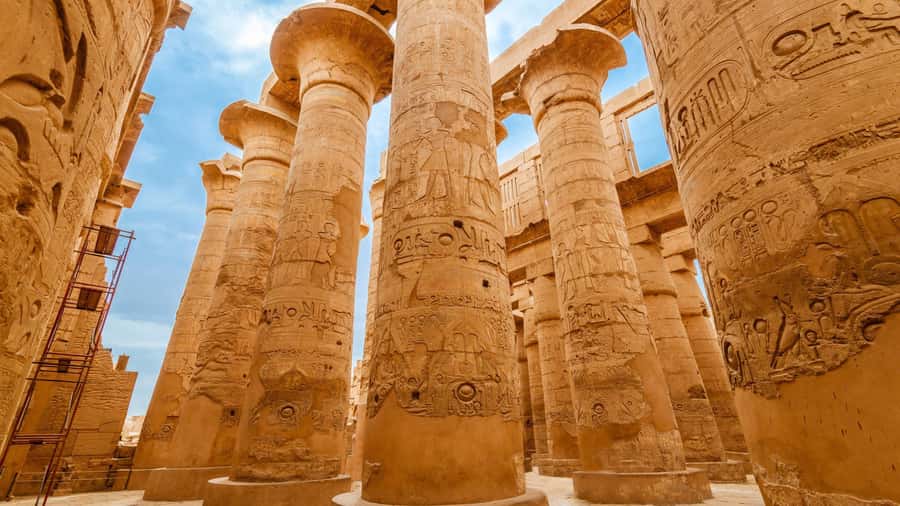
Then it’s on to Karnak Temple, one of the greatest surviving examples of ancient Egyptian worship. The sheer size can be mentally loud, even if your feet are still okay. Karnak is where you start to understand that temple complexes weren’t small “churches”—they were cosmic centers.
This stop gets extra credit when a guide brings the system to life. Karnak is described as dedicated to Amun, Mut, and Khonsu, the Theban triad. That’s a useful anchor: it’s easier to follow the meaning of carvings and temple spaces when you know which divine relationships the Egyptians were emphasizing.
Here’s what you should look for while you listen. Watch how the architecture repeats themes: monumental axes, sacred enclosures, and areas that feel designed to move you through a ritual logic. If your guide is strong—many people specifically praise guides like Ahmed bahaa and Alaa Hassan—you’ll leave understanding not just what Karnak is, but why it was built the way it was.
Also, don’t try to “see everything.” Karnak is too big for that. Instead, pick a few focal moments your guide highlights, and use the explanations to connect them.
Luxor Temple: from Amenhotep III to Ramses II
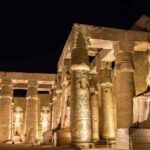
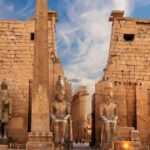
The day ends with the Luxor Temple, built by Amenhotep III and completed by Ramses II. This is a satisfying capstone because it spans royal planning across dynasties. You’re basically watching two eras negotiate how sacred space should look and represent power.
I like Luxor Temple as a closing stop for a simple reason: after the West Bank’s scale and the maze-like enormity of Karnak, the Luxor Temple feels more “composed.” You can better appreciate alignment, entrances, and how the monument fits into the modern city’s edge.
A good guide will point out how Ramses II’s additions relate to Amenhotep III’s original concept. That kind of continuity makes the temple feel like a living project rather than a random pile of walls.
Give yourself a moment to stand back and absorb the surroundings. This is where the day stops being only about ruins and starts feeling like a real place in Luxor—ancient monuments sitting inside a lived landscape.
Price and logistics: what $90 buys you
At $90 per person for an 8-hour day with pickup in Luxor, this is positioned as a value-focused way to cover the core highlights. The big question isn’t only the price—it’s whether the structure helps you get the day you want.
What you’re paying for:
- An English-speaking guide and guided time at multiple major sites
- Hotel pickup and drop-off on the East Bank
- Lunch included
- Entrance fees are included only if the selected option includes them
That entrance-fee detail can change the real total. If you’re deciding between options, confirm what’s covered so you don’t get surprised at the gate.
The other logistics factor: it’s a shared tour. That means you’ll be dependent on group pacing, and you might feel rushed at one or two sites if the day runs tight. Still, many guide reports mention efficient timing and avoiding the worst lines, which helps a lot.
What I’d recommend it for (and who should skip it)
This tour fits best if:
- You have limited time in Luxor and want the best-known West Bank and East Bank monuments in one day
- You value guided storytelling so you can understand what you’re seeing, not just look at it
- You want a reliable structure, including lunch, rather than piecing together transport and tickets on your own
You might consider a different plan if:
- You prefer slow temple wandering with lots of unstructured time
- You want to spend extra time inside specific tombs without any schedule pressure
- You dislike long days that include both banks and multiple stops
Booking tip: choose a guide style you’ll enjoy
Because this is a guided day, your guide style matters. If you’re the type who loves clear explanations and photo-time moments, look for a guide known for strong English and careful pacing. People often highlight guides like Bishoy/Beshoy, Ramon, Gabriel, Omar, Mahmoud, Omar, Alaa Hassan, and Ahmed bahaa as especially good at making the sites understandable and keeping the group moving well.
When you book, also think about languages. The tour includes an English-speaking guide, and there may be options to add a Spanish, German, or French-speaking guide as an add-on.
Should you book this Luxor West and East Banks tour?
If you want one solid, iconic day in Luxor that covers the temples most people come for, I’d say yes—this is a strong value because it includes guidance, pickup, lunch, and the two-bank arc that makes Luxor click as a whole.
Book it if you’re time-limited and like having a plan. Skip or modify it if you’re easily overwhelmed by long schedules or you want a deeply slow pace at just one or two sites.
Either way, go in with the right expectation: the magic here is in the connections your guide draws between Valley of the Kings, Hatshepsut, Karnak, and Luxor Temple—so you leave with a clearer sense of how Luxor’s monuments were meant to work together.
FAQ
How long is the Luxor West and East Banks tour?
The tour duration is 8 hours.
Where does pickup happen?
Pickup is from your hotel in Luxor, with hotel pickup and drop-off in the East Bank.
What sites are included in the tour?
You’ll visit the Valley of the Kings, the Mortuary Temple of Queen Hatshepsut, the Colossi of Memnon, Karnak Temple, and the Luxor Temple, plus a local restaurant for lunch.
Is lunch included?
Yes. Lunch is included.
Is an English-speaking guide included?
Yes. The tour includes an English-speaking guide.
Are entrance fees included?
Entrance fees are included only if the option is selected.
What other languages are available for guides?
The tour lists live guide language options including Spanish, German, and French as add-ons (in addition to English).
Is the tour shared or private?
This is a shared full-day tour.
Is free cancellation available?
Yes. You can cancel up to 24 hours in advance for a full refund.
Can I pay later?
Yes. There is a Reserve now & pay later option.