REVIEW · ALEXANDRIA
Alexandria: Archeological Day Tour
Book on GetYourGuide →Operated by Ramses tours · Bookable on GetYourGuide
Roman tombs under Alexandria steal the show. I love how this 6–7 hour route pairs the Kom El Shokafa Catacombs with major landmarks above ground, so you see how layered the city really is.
My second favorite part is the slow-breathe moment at Montazah Palace Gardens, where King Farouk’s seaside world mixes royal history with sea air and sweeping views. It’s a nice counterweight to the morning walking and it makes the day feel human, not just checklist-driven.
One thing to plan around: the Library of Alexandria is closed on Fridays, Saturdays, and public holidays, and the ticketed reading hall is extra. If your dates land on closure days, you’ll need to adjust expectations for the library portion.
In This Review
- Key things I’d book this tour for
- The value of a focused archaeology circuit in Alexandria
- Kom El Shokafa Catacombs: the Roman underworld
- Pompey’s Pillar photo stop and the city’s old-world architecture drive
- Library of Alexandria: what you can see, and what can go wrong
- Roman Alexandria above and around Kom el-Deka and the Serapeum
- Qaitbay Citadel and the Lighthouse story at sea level
- St. Mark’s Cathedral and the oldest church in Africa
- Abu al-Abbas al-Mursi Mosque, old harbor scenes, and a strange little funfair
- Montazah Palace Gardens and King Farouk’s royal seaside world
- Lunch, timing, and how to make a jam-packed day feel doable
- Price and logistics: is $80 a fair deal?
- Should you book this Alexandria archaeological day tour?
- FAQ
- FAQ
- What’s the duration of the Alexandria archaeological day tour?
- Which major sites do you visit on the tour?
- Is the Library of Alexandria included on every date?
- Is there an extra ticket for part of the Library?
- Are you allowed inside the Roman excavation sites?
- What languages are the guides available in?
- What’s included in the price, and what’s not?
Key things I’d book this tour for
- Three-level Kom El Shokafa catacombs: rock-cut Roman burial halls with a haunting layout
- Library courtyard highlights: a guided look at the open-air court with major statues
- St. Mark’s Cathedral: the oldest church in Africa, set within a city of overlapping eras
- Qaitbay Castle at the Lighthouse site: history you can stand next to, with real “Seven Wonders” context
- Montazah Palace Gardens: King Farouk’s royal landscape plus scenic breaks
- Abu al-Abbas al-Mursi Mosque area: a grand mosque view with the old harbor nearby
The value of a focused archaeology circuit in Alexandria
Alexandria can be an overwhelming place to plan. You could spend days trying to stitch together Roman sites, church history, mosques, and the coastal palaces. This tour is built to do the hard work for you: hotel pickup, air-conditioned driving, an expert guide, and a clear sequence of stops across different periods.
What you really get here is context. The catacombs explain one kind of Alexandria; the Roman ruins explain another; St. Mark’s and the mosques show faith and power moving through centuries. Then Montazah brings it back to the coast, where the city’s relationship with the sea becomes part of the story, not background noise.
At $80 per person for a 6–7 hour day, it’s not a budget half-hour tour. But you’re paying for guided interpretation across multiple sites, plus transport that saves you from bus-taxi puzzles and timing stress in a busy city.
You can also read our reviews of more tours and experiences in Alexandria.

Kom El Shokafa Catacombs: the Roman underworld
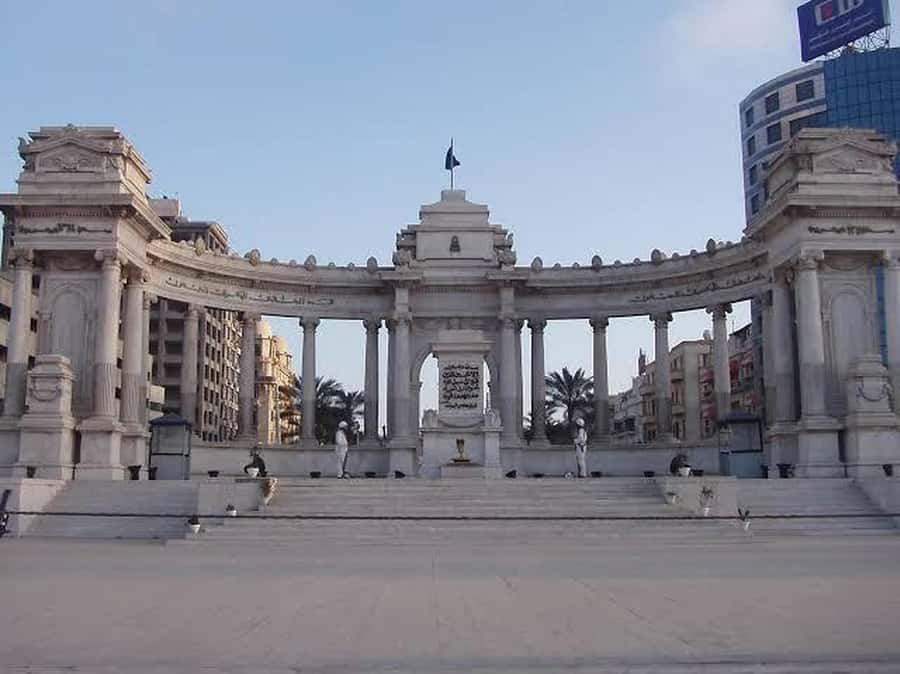
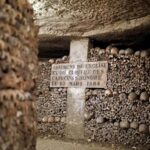
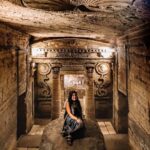
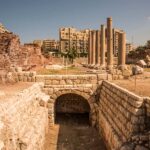
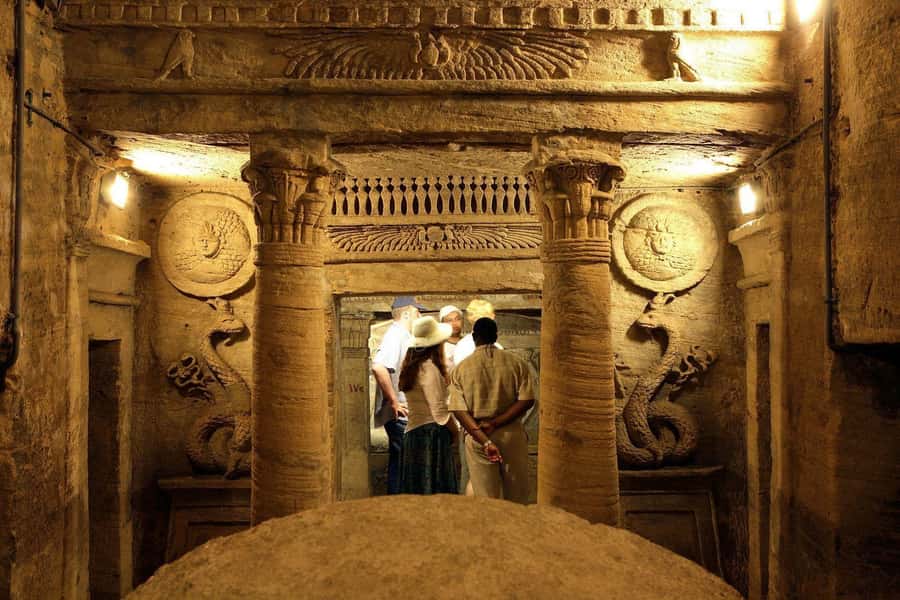
This is your big opening act. The Catacombs of Kom El Shokafa are the largest Roman cemetery in Alexandria and are cut into rock in three levels. Even before you reach any standout details, the setting does something: it turns the city into layers, with the underground world sitting literally beneath daily life.
Inside, you’ll see the cemetery layout that makes these catacombs feel more like a built system than a single tomb. Because the space is carved rather than freestanding, it encourages you to look up, look sideways, and really follow how people used these burial spaces over time.
Practical note: wear comfortable shoes. This stop is part museum, part walking through uneven stone. If you’re sensitive to tight spaces or low light, consider going a bit slower and giving yourself extra time at each junction so you don’t rush the experience.
Pompey’s Pillar photo stop and the city’s old-world architecture drive

Between the heavier sites, you get a breather. Pompey’s Pillar is one of those landmarks where a quick photo feels justified, because it’s so recognizable once you see it in person. The stop is positioned as a photo break, not a long detour, which helps keep the day on track.
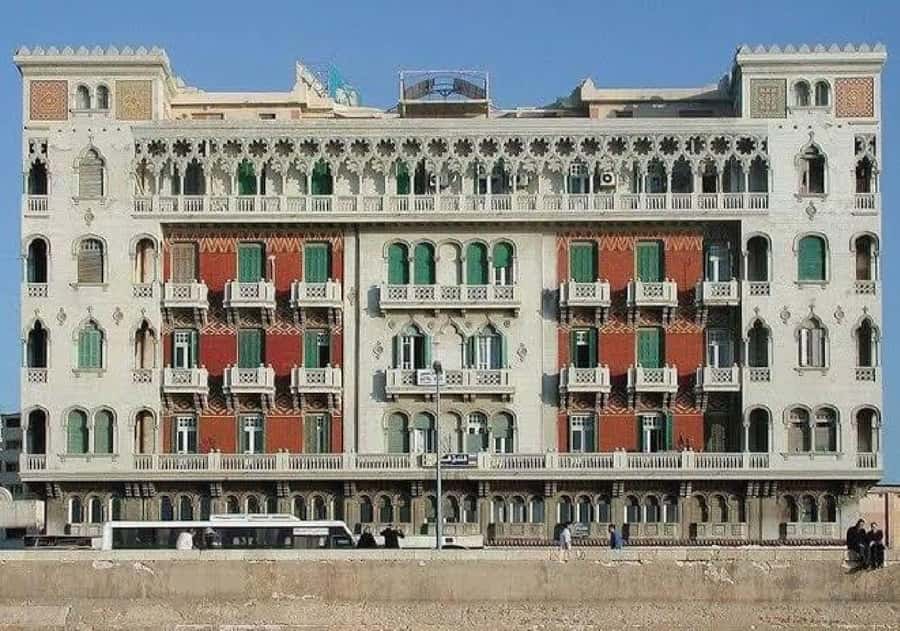
On the drive, the guide’s storytelling gets anchored in what you can actually see through the windows: old downtown streets and historical architecture with Baroque-style designs and properties that reflect Italian and French influence. You may not notice this kind of layering if you only focus on monuments. Here, the “in-between” streets help you understand why Alexandria looks the way it does.
This is also where the guide matters. If traffic or heat becomes an issue, a good guide can adjust the order and pacing so you’re not stuck fighting crowds in the worst light.
Library of Alexandria: what you can see, and what can go wrong
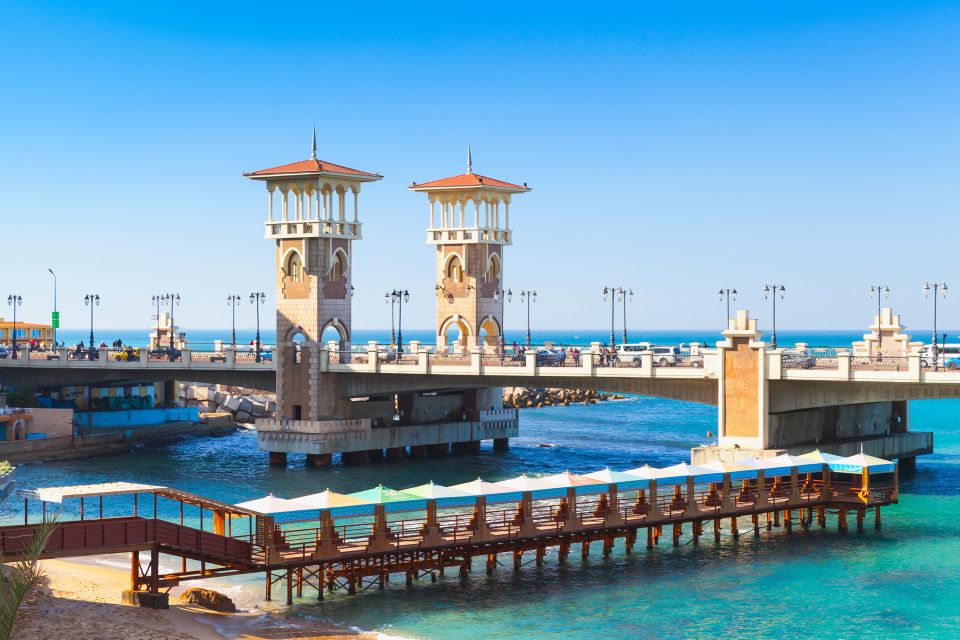
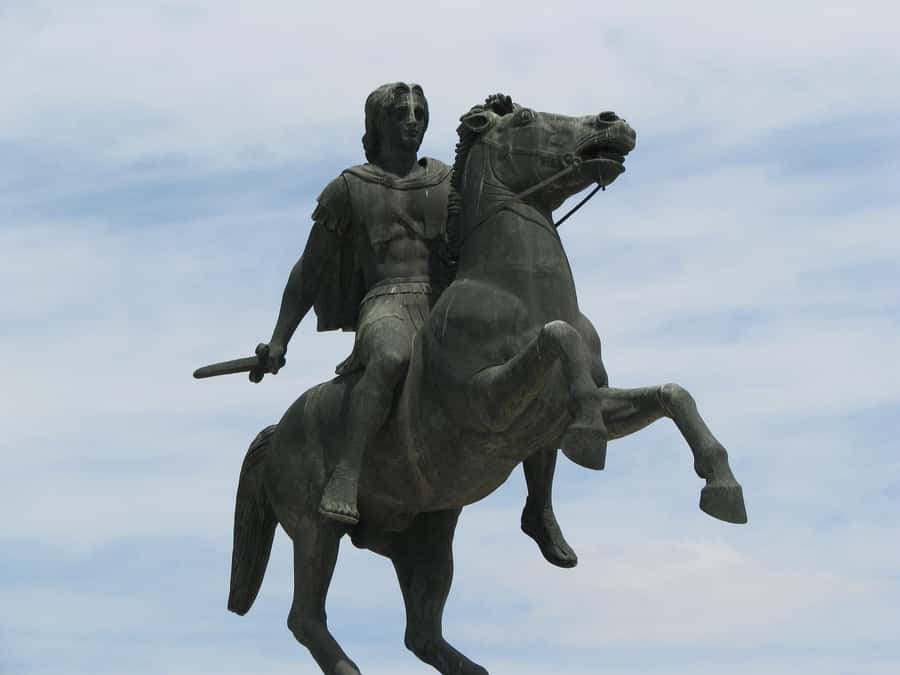
The Library stop is one of the most iconic moments of the day. In the open court, you can see a statue of Alexander the Great and a statue of Ptolemy I, described here as the one found underwater nearby. Even if you don’t think you’re a “library person,” the courtyard presence makes the idea of Alexandria feel physical.
There’s also a guided look at museum-style areas connected to the library complex, including impressions of the Alexandria Museum inside the broader library site.
Now the key planning reality: the Library of Alexandria is closed on Fridays and Saturdays and on public holidays. And the reading hall requires an extra ticket. If you’re traveling on a closure day, you’ll still do the rest of the circuit, but you should expect the library portion to be reduced or skipped.
If your dates line up with an open day, I’d think of the Library stop as your cultural reset. After tombs, ruins, and churches, it brings you back to Alexandria as a center of knowledge—exactly the kind of contrast that makes this tour work.
Roman Alexandria above and around Kom el-Deka and the Serapeum
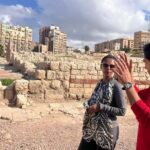
The middle of the day leans Roman and archaeological. You’ll walk by the excavation areas of the Old Roman City of Alexandria, including Roman villas, amphitheater ruins, and what’s described as the Great Tomb excavation site.
Important: you are not allowed to visit inside these excavation sites. That means your time is about observing the footprint and scale from outside, not poking around ruins like an explorer. Done right, this still works. Looking at the site from the outside gives you the bigger picture—how space was organized, where major buildings would have stood, and how dense Roman city life was in this area.
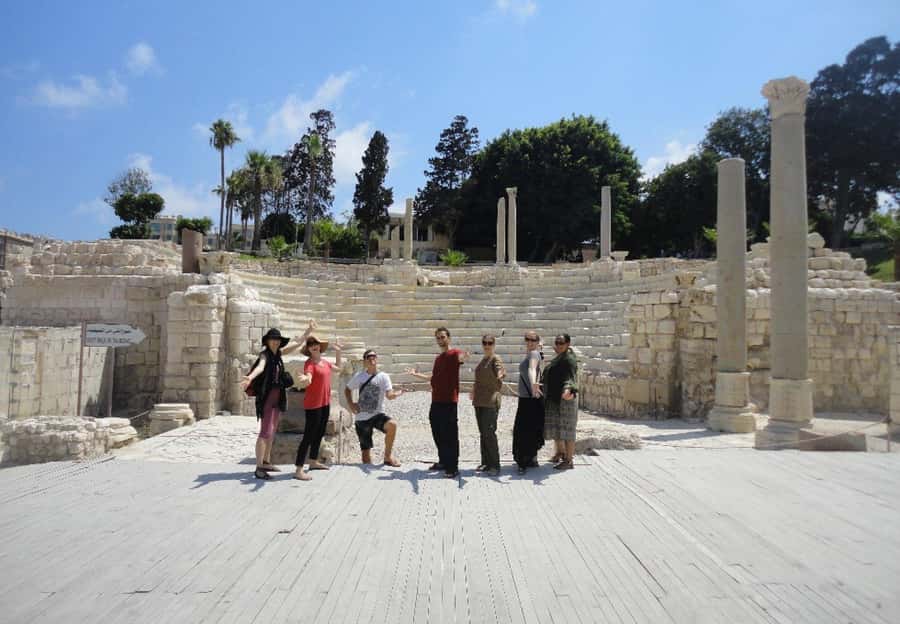
You also visit Kom El-Deka’s Roman theater (with guided tour and walking). Then there’s the Serapeum of Alexandria with a guided walk. The value here is in comparison: a theater speaks to public life, while the Serapeum connects to religious and cultural power in Roman-era Alexandria. The guide can help you connect those dots quickly.
This portion is also where the day can feel packed. Plan for sun and walking time. You’ll enjoy it more if you treat this as an interpretive walk, not a sprint between checkboxes.

Qaitbay Citadel and the Lighthouse story at sea level
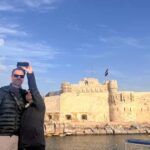
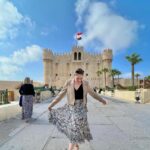
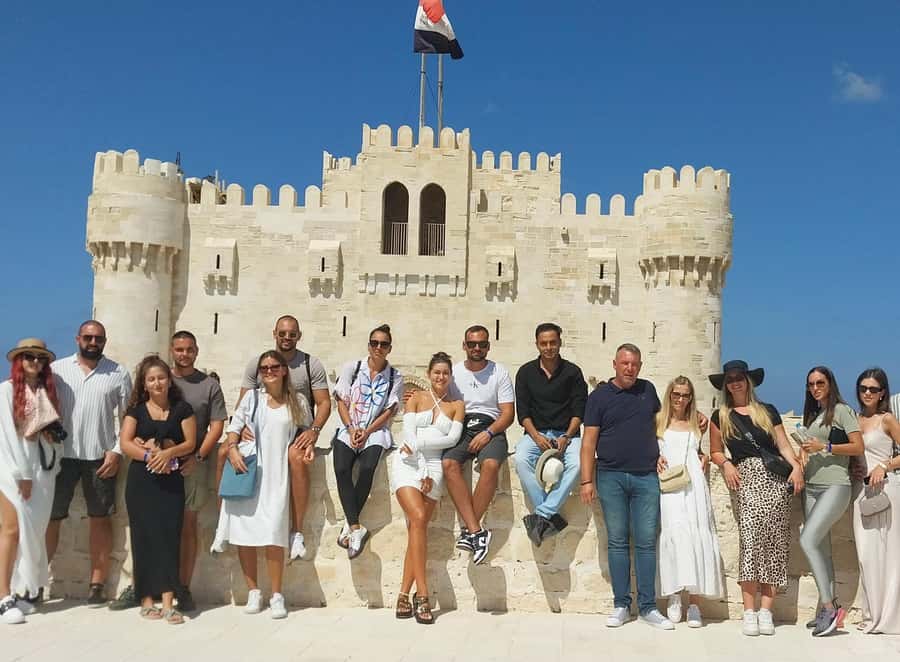
Then comes one of the most dramatic “standing where history happened” moments: Qaitbay Castle, built on the same site as the ancient Lighthouse of Alexandria, one of the Seven Wonders of the Ancient World.
You won’t just learn the legend. You’ll see the citadel outside as the tour ties the modern fortress back to the ancient beacon idea. Even though the lighthouse itself is gone, the location gives you something many history lessons can’t: a sense of scale and shoreline geography. You can picture why a lighthouse mattered here—this coast wasn’t just scenery, it was navigation and commerce.
This stop is typically paired with the feel of the waterfront as the route continues through the older parts of the city. If you like history that you can almost see with your eyes, you’ll like Qaitbay.
St. Mark’s Cathedral and the oldest church in Africa
After Roman Alexandria, the tour shifts to early Christian heritage. St. Mark’s Cathedral is presented as the oldest church in Africa. That title is big enough to stop you in your tracks, but the real payoff is how the guide connects the church to the city’s longer narrative.
You’ll also pass through older downtown areas and see local historical architecture with European-style influences. That matters because it shows you Alexandria wasn’t frozen in one era. It kept layering new eras over old neighborhoods.
This is the kind of stop that benefits from a patient guide. You may not spend a long time physically inside a single location, but you can walk away with a clearer sense of how religious sites helped shape communities over time.
Abu al-Abbas al-Mursi Mosque, old harbor scenes, and a strange little funfair
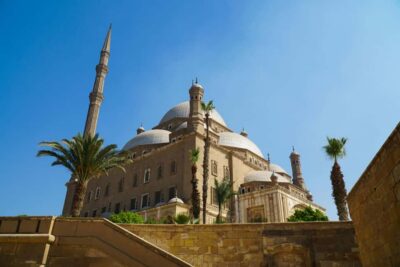
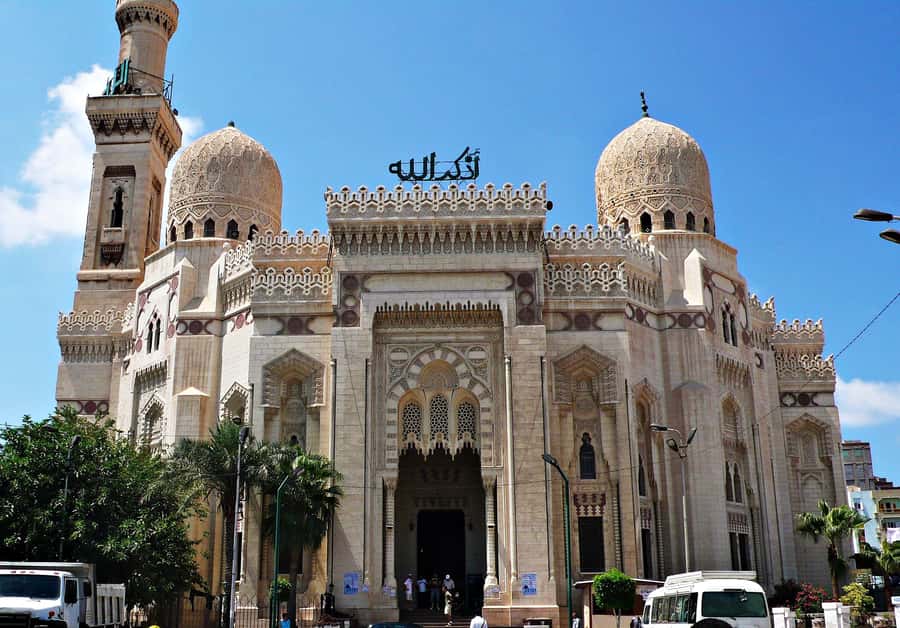
One of the highlights here is the Abu al-Abbas al-Mursi Mosque, also known for being the prettiest and biggest mosque in the city (as described on this tour). You’ll get a guided visit, and then the route also sets you up for an unusual contrast.
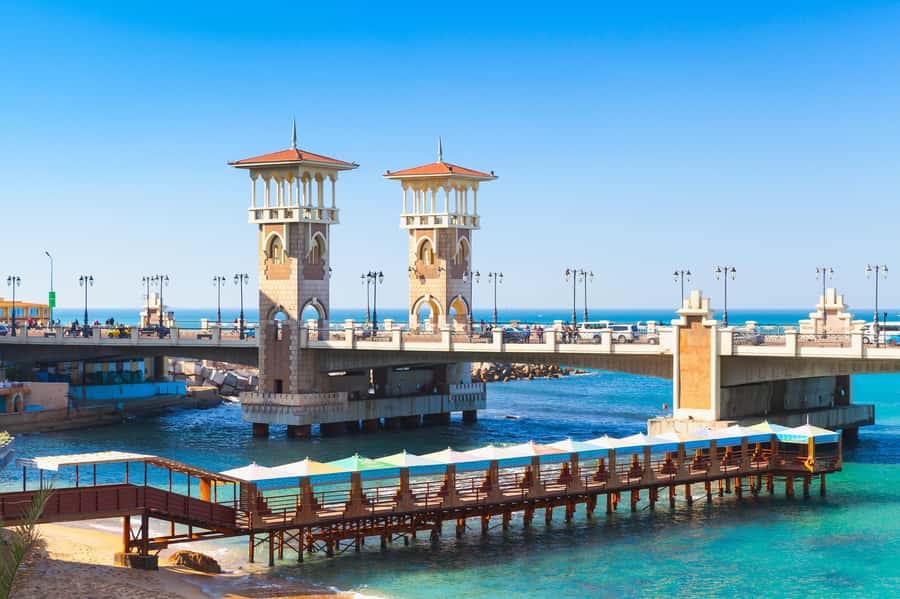
Outside the mosque area, the tour includes the strangest sight: an old funfair where children play on antique rides and eat candy floss. Across from that area, you’ll reach the corniche and old harbor views. Here the city looks working-class and everyday: fishing boats, men fishing, and traditional fishermen making nets.
That combination is why I like this stop. It doesn’t feel like you’re just touring monuments in isolation. You’re seeing how sacred spaces share the street with ordinary life.
Montazah Palace Gardens and King Farouk’s royal seaside world
Montazah Royal Palaces Gardens are where the day gets gentler. The tour focuses on the royal gardens of King Farouk (the last king in Egypt’s history) and includes pauses for photos at the royal palace and the royal beaches of the queens.
This is more than a pretty break. Montazah helps you understand Alexandria as a Mediterranean city of leisure and power—where royalty and the sea were linked. If the morning made you feel underground and surrounded by stone, Montazah gives you horizons again.
A practical perk: this is a stop that often includes little surprises based on how the guide works the route. For example, one guide (Karim) is noted for adding an extra stop like a tropical plant house at Montazah, which can be a pleasant reset when you want something visual without committing to another heavy ruin.
Even if you’re not a royal-history person, you’ll likely enjoy the open spaces and the photo moments. Just bring water and take your time.
Lunch, timing, and how to make a jam-packed day feel doable
This is a 6–7 hour day, so yes, it’s busy. The tour includes an optional lunch stop at a modern fish restaurant, which is a smart match for Alexandria’s coastal identity. If you love seafood, you’ll likely be happy here. If you’re not hungry, keep your expectations realistic: this circuit moves you between major sites, so long lunch linger time isn’t the goal.
What makes this tour feel better than many full-day group options is pacing. In practice, guides in this program are praised for keeping things organized and for adjusting the route when traffic hits. One example: Karim was highlighted for changing the route to avoid crowds and the hottest parts of the day. That’s the difference between a stressful schedule and a satisfying one.
Also, wear your most reliable walking shoes. You’ll do catacombs, Roman walks, and outdoor excavation viewing. A hat and sunglasses help, and quick shade breaks matter more than you think on a hot day.
Price and logistics: is $80 a fair deal?
Let’s talk value in plain terms. You’re paying $80 per person for a full guided day that includes air-conditioned transfers, an expert guide, and listed services and taxes. Entrance fees are included only if you select the entrance-fee option, so check what’s covered when you book.
You’re also getting a few operational advantages that matter in Alexandria:
- Hotel pickup is optional, which can save time and stress
- You’ll often skip the ticket line
- You’re not coordinating multiple sites by yourself across different neighborhoods
So is it worth it? If you want one day to cover catacombs, Roman ruins, church history, major mosques, Montazah palace gardens, and the Lighthouse-site story at Qaitbay, then yes—this price is tied to a real workload, not just transportation.
If your main interest is only one or two sites (for example only catacombs or only the library), you might find a cheaper point-to-point option. But if you’re the type who likes seeing how cultures stack in one city, the “guided multi-era circuit” format is the whole point.
Should you book this Alexandria archaeological day tour?
Book it if you want a structured day that connects Roman Alexandria, early Christian history, Islamic landmarks, and the royal seaside atmosphere of Montazah—without you having to map it all out.
Skip or reconsider if your travel dates fall on a Library of Alexandria closure day (Fridays, Saturdays, or public holidays). The rest of the tour still offers plenty, but the library is one of the major draws, and its opening hours can affect the experience you came for.
I’d also recommend it if you like guided explanation over wandering on your own. This tour is built around interpretation: the guides’ job is to tie what you see at each stop into one coherent story.
FAQ
FAQ
What’s the duration of the Alexandria archaeological day tour?
It runs for about 6 to 7 hours.
Which major sites do you visit on the tour?
You visit the Catacombs of Kom El Shokafa, the Library of Alexandria (when open), Pompey’s Pillar for a photo stop, St. Mark’s Cathedral, Montazah Palace Gardens, Abu al-Abbas al-Mursi Mosque, Qaitbay Citadel (Lighthouse site area), and you walk by several Roman excavation areas including Kom el-Deka and the Serapeum.
Is the Library of Alexandria included on every date?
The Library of Alexandria is closed on Fridays, Saturdays, and on public holidays. If your date falls on a closure day, you should expect the library portion to be affected.
Is there an extra ticket for part of the Library?
Yes. The reading hall in the Library of Alexandria requires an extra ticket.
Are you allowed inside the Roman excavation sites?
No. It’s not allowed to visit inside the excavation sites. You enjoy external views only.
What languages are the guides available in?
The tour offers English, Arabic, and French.
What’s included in the price, and what’s not?
Included: air-conditioned transfers, an expert tour guide, and service charges and taxes (and entrance fees if the entrance-fee option is selected). Not included: any extras not mentioned in the itinerary.