REVIEW · ALEXANDRIA
Alexandria: Guided City Walking Tour
Book on GetYourGuide →Operated by Ramses tours · Bookable on GetYourGuide
Alexandria on foot feels like a time machine. This 4-hour guided walk strings together the Library of Alexandria, major mosques, and the tight lanes of Mansheya, with clear explanations in English or Arabic. You get the kind of route that helps you understand what you’re seeing, not just where to stand for a photo.
Two things I really like: the guides bring the stops to life with practical context, and it’s set up as a one-stop package that includes a guide and entrance fees plus a bottle of water. Even when the group is mixed in age and background, the pacing is set to keep you from feeling rushed, and that matters in a city you’ll be walking through on foot.
One consideration: access at the Library of Alexandria isn’t always straightforward. The Library is closed on Fridays and public holidays, and even when it’s open, you may need a ticket to enter the reading area.
In This Review
- Key moments you’ll remember
- How the 4-hour walking route really works
- Entering the Library of Alexandria open court: what you’ll see first
- The ticket reality you should plan for
- Optional add-on: manuscripts museum
- President Sadat Museum and Impressions of Alexandria: making sense of the city
- Al Qa’ed Ibrahim Mosque: a 1948 landmark with an Italian touch
- Mansheya’s oldest market area: women’s lanes and a gold-market purpose
- Women’s market lanes (zan’et etsetat)
- Gold market tied to weddings and engagements
- Abbo Elabbas Mosque photo stop and the antique funfair outside
- Qaitbay Citadel and the historic finish before café time
- Ending at a café
- Price and value: what $50 buys you (and what might cost extra)
- Who this tour suits best (and who should think twice)
- Should you book this Alexandria walking tour?
- FAQ
- Where is the meeting point?
- How long is the tour?
- How much does the tour cost?
- What languages are offered?
- Is the tour wheelchair accessible?
- What are the main sights included?
- Is the Library of Alexandria open every day?
- Do I need a ticket to enter the Library reading area?
- Is the manuscripts museum included?
- Are refreshments or meals included?
Key moments you’ll remember
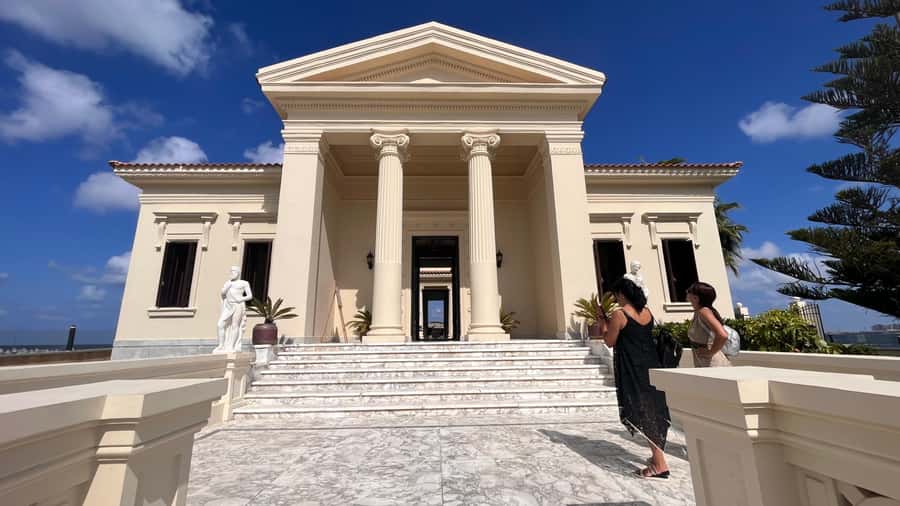
- Library of Alexandria open court with the statue of Alexander the Great and the statue of Ptolemy the First
- Reading area ticket required (plan for it, and note Friday and holiday closures)
- Al Qa’ed Ibrahim Mosque built in 1948 AD under King Farouk, designed by Italian architect Mario Rossi
- Mansheya market lanes including women’s market streets (zan’et etsetat) and a gold market tied to wedding and engagement jewelry
- Abbo Elabbas Mosque photo stop plus an old funfair outside with antique rides and candy floss
- Citadel of Qaitbay to close out the historic stretch before you finish at a local café
How the 4-hour walking route really works
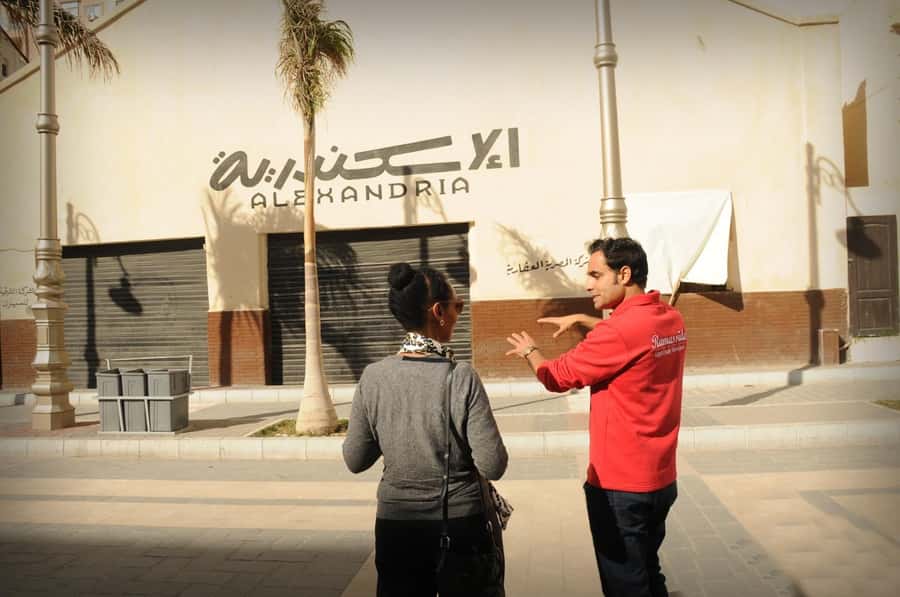
This tour is built for walking, so the best way to enjoy it is to treat it like a guided walk with a plan, not a checklist sprint. You start at Steigenberger Cecil Alexandria, then move through the center on foot while your guide explains what you’re seeing and why it matters.
The total time is four hours, which is long enough to cover several major landmarks but short enough that you can stay sharp. Your guide also steers attention to details that you might otherwise miss—like how certain neighborhoods are laid out, and what types of shops are concentrated where people gather. You’ll end at a local café or restaurant, with refreshments at your own expense, which is a nice pressure-free way to cap the walk and decompress.
Guide quality is a big part of this experience. On this route, you can get guides such as Macy, Aalaa, Waleed, or Mohamed—each noted for strong communication and careful attention to the group. In practice, that usually means you’ll get explanations that are easy to follow, plus a sense of humor and confidence that keeps the pace comfortable.
You can also read our reviews of more walking tours in Alexandria

Entering the Library of Alexandria open court: what you’ll see first
The Library of Alexandria stop sets the tone. Even if you’ve seen photos before, the first thing you’ll want to notice is the open court, where the visuals do a lot of the storytelling.
This stop includes:
- the statue of Alexander the Great
- the statue of Ptolemy the First, described as connected to a discovery underwater nearby
These aren’t just decorative. They’re pointers to the Library’s identity as a symbol of learning and scholarship—an idea that helps you understand why Alexandria keeps returning in global history.
The ticket reality you should plan for
Here’s the practical bit: the Library is not always a simple walk-in. The Library of Alexandria is closed on Fridays and public holidays. On open days, you still may need to purchase a ticket to enter the reading area.
So if you care a lot about seeing inside areas beyond the open court, build flexibility into your plans. If you’re visiting on a Friday or a public holiday, don’t assume the reading areas will be available—your guide can help you adjust expectations on the day.
Optional add-on: manuscripts museum
There’s also an optional manuscripts museum. If that’s your thing—books, preservation, the physical side of scholarship—this can add extra meaning to the Library stop. If you’d rather keep the day moving, you can skip it and focus on the street-level Alexandria that comes right after.
President Sadat Museum and Impressions of Alexandria: making sense of the city
After the Library open court, the tour includes museum time that helps you connect the big landmark to the city around it. You’ll visit the President Sadat Museum and the Impressions of Alexandria Museum.
What I like about adding museum visits during a walking tour is that it gives you a map for the impressions you’ll pick up later. Market lanes and mosques are easier to read once you’ve had a short dose of context about how Alexandria is remembered, imagined, and rebuilt over time.
This is also a good moment to slow down. You’re not just moving from place to place; you’re pausing to understand the patterns behind the sights.
You can also read our reviews of more guided tours in Alexandria



Al Qa’ed Ibrahim Mosque: a 1948 landmark with an Italian touch
Next comes Al Qa’ed Ibrahim Mosque, described as a historical mosque in Alexandria built in 1948 AD during the reign of King Farouk. It was built on the centenary of the death of Ibrahim Pasha, a general in the Egyptian army and the eldest son of Muhammad Ali.
One detail that makes this stop more than a quick photo stop is the architecture note: it was designed by Italian architect Mario Rossi. When a mosque blends local and foreign architectural influences like this, it helps you see Alexandria as a city shaped by more than one set of rulers and ideas.
If you like religious architecture but don’t want a technical lecture, this is a good fit. You’ll get the story behind the building and a better sense of why that specific site matters in Alexandria’s timeline.
Mansheya’s oldest market area: women’s lanes and a gold-market purpose
From the mosque, you head into Mansheya, described as the oldest market area. This is where the tour becomes very practical: you see how daily commerce and community life compress into narrow streets.
Women’s market lanes (zan’et etsetat)
A highlight here is the traditional women’s markets (zan’et etsetat). The streets are described as very thin and narrow, and that detail changes how you experience the area. You don’t walk it like a wide boulevard—you move slowly, take in shopfront life, and pay attention to how people navigate close space.
If you’re the type who likes to learn through observation, this is the point where you start reading Alexandria differently. It stops feeling like only monuments and starts feeling like an actual working city.
Gold market tied to weddings and engagements
You’ll also see a gold market in this area, where people buy wedding and engagement jewelry. That gives the market a clear purpose beyond browsing. It’s not abstract shopping—it’s tied to major life events.
So when you’re standing in these lanes, look for the logic: why certain stalls concentrate where they do, and how commerce maps onto community routines. A good guide will point out these connections without making it feel like a lecture.
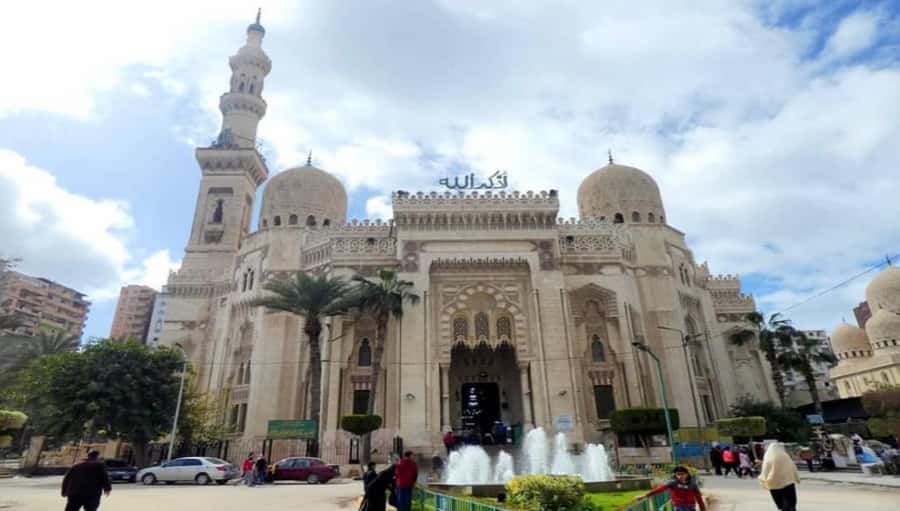
Abbo Elabbas Mosque photo stop and the antique funfair outside
After Mansheya, the tour shifts to a “wait, what is that?” moment—Abbo Elabbas Mosque first, then the funfair outside it.
The mosque is described as the prettiest and biggest mosque in the city, and you’ll get a photo stop there. Even if you only take a quick look, it helps break up the day with something visually striking.
Then comes the strangest sight outside it: an old funfair where children play on very antique funfair rides and eat candy floss. This is one of those Alexandria details that reads like a joke until you see it in real life. It also gives you a human angle—because even in a day filled with monuments and museums, childhood and everyday joy are part of the scene.
If you like a bit of surprise in your itinerary, this stop is a strong reason to choose the walking format. You’re close enough to catch moments like this that don’t belong on a bus route.
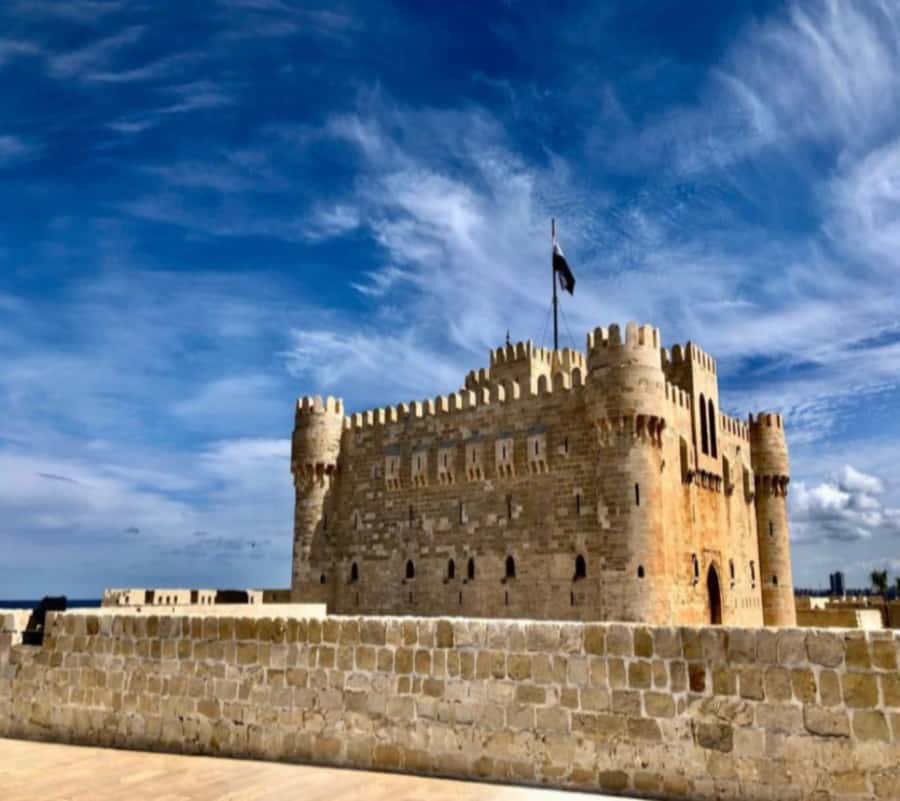
Qaitbay Citadel and the historic finish before café time
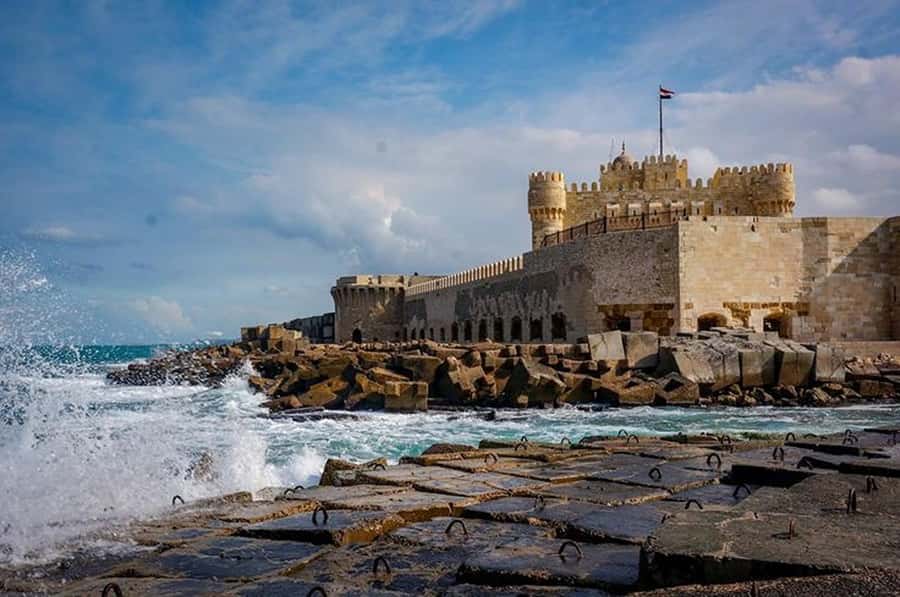
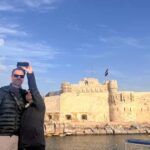
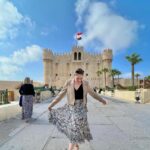
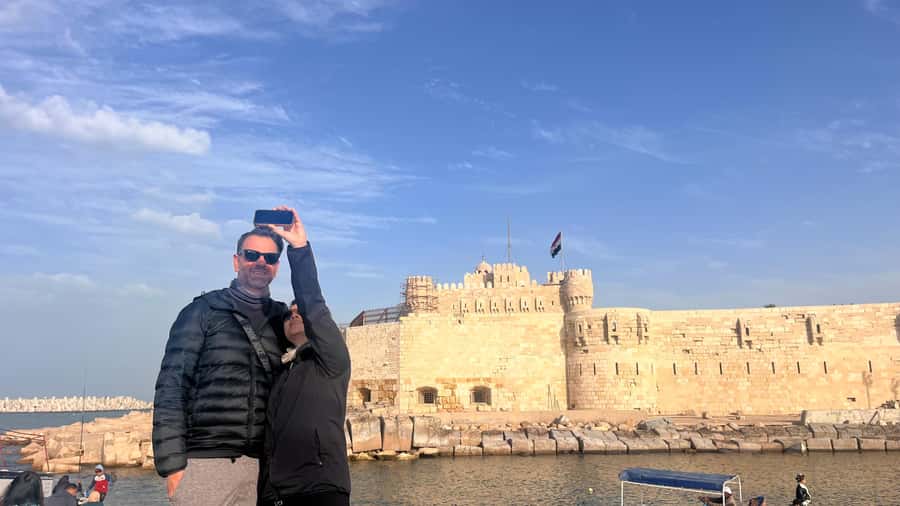
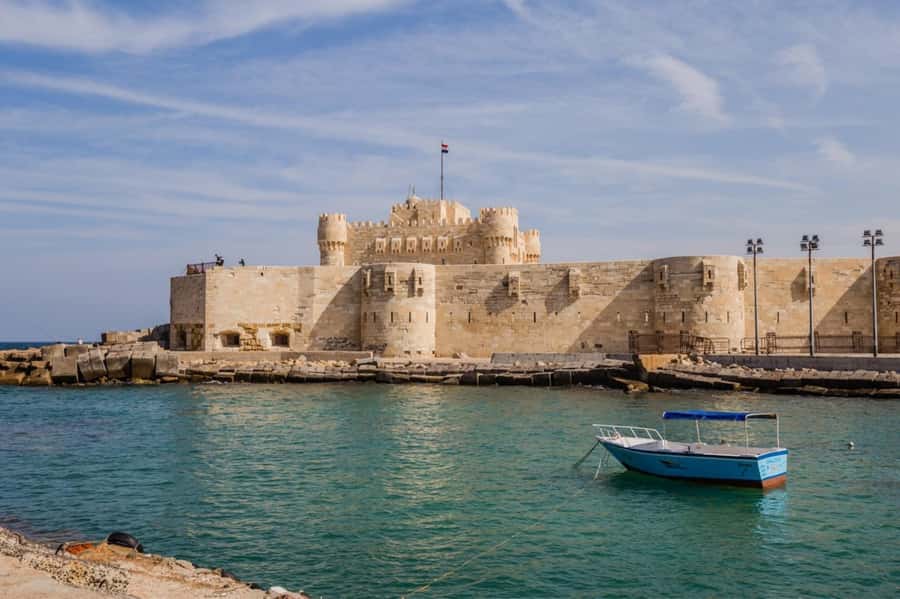
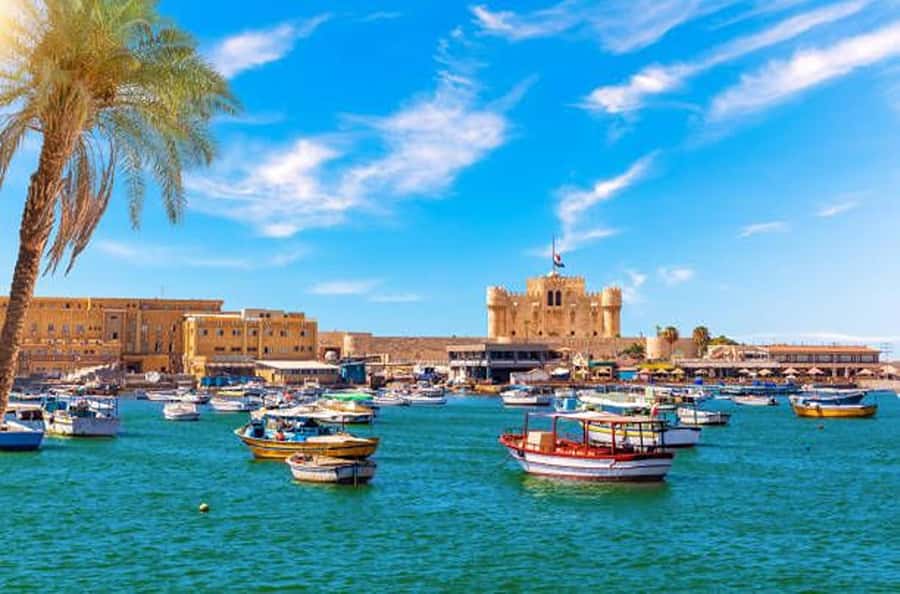
The tour continues through Alexandria’s historic landmarks, including the Citadel of Qaitbay. A citadel stop works well near the end of a walking day because it’s the kind of sight that you can look at, absorb, and then talk through with your guide.
By the time you reach this stage, you’ve already seen:
- the symbolic learning power of the Library
- the faith and architecture stories of mosques
- the market life of Mansheya
- the street-level variety around Abbo Elabbas
So Qaitbay doesn’t feel random. It feels like the city’s defensive and strategic story closing out the day’s theme.
Ending at a café
Your tour ends at a local café or restaurant, where you can relax. Refreshments are at your own expense, but this is a smart time to plan what you’ll do next. If you want to keep the day going, ask your guide what’s closest and easiest to reach on foot.
Price and value: what $50 buys you (and what might cost extra)
The price is $50 per person, and the value comes from what’s packaged in.
This tour includes:
- your tour guide
- a walking tour
- entrance fees
- a bottle of water
- all taxes and service charges
That’s a big deal in practice because museum and landmark days can add up quickly once you start paying one admission at a time.
What might cost extra:
- the ticket you need to enter the Library reading area
- the optional manuscripts museum (listed as optional)
- drinks and food at the end café/restaurant, since refreshments are at your own expense
So I’d call it good value if you want a guided route that covers several major stops without forcing you to manage every ticket yourself. If you’re a total do-it-yourself traveler who hates buying tickets, then the only potential frustration is the Library ticket situation.
Who this tour suits best (and who should think twice)
This walking tour is a great match if you:
- want a guided way to understand Alexandria, not just see it
- like mixing landmark sites with market neighborhoods
- prefer an efficient four-hour format
- enjoy photo stops and small surprises (Abbo Elabbas and the antique funfair are a real mood-shift)
It’s also a solid choice if you’re traveling with mixed interests—someone might love the Library area, while another person is there for Mansheya’s lanes and shopping culture. A good guide keeps both sides engaged.
Think twice if:
- you’re visiting on Fridays or public holidays and you were counting on access beyond the open court at the Library
- you’re sensitive to narrow, active market streets (Mansheya is described as very thin and narrow in places)
Should you book this Alexandria walking tour?
Yes, I’d book it if you want a tight, high-impact introduction to Alexandria. The combination of Library of Alexandria open court, mosque architecture, Mansheya markets, and a historic finish at Citadel of Qaitbay is an efficient way to see different sides of the city in one go.
The biggest reason not to book is simple: plan around the Library’s Friday and public holiday closures, and don’t assume reading-area entry is automatic. If your schedule lines up with open Library days, this tour is a strong value at $50 because entrance fees and key groundwork are handled for you.
If you do book, bring comfortable walking shoes, keep your phone ready for the Abbo Elabbas photo stop, and ask your guide to steer you toward the details you’ll actually remember.
FAQ
Where is the meeting point?
Meet your guide at Steigenberger Cecil Alexandria.
How long is the tour?
The duration is 4 hours.
How much does the tour cost?
It costs $50 per person.
What languages are offered?
The live tour guide speaks English and Arabic.
Is the tour wheelchair accessible?
Yes, the tour is listed as wheelchair accessible.
What are the main sights included?
You’ll visit the Library of Alexandria area, Al Qa’ed Ibrahim Mosque, the oldest market area in Mansheya (including women’s markets and the gold market), a photo stop at Abbo Elabbas Mosque, and you’ll continue through historic landmarks including the Citadel of Qaitbay.
Is the Library of Alexandria open every day?
No. The Library of Alexandria is closed on Fridays and in public holidays.
Do I need a ticket to enter the Library reading area?
Yes. To enter the reading area, you need to purchase a ticket.
Is the manuscripts museum included?
It’s optional, so you can choose whether to add it.
Are refreshments or meals included?
The tour ends at a local café or restaurant, and refreshments are at your own expense.