REVIEW · ALEXANDRIA
Alexandria Historian-Guided Tour with Local Food Tasting
Book on GetYourGuide →Operated by Ramses tours · Bookable on GetYourGuide
Alexandria has a secret underfoot. A historian-guided day like this is interesting because it pairs the Kom El Shokafa catacombs with the newly opened Greek and Roman Museum, so you’re not just looking at sites. You’re also picking up the story behind them as you move from one era to the next.
I also like the pacing: you get big “wow” moments, then practical stops with photo breaks. One thing to plan for, though: you’ll want to confirm the pickup timing, and remember that lunch is optional, so the money you spend on food depends on what you choose.
In This Review
- Key points I’d plan around
- A 7-hour route that covers Alexandria’s main eras (without feeling rushed)
- Greek and Roman Museum: artifacts you can connect to real places
- Kom El Shokafa catacombs: a three-level maze carved into rock
- Pompey’s Pillar and the timing of your best photos
- Alexandria Library and the surrounding monuments: modern space with ancient names
- Kom El-Deka amphitheater, Sadat Museum, and Impressions of Alexandria
- St. Mark’s Church and downtown architecture: Alexandria above ground
- Abbo Elabbas Mosque, the antique funfair, and the corniche harbor scenes
- Local food tasting (and the optional fish lunch reality)
- Price and logistics: value is strong, but watch the handoffs
- Who this tour fits best
- Should you book this historian-led Alexandria tour?
Key points I’d plan around
- Greek and Roman Museum (new opening): You’ll see artifacts spanning from ancient Greek and Roman periods, including items tied to Alexander the Great and Roman emperors.
- Kom El Shokafa catacombs (three levels): A rock-cut underground cemetery that feels like a maze once you’re inside.
- Alexandria Library open court: Time to see statues of Alexander the Great and Ptolemy I, and understand the site’s modern setting.
- Photo stops that actually matter: Pompey’s Pillar and Abbo Elabbas Mosque break up the day and give you strong backdrops.
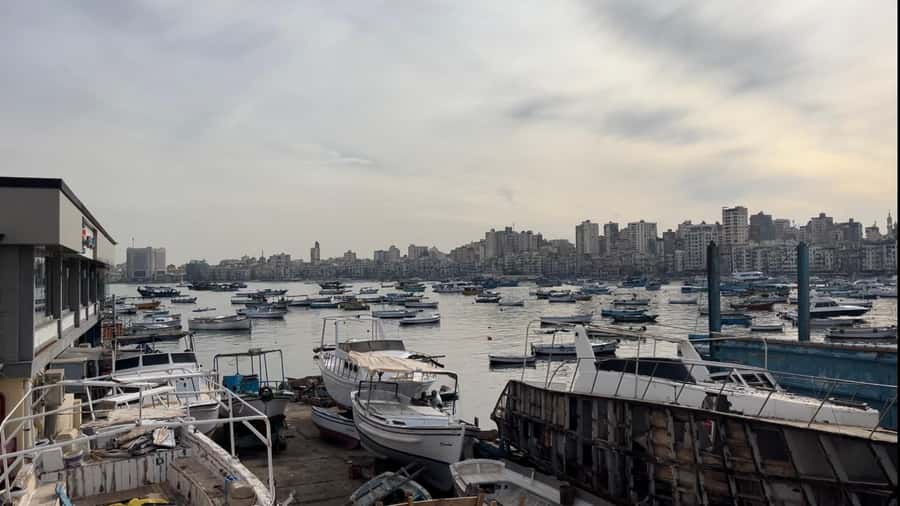
- Corniche and old harbor views: Traditional fishing scenes across from the seaside promenade make the photos feel real.
- Local food tasting included: You’ll add flavors to the history-heavy route, and you can still decide about any extra meal.
A 7-hour route that covers Alexandria’s main eras (without feeling rushed)
This tour is built like a history playlist: start with museum artifacts, go underground to the catacombs, then come up for monuments and public spaces tied to Alexandria’s identity. With hotel pickup and air-conditioned vehicle transfers, you spend less time fighting traffic and more time walking when it counts.
At 7 hours, the day is long enough to cover major sites, but not so long that you’ll feel swallowed by Alexandria. The trade-off is simple: there’s not much “wander time,” so come ready with a few must-see questions for your guide. If you want extra stops, you can ask to add them at cost (no extra profit added by the operator).
You can also read our reviews of more food & drink experiences in Alexandria

Greek and Roman Museum: artifacts you can connect to real places

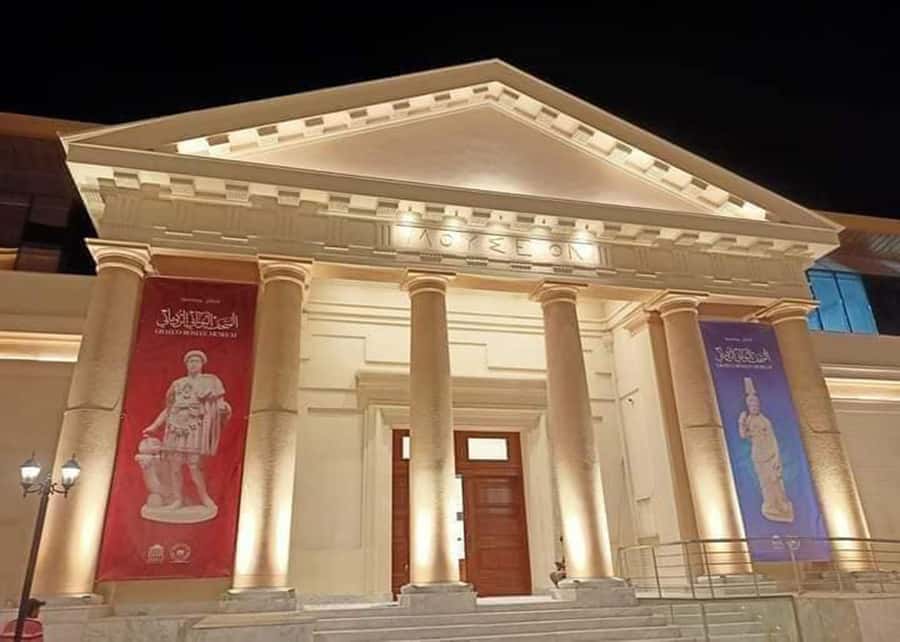
The day’s first major anchor is the Greek and Roman Museum, recently opened, with a collection covering roughly the 3rd century BC through the 7th century AD. What makes this stop worth your attention is not just the labels. The guide’s job is to connect what you’re seeing—statues, relics, and burial-related pieces—to what Alexandria looked like across centuries.
You should expect highlights like a statue connected to Alexander the Great, plus Roman emperors’ relics and items from the Greek and Roman periods. Even if you only catch part of the explanation, the museum setting helps you see the logic of the route. After this, the catacombs stop feels less random. It’s the same city, just expressed underground.
Practical tip: give yourself a moment before your first big photo. Museums can be tricky for light and angles, especially if you’re trying to frame statues and artifacts without blocking other people.
Kom El Shokafa catacombs: a three-level maze carved into rock
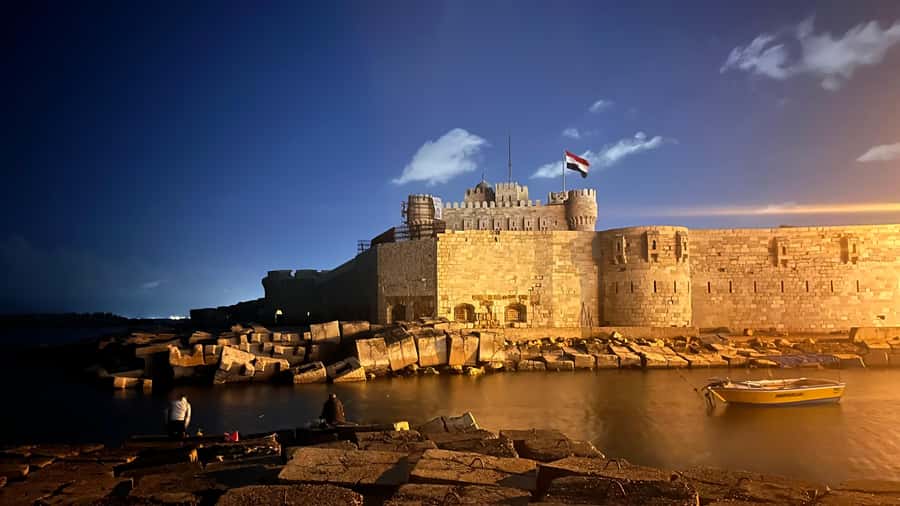
Next comes the Catacombs of Kom El Shokafa, described as Alexandria’s largest Roman cemetery and cut into three levels in the rock. This is the kind of site that changes your body language. You slow down. You look up and down. You pay attention to openings and corridors because the layout is part of the experience.
What I find valuable here is how the historian-style explanations make the scale make sense. It’s not only “tombs.” It’s a complex space where funerary practice, Roman influence, and local adaptation all show up in the design. If you like history you can walk through, this is one of the best stops on the route.
One consideration: catacombs can feel tight and dim compared with open-air landmarks. Wear shoes that grip well and keep your phone light on low so you don’t blind your group.
Pompey’s Pillar and the timing of your best photos
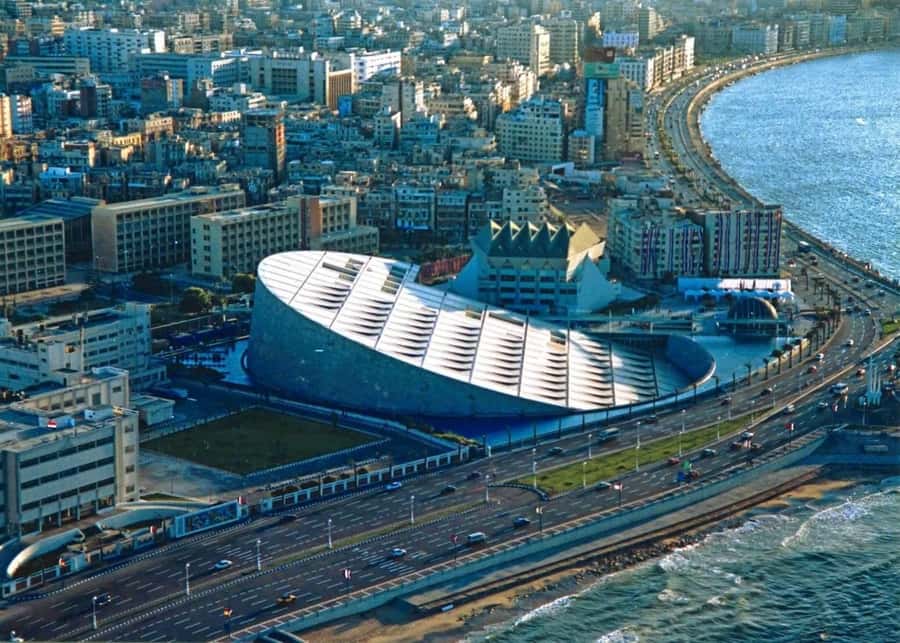
After the underground stop, you transition to easier sightseeing and classic photo moments. You’ll drive by Pompey’s Pillar and get a photo break. The pillar is associated with Emperor Diocletian and dates to the end of the 4th century, so you’re looking at a monument tied to the later Roman era.
This stop is shorter by design, but that’s not a downside. It’s a reset. You’re moving from rock-cut history to a landscape you can see clearly, and it helps break up the heavier walking of the morning.
If you want strong photos, choose your spot quickly when you arrive. Photo breaks on a shared itinerary are time-limited, and the best light can change fast.
Alexandria Library and the surrounding monuments: modern space with ancient names
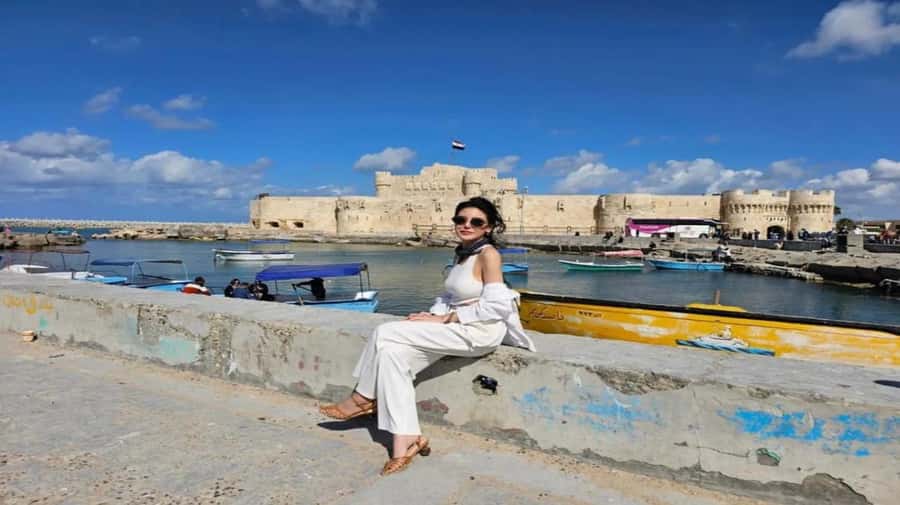
The tour includes the Alexandria Library area and its open court, where you can see statues of Alexander the Great and Ptolemy the first (Ptolemy I). This stop works for two reasons.
First, you’re connecting names you may have seen in museums and textbooks to a real public space. Second, you’re getting a visual “anchor” after the underground maze. It’s easier to process everything you learned when you have an open view again.
Important planning note: the Alexandria Library is closed on every public holiday. If your dates land on one, expect that stop may not happen as scheduled.
Also, if you enjoy spotting details, your guide may point out the statue setting, including the story about Ptolemy I being found underwater nearby.


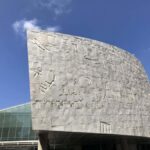


Kom El-Deka amphitheater, Sadat Museum, and Impressions of Alexandria
The route doesn’t stop at one type of history. After the library area, you’ll also visit President Sadat Museum and the Impressions of Alexandria Museum. Then, you’ll see the Roman amphitheater of Kom El-Deka as part of the highlights.
These stops matter because they round out the day. You’re not only chasing famous names. You’re also seeing Alexandria’s layers presented through museum interpretation and archaeological remnants, which helps you build a mental map instead of a pile of disconnected photos.
If your time feels tight, focus on the parts your guide emphasizes. That’s usually the material that explains why Alexandria’s past keeps showing up in the city’s present-day identity.
St. Mark’s Church and downtown architecture: Alexandria above ground
Next you’ll head toward St. Mark’s Church, often described as the oldest church in Africa. Even if you’re not religious, it’s a big historical marker, and it helps you broaden your view beyond Roman and Greek themes.
Through the drive, you’ll also see old downtown streets and historical architecture with baroque-style designs, plus Italian and French style properties. This is one of those “you learn to see the city” moments. The buildings are not museum objects, but they explain why Alexandria feels like a crossroads—European influence mixed into an Egyptian setting.
A good mindset: look for patterns. Balconies, facades, and doorways often tell you where wealth and style shifted over time. Your guide may not say everything, but you’ll start noticing faster as the car moves.
Abbo Elabbas Mosque, the antique funfair, and the corniche harbor scenes
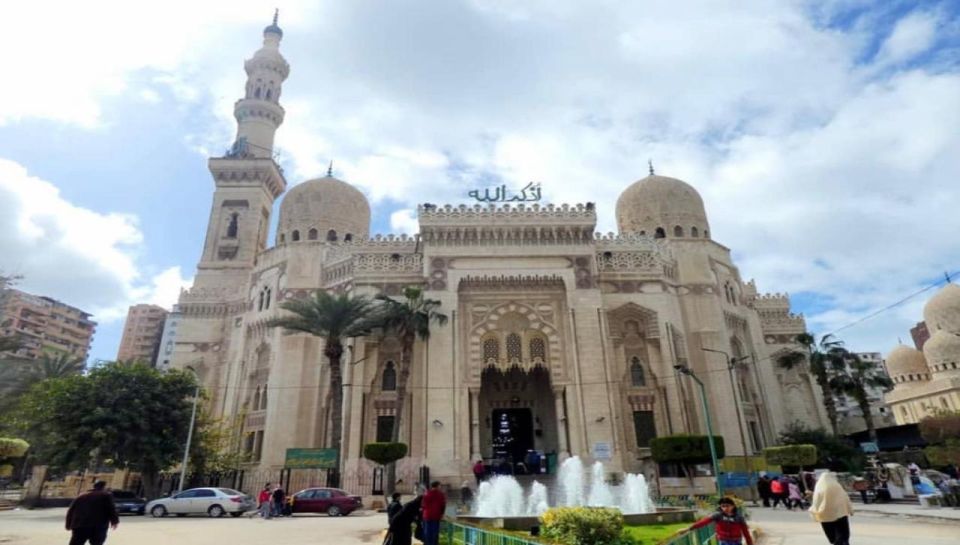
One of the most memorable visual stretches is the Abbo Elabbas Mosque photo stop. It’s described as the prettiest and biggest mosque in the city, and getting out for photos here makes a difference because the scale is hard to capture from a moving vehicle.
What makes this stop more than a standard landmark photo is what’s nearby: an old funfair area outside the mosque where children play on antique-style rides and eat candy floss. It’s strange in the best way, because it shows how daily life keeps going right beside major monuments.
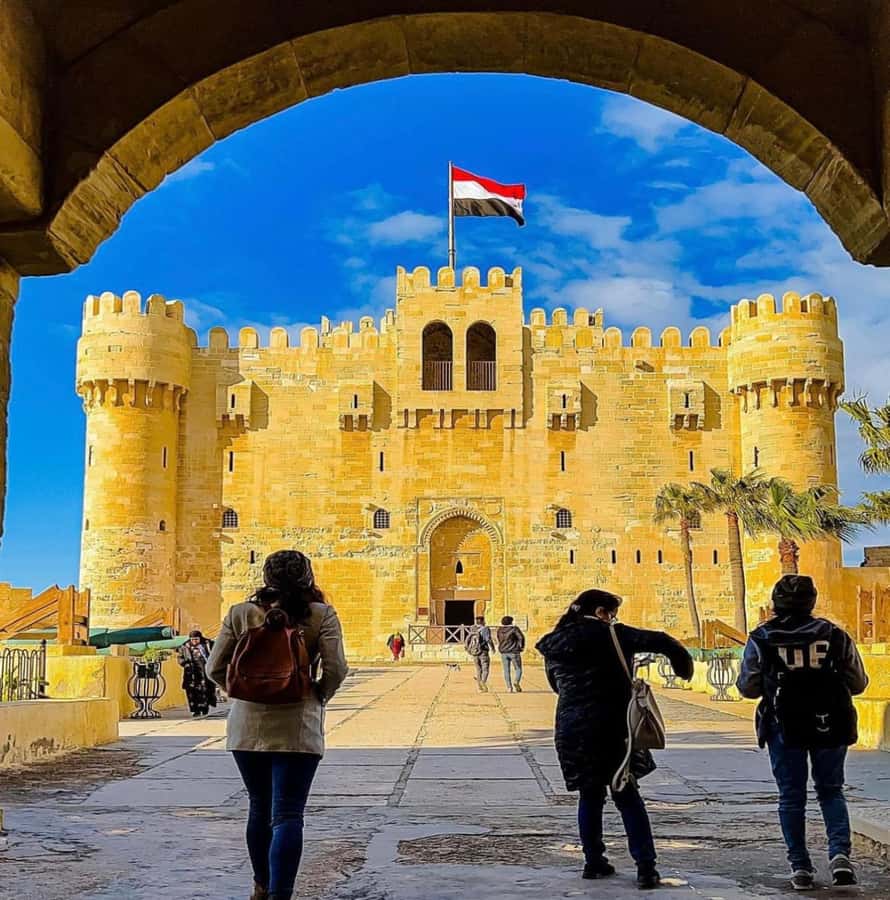
Then you head opposite the mosque toward the corniche and old harbor scenes. You’ll see traditional fishing boats, men fishing, and fishermen making nets. This is where the photos can look genuinely alive, not like a staged travel snapshot.
Tip for your photos: if you want the net-making moment, ask your guide where people usually gather and hold your position for a minute rather than sprinting around.
Local food tasting (and the optional fish lunch reality)
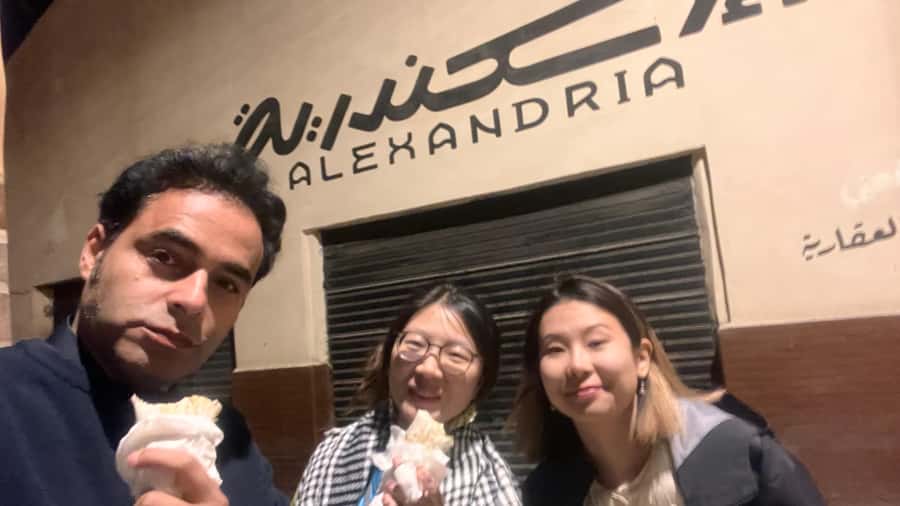
This tour includes a tasting of local cuisine, which is a smart match for Alexandria. History can be intense; food helps you reset your senses and makes the day feel less like a checklist.
What’s also clear is that lunch is optional at a modern fish restaurant. That means you should treat lunch as a separate decision, not automatically included just because you’re already eating something on the tour. In practice, that can change what you spend depending on what you order.
If you’re trying to keep costs predictable, I’d plan on paying for anything beyond the tasting itself. If you want a simple plan, eat the tasting, then decide whether lunch is worth it based on your energy and hunger level.
Price and logistics: value is strong, but watch the handoffs
At $80 per person for a 7-hour day, this tour’s value comes from what’s included: entrance fees, hotel transfers by air-conditioned vehicle, an expert guide, and all service charges and taxes. It also includes skipping ticket lines, which can save real time at busy sites.
Where you need to be careful is the human side of scheduling. One past experience involved a guide not arriving and long waits with no response through contact attempts. Another involved a start time changing the previous day without ensuring the traveler was aware, leading to a significant wait. There are also cases where the organizer seems flustered around schedule changes.
You can’t eliminate those risks completely, but you can reduce them:
- Confirm your pickup timing in advance and again the day before.
- Stay reachable for contact messages.
- If lunch is part of your plan, decide early so you don’t end up surprised by what’s optional.
Also, note the tour runs with a live guide in Arabic, English, Spanish, and French. If you have a preference, pick your language carefully so questions are easy.
Who this tour fits best
I think this is a good match if you want a structured, guided day across Alexandria’s major categories: museums, underground Roman-era funerary history, landmark stops, and waterfront scenes. It’s also great if you like guides who explain context rather than just pointing at plaques.
It’s less ideal if you hate waiting for pickup logistics or if you’re extremely sensitive to schedule changes. Because the itinerary uses multiple vehicle legs and photo breaks, timing matters. If you’re the type who needs every minute on your own schedule, you might find this stressful.
If you’re traveling with kids, the format can work since the day includes outdoors scenes like the corniche and the funfair area, plus the tour breaks up the day with photo stops and museum time.
Should you book this historian-led Alexandria tour?
Book it if you want a day that blends catacombs + Greek and Roman museum + landmark photography, and you’re happy to let a guide shape the flow. The price makes sense for the number of covered entrances and vehicle transfers, and the local food tasting adds a nice balance.
Skip it or at least double-check expectations if schedule changes would throw off your trip plans, or if you’re assuming lunch is automatically included. Use this tour for what it’s clearly designed to do: give you a guided route through Alexandria’s most well-known historical spaces and a few striking visual moments by the harbor.