REVIEW · ALEXANDRIA
Alexandria City Tour from Cairo Full Day
Book on GetYourGuide →Operated by Egypt Excursions Online · Bookable on GetYourGuide
Alexandria feels like a time machine. I love the mix of big Roman landmarks and the chance to wander through quieter history like the Catacombs, all with a private guide who can answer your questions on the spot. The main catch is the day is long, with about a 3-hour drive each way from Cairo.
In practice, this tour is built for people who want the headline sights without stitching together buses and tickets. You’ll see the Roman Amphitheatre of Kom El-Deqa, the ruins linked to the Alexandria Library, Pompey’s Pillar, and the Qaitbay Citadel area, then finish with Montazah Palace gardens.
One more thing to plan around: the heat and walking add up. Bring sunscreen and comfy shoes, and remember drinks aren’t included with lunch.
In This Review
- Key points at a glance
- The 10-hour Alexandria day trip: why the long drive matters
- Roman Amphitheatre of Kom El-Deqa: the first big “wow” stop
- Alexandria Library ruins: seeing history through what remains
- Pompey’s Pillar and the photo-friendly streetscape rhythm
- Qaitbay Citadel: the underground switch to quiet, cool history
- Seafood lunch in Alexandria: where value meets timing
- Montazah Palace gardens: finish with architecture and sea-sky calm
- Price and logistics: what $121 per person really covers
- Who this Alexandria tour is best for
- Should you book this tour?
- FAQ
- How long is the Alexandria City Tour from Cairo?
- Is pickup and drop-off from Cairo included?
- What time should I be ready for pickup?
- Is the tour guide English-speaking?
- What vehicle is used for the trip?
- Which major sights are included?
- Is lunch included?
- Are drinks included with lunch?
- What should I bring for the day?
- How far is the drive from Cairo?
Key points at a glance
- Roman highlights in one packed day with Kom El-Deqa and Pompey’s Pillar plus the catacombs
- Qaitbay Citadel underground time across multiple catacomb levels
- A private setup with pickup/drop-off from Cairo and an English-speaking guide
- Seafood lunch stop (drinks not included) that keeps the day moving
- Montazah Palace as the calm finale with architecture and extensive gardens
The 10-hour Alexandria day trip: why the long drive matters
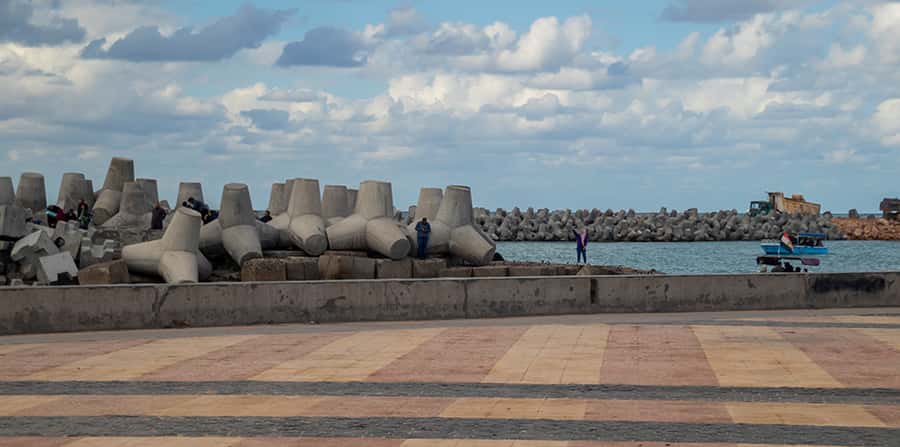
Alexandria is worth it, but you need to mentally budget for the travel day. You’re looking at roughly 3 hours driving each way, so this tour feels like a full-day sprint: transport first, sightseeing after, then the trip back before evening.
The upside is comfort and predictability. You’re in an air-conditioned vehicle with pickup and drop-off from your Cairo accommodation, so you don’t lose time negotiating taxis or figuring out routes. If you’re the kind of person who hates uncertainty, that alone makes the day easier.
The trade-off is energy. If you’re prone to getting cranky after long drives, plan to treat this like a schedule, not a wander day. I’d also bring a little patience for crowds, especially on big religious holidays when city traffic and foot traffic can get intense.
You can also read our reviews of more city tours in Alexandria


Roman Amphitheatre of Kom El-Deqa: the first big “wow” stop
Your day starts strong with the Roman Amphitheatre of Kom El-Deqa, described as Alexandria’s largest historical site and dating from the 1st to 3rd centuries A.D. This is one of those places where scale hits you fast. Even in ruins, you can picture how the space would have shaped crowds, noise, and spectacle in Roman times.
What I like about starting here is that it gives you a clear historical anchor early. It’s not just a pretty ruin; it’s a structure tied to public life and performance. Once you understand the amphitheatre, it’s easier to connect it to the rest of Alexandria’s layers later in the day.
Practical note: you’ll want comfortable shoes. This stop is about walking around uneven ground and looking up and down. Sunglasses and sunscreen also matter here because you’re outside for at least part of the experience.
Alexandria Library ruins: seeing history through what remains
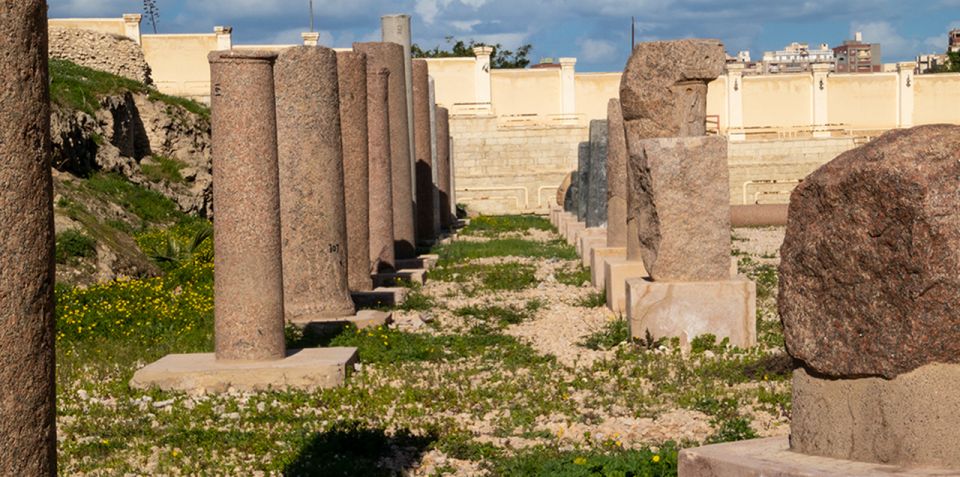
Next comes the Alexandria Library ruins, where the atmosphere is different. You’re not stepping into a living museum hall. You’re standing among what’s left, and the work becomes imagination plus context from your guide.
This stop is valuable because it teaches you a way to look at Alexandria. The city’s story isn’t only about intact buildings. It’s also about loss, rebuilding, and what survives in fragments. If your guide is chatty (and many guides are), ask questions. The best versions of this tour are less about ticking off a list and more about understanding why these places mattered.
Also, plan for photos. The library site is one of those stops where you’ll want time for a wide shot and then a closer look for details. If you move quickly, you may miss the small things that make the ruins feel tangible.
Pompey’s Pillar and the photo-friendly streetscape rhythm
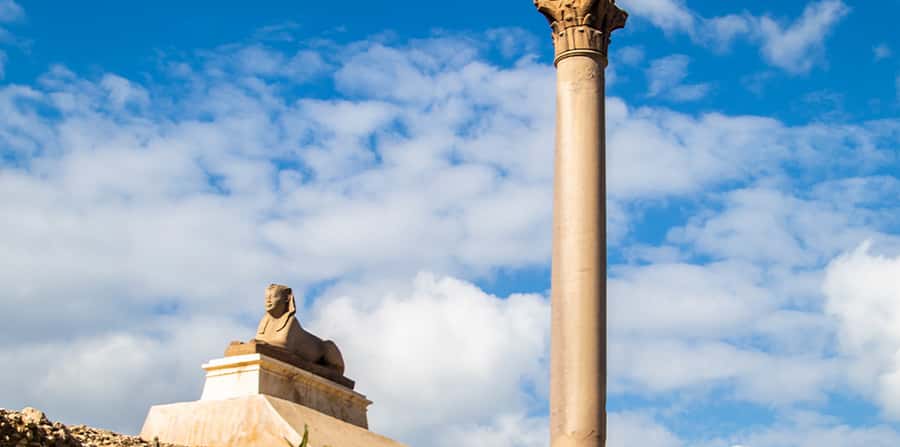
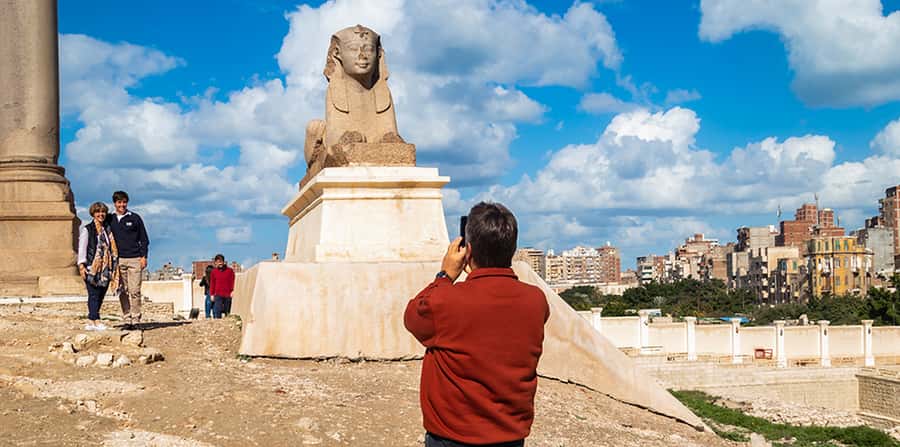
Pompey’s Pillar is one of Alexandria’s most recognizable landmarks: a Roman column dating to the 4th century. It’s the kind of sight that feels almost cinematic in the right light. Up close, you can see how a single monument can become a geographic anchor for the whole city.
This is a good moment in the itinerary because it breaks up the heavier stops. After amphitheatre ruins and library remnants, Pompey’s Pillar gives you a clear, straightforward “there it is” landmark. It’s also a natural setup for photos without requiring museum-style patience.
One practical tip: expect people to be around. This is a famous stop, so keep your sunglasses on, keep an eye on your group, and let your guide handle the timing so you’re not spending your day stopping and waiting.
Qaitbay Citadel: the underground switch to quiet, cool history
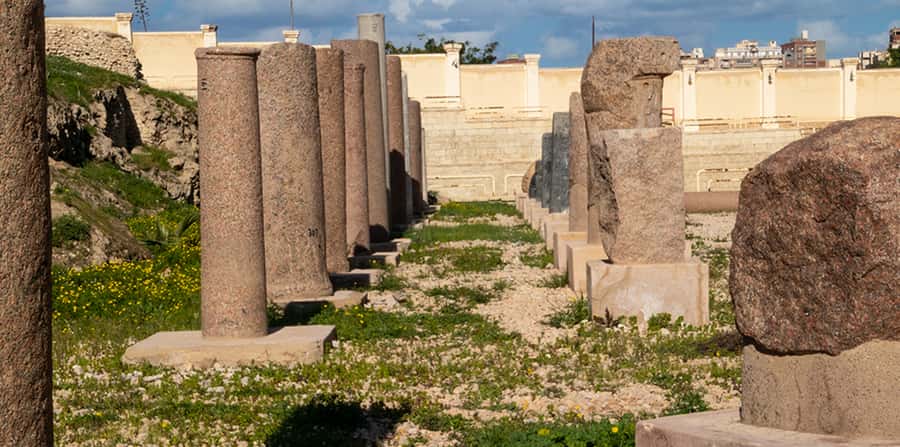
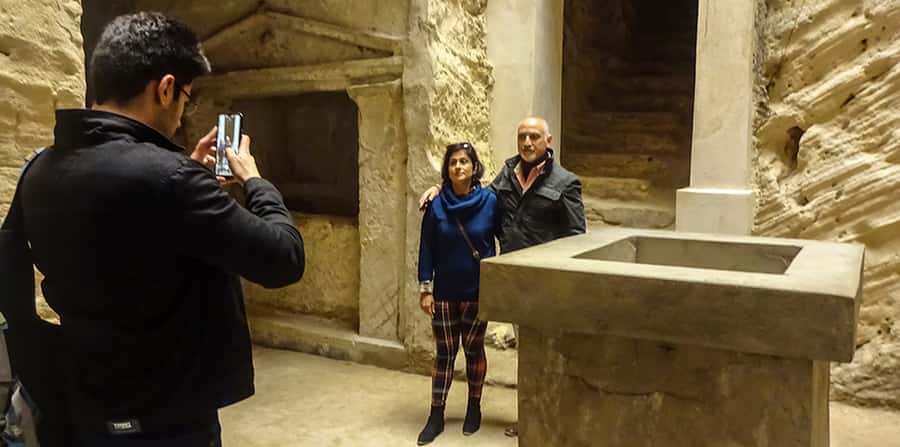
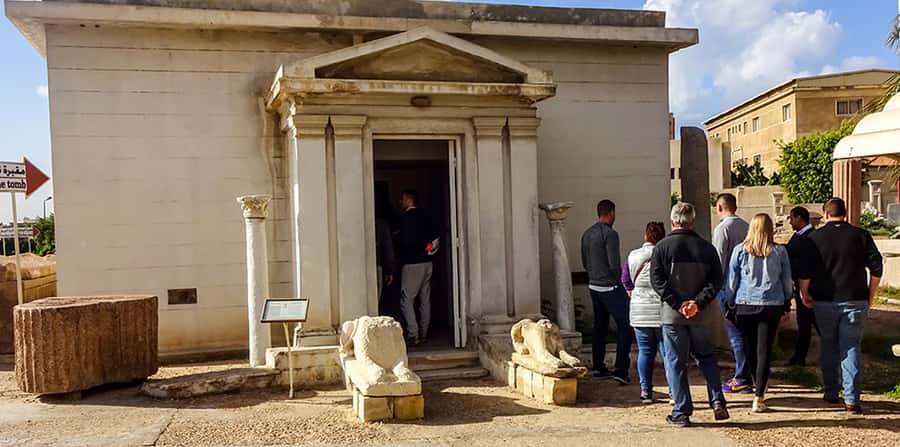
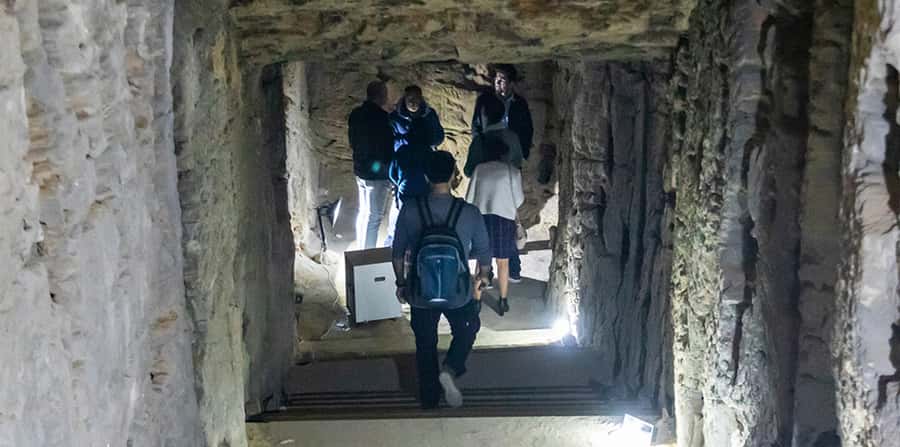
Then you’ll head to Qaitbay Citadel. This area is famous for its descent into the underground, where you can experience the Catacombs, described as a three-level Roman cemetery cut deep into the rock.
This is easily the most memorable section of the day because it changes the mood. Roman sites above ground can feel open and sunlit. The catacombs turn it inward. You move from outdoor history to a tighter, quieter setting where your guide’s narration matters more, because you’re physically surrounded by the past.
What to do with this time: slow down. The temptation is to race through because it’s underground and time is limited. Instead, take your time at the key viewpoints and ask what each level would have meant. Your guide can help connect architecture and human use, not just describe dates.
If you’re sensitive to cramped spaces, consider this as you plan. The catacombs are specifically described as cut into rock and multi-level, so the physical setting is part of the experience.
You can also read our reviews of more tours and experiences in Alexandria
Seafood lunch in Alexandria: where value meets timing
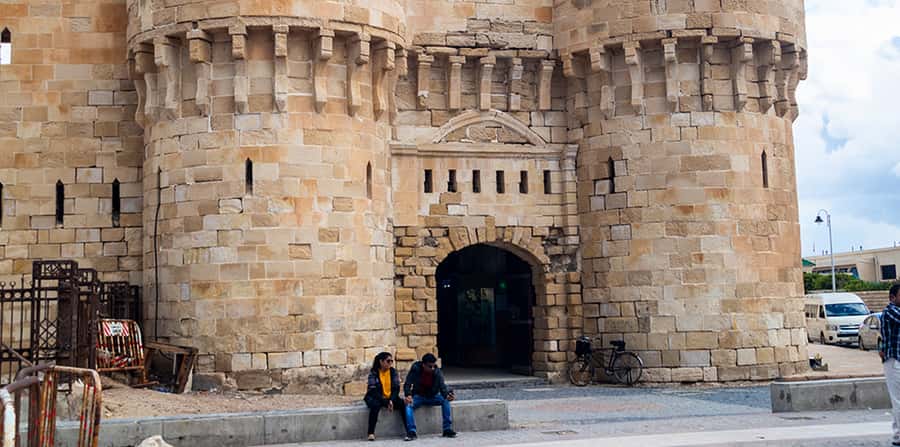
Lunch is included, and it’s described as an authentic meal at a restaurant serving seafood. After hours of walking, the lunch stop is the moment you get to breathe, refuel, and reset your brain for the afternoon.
Here’s the value angle: the tour includes service charges and taxes, and it’s already built around transport and a guide. That makes lunch timing important. You’re not looking for a long sit-down. You’re looking for something that tastes good, keeps you on schedule, and feels local enough to fit the day’s theme.
One catch: drinks aren’t included, so budget for water or anything else you want. Also, check your comfort level with a restaurant that might be busy with tour groups. Even when a place is good, these high-traffic stops can feel crowded.
If you’re picky about food, you’ll want to say so early to your guide. A flexible guide can help reduce stress and keep lunch pleasant.
Montazah Palace gardens: finish with architecture and sea-sky calm
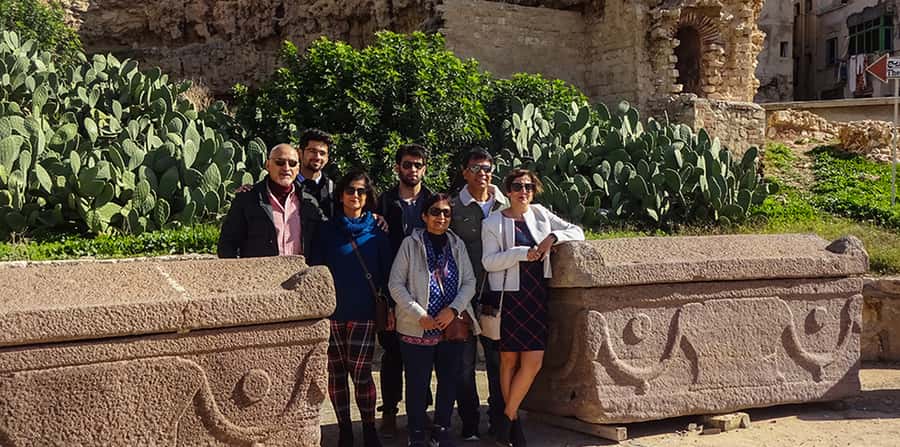
To close the day, you’ll visit Montazah Palace, known for its architecture and extensive gardens. This is a smart finale because it gives you variety after the Roman-focused stops. Gardens are slower, brighter, and often easier on the feet than ruins.
What I like about a palace-garden finish is the emotional pacing. By the time you reach Montazah, the day has already moved through outdoor monuments, underground catacombs, and a library site. The gardens help you come up for air and see Alexandria as more than ancient stone.
Even if you don’t obsess over plants or architecture, you’ll still benefit. A strong ending makes the day feel complete instead of exhausting.
Price and logistics: what $121 per person really covers
At $121 per person for a 10-hour day, you’re paying for convenience and structure: pickup and drop-off from Cairo, an English live guide, a private vehicle, and all service charges and taxes.
That price makes the most sense if you value time and smooth planning. Alexandria from Cairo can be a hassle if you’re going DIY. Here, the tour smooths out the day so you can focus on the sites rather than the route math.
What’s not included matters too. Drinks are not included, so you may want to plan for water at minimum. Also, the provided details don’t mention ticket or entrance costs for each attraction, so if you’re the kind of traveler who likes certainty, confirm what you’ll need to pay on-site.
Who this Alexandria tour is best for
This is a great match if you want a strong first pass at Alexandria’s big-name history. I especially like it for:
- First-time visitors who want the major Roman landmarks plus the catacombs in one day
- Travelers who prefer a guide that can answer questions as you go
- People who want pickup from Cairo and a predictable schedule
It may not be ideal if you want deep museum-level context or slow, unhurried wandering. This tour is built for moving. It’s also English-guided, so if you need another language, you should confirm this before booking.
One more note from the real world: guide quality can make or break how much you enjoy the day. Some guides are extremely attentive and even work around personal requests. If you care about cultural context beyond the main sights, ask questions early and don’t wait until the last stop.
Should you book this tour?
Yes, if you want a well-paced, single-day overview of Alexandria’s most famous historical stops, with transport and an English guide handled for you. The value is strongest for travelers who appreciate convenience and want to see the Roman Amphitheatre, Pompey’s Pillar, Pompey-adjacent landmarks, Qaitbay Citadel catacombs, the Alexandria Library ruins, and Montazah Palace without organizing everything yourself.
Book with realistic expectations: it’s a long day with a lot of moving parts, and drinks aren’t included. If you’re sensitive to long drives or prefer slow travel, you might feel rushed. But if you’re ready for a full-day history circuit that ends with gardens and sea-air, this is a very workable option.
FAQ
How long is the Alexandria City Tour from Cairo?
The tour duration is 10 hours.
Is pickup and drop-off from Cairo included?
Yes. You get pickup and drop-off from your Cairo accommodation.
What time should I be ready for pickup?
You should wait in the hotel lobby 15 minutes before your scheduled pickup time.
Is the tour guide English-speaking?
Yes. The live tour guide is English.
What vehicle is used for the trip?
You travel in an air-conditioned vehicle with pickup and drop-off included.
Which major sights are included?
You’ll visit the Roman Amphitheatre of Kom El-Deqa, the Alexandria Library ruins, Pompey’s Pillar, the Qaitbay Citadel area with the Catacombs, and Montazah Palace.
Is lunch included?
Yes. The tour includes lunch at a local restaurant serving seafood.
Are drinks included with lunch?
No. Drinks are not included.
What should I bring for the day?
Bring a passport or ID card, comfortable shoes, and also consider sunglasses and sunscreen. Wear comfortable clothes for walking.
How far is the drive from Cairo?
The tour involves a drive of approximately 3 hours from Cairo (each way).