REVIEW · CAIRO
From Cairo: Pyramids of Giza, Sphinx, Saqqara & Memphis Tour
Book on GetYourGuide →Operated by OceanAir Egypt · Bookable on GetYourGuide
Cairo’s pyramid day hits fast and hard. This 8-hour tour strings together Saqqara, Memphis, and the Giza Plateau with an Egyptologist guide, so you’re not just looking at monuments—you’re learning how each site connects. I like that it’s small group (up to 13) and paced so you can actually see things, not just survive a bus loop.
Two things I really enjoy: you get expert explanations at each stop (with guides like Mohamed and Shaima showing up in feedback), and you’re covered with admission to the key areas plus air-conditioned transport. One consideration: time pressure can happen if you’re aiming for pyramid interiors, since some access depends on closing windows and your day’s timing.
You’ll start in the Cairo/Giza pickup zone and end back where you began. The plan is built for one long, focused day: Saqqara first, then Memphis, then the Giza Plateau for the big pyramid views and photos, followed by the Sphinx and Khafre’s Valley Temple. If you’re sensitive to early starts or hot sun, pack smart and keep your expectations realistic about how much ground you can cover in a single day.
In This Review
- Key highlights that make this tour worth your time
- Saqqara Step Pyramid: where pyramid history starts
- Memphis and Ramesses II: the ancient capital after the pyramids
- Giza Plateau: Khufu, Khafre, and Mykerinos without the chaos
- The Sphinx and Valley Temple: the mortuary meaning clicks
- Camel rides, horse moments, and the shopping detour
- Price and logistics: what $90 really covers
- Guide language and group size: the difference you’ll feel
- Timing tips for a day that moves fast
- Who this tour is best for
- Should you book the From Cairo: Pyramids of Giza, Sphinx, Saqqara & Memphis Tour?
- FAQ
- How long is the tour?
- Where do you get picked up and dropped off?
- What’s included in the price?
- Which languages are available for the guide?
- Can I ride a camel or get a photographer?
- Is the group small?
- Do I need cash for entrance tickets?
Key highlights that make this tour worth your time
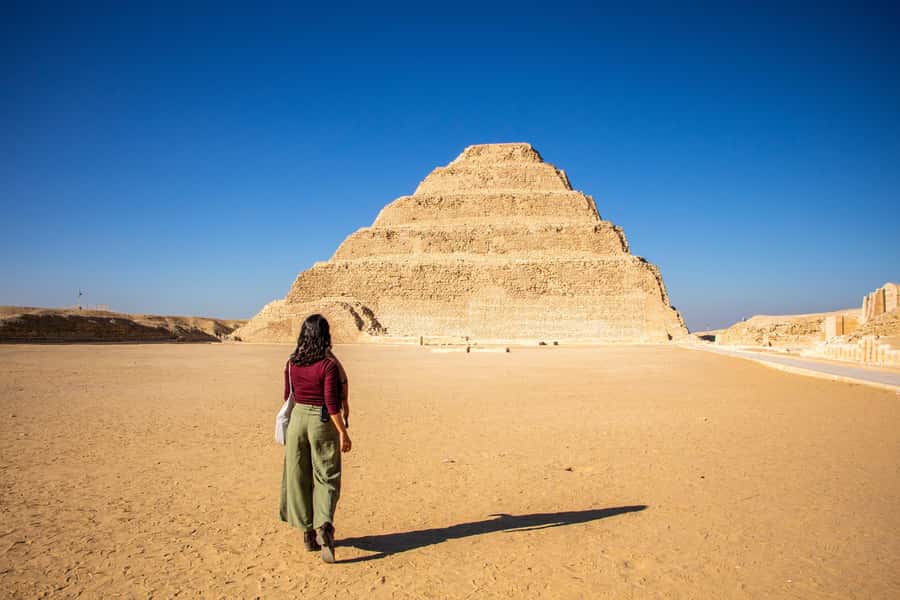
- Saqqara Step Pyramid early in the route to get oriented on how pyramids evolved before you hit Giza
- Memphis ruins plus Ramesses II’s colossal statue so you see Egypt beyond the pyramid era
- Giza Plateau time built around photos with guided context at Khufu, Khafre, and Mykerinos
- Great Sphinx and Valley Temple in one sweep so the mortuary “why” makes sense
- Small-group pacing and photo help noted again and again by guests, including guides who manage images well
Saqqara Step Pyramid: where pyramid history starts
Your day begins at Saqqara, and that’s a smart choice. This is where you meet Egypt’s earliest big stone pyramid idea—the Step Pyramid of Djoser (often dated around 2630 BC). Instead of arriving at Giza already memorized and impressed, you first see the concept in its earliest major form. That makes the later Giza pyramids easier to understand, because you can literally feel the progression from stepped design toward smoother pyramid shapes.
I also like that the visit gives you time to walk and look. Saqqara isn’t just one photogenic pyramid; it’s a wide necropolis. So even if you’re not a “ruins all day” person, you’ll still get moments to pause, frame your shots, and notice details in the stonework and layout.
Possible drawback: Saqqara can feel like it has more ground to cover than people expect, especially if the group has multiple languages and everyone needs a minute to regroup. You’ll get a guided walk (about an hour), but it’s still a place where good shoes matter.
You can also read our reviews of more tours and experiences in Cairo.
Memphis and Ramesses II: the ancient capital after the pyramids
Next you head to Memphis, described as the first capital after Egypt’s unification under the early dynastic rulers (traditionally tied to about 3100 BC). Even if you’re mainly chasing pyramid photos, Memphis gives you the missing layer: the story doesn’t stop at the Old Kingdom. This is Egypt as an evolving political and cultural machine.
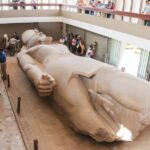
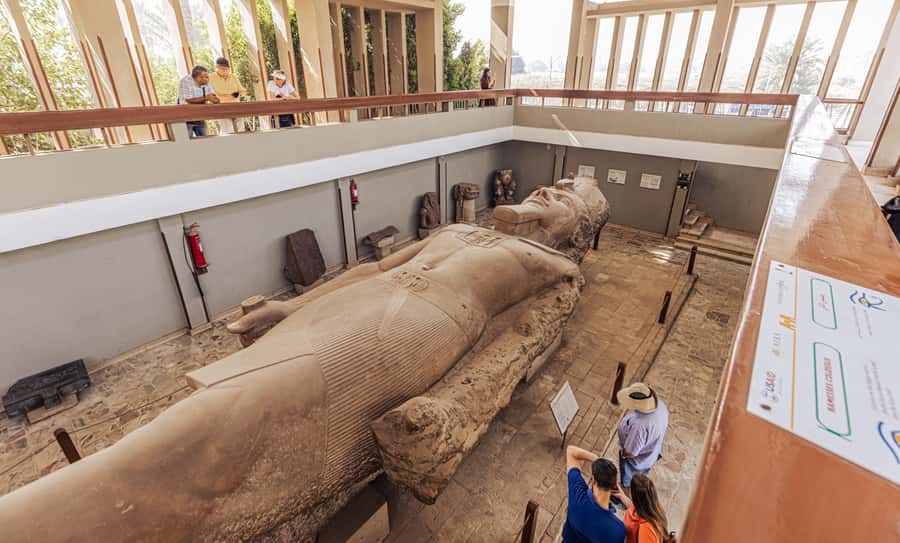
The centerpiece in your stop here is the Colossal Statue of Ramesses II. It’s a great contrast to the pyramid sites. At the pyramids you’re looking at kingly building projects aimed at eternity. In Memphis you’re looking at power made visible in massive scale—an image meant to be seen, commanded with, and remembered.
The walk time is short (about 45 minutes), so Memphis doesn’t drag. That helps keep the day comfortable, especially when you’re heading toward the Giza crowds.
Giza Plateau: Khufu, Khafre, and Mykerinos without the chaos
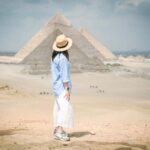
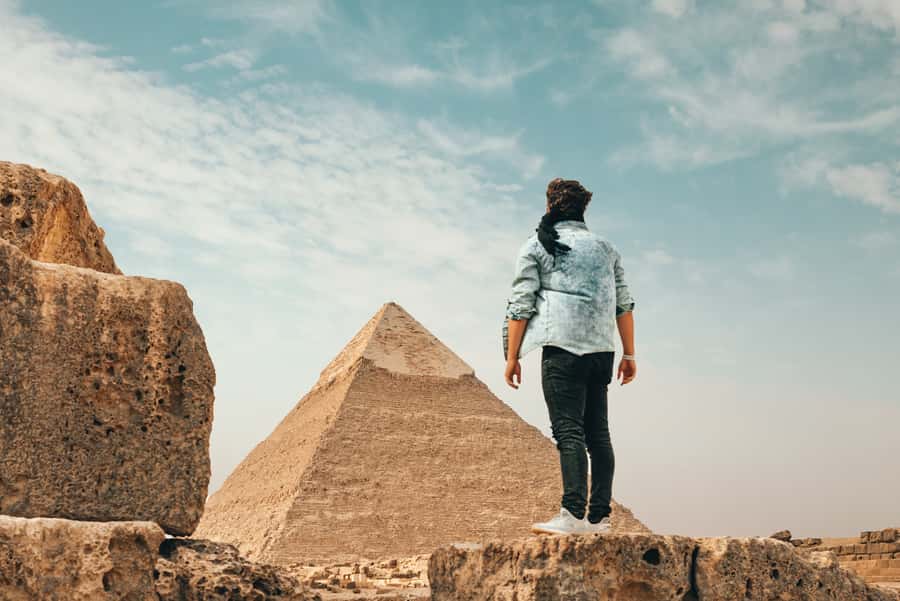
Then comes the part most people picture when they think of Egypt: the Giza Plateau. This is where the tour’s value becomes practical. Instead of treating Giza as a checklist, your Egyptologist guide ties together what you’re seeing: the pyramids’ different sizes, what each king represents, and why these monuments dominate the landscape.
You’ll spend about an hour for lunch in the area, then move into the plateau time block that includes a guided segment, photo stops, and extra time for scenic views. Expect a mix of “get the story” and “get the photos.” That balance is exactly what you want on a day trip—otherwise it turns into either a lecture treadmill or a scatter-and-stumble free-for-all.
A key detail: your general admission covers the major pyramids and Sphinx area. If you choose the add-on for entry inside the Khafre Pyramid, you’ll get access to go in (when booked). That’s often the most memorable part for first-timers, because it changes the whole scale. The narrow interior space makes the engineering feel real, not abstract.
Small caution: interior access can be sensitive to time windows. If the day runs later—traffic, queues, or a late-moving group—some interior entry may be restricted. If going inside matters most to you, mention that goal to your guide early in the day so timing stays aligned.
The Sphinx and Valley Temple: the mortuary meaning clicks
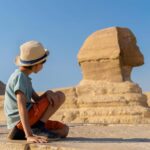
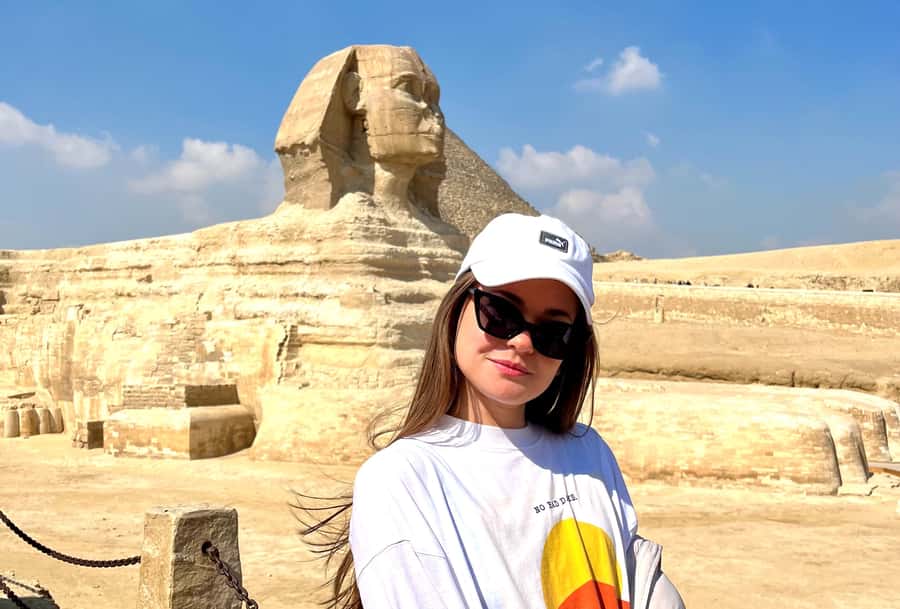
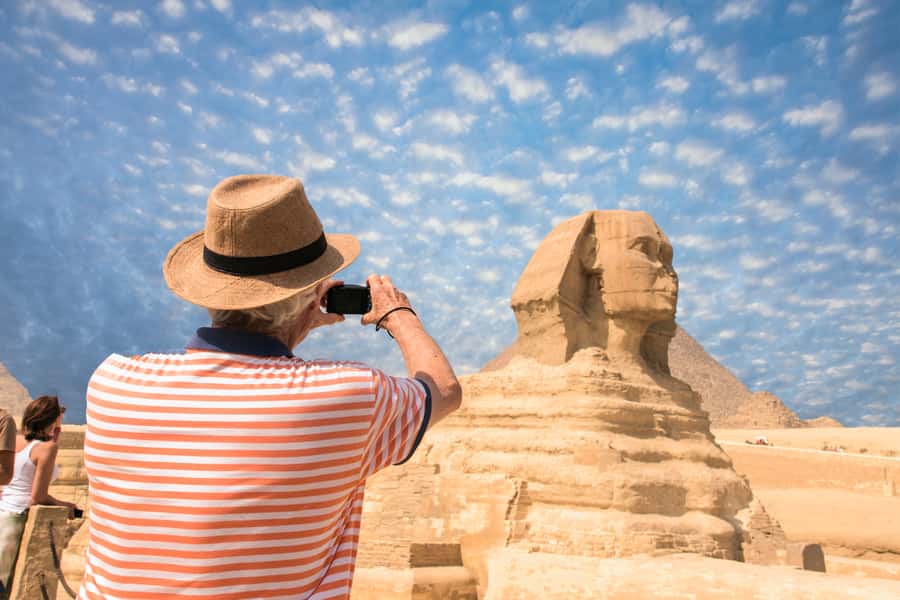
After the plateau, the tour shifts from “wow, geometry” to “why these places existed.” You’ll see the Great Sphinx, the limestone creature with a Pharaoh’s head and lion’s body. It’s the kind of statue that feels familiar because everyone has seen it in photos—but up close, the weathering and scale make it feel more mysterious than expected.
The guide’s role here matters. The Sphinx is not just a landmark; it’s part of a bigger complex tied to the funerary world of the pyramids. That’s why your next stop—the Valley Temple of Khafre—works so well on the same day.
The Valley Temple visit is shorter (around 30 minutes), but it’s a high payoff stop. It’s a mortuary temple connected to royal burials, and once you see it right after the Sphinx, you start to understand the landscape as a system. You’re seeing how the ancient Egyptians built routes of meaning: from where the body was processed to where the king’s story was protected.
If you only had time for one “meaning” stop in the Giza area, I’d put Valley Temple near the top of the list.
Camel rides, horse moments, and the shopping detour
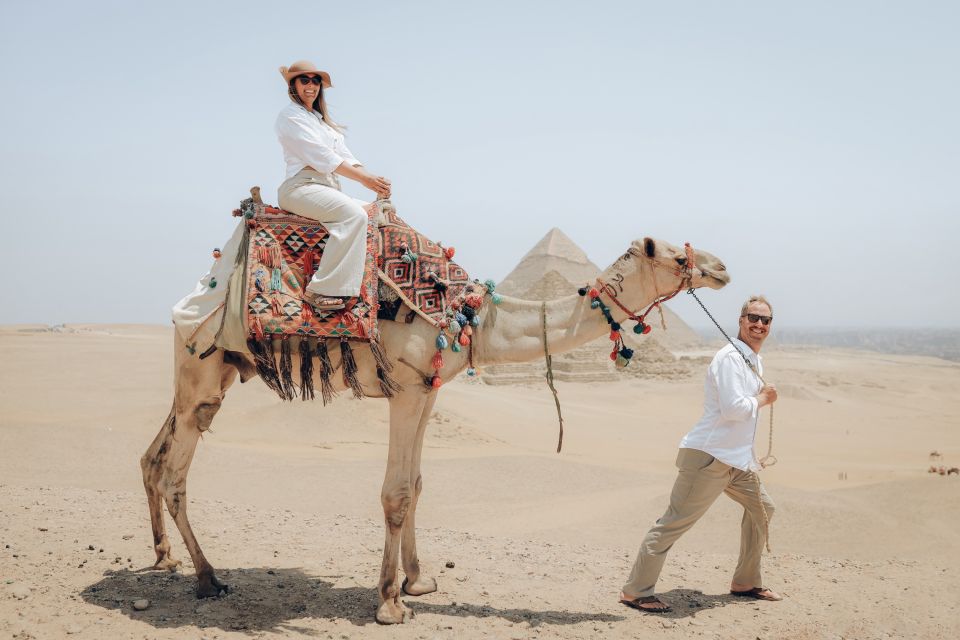
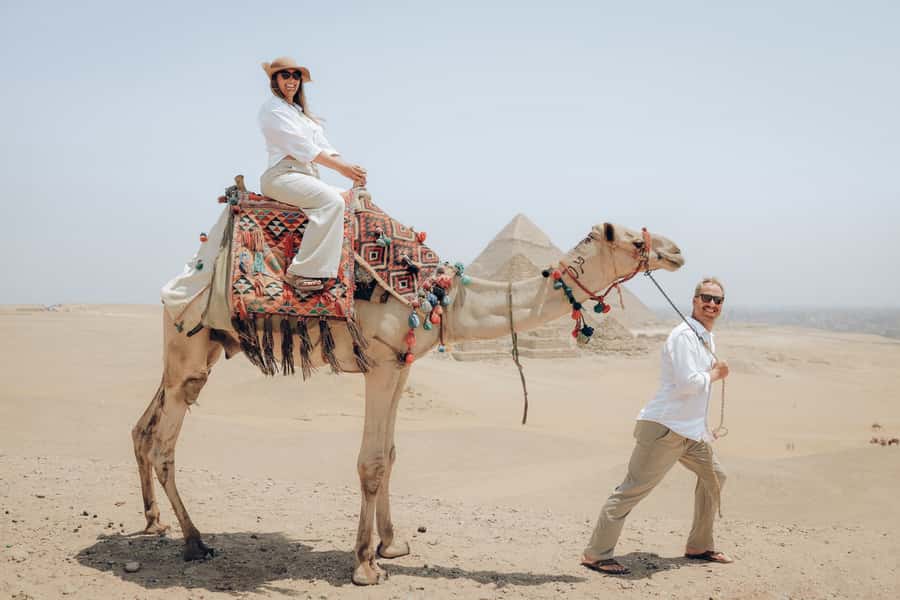
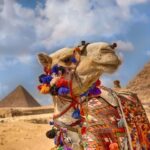
On the Giza Plateau portion, you’ll have time that can include a camel ride add-on and also short animal/horse moments depending on what’s offered that day. I’m a fan of doing one ride if you’re going to, not because it’s a must-do for history, but because it gives you a different angle on the pyramids and lets you slow down. Just treat it as a fun extra, not a core requirement.
Then there’s the free shopping time. This is your buffer zone where you can browse without a guide reading every label. It’s also where you might want to focus on one rule: decide what you’re willing to pay before you get talked into a higher price. The best way to handle shopping in Egypt is calm, direct, and short. If you want something, make a counteroffer. If you don’t, politely move on.
Practical note: don’t carry large bags. Your tour information specifically says luggage or large bags aren’t allowed, so plan to travel light.



Price and logistics: what $90 really covers
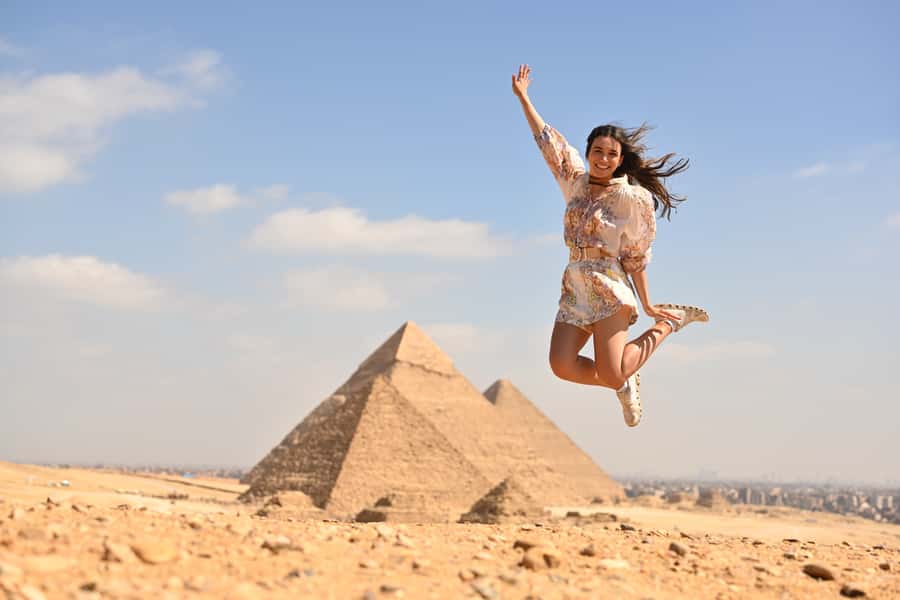
At $90 per person for an 8-hour day, the value is in the parts that are annoying to organize alone.
You’re getting:
- Pickup and drop-off in Cairo or Giza
- Air-conditioned vehicle between sites
- Egyptologist guide
- Bottled water
- General admission tickets for Pyramids and Sphinx area, Memphis, and Saqqara
- Lunch at a restaurant if you select that option
- Optional upgrades like entry inside the Khafre Pyramid, camel ride, and extras such as professional photographer or long-range pickup
If you were to book all of that separately—transport, timed guidance, and admissions—it usually stops feeling like “just a tour” and starts feeling like a logistics job. This package tries to remove that friction so you can focus on the monuments.
What I’d watch for when comparing options: pyramid interior entry isn’t automatically included unless you book the Khafre Pyramid entry add-on. If that’s a priority, factor it into your decision rather than hoping it happens as part of the base ticket.
Guide language and group size: the difference you’ll feel
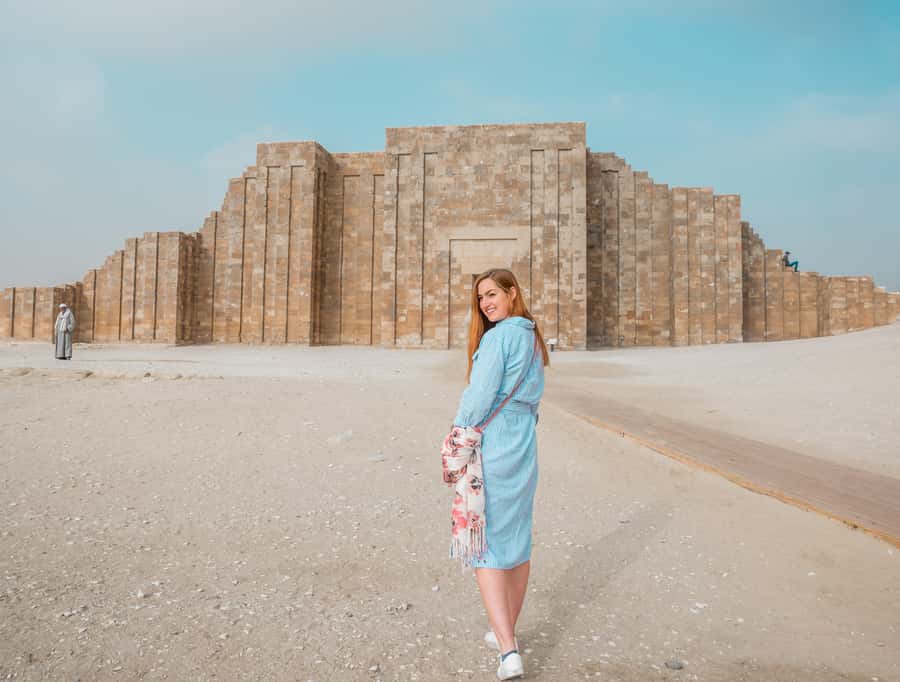
This is a small group tour limited to 13 participants, which you’ll feel immediately at the stops. Smaller groups tend to mean fewer people competing for the guide’s attention at the same moment and less time lost herding the group. If you’re the kind of traveler who wants questions answered without being rushed, that matters.
Language options include German, French, English, and Arabic. If English is your choice, pick a guide who can explain history clearly at a speed that fits your comfort level. In the feedback I saw, some guides were praised for strong delivery, while a few guests noted the pace or clarity wasn’t always perfect in certain language situations. The safe move is to ask your guide to slow down if you want specifics—you’re not on a tightrope.
Also, a theme across positive comments: guides often help with dealing with vendor pressure around the plateau. That makes the free time feel less stressful, which is a big deal after you’ve already spent hours walking in the sun.
Timing tips for a day that moves fast
Even with a good plan, you’re covering multiple sites in one day. That means small choices help.
Bring:
- Passport or ID card
- Comfortable shoes for walking on uneven ground
- A sun hat and comfortable clothes
- Warm clothing, especially if you’ll be out during cooler early or late hours
And pack smart:
- No large bags
- Keep valuables accessible so you’re not digging during handoffs
My other practical tip: if you want the best pyramid photos, get ready for waiting moments near the best angles. Your guide can point you to photo spots while keeping the group moving, but you should still expect some standing time because crowds and crowd control happen at Giza.
Who this tour is best for
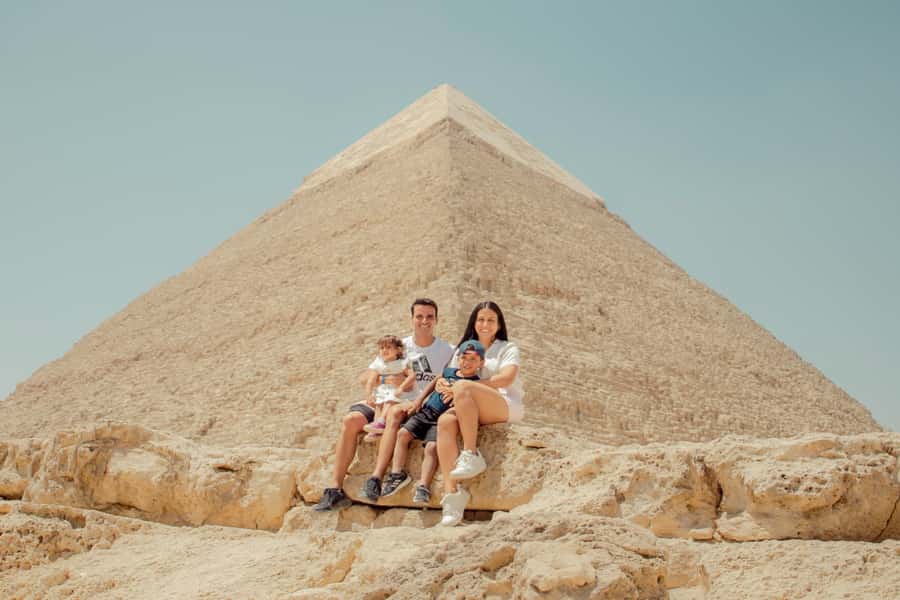
You’ll likely love this format if:
- You want one day that covers Saqqara, Memphis, and Giza without juggling separate bookings
- You enjoy learning as you walk, especially when the guide connects the dots between sites
- You care about photo time and want a plan, not just a drop-off
You might reconsider if:
- You’re wheelchair-dependent (the tour isn’t suitable for wheelchair users)
- You hate tight schedules and prefer long unstructured time at fewer sites
- Your top goal is maximum interior access across multiple pyramids, because this is a single-day route with specific timing
Should you book the From Cairo: Pyramids of Giza, Sphinx, Saqqara & Memphis Tour?
If you want a well-managed “greatest hits” day that still feels guided and thoughtful, I’d say yes, book it. The price is reasonable for what’s included, and the route makes sense: start at Saqqara so you understand the pyramid idea’s evolution, then bring that context to Giza and finish with the Sphinx and Valley Temple so you don’t just see famous stones—you grasp why they mattered.
Just be honest with yourself about the one thing this kind of day can’t guarantee: interior pyramid access depends on timing. If that’s your must-do, confirm priorities with your guide early and be flexible if the day’s clock shifts.
FAQ
How long is the tour?
It lasts 8 hours.
Where do you get picked up and dropped off?
Pickup and drop-off are included from your accommodation in Cairo or Giza, with multiple options around Giza listed for start and end points.
What’s included in the price?
Included basics are pickup and drop-off, air-conditioned transport, an Egyptologist guide, bottled water, and general admission tickets for the Pyramids and Sphinx area, Memphis, and Saqqara. Lunch is included if you select that option. Entry inside the Khafre Pyramid is included only if you book that add-on.
Which languages are available for the guide?
The tour offers live guide languages in German, French, English, and Arabic.
Can I ride a camel or get a photographer?
A camel ride and a professional photographer are available as add-ons, meaning they’re included only if you select them during booking.
Is the group small?
Yes. The tour is limited to up to 13 participants.
Do I need cash for entrance tickets?
The Egyptian Ministry of Tourism states that entrance tickets should be purchased directly by paying with a card; cash is not accepted.