REVIEW · GIZA
Giza: Pyramids at Sunset Guided Camel Tour
Book on GetYourGuide →Operated by Egypt Excursions Online · Bookable on GetYourGuide
Camel rides at sunset beat the crowds. This small-group Giza tour pairs an Egyptologist guide with an easy hotel pickup so you can focus on the big moments: pyramids at golden hour and an up-close look at the Great Sphinx. The main catch is simple: drinks aren’t included, so plan for water.
You’ll spend about two hours total, with a full 1-hour camel ride timed for views of Khufu, Khafre, and Menkaure. It’s a comfortable pace, designed for photos, and the guide’s explanations help the desert feel less random and more like a story you can actually follow.
In This Review
- Key things I’d watch for (before you ride)
- How this sunset camel tour in Giza really works
- Pickup, group size, and why the timing matters
- The camel ride: traditional, calm, and made for photos
- Passing Khufu, Khafre, and Menkaure with context
- The Great Sphinx: up close, not just in the distance
- Weather, comfort, and what to pack so the desert doesn’t win
- Value and the $20 question: what you’re really paying for
- Who this tour suits best (and who should skip it)
- About the guide and language options
- Transportation: air-conditioned comfort on a hot day
- Add-ons: if you want to turn it into an adrenaline sunset
- Should you book the Giza camel sunset tour?
- FAQ
- How long is the Giza pyramids at sunset guided camel tour?
- How long is the camel ride?
- Is hotel pickup and drop-off included?
- Do I need to bring drinks?
- Is there an Egyptologist guide?
- What languages are available for the guide or host?
- What is the group size?
- What should I bring for the tour?
- Is this tour suitable for pregnant women or people with mobility impairments?
- Is cancellation refundable, and how far in advance do I need to cancel?
Key things I’d watch for (before you ride)
- Sunset timing for the pyramids: the tour is built around getting those sweeping views when the light turns dramatic
- 1-hour camel ride: long enough to feel like an experience, not so long that it turns into a chore
- Up-close Great Sphinx time: you’ll get near the statue rather than just looking from a distance
- Small group (up to 10): easier questions, less crowd shuffle, better photo moments
- Drinks not included: bring money for water and consider sun protection
- Not ideal for mobility needs or pregnancy: camels and desert terrain make this one a tough fit
How this sunset camel tour in Giza really works
This is one of those tours that nails the basic formula: keep logistics simple, then deliver the sights when they look their best. You’re picked up from your hotel area and carried to the starting point, so you’re not doing the stressful part—finding the right spot at the right time—while the sky is changing.
Once you’re with the group, the experience shifts into slower mode. You’ll climb onto a camel, head out into the desert, and take in the pyramids and the Sphinx with context from an Egyptologist guide. That guide time matters. Without it, you see monuments. With it, you start to understand why these shapes still dominate the skyline and what the site meant over 4,000 years ago.
The tour runs about 2 hours total. The ride itself is 1 hour, which is the sweet spot for most people: enough time to enjoy the motion and soak up the views, without feeling like your legs and attention are being drained for the sake of tradition.
You can also read our reviews of more guided tours in Giza
Pickup, group size, and why the timing matters
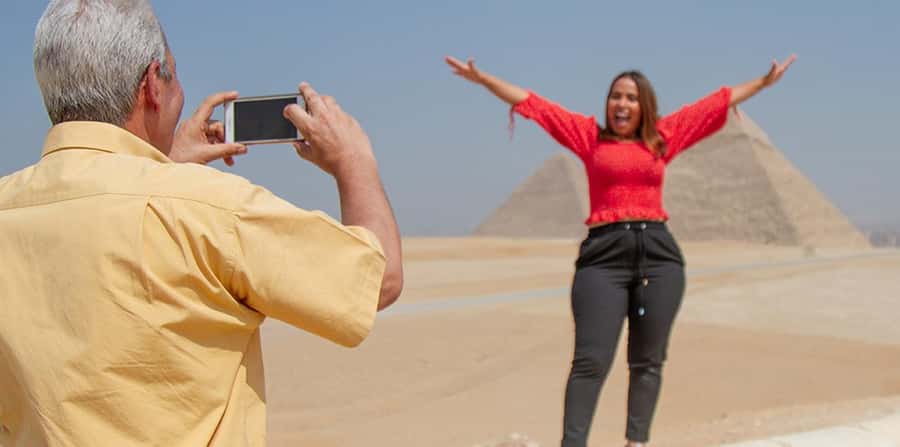
Your day starts with hotel pickup and drop-off, and the experience is designed around arriving before sunset views peak. That timing isn’t just about beauty. In Giza, the light can make everything—from distant pyramid edges to the Sphinx’s details—look completely different, and sunset light is usually when you get the most flattering sightlines.
The group is kept to up to 10 participants, which changes the whole vibe. With a smaller group, you’re more likely to get a clear route, space for photos, and answers to questions without waiting forever for your turn. It also usually means the guide can keep an eye on everyone’s comfort level during the ride.
One practical note: you should be waiting about 10 minutes early in your hotel lobby at the stated pickup time. With a tour like this, being even a few minutes late can mean your group is already moving, and you’ll lose the part of the schedule that’s tuned for sunset.
The camel ride: traditional, calm, and made for photos
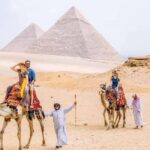
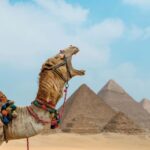
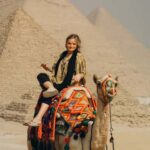
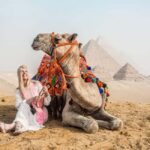
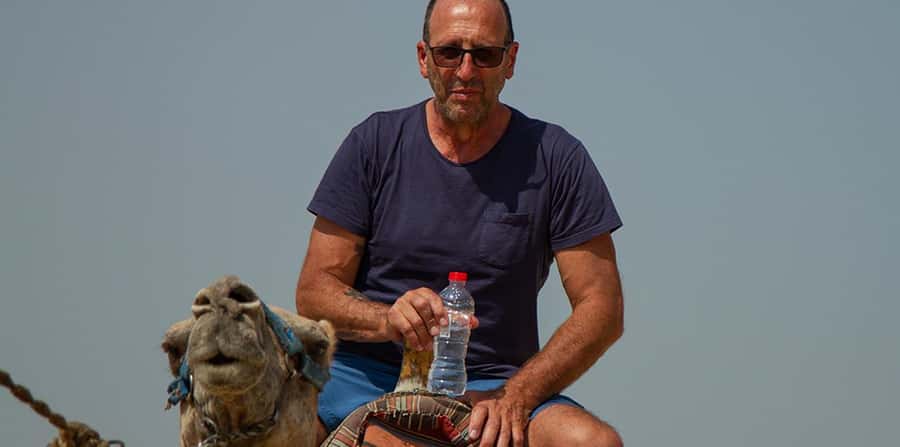
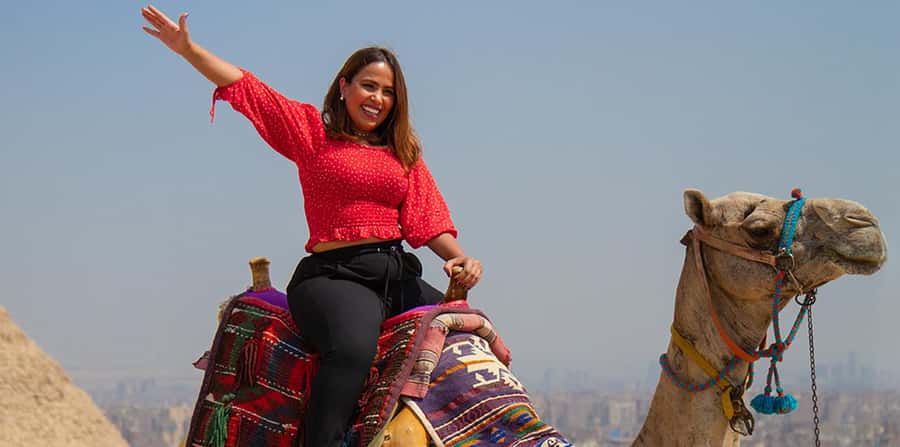
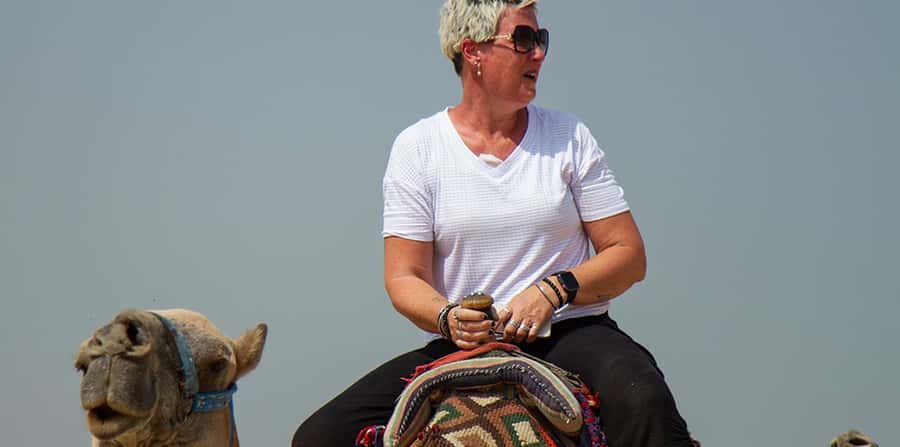
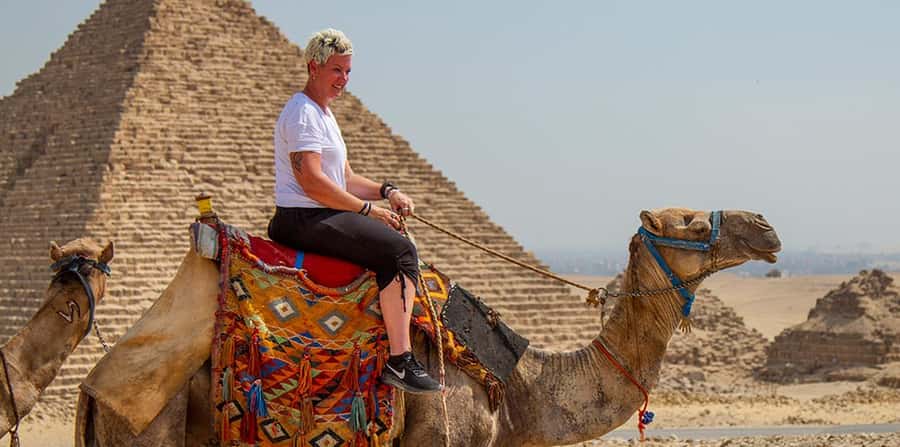
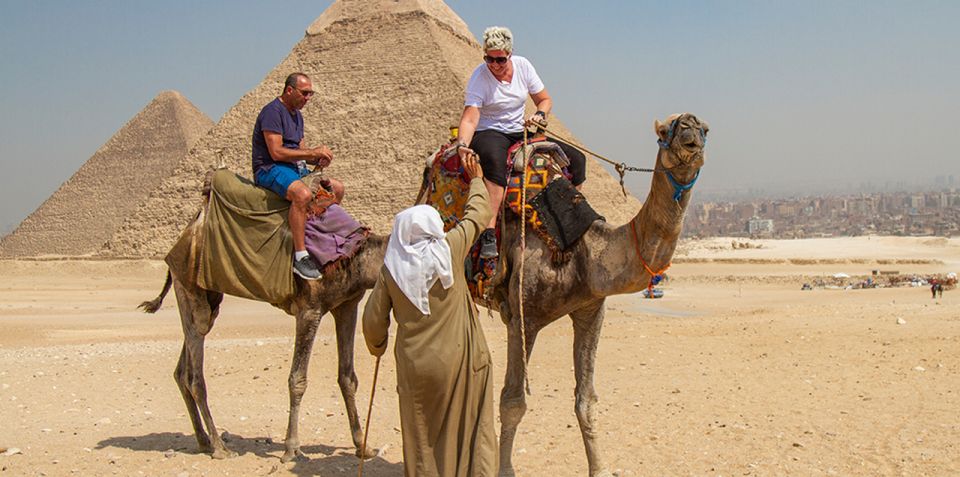
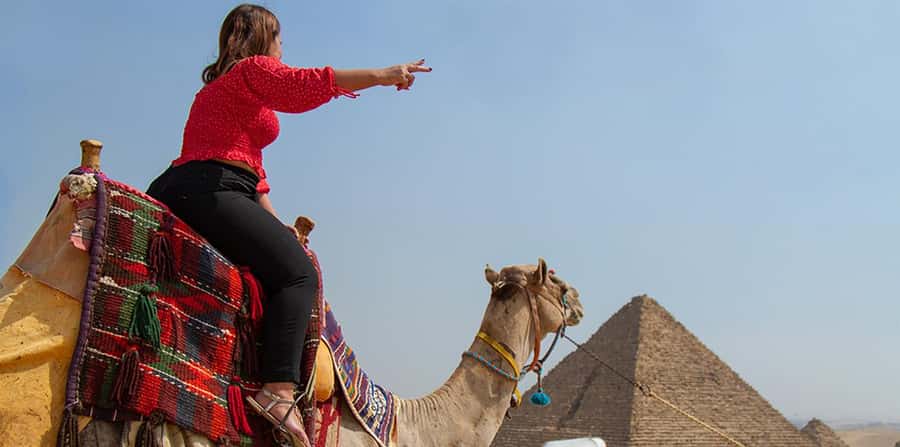
The core activity is a camel ride that lasts 1 hour. You’ll be riding among the Pyramids of Giza, with a guide who explains what you’re seeing while you travel through the desert.
What I like about this format is that it doesn’t pretend the ride is just a means to an end. You’re doing the ride for the experience, not as a quick photo stop and done. At the same time, it stays structured. You get enough time to stop, orient yourself, and take pictures—without feeling like you’re stuck for hours in the same position.
The pace matters too. Camel rides can vary a lot depending on the team. The setup here is clearly meant to feel steady and safe, so you can enjoy the view instead of spending your mental energy gripping for balance.
And yes—sunset adds a whole layer. The heat drops, the shadows lengthen, and the pyramids start looking more sculpted. If you’re thinking you’ll just see pyramids later from a viewpoint, this is the advantage of the camel portion: you’re closer to the scene, moving through it, not hovering at a distance.
Passing Khufu, Khafre, and Menkaure with context
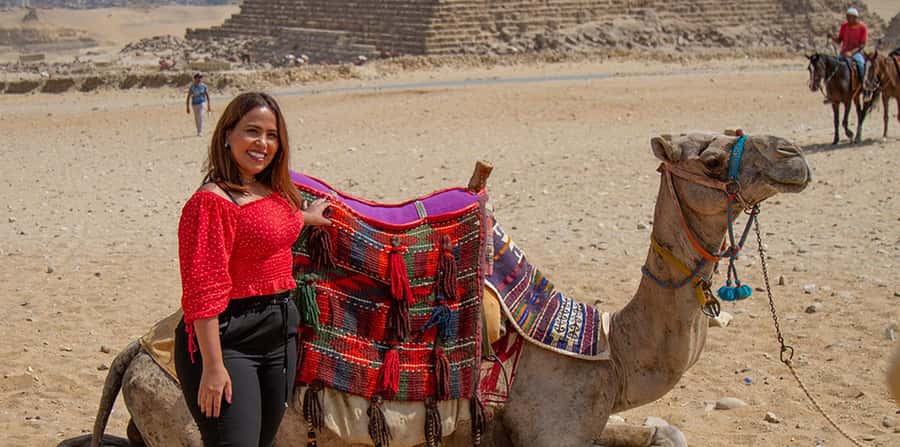
One of the most valuable parts of this tour is that it doesn’t treat the pyramids like random photo objects. You’ll get explanations about the three main pyramids: Khufu, Khafre, and Menkaure, including that they served as burial tombs around 2550 BC for a father, son, and grandson.
Even if you’ve read a bit about the Giza plateau before, hearing it from a guide while you can actually point at the shapes is a different learning experience. You start noticing how the site is organized and how each pyramid’s scale and placement help tell the broader story of the royal necropolis.
This is where the Egyptologist guide earns their keep. You’ll be able to ask questions as you ride and as you get viewpoints on the pyramids, and the explanations are tailored to what you’re seeing in front of you rather than a lecture detached from the ground.
If you’re the kind of person who likes to understand what you’re photographing—not just that it’s “cool”—you’ll appreciate this part.
The Great Sphinx: up close, not just in the distance
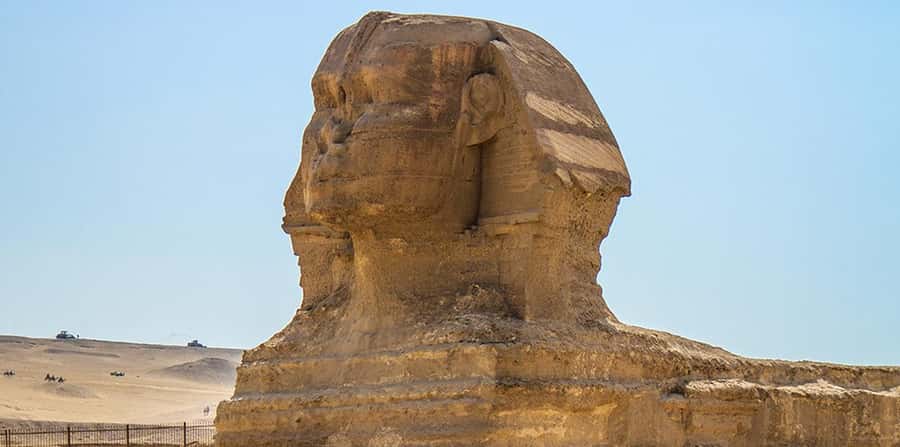
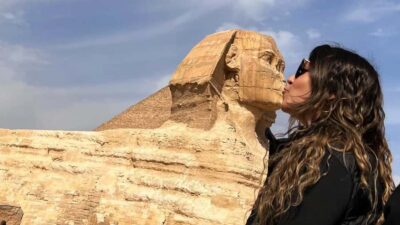
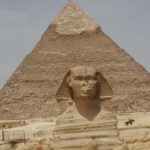
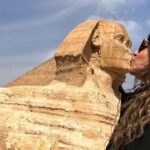
After the ride and pyramid viewing time, the tour heads into the desert area so you can get up close to the Great Sphinx. The Sphinx is described as one of the largest and oldest statues in the world, and the key point for your expectations is simple: this tour aims for proximity.
Standing near the Sphinx changes how you read it. Up close, it’s not just a silhouette. You can better sense the scale and the way the form dominates the space around it. It also makes the guide’s commentary more useful, because you can match what you’re hearing to real details right in front of you.
And this is one of the tour’s best “time-efficiency” advantages. There are plenty of ways to see the Sphinx, but getting there quickly and pairing it with pyramid viewing at sunset reduces your need to plan multiple separate excursions.

Weather, comfort, and what to pack so the desert doesn’t win
Giza’s desert conditions can be unforgiving, especially around sunset when the temperature swings can still fool you. So keep it practical.
Bring:
- Passport or ID card (useful for entry processes)
- Comfortable shoes (the desert isn’t a place for slippery or fragile footwear)
- Sunglasses and a hat
- Sunscreen
- Comfortable clothes
Since drinks aren’t included, I strongly suggest you plan for water. Even if you’re only out for about two hours total, you’ll feel the sun, the motion, and the standing around for photos.
Also think about photos. Sunset light is gorgeous, but you still need to be able to move—camera in one hand, sunglasses on, ready to shift positions. Loose layers help, and a small crossbody or zippered bag can keep things secure during the ride.
Value and the $20 question: what you’re really paying for
At $20 per person, this is priced like an affordable way to add “camel + guided context + sunset views” without turning your day into a half-day marathon. What makes it feel like value is the combo of inclusions:
- Hotel pickup and drop-off
- Air-conditioned transportation
- Egyptologist guide
- 1-hour camel ride
- Small group size (up to 10)
If you tried to piece this together yourself—transport, a reliable guide, and camel time—the cost typically climbs fast. The price also makes this a strong “first taste” option for camel riding in the desert if you’re on a tight schedule.
That said, one note to keep you grounded: the value can feel different depending on what you compare it to. I’d treat this as a baseline offer and compare other nearby options by checking what’s actually included—especially whether they add any extras that can change the total cost. If a different tour offers a similar experience for less, you’ll want to make sure the lower price isn’t cutting key items like guided time or pickup.
Finally, remember tipping. One review specifically advised bringing cash for tips because it’s customary in Egypt. That doesn’t mean you have to overspend, but it does mean your final budget is usually a bit higher than the headline price.
Who this tour suits best (and who should skip it)
This tour fits best if you:
- Want sunset views of the pyramids without spending hours organizing transport
- Like guided storytelling, not just sightseeing snapshots
- Prefer a small group where you can ask questions and get answers
- Are comfortable with a camel ride for about one hour
It’s not suitable for:
- Pregnant women
- People with mobility impairments
Also, if you’re looking for a purely hands-off, “no effort, no waiting” experience, a desert camel tour will still require some physical comfort—climbing on, sitting, and staying steady during the ride.
About the guide and language options
The experience is run with an Egyptologist guide, and there’s a clear emphasis on communication. Host or greeter languages include English, Romanian, Russian, German, and French. That matters because the guide’s explanations are part of what turns the pyramids and Sphinx into something you can interpret, not just something you walk past.
One practical mindset: if you want more out of the tour, come with a few questions. Even simple ones—how the kings are connected, why the Sphinx matters historically, what you’re looking for when you photograph the pyramids—make the time feel instantly more personal.
Transportation: air-conditioned comfort on a hot day
You’ll use air-conditioned transportation for the transfer from your hotel area to the starting point and then back at the end. In Giza, that’s not a minor detail. Even if the main event is the desert, you don’t want to sweat your way through the setup and wrap-up.
Smooth pickup and drop-off can also protect your sunset timing. If you’re delayed, you miss the best light and the entire experience loses some of its magic.
Add-ons: if you want to turn it into an adrenaline sunset
This camel tour is the base experience, but some people add a quad biking option to extend the fun. If you’re the kind of traveler who likes options, ask when you book whether any add-ons are available and how they’ll affect timing and total day length.
Just be ready: add-ons can change the overall feel from calm to energetic. And if you go that route, plan water and sun protection even more carefully.
Should you book the Giza camel sunset tour?
I’d book it if you want a guided way to see Giza at the moment the monuments look most dramatic—plus a real camel ride instead of a quick photo stunt. The blend of hotel pickup, small group size, and Egyptologist guidance makes it feel efficient and beginner-friendly.
I’d think twice if you hate tipping pressure, hate paying for water out of pocket, or you’re not comfortable with the idea of riding in desert conditions. Also compare prices against similar camel tours in the area, because the value can shift depending on what else is included.
If your goal is sunset magic over strict museum-style pacing, this is a strong choice. It’s exactly the kind of tour that turns a famous place into a memory you can feel, not just one you can recognize.
FAQ
How long is the Giza pyramids at sunset guided camel tour?
The tour lasts about 2 hours total.
How long is the camel ride?
You get a 1-hour camel ride as part of the experience.
Is hotel pickup and drop-off included?
Yes. The tour includes hotel pickup and drop-off.
Do I need to bring drinks?
No drinks are included. You should plan to bring water or buy drinks separately.
Is there an Egyptologist guide?
Yes, the tour includes an Egyptologist guide.
What languages are available for the guide or host?
The host or greeter is listed as available in English, Romanian, Russian, German, and French.
What is the group size?
This is a small group with a maximum of 10 participants.
What should I bring for the tour?
Bring your passport or ID card, comfortable shoes, sunglasses, a hat, sunscreen, and comfortable clothes.
Is this tour suitable for pregnant women or people with mobility impairments?
No. It is not suitable for pregnant women or people with mobility impairments.
Is cancellation refundable, and how far in advance do I need to cancel?
You can cancel up to 24 hours in advance for a full refund.