REVIEW · CAIRO
From Cairo: Private All-Inclusive Tour of Luxor by Plane
Book on GetYourGuide →Operated by Emo Tours Egypt · Bookable on GetYourGuide
The day starts before most people’s phones wake up. One morning in Cairo and by midday you’re standing among Egypt’s most famous ancient monuments, with flights built into the schedule. You’ll hit both banks of the Nile, all with a guide waiting for you at each step, so the day stays tight and meaningful instead of stressful.
I love that it’s a private guided format, so your pace and questions are yours (and you’re not stuck listening through a loudheadphone haze). I also like the hard-hitting pairing of West Bank tombs and East Bank temples, which is the best way to understand what Luxor looked like in different royal eras.
The main drawback is the very long, very early start. Even with the plane, this is a full-on day, and late return flights can mean extra waiting time in Luxor.
In This Review
- Key points
- Cairo to Luxor by plane: the trade-off that makes sense
- West Bank morning: Valley of the Kings, Deir El Bahari, Colossi of Memnon
- Valley of the Kings: tombs with a storyline
- Deir El Bahari and Queen Hatshepsut: architecture that explains power
- Colossi of Memnon: the easiest photo, the hardest to forget
- Crossing the Nile: why the East Bank feels like a different world
- Luxor Temple: a calmer introduction before the Karnak scale hits
- Karnak Temple: Hypostyle Hall and the parts you should not miss
- Lunch break and the rhythm of a 10-hour day
- Price and logistics value: what $370 really buys you
- What makes the guide factor matter on this route
- Tips to help you enjoy it instead of surviving it
- Who this tour is best for (and who should skip it)
- Should you book this Cairo to Luxor day tour by plane?
- FAQ
- What is the duration of this Cairo to Luxor tour?
- What’s included in the price?
- How early is pickup in Cairo?
- What are the main sites you’ll visit in Luxor?
- What languages is the guide available in?
- Do I need a passport, and what should I bring?
- What should I know about cancellation and flight availability?
Key points
- 3:30 a.m. pickup makes the flight timing work, but plan for a long day.
- West Bank highlights include Valley of the Kings, Deir El Bahari, and the Colossi of Memnon.
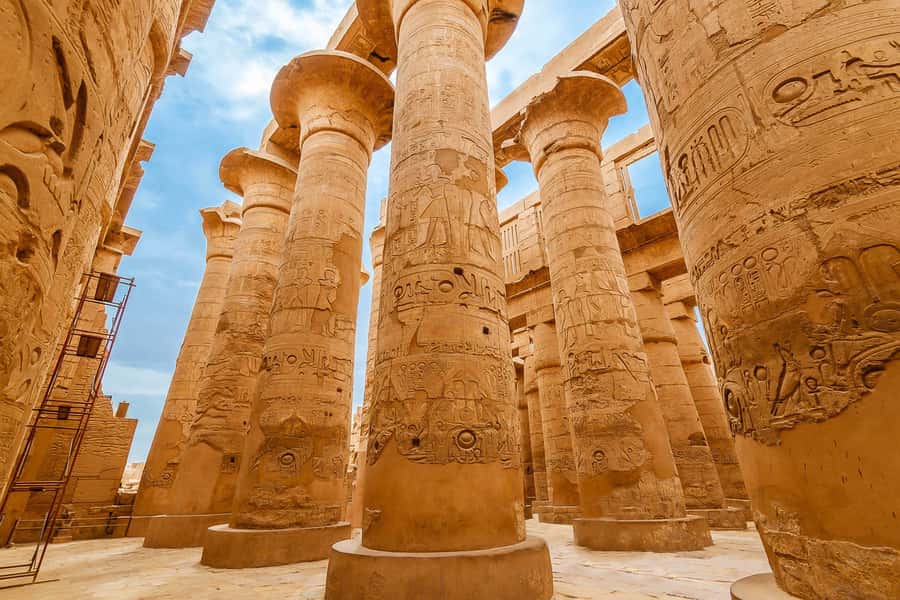
- Karnak Temple scope is huge: Hypostyle Hall with 134 columns and major obelisks.
- Private transfers and entry fees reduce the usual Cairo–Luxor headache.
- Lunch is included, plus bottled water to keep the pace realistic.
Cairo to Luxor by plane: the trade-off that makes sense
This tour is built for people who want Luxor but only have a limited window in Cairo. Instead of spending a full travel day on trains or road trips, you fly one way and fly back the same day. That matters because Luxor is the kind of place where time disappears fast once you’re there.
You’ll be picked up in Cairo early (around 3:30 a.m. in the plan) and transferred to the domestic airport. After the flight (about 2 hours), your guide meets you in Luxor—often with a sign showing your name—and then the real sightseeing starts right away. The result is that you don’t waste half a trip just getting oriented.
And it stays practical: private A/C vehicle, entrance fees included, a live guide, and bottled water. That combo is the difference between a day trip that feels manageable and one that feels like you’re running between buses all day.
You can also read our reviews of more private tours in Cairo



West Bank morning: Valley of the Kings, Deir El Bahari, Colossi of Memnon
Luxor’s West Bank is where you go to feel the scale of royal ambition. The plan focuses on the big names: tombs in the Valley of the Kings, the funerary complex of Deir El Bahari, and the Colossi of Memnon as a dramatic mid-day stop before you cross back toward the temples.
Valley of the Kings: tombs with a storyline
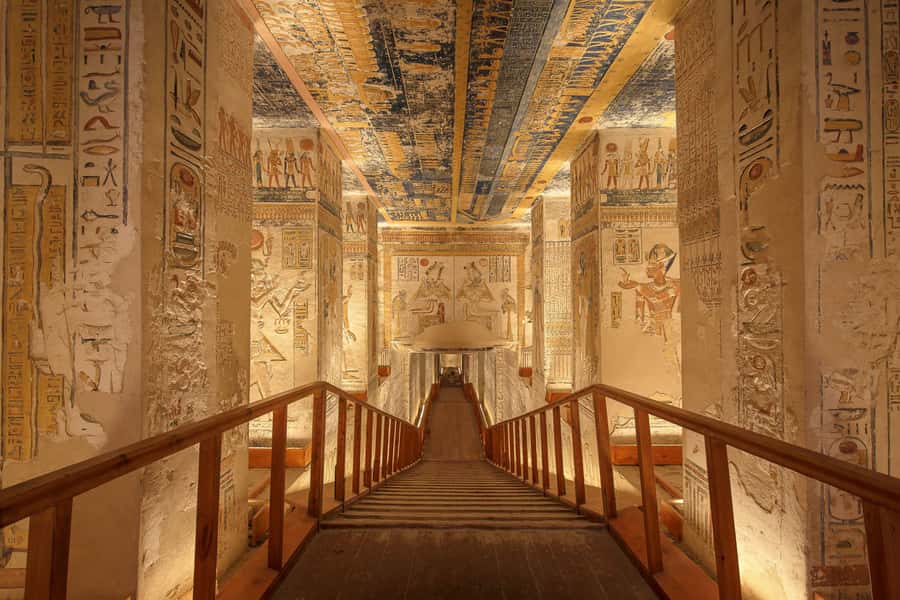
This is the star stop for many people, and the tour uses a guided format so you don’t just look at doors in a hillside. You’ll get context for what kinds of dynasties and rulers were buried here and why the valley became such a magnet for royal death cults.
One practical plus: guided time inside can feel easier than doing this independently, because your guide can help you prioritize what to look for and how to read the setting. If you’re visiting for the first time, that’s huge.
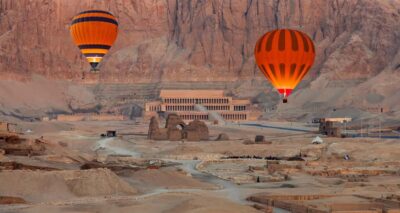
Deir El Bahari and Queen Hatshepsut: architecture that explains power
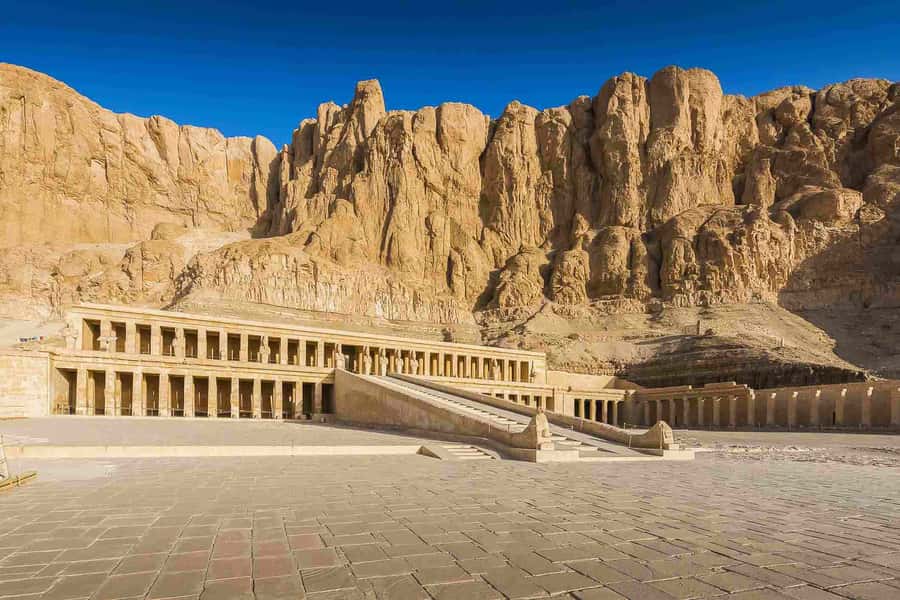
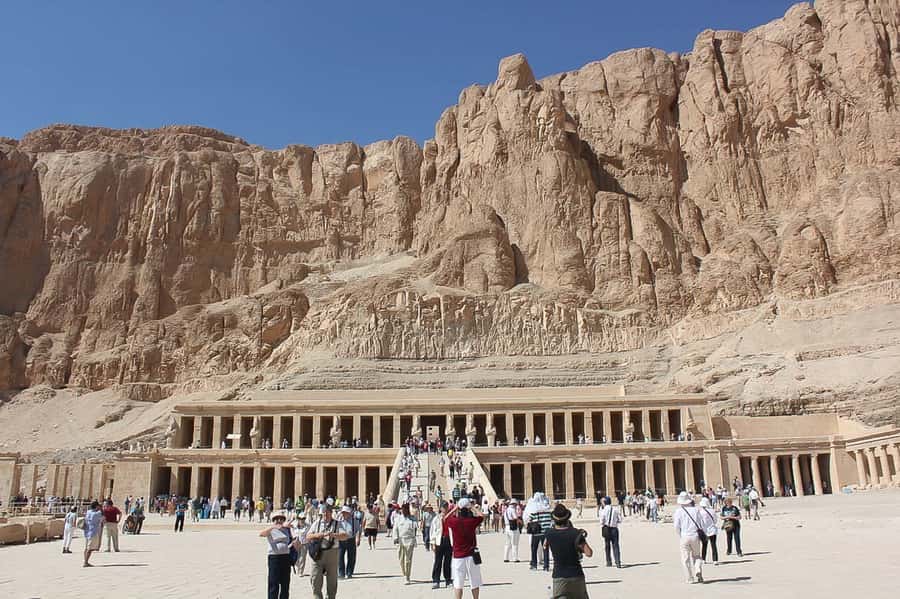
Next comes the Temple of Queen Hatshepsut at Deir El Bahari. This stop is famous for a reason: the temple layout uses terraces and sheer drama to project authority. With a guide, you’re not just seeing shapes—you’re tying the design to the politics and religious ideas behind it.
Also, this temple is a good “breather” compared to the tombs. Tomb visits can be mentally intense (stone, shadows, symbolism, crowds). Deir El Bahari gives your eyes a wider stage and lets the day feel less like a checklist.
Colossi of Memnon: the easiest photo, the hardest to forget
Then you’ll stop at the Colossi of Memnon—two gigantic seated statues representing Amenophis III facing the Nile. This is one of those rare sights where even if you’ve seen pictures, the real thing feels larger than your brain expects.
It also functions as a useful pacing tool. The statue stop gives you a moment to reset before the day shifts toward the East Bank temples.

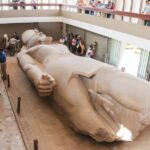



Crossing the Nile: why the East Bank feels like a different world
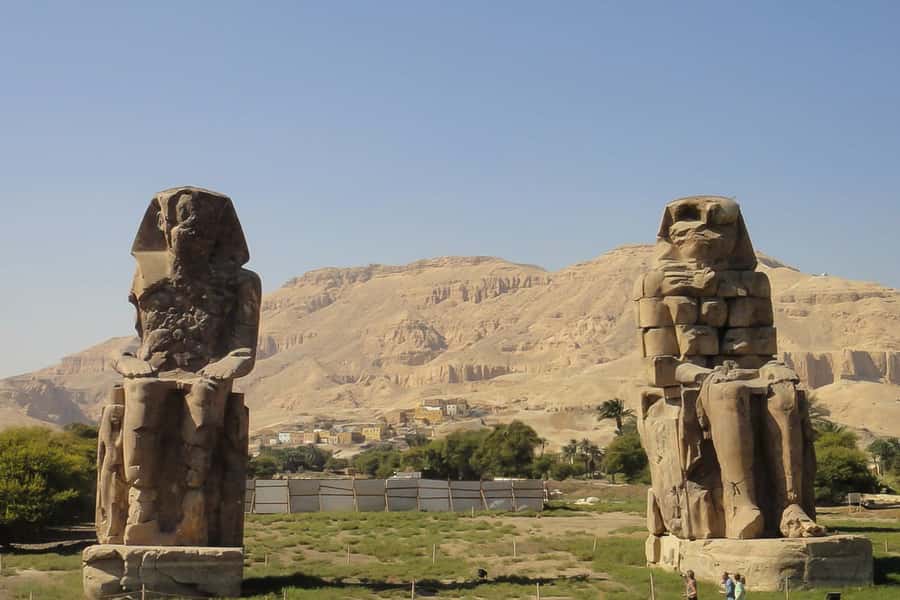
After lunch, the tour crosses to the East Bank for Luxor and Karnak Temples. This is where Luxor flips from funerary silence to daily ritual and monumental construction.
The big idea you’ll want to keep in mind: West Bank is about the afterlife and royal burial spaces. East Bank is where kings performed power in public settings—processions, worship, and the architecture meant to last for centuries.
So even if the day is long, the route has logic. You’re not just ticking off famous sites—you’re watching how different parts of ancient Thebes worked together.
Luxor Temple: a calmer introduction before the Karnak scale hits
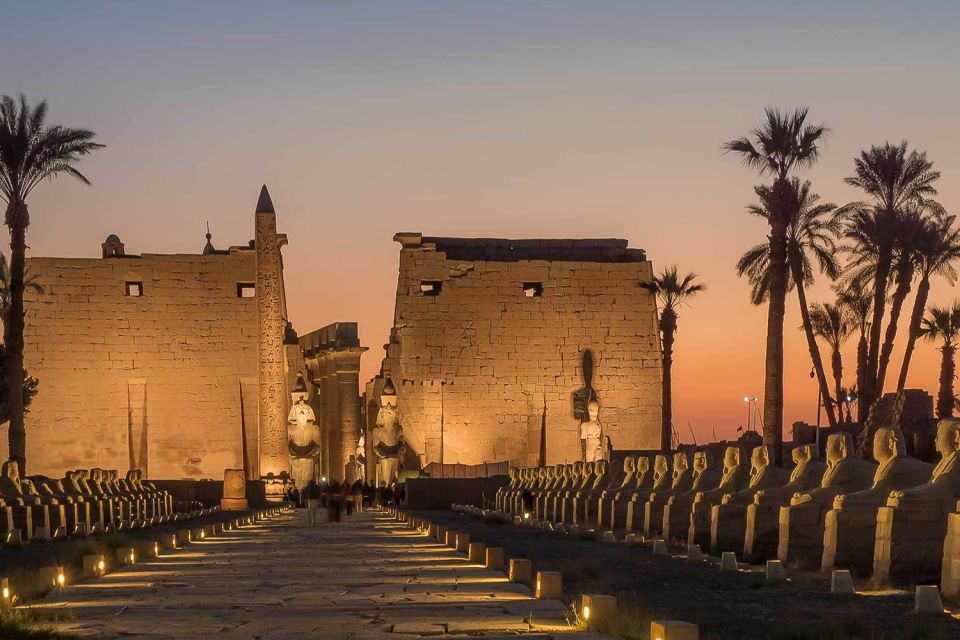
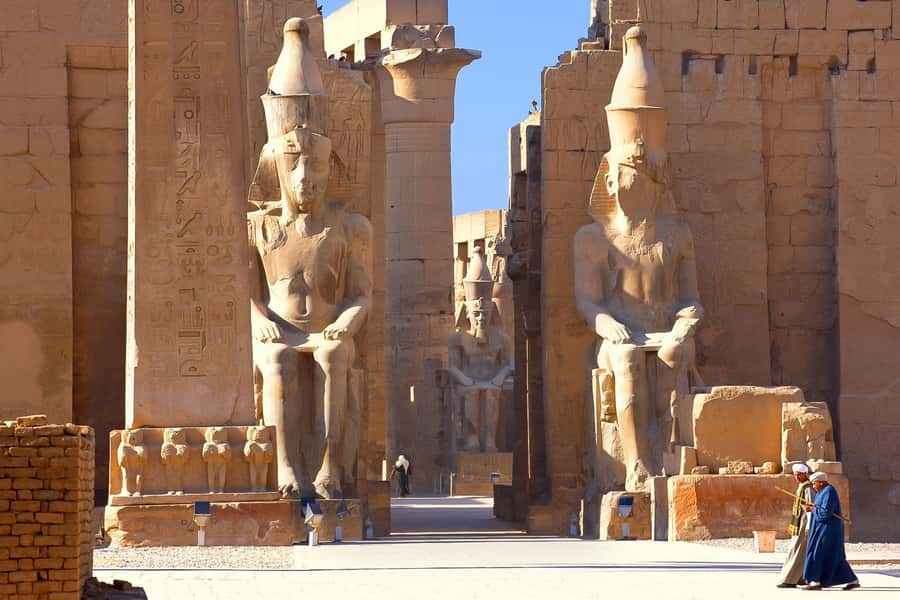
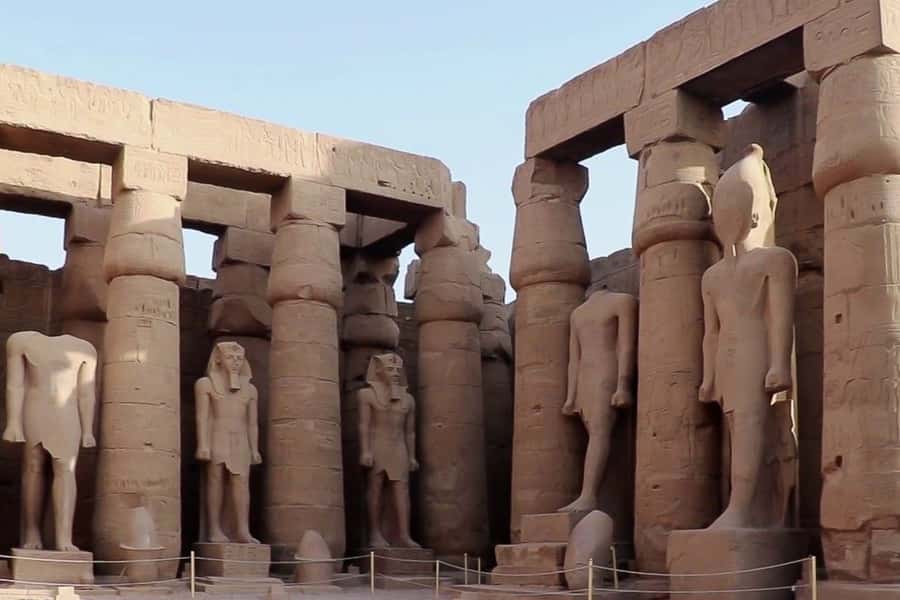
Luxor Temple is the first major East Bank site on the schedule. You’ll see its courtyard and key granite statuary associated with Ramses the Great. The tone here feels more human-scale than Karnak, even though it’s still monumental.
This stop is a smart setup. By the time you reach Karnak, your eyes have learned the basics: columns, sacred geometry, and the way ancient Egyptian temples layer meaning in stone.
Karnak Temple: Hypostyle Hall and the parts you should not miss
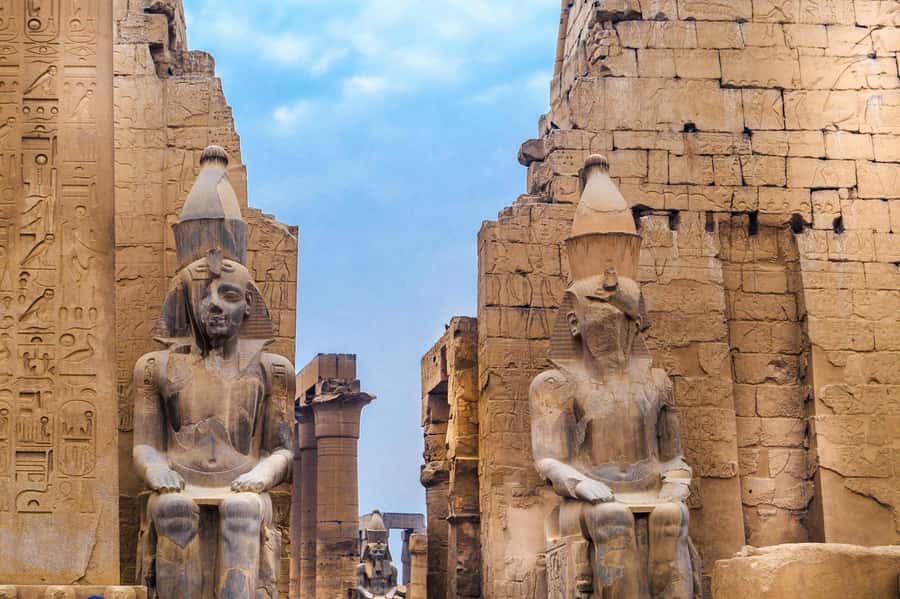
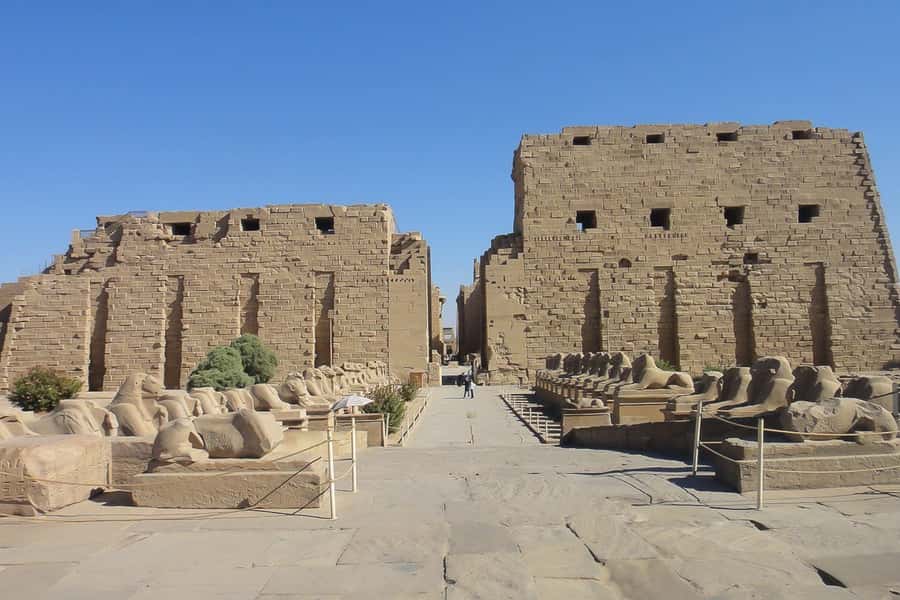
Karnak is the reason Luxor can feel overwhelming if you go without a plan. This tour handles that by guiding you through the best-known sections in an order that makes sense: you’ll start along the Avenue of Sphinxes, then hit major structures and standout features.
Here are the Karnak moments that most strongly justify the time and early start:
- Unfinished Propylon: a reminder that even empires were unfinished works in progress.
- Hypostyle Hall with 134 gigantic columns: this is where the room transforms into a forest of stone. Expect it to feel visually loud.
- Obelisks of Queen Hatshepsut and Tutomosis III: you’ll see how different rulers reused the sacred stage for their own claims.
- Amon temple area decorated with lotus and papyrus designs: those plants weren’t random decoration. They connect to Egyptian symbolism and the way the temple presented order.
- Granite Scarabeus of Amenophis III: it’s an odd, eye-catching object to look for in the flow of the complex.
- Sacred Lake: temples weren’t just buildings. They were systems, and water features were part of the sacred design.
One more practical point: Karnak is busy. A guided day usually means you spend less time trying to figure out where to go next and more time understanding what you’re looking at. That’s not just convenience—it keeps you from rushing past details because you got turned around.
Lunch break and the rhythm of a 10-hour day
Lunch is included, plus bottled water. That sounds basic, but on a day with flights and two sides of the Nile, it’s a real quality-of-life win.
In practice, the meal spot tends to be the kind of restaurant stop that helps you recover before the afternoon temples. Some departures are known for rooftop or Nile-view style dining, which makes the wait feel less like waiting and more like part of the experience.
Still, keep your expectations aligned with the timing: this is not a leisurely day. You’re going to eat, move, and keep going. If you want a long, slow Luxor day with extra wandering time, you’d be better off adding a separate evening out rather than trying to turn this into a relaxed vacation day.
Price and logistics value: what $370 really buys you
At about $370 per person for a 10-hour experience from Cairo, you’re paying for more than sightseeing.
You’re paying for:
- round-trip domestic flights
- airport transfers in Luxor and Cairo by private A/C vehicle
- entry fees
- a live guide
- lunch and bottled water
If you were to DIY this, the biggest cost in time is not the money—it’s coordinating transport, tickets, and a guide you trust while you’re tired after a pre-dawn pickup. This package trades money for smoothness. For many people, that’s the right deal.
Private transportation also matters here. Luxor sites are spread out enough that waiting for cabs or taxis can steal hours. The tour is designed to keep momentum, which is exactly what you want on a one-day Luxor sprint.
What makes the guide factor matter on this route
On a day like this, your guide can change everything.
Many departures report guides like Ahmed and Ayman, with other named Egyptology-focused guides including Adel and Shereen. The recurring theme is not just facts—it’s how the information is structured: what to notice, how sites link to specific rulers, and how to read symbols rather than treat carvings like decoration.
Also, the guides often help with timing and comfort. With early mornings and a long circuit, knowing the best way to move through crowded zones can make the difference between feeling rushed and feeling in control.
If you’re the type who asks questions, a live guide is a big win here. Karnak alone can turn into a maze. A good guide keeps it understandable.
Tips to help you enjoy it instead of surviving it
This day is doable, but you’ll enjoy it more if you plan like a strategist.
- Sleep early the night before. This is a 3 a.m. or 3:30 a.m. world, not a normal tourist schedule.
- Pack light but smart: passport or ID is required, and you’ll want essentials for heat and sun during outdoor stops.
- Bring a small hydration plan: bottled water is included, but extra sips help, especially if your stop times feel faster than expected.
- Use downtime well if your flight is late: some late-return situations have resulted in hotel waiting time before the Cairo flight. If you get a few free hours in Luxor, your guide may suggest practical ways to use it (like a short Nile option at the right time of day).
- Skip the shopping pressure: if you don’t want shop stops, tell the team. Several departures have had guides and drivers who won’t force extra purchases.
Who this tour is best for (and who should skip it)
This is a strong fit if:
- you’re staying in Cairo and want Luxor without losing a day to overland travel
- you want the major highlights with a guide, not DIY navigation
- you like a structured route that connects West Bank and East Bank in one pass
It’s a less good fit if:
- you hate very early starts and long travel days
- you need lots of unplanned free time for wandering or shopping
- you’re sensitive to indoor/outdoor shifts and heat (most of the key sites are outdoors)
One note from the operator: it’s not suitable for people over 95 years. If that affects you, you’ll want a different plan with a slower pace.
Should you book this Cairo to Luxor day tour by plane?
Book it if you want the Luxor highlights fast, with private logistics and a guide doing the heavy lifting. At this price, you’re not just buying tickets—you’re buying a day that runs on rails: flights handled, transfers handled, entrances handled, and the route designed to teach you what you’re seeing.
Skip it if your dream Luxor trip is slow, flexible, and centered on one or two sites with long breaks. In that case, you’d be happier flying on separate days or staying overnight so you can pace yourself.
If you do book, my advice is simple: treat this like a mission, not a casual stroll. Get good sleep, show up ready, and let the guide structure your day—especially for Karnak, where the right order turns confusion into clarity.
FAQ
What is the duration of this Cairo to Luxor tour?
The tour duration is listed as 10 hours.
What’s included in the price?
It includes round-trip flight tickets, private transportation and transfers by A/C vehicle, entry fees, a live tour guide, lunch, and bottled water.
How early is pickup in Cairo?
Pickup is scheduled very early, with the plan starting around 3:30 a.m. (with some departures reported at about 3 a.m.).
What are the main sites you’ll visit in Luxor?
You’ll visit Valley of the Kings, Deir El Bahari / Temple of Queen Hatshepsut, Colossi of Memnon, and on the East Bank Luxor Temple and Karnak Temple.
What languages is the guide available in?
The live tour guide is available in English, Spanish, German, and Arabic.
Do I need a passport, and what should I bring?
You should bring a passport or ID card. A passport copy is accepted.
What should I know about cancellation and flight availability?
There is free cancellation up to 3 days in advance for a full refund. Since flights require reservations, the tour is non-refundable except when the tour operator cancels. The tour also depends on flight availability.