REVIEW · ASWAN
Aswan: Luxor Day Trip with Sunrise Hot Air Balloon & Felucca
Book on GetYourGuide →Operated by Nice Tours · Bookable on GetYourGuide
The Nile looks unreal from above. This private Aswan-to-Luxor day trip pairs a sunrise hot air balloon with a full sweep of Luxor’s West and East Bank icons.
I especially like the calm start of drifting over the temples at first light, and I like how your private Egyptologist guide turns tomb paintings and temple carvings into stories you can actually follow. A guide named Marwa Fatafeat Elsoker has been praised for her energy, and you may also run into Mahmoud Issa or Ahmed Anwer—both called out for teaching and kindness.
One consideration: the balloon is weather-dependent, and drive times can run long. One booking reported a balloon cancellation and another noted the return drive took longer than expected due to road changes and delays.
In This Review
- Key things to know before you go
- Sky at sunrise, temples all day: what this trip feels like
- The Aswan to Luxor drive: why timing matters
- Sunrise hot air balloon over Luxor: the view you can’t fake
- Valley of the Kings: hieroglyphs become a language
- Hatshepsut, Deir el-Medina, and Colossi of Memnon: the West Bank story arc
- Hatshepsut Temple: a rare female pharaoh in stone
- Deir el-Medina: the workers behind the royal tombs
- Colossi of Memnon: scale you can feel from one spot
- Lunch, then the Nile by felucca: why the break helps
- Karnak Temple and Luxor Temple: the East Bank hit list
- Karnak: the biggest wow-factor
- Luxor Temple: power at human scale
- Price and what you really get for $260
- Practical tips for a smooth 12-hour day
- Should you book this sunrise balloon and felucca Luxor day trip?
- FAQ
- How long is the trip?
- What does the tour include?
- Which areas and sites will I see in Luxor?
- Is the hot air balloon ride guaranteed?
- Where does pickup happen?
- What languages are available for the live guide?
- What should I bring?
Key things to know before you go
- Sunrise balloon over Luxor’s West Bank for the view before the crowds show up
- Private Egyptologist explanations tied to beliefs, symbols, and what you’re looking at
- Valley of the Kings tombs with hieroglyphs you can read better with guidance
- Deir el-Medina’s Final Judgement carvings in a quieter, more local-feeling stop
- Felucca ride on the Nile after lunch to reset between temple visits
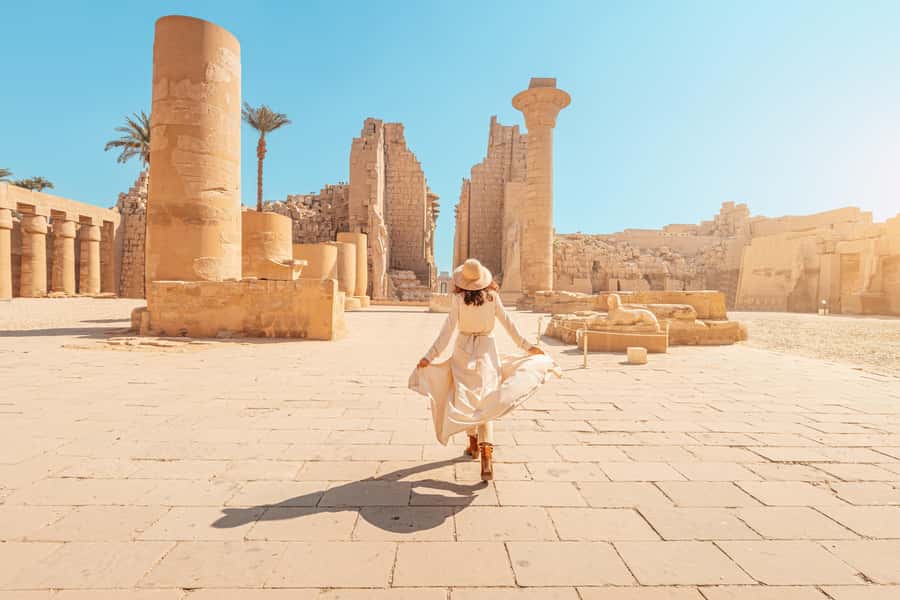
- Karnak and Luxor Temples for the big scale on the East Bank, plus the power-play at Luxor Temple
Sky at sunrise, temples all day: what this trip feels like
This is one of those days that stacks contrasts on purpose. You start in silence above Luxor, then spend the rest of the day walking through the places where Ancient Egyptians designed their afterlife and their legacy. If you like history, you’ll be busy. If you like atmosphere, you’ll be fed too.
The value here is the range. You don’t just hit one site. You do the West Bank monuments (Valley of the Kings, Hatshepsut, Deir el-Medina, Colossi of Memnon) and the East Bank power centers (Karnak and Luxor Temple) in a single private run, with lunch and a felucca cruise to break it up.
For me, the best part is that you’re not sightseeing by autopilot. A good guide can make hieroglyphs and temple layouts feel less like decoration and more like communication. Several guide names have come up repeatedly in feedback, which is a nice sign that the narration matters—not just the stops.
You can also read our reviews of more tours and experiences in Aswan.


The Aswan to Luxor drive: why timing matters
You’ll get picked up from your Aswan hotel and travel about three hours to Luxor in a private air-conditioned vehicle. That’s a big chunk of the day, so plan to use it like a transition, not wasted time.
Bring what you need to stay comfortable: sunglasses and a sun hat are specifically suggested, and comfortable clothes and shoes will matter because the walking adds up fast once you start moving through temple and tomb entrances. Also, cash is listed—handy in case you want small extras during the day.
Two practical notes from real-world experience:
- One report said the balloon was canceled due to weather, which can shift the day’s rhythm.
- Another report said the drive back to Aswan took longer than the stated time because the route changed. Roads can be unpredictable, so keep your expectations flexible on the return.
Sunrise hot air balloon over Luxor: the view you can’t fake

If you’re awake enough to remember it (and you will be), the sunrise hot air balloon is the reason many people pick this day trip. The balloon ride happens around sunrise and includes drifting over the archaeological sites on Luxor’s West Bank. Even if you’ve seen photos, being up there changes the scale. Temples and tomb sites look like a planned landscape, not scattered ruins.
It’s also the best time to get your bearings. From the air, you get a sense of how the Nile bends the geography and how the West Bank monuments relate to each other. Then, when you step back onto land, the sites feel less random.
Logistically, you’ll meet your guide at a café and start with something simple like Egyptian tea. That small pause helps you transition from travel mode into early-morning exploration mode.
Weather is the only real wildcard. Balloon flying depends on conditions. If the balloon doesn’t happen, you lose the best visual piece of the puzzle—so treat this as a weather-season activity and don’t build a tight schedule after your return.
Valley of the Kings: hieroglyphs become a language
On the West Bank, the day shifts into your tomb and temple phase. Valley of the Kings is where you slow down in a different way: it’s not about distance, it’s about detail.
You’ll visit three important tombs, and the key here is the interpretation. The tomb walls are decorated with hieroglyphs, and a private guide can help you understand what you’re seeing—especially Ancient Egyptian ideas about the afterlife. Without help, hieroglyphs can feel like pattern. With help, they start to act like captions.
What I like about arranging the tomb visits early in the sequence is that you’re still mentally fresh from the balloon. By the time you’re inside these tombs, you can focus on the scenes instead of just collecting sites.
A small practical tip: wear comfortable shoes. You’ll be going in and out of entrances and navigating uneven ground around tomb areas. Also, expect it to feel warm even when it’s early, so sunglasses and a hat are genuinely useful.
Hatshepsut, Deir el-Medina, and Colossi of Memnon: the West Bank story arc
This part of the day gives you variety without feeling scattered.
You can also read our reviews of more tours and experiences in Aswan


Hatshepsut Temple: a rare female pharaoh in stone
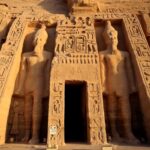
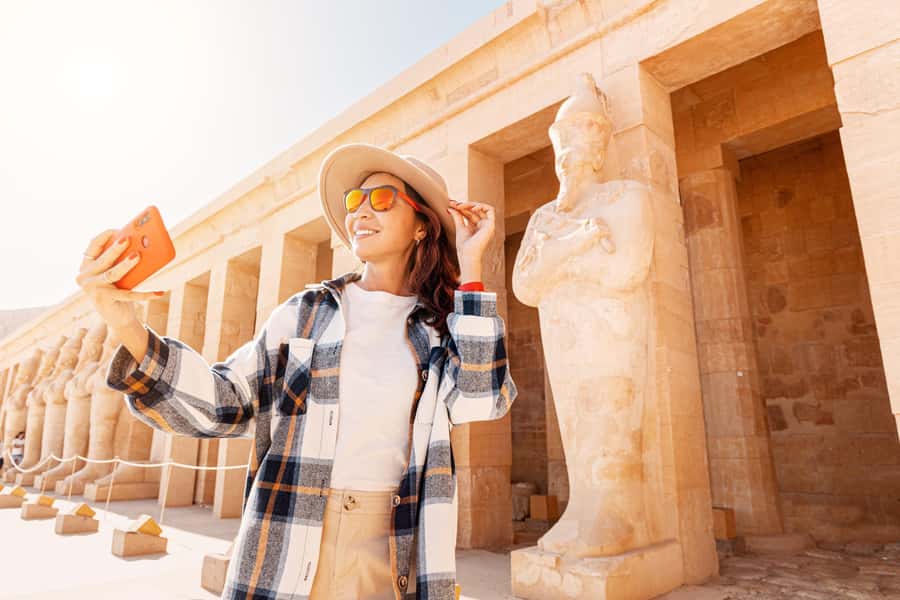
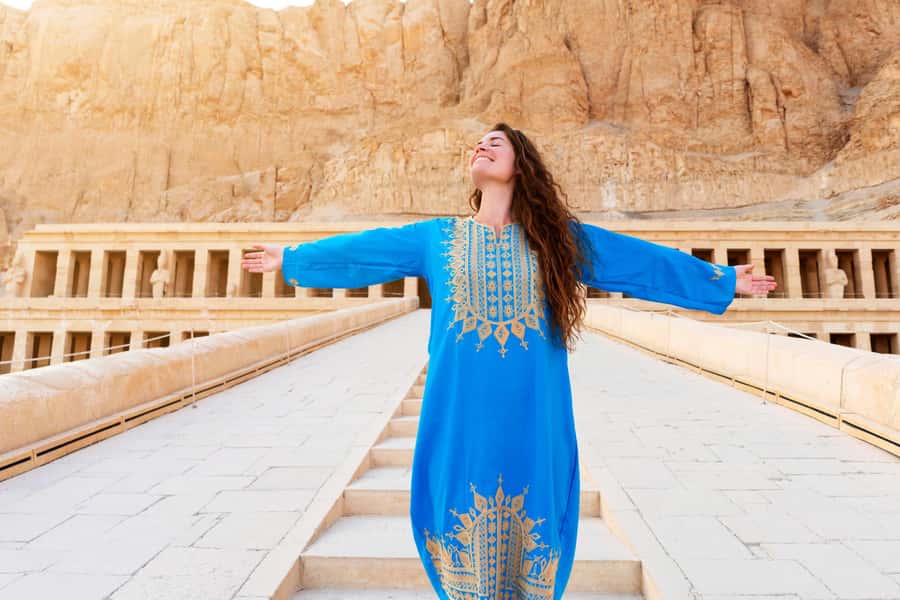
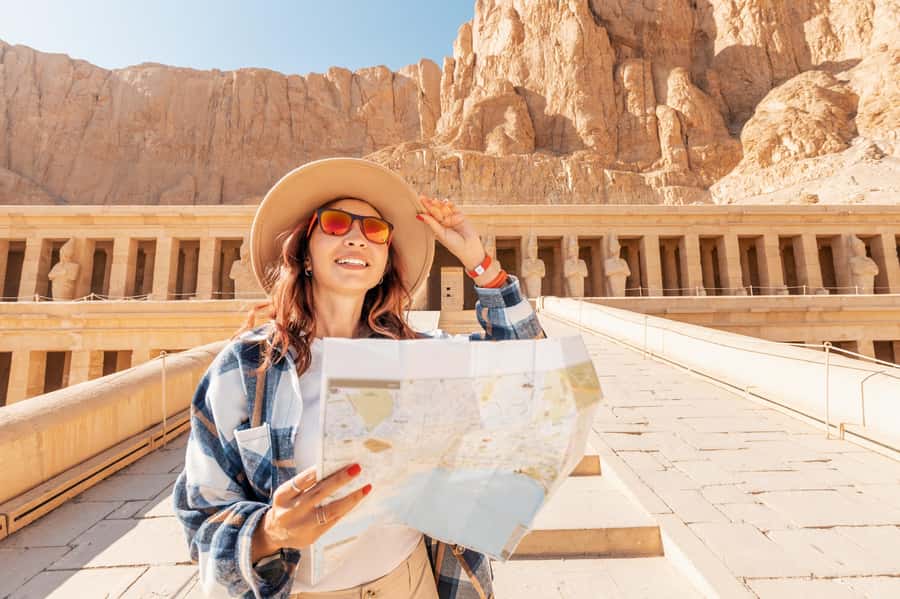
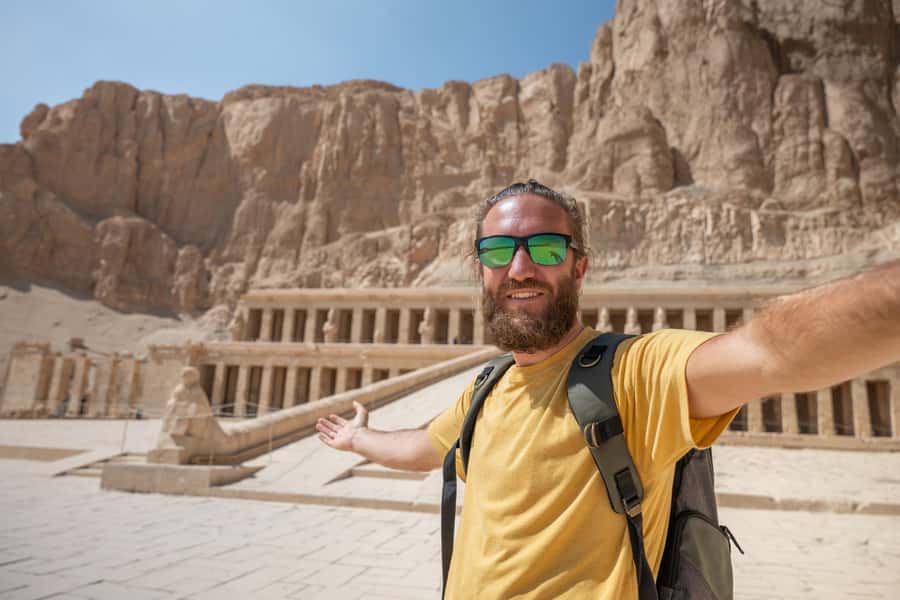
Next up is the Temple of Hatshepsut. The temple is built with three floors and open balconies, with limestone shaping the terraces. It’s also visually distinctive because it features statues connected to Osiris and Queen Hatshepsut.
For your understanding, Hatshepsut matters because she’s described here as the only female pharaoh in Ancient Egypt. When your guide ties that fact to what you’re seeing—how power is displayed, how authority is claimed—the temple becomes more than a set of blocks. It becomes political messaging carved into architecture.
Deir el-Medina: the workers behind the royal tombs
Then you’ll head to Deir el-Medina, also known as the Valley of the Workers. This stop helps you zoom in from royal drama to the people who built it.
The temple dedicated to Hathor here stands out because it’s one of the few places in Egypt where you can see carvings of the Final Judgement. That’s not just interesting trivia; it’s a window into how everyday people might have talked about morality, fate, and what comes after death.
If you want more than royalty-only sightseeing, this is where the day feels more human.
Colossi of Memnon: scale you can feel from one spot
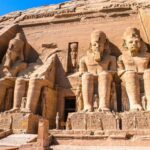
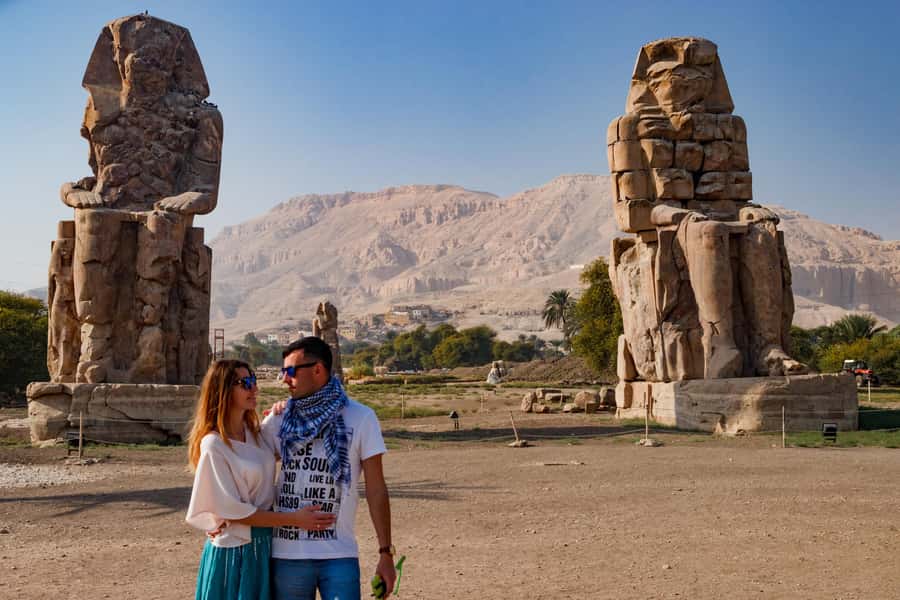
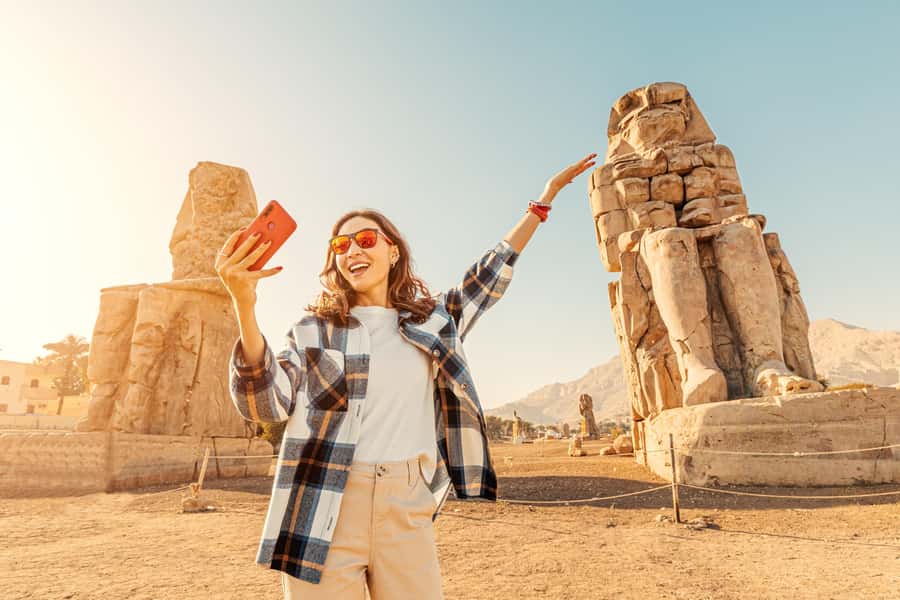
You’ll also stop at the Colossi of Memnon, tied to Amenhotep III. These are massive statues that are famous enough to be recognizable even without a long explanation, but the guide’s job is to connect the statues to their purpose and the culture around them.
This is a nice breather between tighter, more detailed stops. You can stand back, take in the proportions, and reset your eyes before the day shifts again.
Lunch, then the Nile by felucca: why the break helps
After all that West Bank walking, the schedule builds in lunch at a local restaurant. Lunch is included, and snacks plus Egyptian tea are also part of what you’ll have during the day. One review specifically called out a lunch restaurant with a Nile view, which is exactly the kind of small comfort that makes a long day feel less punishing.
Right after lunch, you take a felucca ride on the Nile River. This is more than a photo stop. It changes your pace. Temples and tombs are intense and detail-heavy. A slow boat on the Nile gives your brain time to digest what you just saw—and it’s also a good physical reset.
Then you cross to the East Bank, where Luxor Temple and Karnak take over with their sheer scale.
Karnak Temple and Luxor Temple: the East Bank hit list
Karnak: the biggest wow-factor
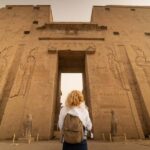
Karnak Temple is dedicated to the god Amun and his family and is described as the largest temple in Luxor. You’ll walk along the avenue of sphinxes to enter the UNESCO World Heritage site. Once inside, the towering columns and decorated walls make it feel like you stepped into a massive system, not one building.
This is a place where a guide helps you notice how the design builds meaning. Without guidance, you might just see volume. With guidance, you see organization.
Luxor Temple: power at human scale
Luxor Temple comes next. It’s smaller than Karnak, but it’s still impressive, and that matters because you get variety without leaving the East Bank story.
Luxor Temple includes massive statues of Ramses II flanking the entrance. That kind of framing gives you a clear sense of how the pharaoh wanted to be remembered—through size, placement, and repetition.
If you’ve just come from Karnak’s monumental scale, Luxor Temple feels more readable. You can take your time, notice alignments, and connect the dots between how the two temples communicate religious and political power.
Price and what you really get for $260
At $260 per person for a 12-hour private day trip, you’re paying for a lot more than entry tickets. You’re paying for:
- Private hotel pickup and drop-off in Aswan
- An English-speaking guide (with other live languages available)
- A sunrise hot air balloon ride
- A felucca ride
- Lunch plus snacks and Egyptian tea
- Entrance fees when selected as part of your option
- Skip-the-ticket-line support
So where does the value come from? It’s in the “stacking.” You’re bundling distant sites (West and East Bank), multiple guided stops, and two very different transport experiences (balloon + boat) into one day. If you were to piece this together on your own, the coordination alone would eat time, and you’d likely end up paying for guides and transport separately.
Where your cost may shift: entrance fees depend on the option selected, and there are extra pickup logistics fees if you need pickup from certain Aswan locations beyond a standard hotel pickup. There’s also an add-on option for certain guide languages beyond the default English-speaking guide.
Practical tips for a smooth 12-hour day
This day runs long, so set yourself up for the physical reality.
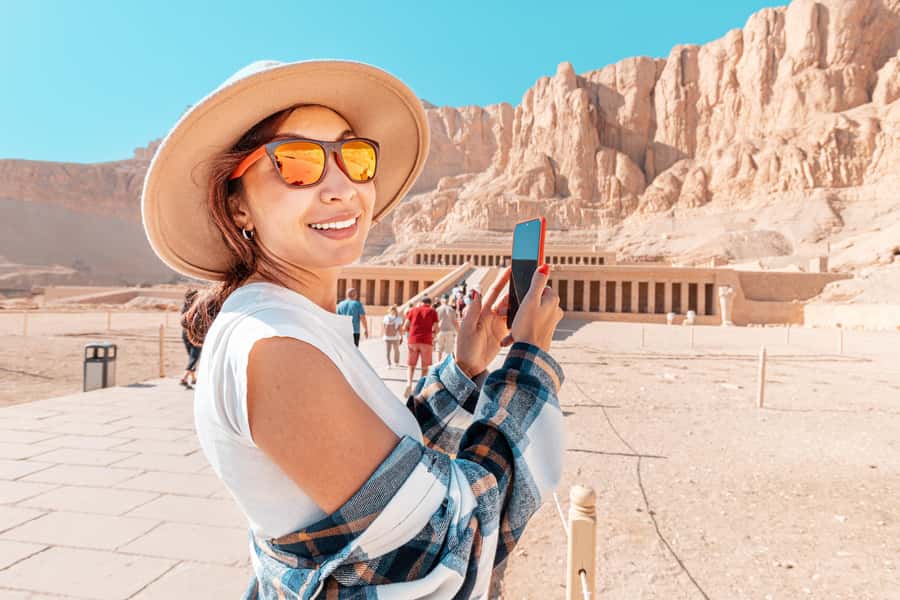
Wear comfortable shoes because you’ll be moving through tomb areas and temple floors. Bring sunglasses and a sun hat, since the sun can be strong even when you start early. Comfortable clothes matter because you’ll be in and out of shaded spaces while walking between stops.
Also, don’t underestimate how much time you spend transitioning between monuments. The drive to Luxor, then the crossing from West Bank to East Bank, then the return to Aswan all add pressure to keep a calm pace. If you’re the type who needs a strict timeline, this might feel intense. If you’re okay with a full-day rhythm, it’s a great fit.
One more practical mindset: expect the day to be guided and structured. This isn’t the kind of trip where you can freely wander for hours on your own. That’s part of the benefit—your guide keeps the day coherent and makes it easier to understand what you’re seeing.
Should you book this sunrise balloon and felucca Luxor day trip?
I think you should book it if you want the best Luxor hits in one go and you like having a guide connect what you see to what it meant. The sunrise balloon gives you a unique perspective that you can’t replicate by land, and the felucca ride is a real decompression moment after a long West Bank push.
Skip it or at least be cautious if balloon weather is a big concern for your plans, because weather can cancel the balloon. Also, if you’re very sensitive to long road travel and you have a hard schedule afterward, know that drive times can run longer than the headline estimate.
If your goal is an energetic, well-rounded Luxor day from Aswan—sky, tombs, temples, and Nile water—this is a strong option.
FAQ
How long is the trip?
The duration is listed as 12 hours.
What does the tour include?
It includes hotel pickup and drop-off in Aswan, an English-speaking guide, a hot air balloon ride, a felucca ride, lunch, snacks and Egyptian tea, and entrance fees if the option is selected. Skip-the-ticket-line is also included.
Which areas and sites will I see in Luxor?
You’ll visit Luxor’s West Bank sites including the Valley of the Kings, the Temple of Hatshepsut, Deir el-Medina, and the Colossi of Memnon. You’ll also visit Karnak Temple and Luxor Temple on the East Bank.
Is the hot air balloon ride guaranteed?
The hot air balloon ride is included, but it can be affected by weather conditions.
Where does pickup happen?
Pickup is from your Aswan hotel. There’s an extra 10 USD per person if you need pickup from Gharb Soheil (the island), Nagaa al-Mahatta, or New Aswan.
What languages are available for the live guide?
Live tour guide languages listed are Arabic, English, French, German, and Spanish.
What should I bring?
Bring comfortable shoes, sunglasses, a sun hat, comfortable clothes, and cash.