REVIEW · ASWAN
From Aswan: Trip to Abu Simbel by Bus
Book on GetYourGuide →Operated by Sun Pyramids Tours · Bookable on GetYourGuide
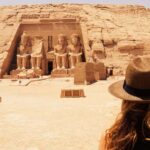
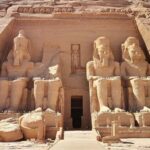
Dawn makes Abu Simbel feel unreal. I really like seeing the four colossal Ramses II statues on the façade before the heat and crowds settle in, and I also like how the trip leans on an Egyptologist guide’s explanations so the temples make sense fast. One consideration: this is a long day built around an early start, with hours spent on the road each way.
You’ll get picked up from your Aswan hotel in a modern air-conditioned coach, then settle in with bottled water as you head toward the temples. The ride also buys you big payback in scenery—especially the Nasser Lake area—so the morning drive doesn’t feel like dead time.
In This Review
- Key Points You’ll Care About
- From Aswan to Abu Simbel: The Early Start That Sets the Tone
- The Drive-In: Comfort, Timing, and What “Small Group” Really Means
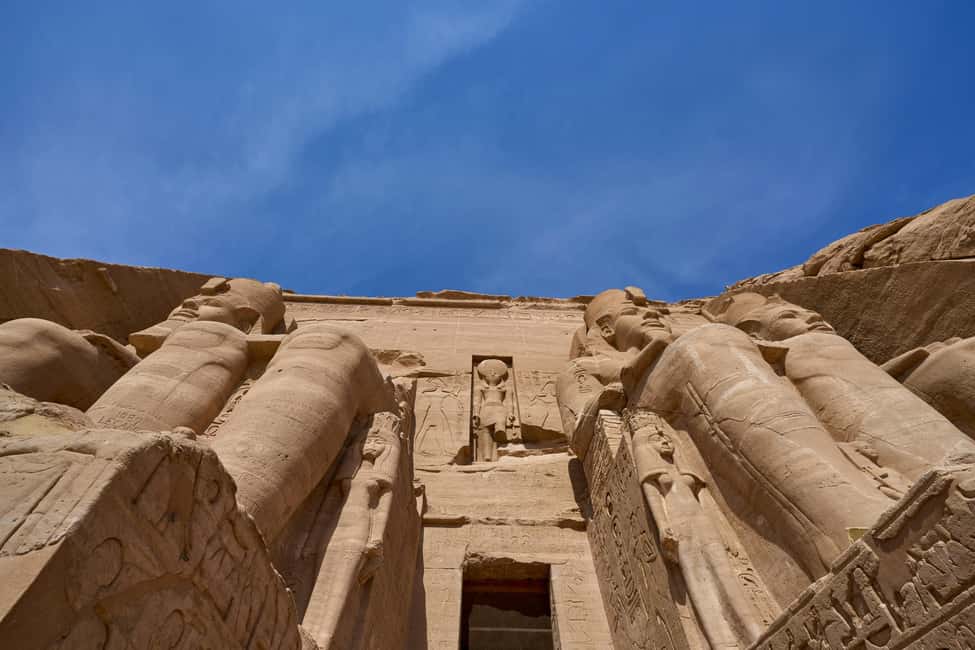
- First Shock at Abu Simbel: The Four Colossal Ramses II Statues
- Ramses II Sun Temple: Ptah, Re, Amun-Re, and the Logic of the Gods
- Temple of Nefertari (Hathor): When the Queen Becomes Symbolic Sun-Goddess Power
- Nasser Lake Views on the Way Back: A Quiet Win After the Big Visuals
- Price and Value From Aswan: What $110 Really Buys
- The Real Deal: Time on Site, Photo Opportunities, and Guide Quality
- Who This Abu Simbel Bus Trip Suits Best
- Should You Book This Aswan to Abu Simbel Bus Tour?
- FAQ
- What’s the departure style from Aswan?
- Are the Abu Simbel temple entrance fees included?
- Is there an English-speaking guide?
- How early does the tour depart?
- What’s included in the price?
- Are there any extra pickup costs?
- Is tipping included?
Key Points You’ll Care About
- Punctual early departure: the morning start is timed to put you among the first groups for the best façade views
- Two temples, one mission: you’ll focus on the rock-carved temples of Ramses II and Nefertari (Hathor)
- Colossi first, photos second: the façade with giant statues is the visual shock, and you’ll have time to take photos
- Guided meaning, not just facts: you’ll connect the temple iconography to Ramses II and the solar/god symbolism
- Air-conditioned comfort + bottled water: the long transport is at least made tolerable
- Small-group pace: the tour runs as a smaller group, which usually means less chaos at the stops
From Aswan to Abu Simbel: The Early Start That Sets the Tone
This is the kind of trip where timing matters more than you think. You’re leaving Aswan early in the morning by modern air-conditioned coach, with hotel pickup handled by the tour company. That early departure is a big part of why Abu Simbel feels dramatic: you arrive while the light is still cooperative and before the day fully ramps up.
Once you’re on the bus, you’re not stuck staring at a wall. The route takes you through the stretch of scenery associated with the Nasser Lake region, and it helps break up the day. The bottled water onboard is a small inclusion, but on a long drive it makes you feel looked after rather than just transported.
If your hotel is on Soheil Island, Hisa Island, near Aswan airport, or in a Nubian hostel area, plan for an extra pickup cost. It’s not a deal-breaker, but it does affect the final number.
You can also read our reviews of more tours and experiences in Aswan.


The Drive-In: Comfort, Timing, and What “Small Group” Really Means
“Small group” is one of those phrases that can be meaningless—or it can be the difference between a relaxed morning and constant regrouping. Here, the idea is clear: you’re traveling together as a unit, not as a huge busload. In practice, that matters because you’re arriving at a famous site early, and being coordinated helps you see the place without getting shoved into random gaps.
There’s also a practical advantage to the early timing. In at least one smooth execution of this tour, the group reached Abu Simbel very early and even bypassed most other buses so they could catch the best morning views. Even if your timing is slightly different, you should still aim for that same goal: get there early, see the façade in good light, then go deeper.
For your expectations: yes, it’s a long ride. Some schedules can feel like about four hours each way. That doesn’t mean the tour is automatically bad—it just means you should be mentally prepared. Bring something simple for the ride (a light layer is smart; temple air can feel cooler in the morning).
First Shock at Abu Simbel: The Four Colossal Ramses II Statues
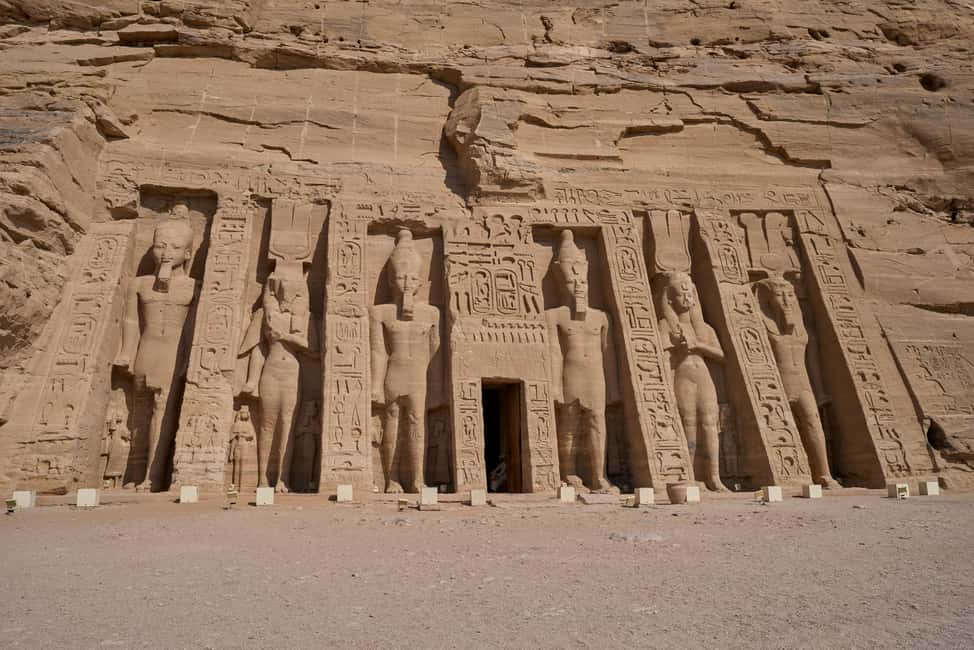
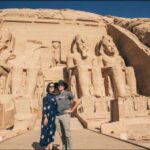
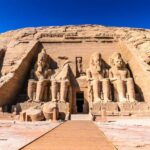
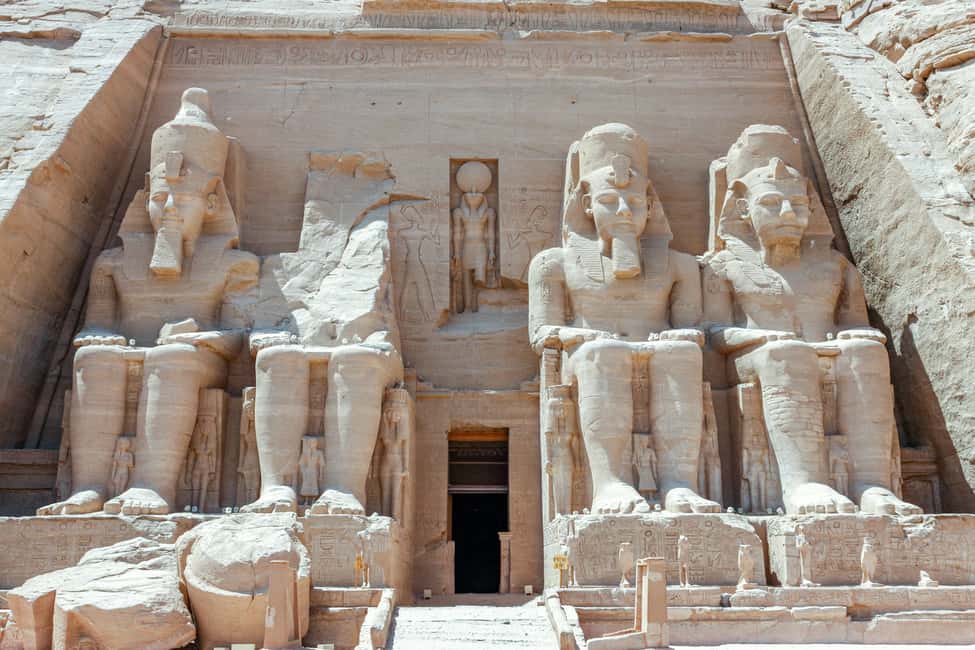
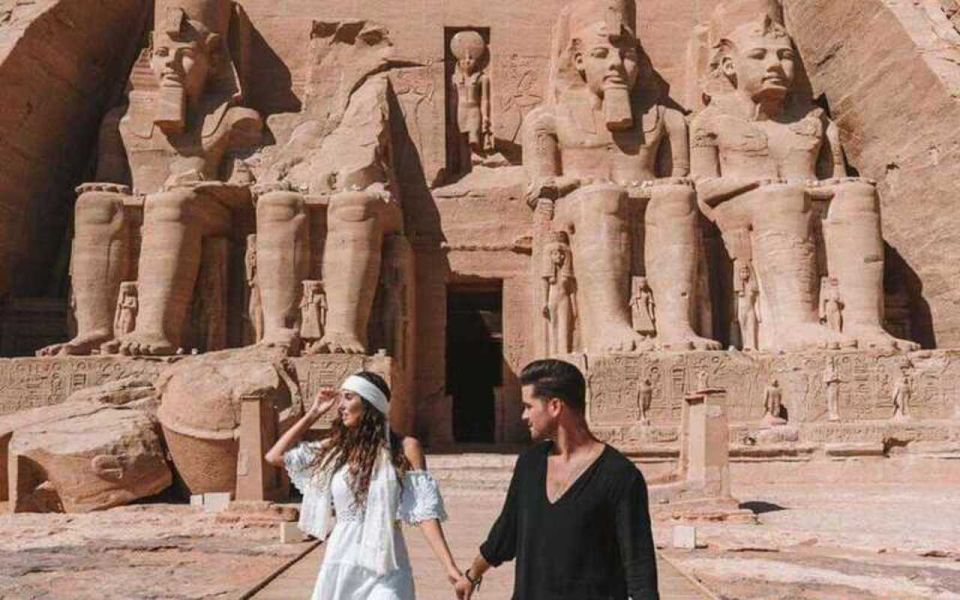
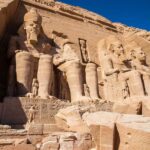
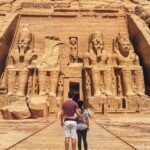
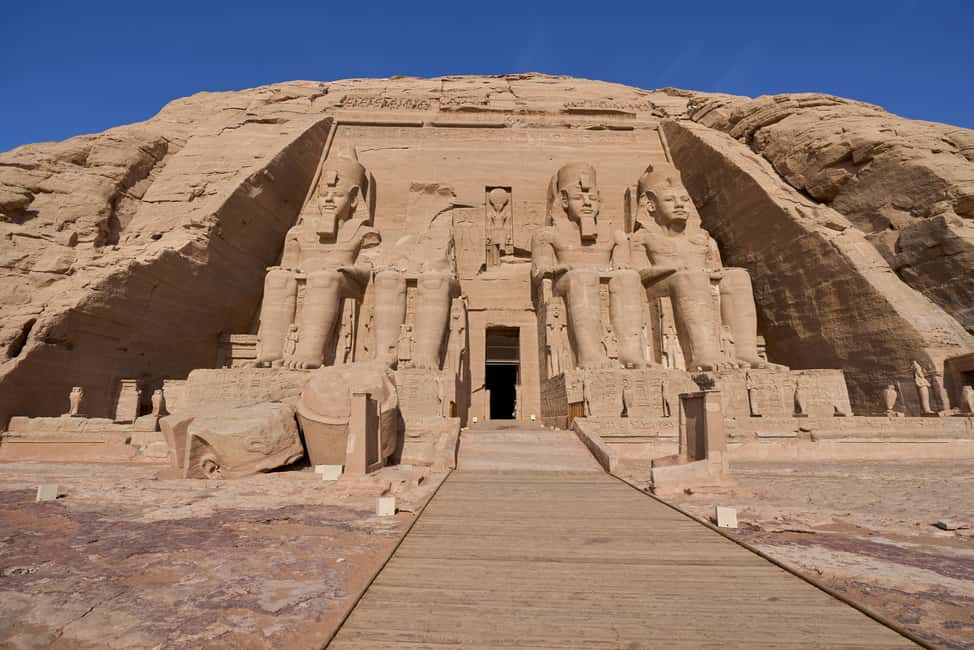
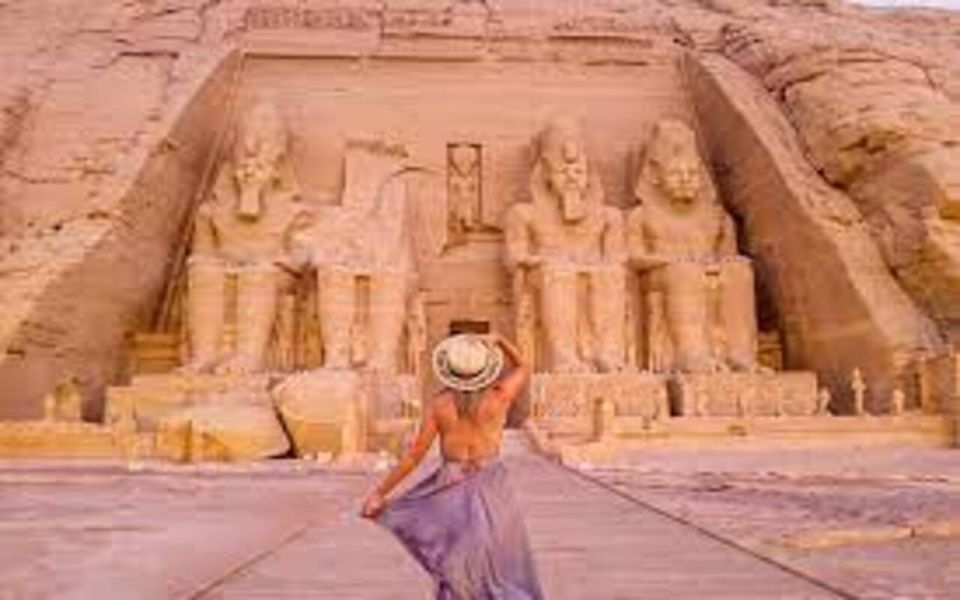
Your first big wow moment is the façade. Abu Simbel’s image is instantly recognizable: the gigantic statues of Ramses II that rise from the entrance area. This isn’t subtle architecture. It’s power made visible, and seeing the statues up close is the kind of moment that makes the drive feel worth it before you even step into the deeper story.
This is also where early timing pays off again. When you arrive before the day thickens, you can actually stand back and take in the whole façade—rather than constantly ducking around other photo angles.
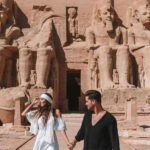
If you care about photos, treat this stop like your warm-up. Get a wide shot first, then move closer for details. The stone textures look different depending on the light, and the early morning brightness helps you capture more than silhouettes.
Ramses II Sun Temple: Ptah, Re, Amun-Re, and the Logic of the Gods
The larger temple at Abu Simbel is closely tied to Ramses II and solar worship, and it’s often called the Sun Temple of Ramses II. You’ll learn that this temple is dedicated not only to Ramses II himself, but also to four important divine figures: Ptah, Re-Her-Akhtey, Amun-Re, and Ramses II.
What I like about this part is that it gives you a framework. Without it, the carvings can feel like a blur of figures and symbols. With it, you start to see the temple as a statement: the king is tied to the gods, and the sun element connects rule, eternity, and daily cosmic rhythm.
Your Egyptologist guide should explain what you’re looking at in plain language. The guide’s job here is to translate temple art into something you can read with your eyes. Even when the time is tight, focusing on how Ramses II links to those gods gives you a real “aha” moment.
A note on how to judge the quality of your guide at this stop: you’re not there to admire a brochure. You’re there for understanding. If the explanations feel too brief, that’s the fastest way the experience can feel underpowered—because the stone itself doesn’t give context. You need someone to connect it to meaning.
Temple of Nefertari (Hathor): When the Queen Becomes Symbolic Sun-Goddess Power
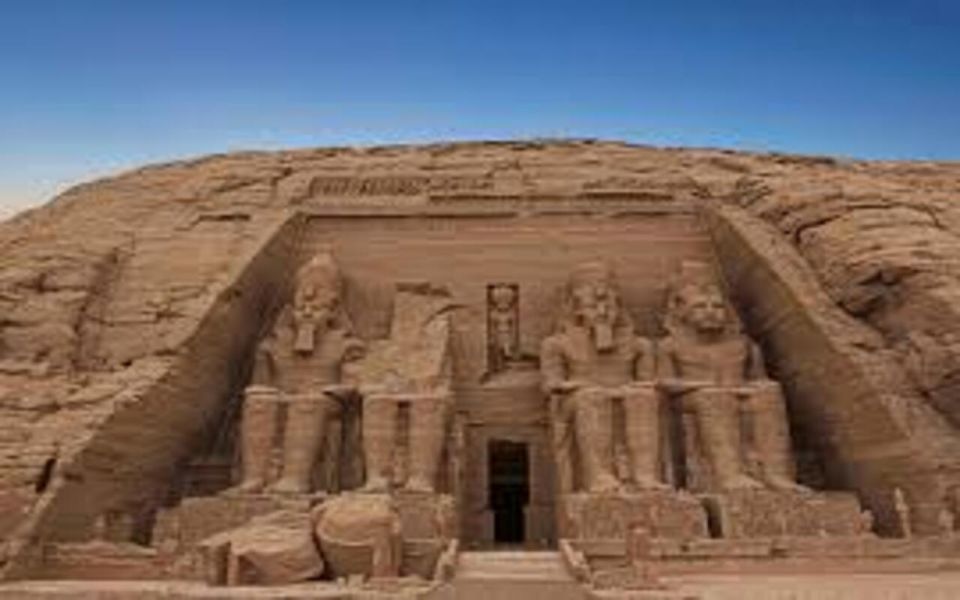
The second temple you’ll visit is associated with Queen Nefertari, also called the Temple of Hathor. The symbolism is the key idea: Hathor is tied here with the wife of the sun god, which means this temple complements the Ramses II temple rather than just existing as a separate building.
From a visitor standpoint, I like how this pairing changes the whole experience. You’re not only seeing male power and royal rule. You’re seeing the religious logic of the “togetherness” of the gods, Ramses II, Nefertari, and the sun god symbolism. The tour doesn’t just tell you that two temples exist—it helps you understand why they were designed as a linked set.
When you’re standing inside or near these spaces, slow down for a minute. Don’t rush to the next photo. The value is in noticing how the figures and themes mirror one another between the two temples. With the guide’s explanations in your head, you’ll recognize patterns instead of just collecting snapshots.
Nasser Lake Views on the Way Back: A Quiet Win After the Big Visuals
After the temples, the day shifts from intensity to recovery. You’ll head back to Aswan with the same basic setup: air-conditioned transport and a return to your hotel.
The Nasser Lake beauty mentioned in the tour highlights is more than a throwaway line. This is when the day can feel balanced—because you’ve already had your main “architecture hit,” and now you’re offered a calmer change of scenery. It’s not just about comfort. It’s about mentally transitioning away from ancient stone power to the present-day water and sky of the region.
If you’re someone who gets museum-fatigue (too many intense stops in a row), this return scenery break is a small but real advantage.
Price and Value From Aswan: What $110 Really Buys
At $110 per person, the value equation is pretty straightforward: you’re paying for more than the entrance fees. The package includes hotel pickup and return, an English-speaking guide for the group, entrance fees to the mentioned sites, modern air-conditioned bus transfers, bottled water, and all service charges and taxes.
If you tried to stitch this together yourself, you’d likely spend time coordinating transport, paying separately for admissions, and figuring out timing. The biggest “value” piece here is that the tour handles the hardest part: getting you from Aswan to Abu Simbel early enough to enjoy the place properly.
That said, value depends on how the day actually runs for your group. Some departures can feel like excellent organization with punctual timing and strong early viewing advantages. Others may feel less satisfying if the guide’s explanation time is very short or if you end up re-orienting yourself between groups during the day. If you’re looking for deep interpretation, don’t assume every schedule will feel equally detailed. Ask yourself what you want most: the sights quickly and smoothly, or a longer, slower teaching moment.
Also remember the possible extra pickup cost depending on where you’re staying.
The Real Deal: Time on Site, Photo Opportunities, and Guide Quality
This kind of day trip lives or dies by pacing. You want enough time at Abu Simbel to look carefully and take photos without feeling like you’re being herded. From real-world experiences shared about this trip, the common pattern is that the guide may do meaningful explanation outside or at specific moments, and then you’re given time to explore and photograph.
You should expect you’ll have an hour or so at the temples for photos and to enter. That’s plenty for wide photos and for getting a sense of the layout. It’s not enough to become an expert in every carving detail unless your guide’s explanations are strong and you’re paying close attention.
One more thing to keep in mind: depending on how the day is staffed, you might experience more than one guide during the visit, and language may vary. You can’t control that. What you can control is your strategy: if you want the story, listen hard to the guide during the time you’re given, then use your own curiosity while you’re inside.
If you dislike rushed experiences, don’t choose this day trip thinking it will feel like a slow guided lecture. Choose it because the sights at Abu Simbel are worth the early wake-up and the long drive.
Who This Abu Simbel Bus Trip Suits Best
This tour is a strong match if:
- You want a guided day trip rather than figuring out transport on your own
- You care about seeing the Ramses II façades early for better morning light
- You like history when it’s explained in a way you can use while you’re looking at the carvings
- You’re okay with a long road day in exchange for hitting Abu Simbel efficiently
It may be a less perfect fit if:
- You need lots of time inside the temples for interpretation with a guide
- You’re very sensitive to long bus rides and early departures
- You expect a detailed, chapter-by-chapter story all day (this is more of a focused highlights visit)
Should You Book This Aswan to Abu Simbel Bus Tour?
I’d book it if you want the temples of Ramses II and Nefertari without the hassle of organizing transport, and you value early arrival for the façade views. The package includes the essentials—guide, entrances, AC bus, and water—so you’re not nickel-and-dimed for the basics.
I’d hesitate if your main priority is long, deep guided time inside the temples. This is a day trip built around early driving and efficient visiting. If what you really want is slow interpretation and extended guide narration, you may want to compare options that give more time on site.
If your goal is to see Abu Simbel’s big statement in the morning and leave with a clear sense of why the two temples were designed as a connected pair, this bus tour is a solid, practical choice.
FAQ
What’s the departure style from Aswan?
You’re picked up from your hotel in Aswan by a modern air-conditioned coach and taken to Abu Simbel as part of a small group tour.
Are the Abu Simbel temple entrance fees included?
Yes. Entrance fees to the mentioned historical places are included.
Is there an English-speaking guide?
Yes. The tour includes an English-speaking tour guide for the whole group.
How early does the tour depart?
The tour runs early in the morning, and departures have been reported as punctual around 4 a.m.
What’s included in the price?
The price includes hotel pickup and return, the English-speaking guide, entrance fees, air-conditioned bus transfers, bottled water on board, and service charges and taxes.
Are there any extra pickup costs?
There can be an extra cost if your hotel is in Soheil Island, Hisa Island, Aswan airport, or a Nubian hostel area.
Is tipping included?
No. Tipping is not included.