REVIEW · CAIRO
Cairo: Grand Egyptian Museum, Giza Pyramids and Sphinx Tour
Book on GetYourGuide →Operated by Ramses tours · Bookable on GetYourGuide
Cairo can feel huge. This tour keeps it focused: Grand Egyptian Museum plus Giza’s icons in one smooth day. You get expert context, good sightlines, and just enough time to enjoy the sites instead of sprinting through them.
What I like most is how the day is built around “you get it fast” moments. The Grand Egyptian Museum stops you at the Grand Hall, the Grand Staircase, and signature features like the Hanging Obelisk and the Ramses II statue. The second win is the Giza routing: panoramic Pyramid views, then the Sphinx, then Khafre’s Valley Temple, with mummification context that makes the visit feel more than photo ops.
One drawback to keep in mind: it’s a 7-hour schedule, so you won’t have unlimited time to linger in every hall or around each monument. It’s ideal if you want a guided highlights-and-meaning day, but less ideal if you’re the type who wants hours inside the museum at your own pace.
In This Review
- Key things that make this tour work
- Grand Egyptian Museum: a modern setting for some very old ideas
- Hanging Obelisk and Ramses II: the fast-track moments at GEM
- Limited-access sections: why early entry can be worth it
- Giza Plateau: making the pyramids feel real in one go
- Valley Temple of Khafre: the mummification connection that makes it click
- The guide makes or breaks it: what the best names bring to the day
- Transportation and group size: where comfort actually shows up
- Price and value: is $80 per person a smart trade for a 7-hour day?
- Who this tour suits best (and who might want a different format)
- Should you book this Cairo: GEM, Giza Pyramids and Sphinx tour?
- FAQ
- How long is the Cairo: Grand Egyptian Museum, Giza Pyramids and Sphinx tour?
- What does the tour cost?
- What major sites are included in the visit?
- Is there a live tour guide?
- Are skip-the-line tickets included?
- What languages are available for the live guide?
- Is an audio guide included?
- Is the tour wheelchair accessible?
- Is it a large group?
- Can I cancel, and is pay later available?
Key things that make this tour work
- Exclusive GEM access before full opening to see select sections early
- Skip-the-ticket-line time savings, especially helpful at busy landmarks
- Giza plateau photo stops built around the best views of Cheops, Chephren, and Mykerinus
- Valley Temple of Khafre explained clearly, including its link to mummification
- High praise for guide energy and crowd strategy, from names like Paula, Menna, Doaa Sabry White, Mahmoud Bahaa, and Lamia
Grand Egyptian Museum: a modern setting for some very old ideas
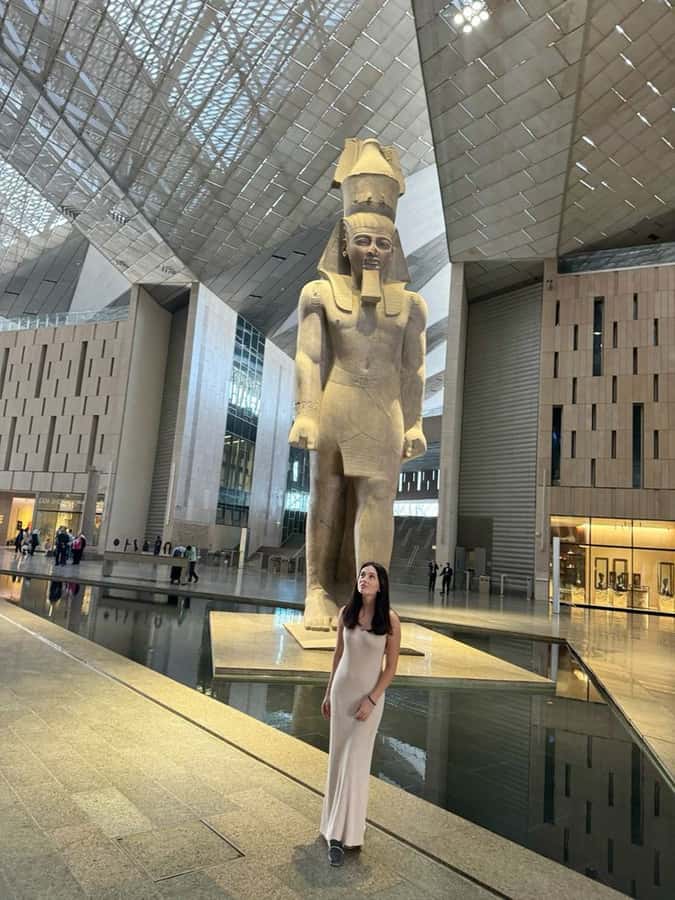
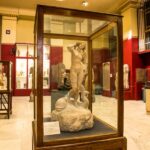
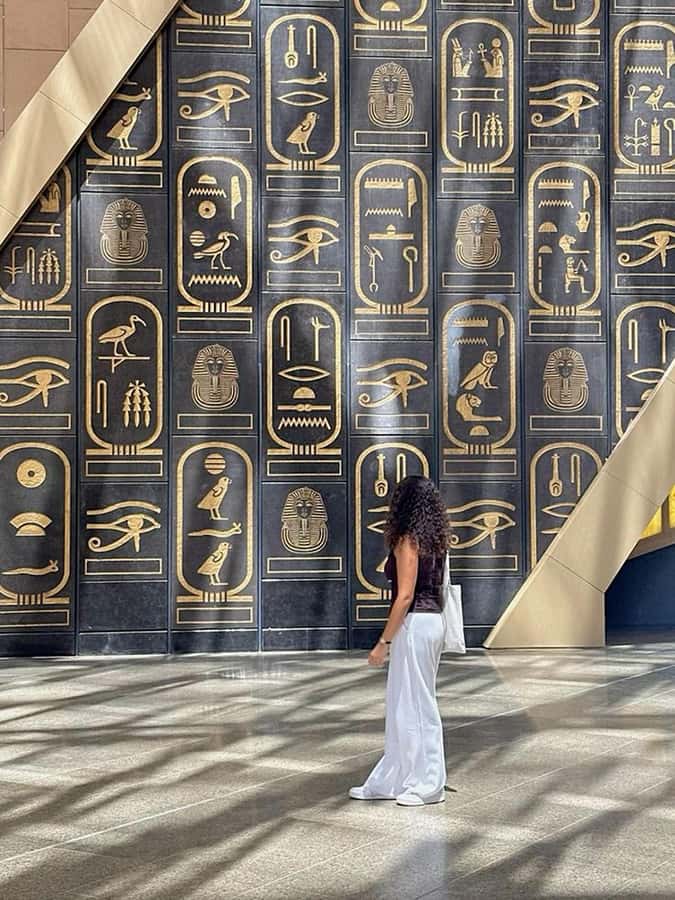
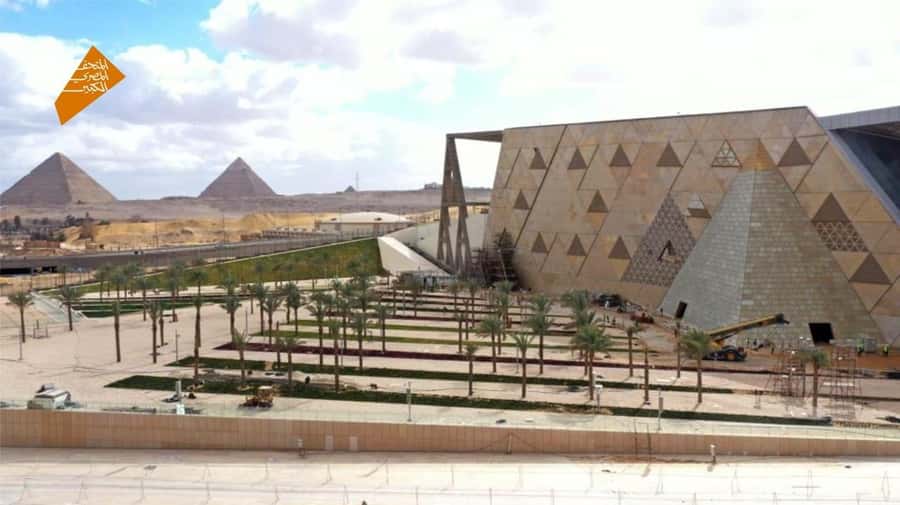
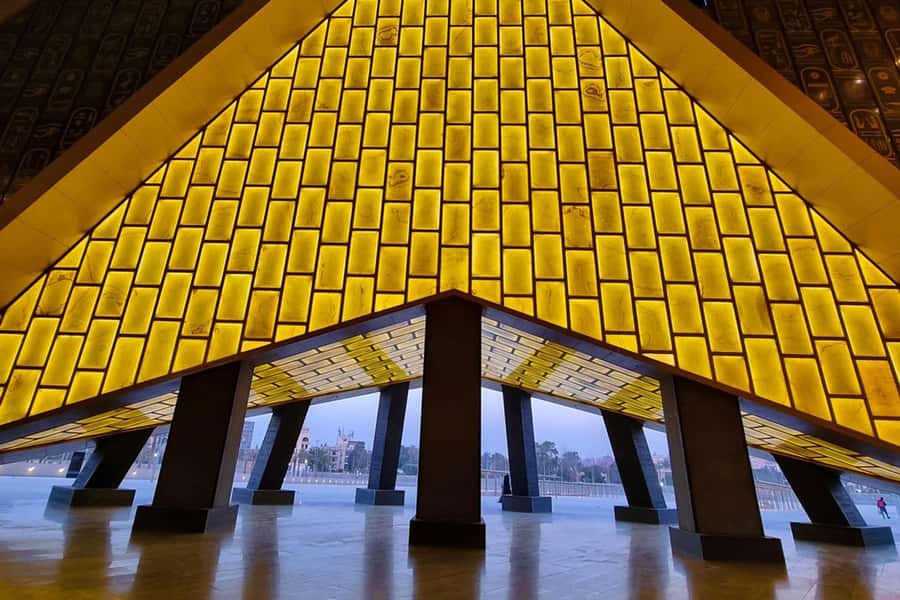
The Grand Egyptian Museum (GEM) is one of those places where the building changes how you experience the collection. You start with the exterior gardens, which is a smart warm-up: you get familiar with the space and you can take photos before you head inside. Then you enter through the main Grand Hall, where the museum’s scale hits first and the context follows.
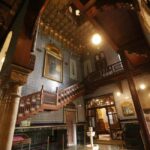
Inside, the tour moves through the museum like it has a purpose, not just a checklist. You’ll pass the Grand Staircase, lined with standout artefacts, and then enter 12 exhibition halls covering periods from prehistoric times through the Roman era. That range matters, because it stops the GEM from feeling like a single-style museum. You’re not only seeing “Pharaoh stuff.” You’re seeing how Egypt’s story stretches across time.
Also, the GEM experience isn’t only about objects on display. The tour includes time in the gardens again after the main indoor route, and that’s where you can slow down. It’s a good place to regroup, look back at the museum architecture, and capture photos when the light is nicer than it usually is at the start.
You can also read our reviews of more museum experiences in Cairo
Hanging Obelisk and Ramses II: the fast-track moments at GEM
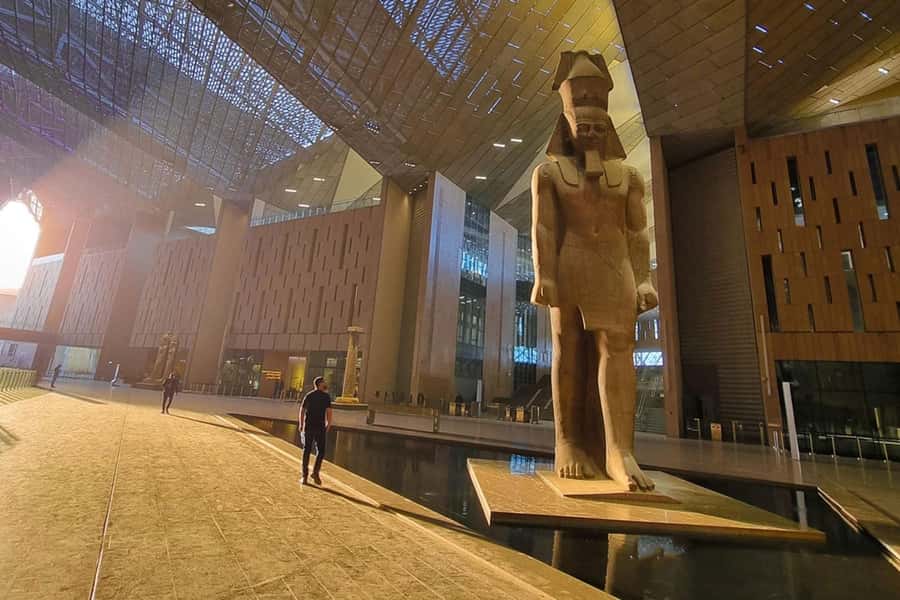
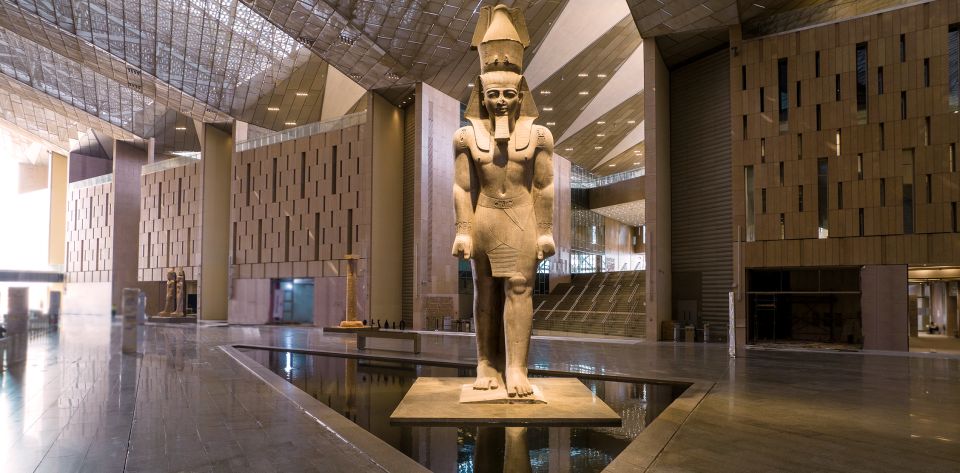
If you want the headline visuals without getting lost, these are the stops to pay attention to. The Hanging Obelisk is a famous architectural trick. Here, you’re guided to view it from below, which gives you that rare “how is that possible” reaction. It also fits the theme of the museum: linking engineering, symbolism, and celestial ideas in a way that’s meant to be understood, not guessed.
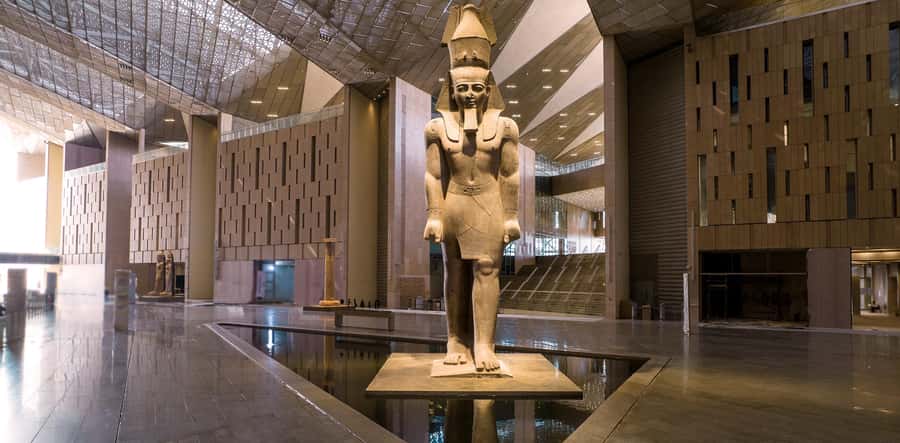
Then comes the iconic statue of Ramses II. It’s the kind of work that instantly tells you scale and power. With a guide, you’re not just looking at a figure; you’re learning why Ramses II mattered and how art and authority work together in Egyptian history.
What makes these highlights especially valuable on a timed tour is that they anchor your museum visit. Once you’ve seen these key pieces, the rest of the halls feel easier to navigate emotionally. You know what you’re looking for, and you’re less likely to end up wandering.
Limited-access sections: why early entry can be worth it
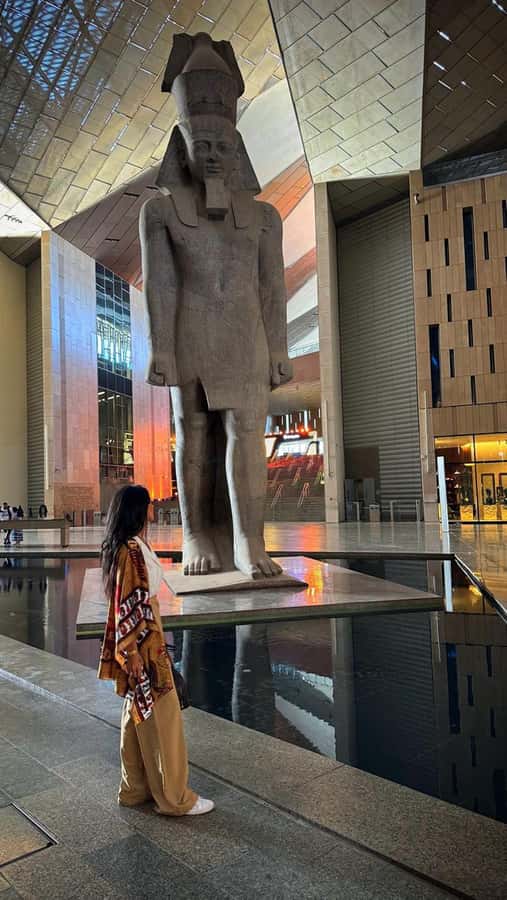
This tour includes exclusive access to select areas of the GEM prior to its full opening. Even if you don’t care about “exclusive” as a buzzword, the practical effect is real. You’re more likely to move through parts of the museum with less friction, and you get the chance to see spaces that may draw heavier crowds later.
It’s also a good match for first-timers. A museum this new can feel overwhelming if you’re trying to self-direct. Limited-access routes still give you the core hits, while the guide helps you connect the dots as you go.
Just know what this doesn’t do: it doesn’t replace the full, at-your-own-speed GEM experience that fans might want. With a 7-hour day total, you’ll get a strong “best-of” selection, not a full museum marathon.
Giza Plateau: making the pyramids feel real in one go
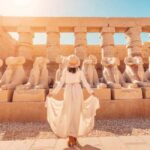
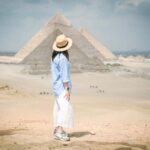
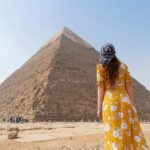
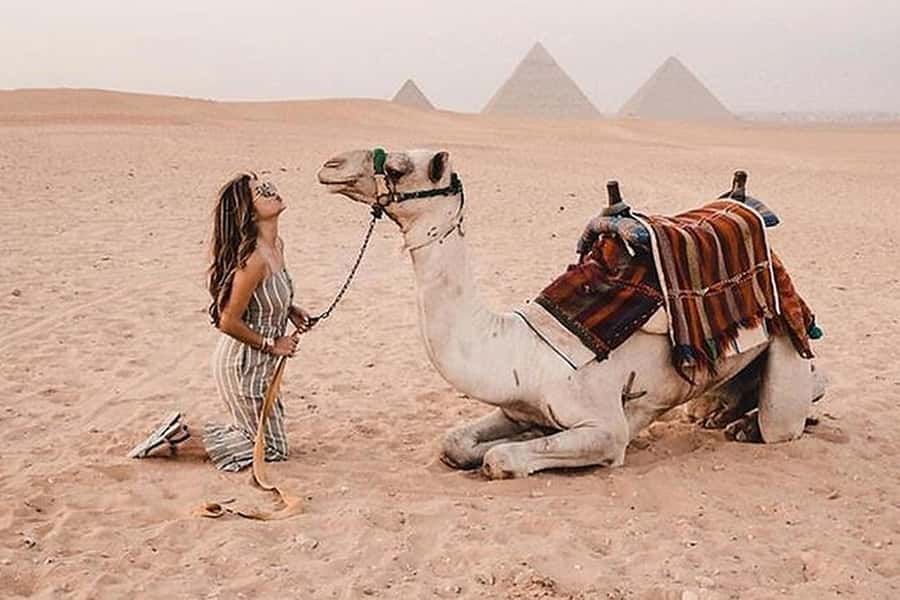
Then you move from modern museum walls to raw desert scale. On the Giza plateau, the tour is built around panoramic views of the Pyramids of Cheops, Chephren, and Mykerinus. That matters because the pyramids don’t really land as icons until you see them in context—distance, angles, and the way the group forms a single visual field.
From a logistics point of view, this kind of guided movement is helpful. The Giza area can feel like a maze if you’re trying to figure out where to stand for the best angles while also managing crowds. A good guide keeps the day moving, so you spend more time looking and less time recalculating.
After the pyramids, the tour visits the Great Sphinx. The Sphinx is one of those monuments where the details can get lost if you’re not pointed toward them. A guide keeps your attention on what’s worth noticing—shape, proportions, and the reasons the Sphinx belongs in the larger story of the Giza complex.
Photo stops are part of the program, too. You’re not just thrown at a viewpoint and told to shoot. The route is timed so you get moments that work for photos without the frantic scramble.
Valley Temple of Khafre: the mummification connection that makes it click

The stop that often turns a “pyramids day” into something more meaningful is the Valley Temple of Khafre. You’re there with guidance, so the site isn’t only impressive architecture in the sun. You learn what it did.
This temple played a vital role in the process surrounding the king’s mummy before burial. The tour explains that it was involved in purifying the king’s mummy and supporting the mummification process. When you understand the function, the temple’s layout and purpose make more sense. It stops being a setting and becomes a chapter in a ritual sequence.
Even better: Khafre’s complex sits naturally within the bigger Giza story you’ve already started understanding at the pyramids and Sphinx. By the time you reach the Valley Temple, you’ve built a framework. You’re ready to see how each part works with the others.




The guide makes or breaks it: what the best names bring to the day
On tours like this, the guide isn’t just translating. The best guides organize your attention. They manage crowd friction and they decide what details you need now versus later.
In the strongest examples from recent trips, people highlighted guides like Paula, Doaa Sabry White, Menna, Mahmoud Bahaa, Ayoup, and Lamia for different strengths:
- Paula and a driver like Mohammed were praised for smooth coordination and overall ease.
- Doaa Sabry White stood out for adjusting to expectations and for handling crowded areas with confidence.
- Menna was praised for clear explanations and humor that kept the day enjoyable while still informative.
- Mahmoud Bahaa was described as organized, attentive, and genuinely passionate, turning the visit into a kind of VIP feeling.
- Ayoup was linked with strong photo support during the day.
- Lamia and a driver like Ahmed were praised for accommodation and knowledge, especially when covering a lot in one outing.
Not every group will have the exact same guide personality, but the pattern is clear: when the guide is sharp, the day feels effortless, and you learn faster. If you’re choosing this tour for one reason, make it the guide. This itinerary has enough famous sites to be good on paper, but the guide’s pacing turns it into a day you remember.
Transportation and group size: where comfort actually shows up
A big practical plus is modern air-conditioned vehicle when that option is selected. Cairo traffic can be long and unpredictable, so starting the day in AC matters more than it sounds. It also helps you arrive at the first stop feeling human instead of wrung out.
Group size is capped at 10 travelers, and private group options are available. That lower ceiling changes the vibe. You’re not constantly waiting for a chain of people to regroup every few minutes. You can also ask questions without feeling like you’re talking into a giant moving crowd.
Wheelchair accessibility is listed as available. If that applies to you or someone in your group, it’s smart to confirm specifics with the operator ahead of time, but the tour is marked as wheelchair accessible.
Price and value: is $80 per person a smart trade for a 7-hour day?
At $80 per person for a 7-hour outing, the value comes from what you get grouped together: museum time with skip-the-line access, plus multiple major Giza stops with guided interpretation, then a return to Cairo.
Where the price feels most fair is when you treat it as a “planning and coordination fee.” You’re not only paying for entry into a building. You’re paying for someone else to handle sequencing, crowd navigation, and the explanations that make the monuments readable.
One note: entrance fees, the tour guide, and AC are listed as included only if you select those options. So the best value depends on how you book. If you add guide + entrance fees, you’re closer to a true all-in day. If you skip options, you’ll be managing more yourself.
Who this tour suits best (and who might want a different format)
This tour is a strong fit if you:
- Want a first-timer friendly mix of GEM and Giza in one day
- Like having a guide connect details so monuments don’t feel like random landmarks
- Prefer a guided pace that reduces the guesswork around viewpoints and timing
- Care about seeing GEM highlights like the Hanging Obelisk and Ramses II without spending hours mapping your own route
It may not be your best match if you:
- Need long, slow museum time in every hall
- Prefer a totally self-directed itinerary where you set every stop from scratch
- Are very dependent on a specific live guide language, since availability can vary (the tour notes support plus audio if the live language isn’t available)
Should you book this Cairo: GEM, Giza Pyramids and Sphinx tour?
If you want a 7-hour day that covers the essentials with real context, I’d say it’s a solid choice. The GEM portion gives you structure and signature sights, including limited-access areas early in the museum’s life. Then Giza adds the scale, and the Valley Temple stop gives you meaning, not just views.
Before you book, double-check two things: whether you want the entrance fees and live guide included through your selected options, and whether your preferred pickup area affects cost. If you’re starting from Cairo proper, the flow tends to be straightforward.
If you’re aiming for a smooth, guide-led hits-and-explanations day at a fair price, this is the kind of outing that earns its spot on your Cairo schedule.
FAQ
How long is the Cairo: Grand Egyptian Museum, Giza Pyramids and Sphinx tour?
It runs for 7 hours.
What does the tour cost?
The price is $80 per person.
What major sites are included in the visit?
You’ll visit the Grand Egyptian Museum, then the Giza Plateau (including the Sphinx and Pyramid views), and you’ll also visit the Valley Temple of Khafre.
Is there a live tour guide?
A live tour guide is included if that option is selected.
Are skip-the-line tickets included?
Yes, skip the ticket line is included.
What languages are available for the live guide?
Arabic, English, French, Spanish, and Italian are listed for the live tour guide, subject to availability.
Is an audio guide included?
Yes. An audio guide is included, and it lists support for a large number of languages.
Is the tour wheelchair accessible?
Yes, it’s listed as wheelchair accessible.
Is it a large group?
The maximum group size is 10 travelers, and private group options are available.
Can I cancel, and is pay later available?
Free cancellation up to 24 hours in advance is offered for a full refund, and there is a reserve & pay later option (book now, pay later).