REVIEW · CAIRO
Old Cairo Guided Walk Tour: History, Culture & Street Bites
Book on GetYourGuide →Operated by OceanAir Egypt · Bookable on GetYourGuide
Mosques, markets, and street food in 3 hours. This guided walk turns Old Cairo into a real place you can picture, starting at Bab al-Futuh and threading through Fatimid, Ottoman, Mamluk, and everyday Islamic-Cairo life. You’ll walk between some of the most photographed corners of Cairo, but with explanations that connect the stones to the street.
I like the way the tour mixes big monuments with human-scale details: Al-Hakim Mosque’s massive minarets and courtyard, then Bayt al Suhaymi’s Ottoman rooms that show what life looked like beyond the prayer hall. I also like that the tour price isn’t just for entry tickets—there’s bottled water plus snacks and an actual street-food stop (koshary or Egyptian pie), so you’re not stuck searching for food mid-walk.
One thing to plan for: this is a walking tour on uneven ground with stairs, so it’s not ideal if you hate slipping between crowds, climbing steps, or spending time in the sun. Also, Cairo markets can feel pushy—this is where a good guide really matters.
In This Review
- Key points before you set off
- Starting at Bab al-Futuh: Cairo’s ancient doorway
- Al-Hakim Mosque and Bayt al Suhaymi: mosques and Ottoman domestic life
- El Moez Street to Khan el-Khalili: seeing Islamic Cairo at street level
- Sultan Barquq Mosque and the Qalawun Complex: Mamluk design with serious purpose
- Al-Hussein Mosque: a calm spiritual pause in Islamic Cairo
- Street snacks, koshary or Egyptian pie, and how pacing actually works
- Price and value: why $31 can feel like a steal in Old Cairo
- Who this tour suits best (and who should think twice)
- Should you book this Old Cairo guided walk?
- FAQ
- Where is the meeting point for the Old Cairo guided walk?
- How long is the tour?
- What’s included in the price besides the guide?
- Is pickup from my hotel available?
- What food will I get during the tour?
- What should I wear for mosques and Islamic Cairo?
Key points before you set off
- Bab al-Futuh sets the tone fast: you start at one of Cairo’s main ancient gates and ease into the walled-city mindset.
- Bayt al Suhaymi shows the Ottoman home: you’re not only looking at mosques; you see domestic architecture and courtyard life.
- El Moez Street connects architecture to daily Cairo: preserved Islamic buildings plus the sound and motion of the market street.
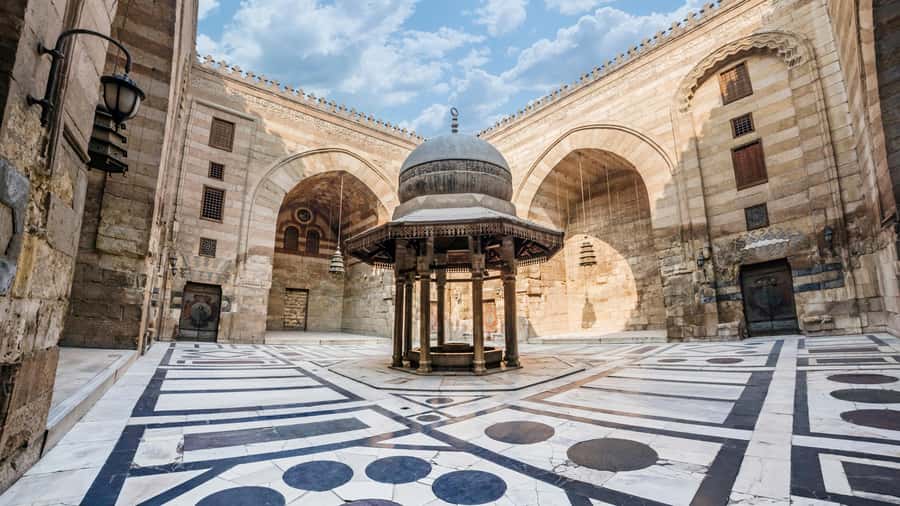
- Sultan Barquq and Qalawun put Mamluk design on display: intricate stonework, plus the big institutional story behind these complexes.
- Al-Hussein Mosque offers a quieter spiritual pause: a reset after walking through the louder parts of Islamic Cairo.
- The street-food stop is part of the value: koshary or Egyptian pie with local sweet snacks like zalabya/halabessa.
Starting at Bab al-Futuh: Cairo’s ancient doorway
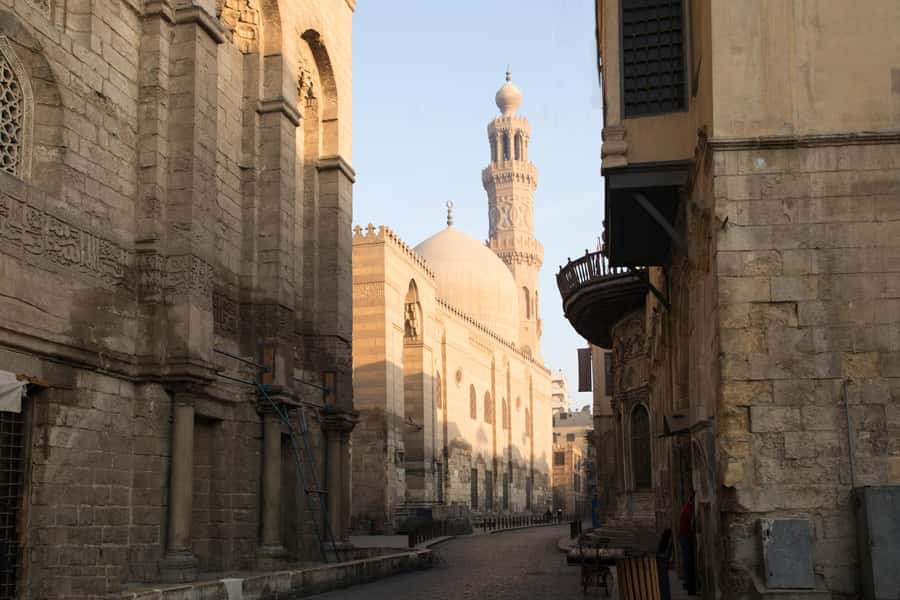
Meet your guide in front of Bab al-Futuh, one of the key gates in the old city walls. That first moment matters. Instead of dropping you into the middle of traffic and tours, the start gives you a frame: Old Cairo wasn’t built as a museum route. It was built as a working city with gates, movement, and neighborhoods.
From here, you begin walking with a professional Egyptologist guide who helps you decode what you’re seeing. The guide part is one of the biggest reasons this tour gets repeated praise. Names like Nahed, Randa, Rehab, Ruby, Dina, and Ehab come up often in the feedback, and the common theme is clear, friendly explanations mixed with humor. Guides also help you keep your bearings in tight streets, which is a real skill in a place like this.
You’ll want to arrive a few minutes early. The meeting point is fixed, and Old Cairo doesn’t do slow starts. Once you’re with the group, you’ll move at a pace that’s active but doable for most people who can handle walking for a few hours.
You can also read our reviews of more tours and experiences in Cairo.

Al-Hakim Mosque and Bayt al Suhaymi: mosques and Ottoman domestic life
Your first major stop is Al-Hakim Mosque. It’s one of the oldest and largest Fatimid mosques, and it hits you immediately: massive minarets, historic stone walls, and that feeling of calm inside the courtyard. This is a great place to understand why Cairo’s religious architecture is more than decoration. It’s design for community life—space for worship, teaching, and daily rhythms.
What I like here is that you’re not only shown the obvious sights. You get context that helps the building make sense: why certain design choices exist, and how styles mark different eras. If you’ve visited one mosque and felt you saw only “another mosque,” this part helps you reset your expectations.
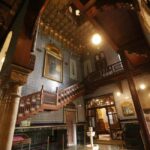
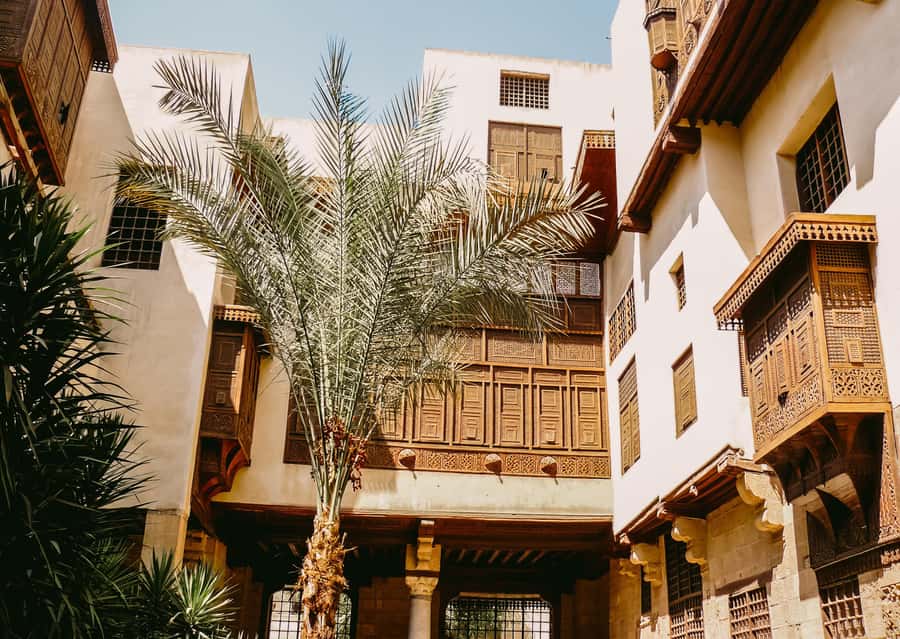
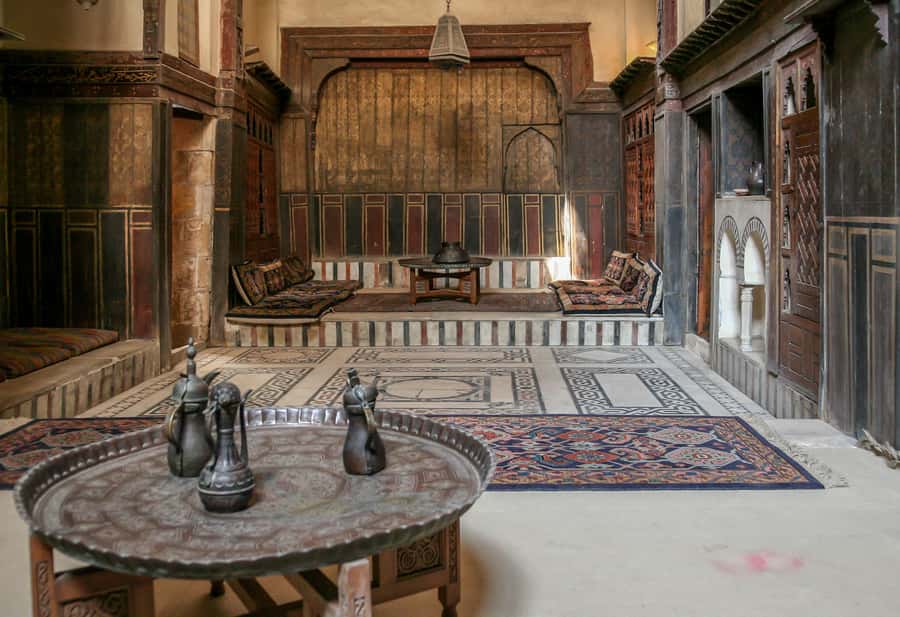
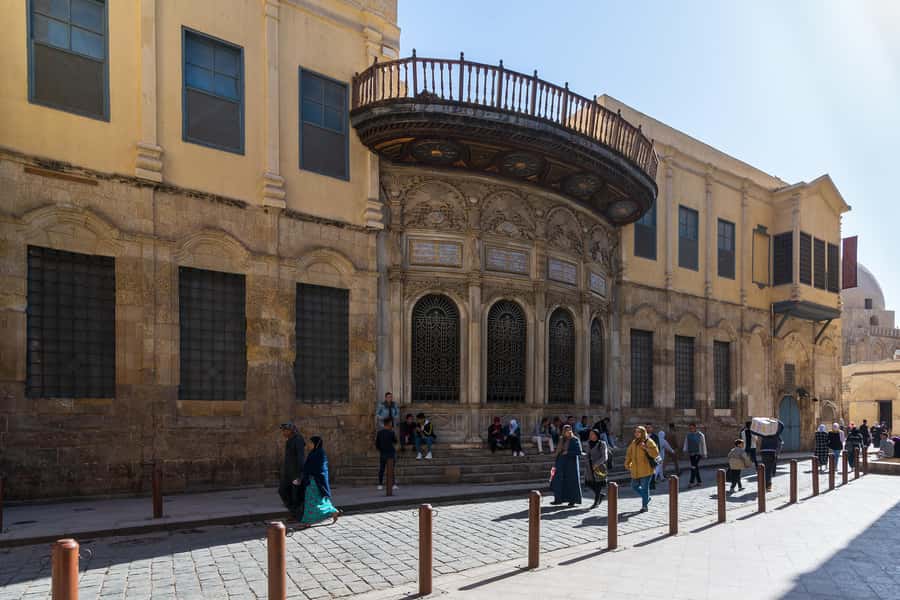
Next comes Bayt al Suhaymi, a standout 17th-century Ottoman house. This is one of the best value shifts in the tour. Instead of staying in the realm of temples and towers, you move into an Ottoman residence—rooms, a courtyard, and the kind of architecture that tells you how people actually lived. Cairo’s Old City often feels like it’s only about monuments. Bayt al Suhaymi reminds you it was also about family spaces, social life, and household culture.
The drawback to this stop is simply time. Houses like this reward slow looking, but you’re on a timed walk. Still, even a faster visit gives you a strong sense of the Ottoman imprint on Cairo’s built world.
El Moez Street to Khan el-Khalili: seeing Islamic Cairo at street level
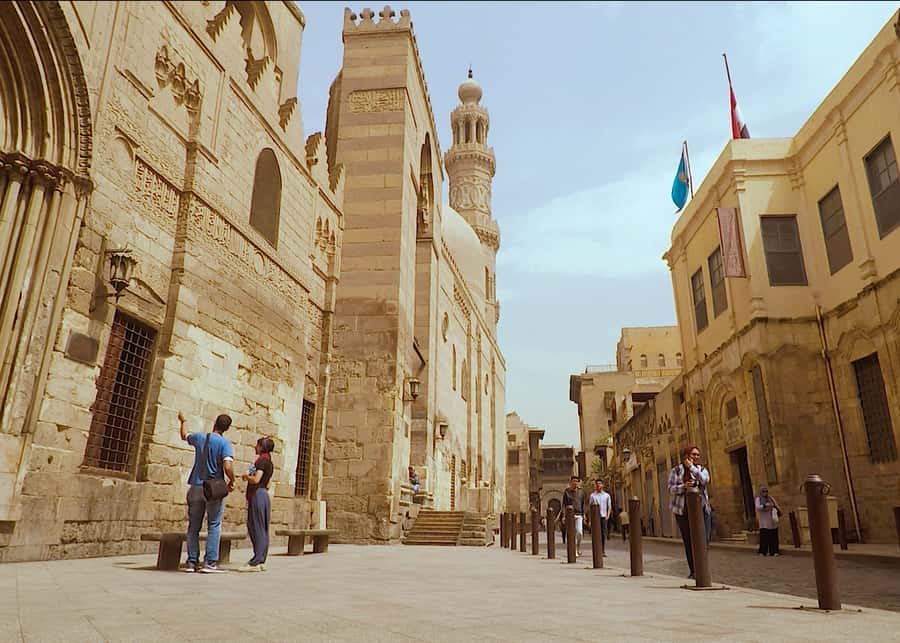
After the early landmark sites, you head onto El Moez Street (also referred to as the Mu’izz area). This is the kind of street that makes you understand why people fall in love with Islamic Cairo. The buildings along the corridor are preserved, and they’re close enough that you don’t just view them—you feel them. It’s architecture in motion, not architecture behind ropes.
One practical note: the street experience is part of the point. You’ll pass local vendors, cafes, and historic structures while your guide explains what each setting represents. This is also where the tour becomes more than sightseeing. You start to connect the architecture to the street economy—the places where people shop, rest, and negotiate daily life.
Then you reach Khan el-Khalili Bazaar. This is the classic Cairo market for a reason: spices, jewelry, textiles, souvenirs. It’s also where negotiation is normal. Your guide’s job isn’t to turn you into a trader. It’s to help you navigate the market pressure without losing your confidence. In feedback, guides like Nahed and Kiki’s guide experience specifically get credit for keeping sellers from over-crowding the group and making people feel safe.
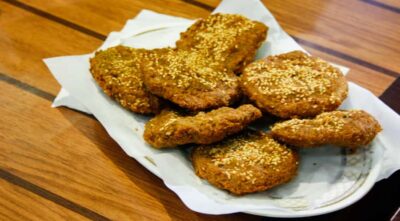
Food lands near the end of the stroll (the exact moment depends on timing and flow). The tour includes a street-food stop—either authentic koshary or Egyptian pie—plus local snack options like zalabya or halabessa, or similar treats. That matters because these markets are tiring. Having planned food means you keep energy instead of sprinting to find lunch.
Sultan Barquq Mosque and the Qalawun Complex: Mamluk design with serious purpose
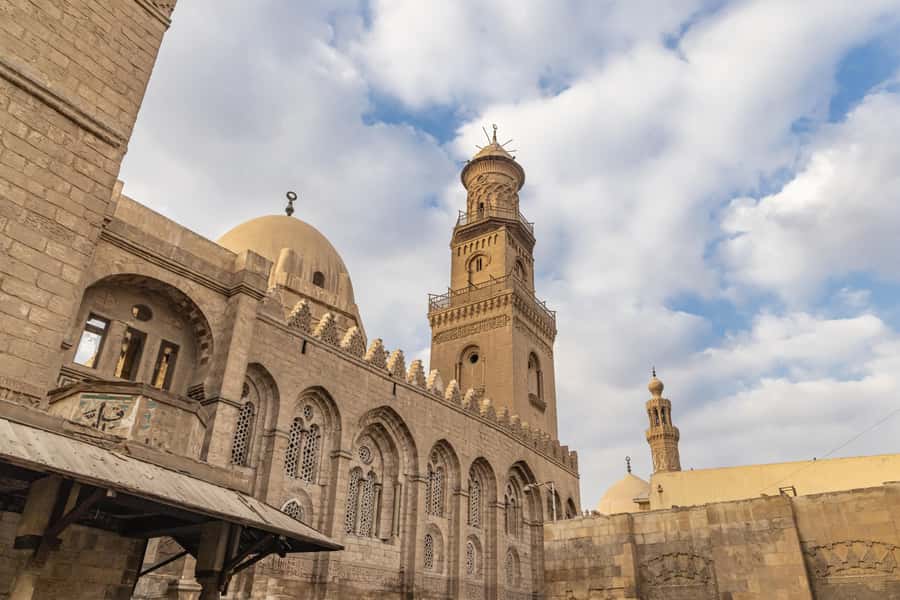
The tour’s middle-to-late segments focus on some of Cairo’s most impressive Mamluk-era religious complexes. First up is the Sultan Barquq Mosque, closely linked with the Mosque and Khanqah of Al-Nasir Faraj Ibn Barquq. Expect elaborate design—intricate ornamentation, strong geometric patterns, and an institutional feel.
Here’s what I’d underline as a practical takeaway: these weren’t built just to look good. They combined multiple roles. The complex functioned as a mosque, a madrasa (teaching space), and a Sufi lodge. Your guide helps you connect those dots so you don’t just see “decorative stone.” You see a system for faith, education, and community services.
Then, right next door, you visit the Qalawun Complex—again, not a single building but a set of functions: a mosque, a madrasa, and a mausoleum. You start to notice patterns in how medieval Cairo invested in religious and educational infrastructure. The stonework is the surface layer; the bigger story is what those institutions were designed to do for the city.
If you’re someone who likes architecture but gets impatient with explanations, don’t worry. The tour is built to keep moving while still offering enough context to make the buildings feel specific, not generic.
Al-Hussein Mosque: a calm spiritual pause in Islamic Cairo

After the detailed complexes, the tour shifts to the quieter, reflective side of Old Cairo with Al-Hussein Mosque. This is in the heart of Islamic Cairo, and it changes the mood from “show-and-go” to “slow down.” The space radiates tranquility, and you get time for a guided visit and sightseeing.
I like this part because it balances the market energy and the architectural intensity. You can feel the difference in the air the moment the group settles into the mosque setting. It’s a chance to reset your attention—what you’ve learned earlier in the day starts to click in a more personal way.
Dress matters here. You’ll want loose clothing that covers shoulders, arms, legs, and knees. Women should have a scarf ready for religious sites (carry one or wear one as needed). If you show up underdressed, you’ll spend valuable time handling clothing instead of enjoying the visit.
You can also read our reviews of more guided tours in Cairo

Street snacks, koshary or Egyptian pie, and how pacing actually works
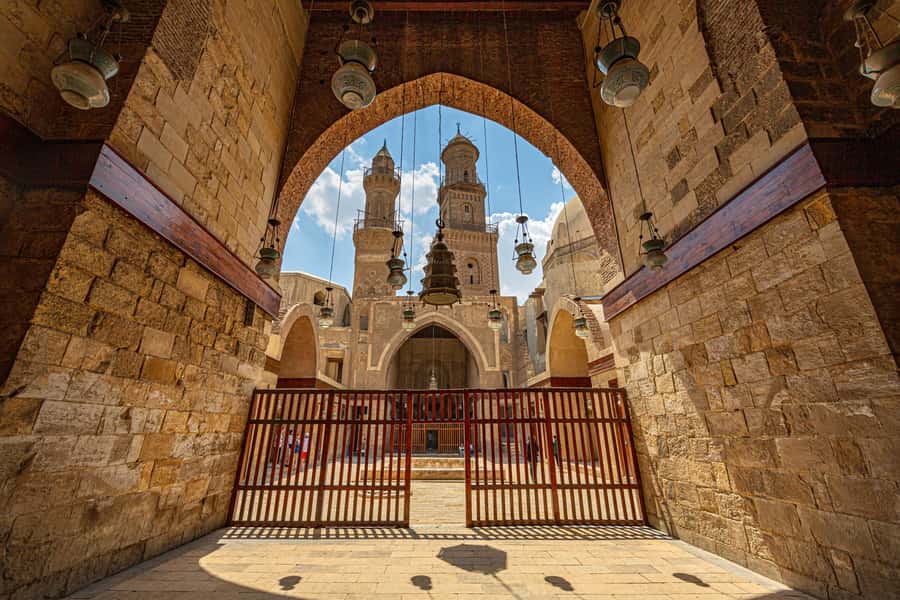
This tour works because it plans around how Cairo feels. You’re walking for about 3–4 hours, with short guided stops and short walking stretches between them. The itinerary includes multiple sites, so you don’t get stuck doing one long thing for hours. Instead, you get a sequence: gate → landmark mosque → Ottoman house → historic street → bazaar → Mamluk monuments → spiritual finale.
The included food helps you stay human through the schedule. You’ll get bottled water, local snacks like zalabya/halabessa (or similar), and a street-food meal such as koshary or Egyptian pie. One thing I appreciate: it’s built into the tour so your energy doesn’t crash right when you’re near the most intense part of the markets.
A useful heads-up from real-world experience in reviews: the walking terrain can feel rough, with stairs. One feedback note explicitly called out that it’s not for the faint of heart. So wear comfortable shoes. If your feet hate stairs, keep that in mind before you commit.
Price and value: why $31 can feel like a steal in Old Cairo
At about $31 per person for a 3–4 hour guided walk, this tour is priced like a “local day” rather than a premium private experience. And the value comes from what’s included:
- Entrance fees to all attractions
- A professional Egyptologist guide
- Bottled water
- Local snacks (like zalabya/halabessa or similar)
- Street food (koshary or Egyptian pie)
- Service tax
- Optional hotel pickup and drop-off in Cairo or Giza city limits
What that means for you: you’re paying for more than pictures. You’re paying for access without ticket-line stress and for a guide who can connect eras—Fatimid, Ottoman, Mamluk—so the trip makes sense as one story. Guides are often praised for humor and for handling market pressure so you don’t feel harassed while you shop.
Is it perfect value for everyone? If you hate walking, avoid crowds, or want a slow sit-down museum style day, this might feel too active. But if you want the Old Cairo experience with structure, it’s a strong deal.
Who this tour suits best (and who should think twice)
This fits you if you want:
- A guided walk through classic Old Cairo and Islamic Cairo
- A balance of mosques, an Ottoman house, and street-market time
- Included snacks and a real meal
- Clear explanations in multiple languages (French, Spanish, English, Arabic, German)
It’s less ideal if:
- You need wheelchair access (not suitable for wheelchair users)
- You travel with large luggage or a stroller (not allowed)
- Stairs and uneven streets are a deal-breaker
- You prefer a very quiet pace with lots of downtime
A final practical tip: bring a hat and sunscreen. Cairo sun doesn’t care about your itinerary, and you’ll be outside for significant parts of the walk. Also carry some cash for optional purchases—market bargaining is part of the fun for many people.
Should you book this Old Cairo guided walk?
Yes, if you want a structured, value-packed way to see the key corners of Old Cairo without feeling lost. The best reason to book is the combination: Bab al-Futuh for instant context, Al-Hakim and Al-Hussein for the religious spine, Bayt al Suhaymi for everyday Ottoman architecture, and Khan el-Khalili plus street food for the lived-in Cairo feeling. Guides like Nahed and Randa show up again and again in feedback for a reason: they make the day understandable, safe, and fun.
Think twice if you’re sensitive to crowds or physically rough terrain. Also, if you’re only looking for one or two “major hits” and you dislike walking between them, you may prefer a shorter, more targeted option.
FAQ
Where is the meeting point for the Old Cairo guided walk?
You meet your guide in front of Bab al-Futuh.
How long is the tour?
The tour runs about 3–4 hours.
What’s included in the price besides the guide?
Entrance fees to all attractions, bottled water, local snacks (like zalabya or halabessa or similar), and street food (authentic koshary or Egyptian pie) are included, along with service tax.
Is pickup from my hotel available?
Pickup and drop-off from your hotel in Cairo or Giza are available if you book the option.
What food will I get during the tour?
The tour includes street food such as authentic koshary or Egyptian pie, and local snacks like zalabya or halabessa (or similar).
What should I wear for mosques and Islamic Cairo?
Wear loose clothes that cover shoulders, arms, legs, and knees. Women should use a scarf for religious sites.