REVIEW · CAIRO
From Cairo by Plane: 5 Days & 4 Nights Nile Cruise to Luxor
Book on GetYourGuide →Operated by Mody Egypt Tours · Bookable on GetYourGuide
Egypt’s temples feel personal on the Nile.
This 5-day trip pairs a 5-star Nile cruise with an Egyptology-led route through Luxor’s East and West banks, plus an optional-feeling thrill level with a hot air balloon ride over Luxor West. The biggest thing I like is how much you pack in with guided context (Karnak’s scale and the story behind each site), without you having to manage day-to-day logistics. One drawback to keep in mind: your experience depends heavily on accurate flight and meeting coordination, so you’ll want to double-check details before you show up.
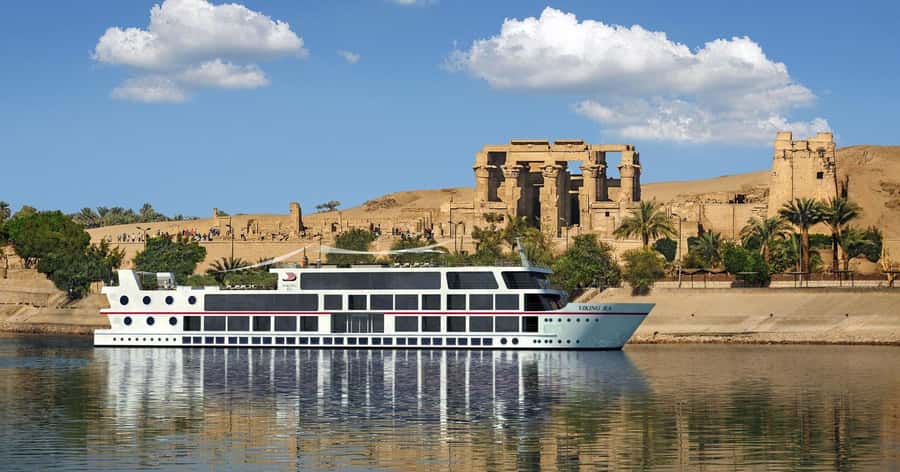
What you’re buying is simple: flight in, temples by guide, cruise downriver (with a stop at Esna), and flights back to Cairo. It’s also a small group (16 max), which helps when you’re moving through crowded sites and want your guide to keep things moving.
In This Review
- Key Takeaways Before You Go
- From Cairo Airport to Luxor: The Cruise Starts Immediately
- Day 1: Karnak’s 2000 Years of Stone, Then Luxor Temple
- Day 2: Valley of the Kings, Hatshepsut at El Deir el Bahari, and Memnon Photos
- Day 3: Edfu’s Horus Temple and Kom Ombo’s Two-God Plan
- Day 4: Aswan High Dam and Philae Temple by Boat
- Day 5: Disembark in Aswan, Fly Back to Cairo, and Consider Abu Simbel
- Egyptologist Guidance and Small-Group Reality (What You Gain)
- The One Thing to Watch: Flight Timing and Meeting Points
- Price and Value: What You’re Really Paying For
- Who This Nile Cruise Is Best For
- Should You Book This Luxor to Aswan Nile Cruise?
- FAQ
- How long is the Cairo to Luxor Nile cruise?
- Does the tour include flights?
- Is the cruise a 5-star option?
- What meals are included?
- Are entrance fees included for the sightseeing?
- Is there an Egyptology guide?
- What group size is this?
- Does the program include a hot air balloon ride?
- Is horse carriage included?
- Is Abu Simbel included or optional?
Key Takeaways Before You Go
- Small group size (up to 16): easier pacing through temples and fewer “where is everyone?” moments.
- Flight included both ways: Cairo to Luxor at the start, then Aswan back to Cairo at the end.
- Egyptologist-style guiding: you’ll get explanations tied to what you’re seeing, not just a checklist.
- Luxor West morning energy: plan for time/energy for the Valley of the Kings area and the West Bank photo stops.
- Aswan day isn’t just one temple: High Dam + Philae Temple by small motorboat, with context about Nubian immigration.
- Entrance fees are extra: your guide can point the way, but you should budget for tickets separately.
From Cairo Airport to Luxor: The Cruise Starts Immediately
This style of itinerary is made for people who don’t want to build their own Egypt plan from scratch. You leave Cairo, land in Luxor, and within the same day you’re touring major sites instead of waiting around. Transfers are handled by air-conditioned mini bus, so you’re not stuck negotiating taxis in an unfamiliar place.
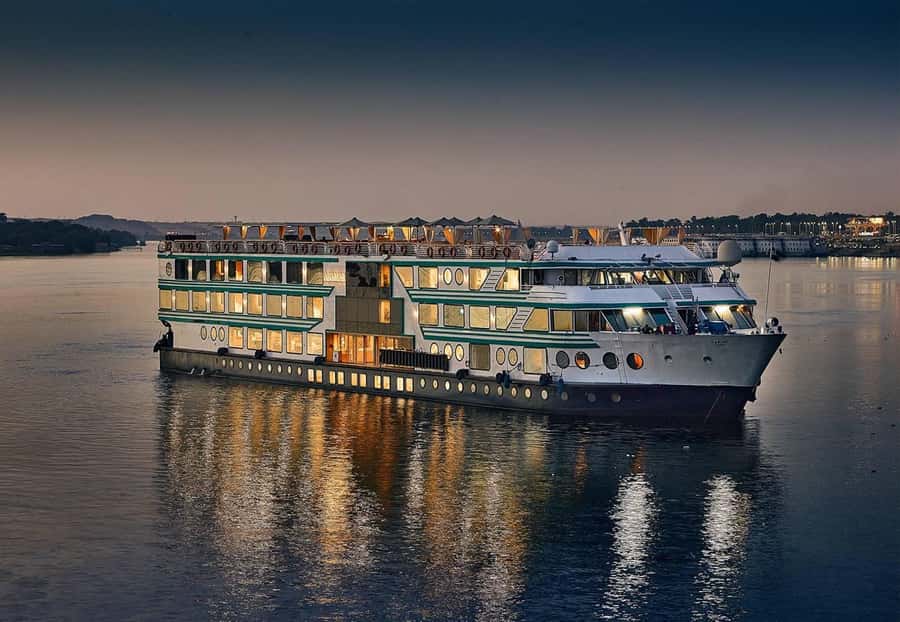
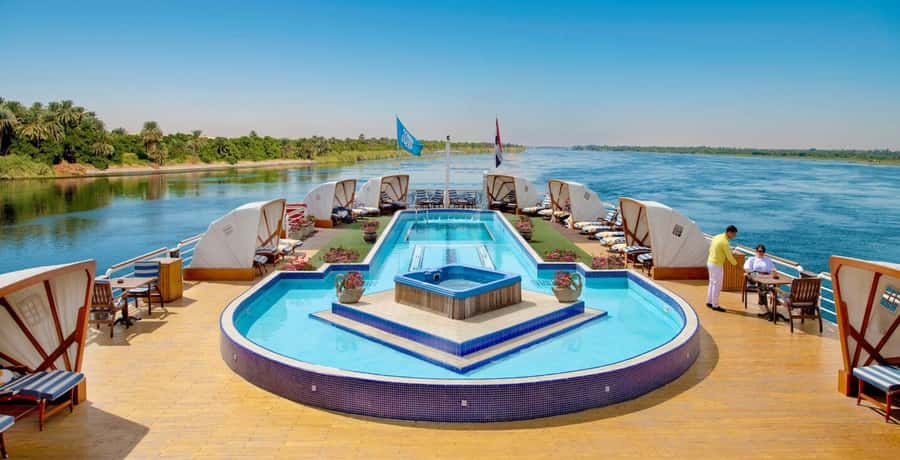
I like the flow here: once you board the cruise, the river becomes your “base.” You’re not packing and unpacking every day—just moving between highlights, eating onboard, and then sailing to the next stop.
One practical note: because the trip includes flights, build in mental flexibility. Egypt air schedules can shift, and meeting points matter. If your message thread isn’t clear, it can turn a smooth day into a scramble.
You can also read our reviews of more boat tours in Cairo



Day 1: Karnak’s 2000 Years of Stone, Then Luxor Temple
After pickup in Cairo, you fly to Luxor and transfer to the cruise for check-in before lunch. Then the afternoon hits the biggest Luxor East Bank payoff: Karnak Temple.
Karnak is huge—built over about 2000 years and spread across roughly 63 acres. The guide’s job here is more than translating labels. In a place like this, explanations help you recognize what you’re looking at: sections that feel separate, but were meant to work as one sacred complex over centuries.
Next comes Luxor Temple, where you can see ancient Egyptian, Christian, and Islamic features layered through the architecture and use of the space. That mix can be a little jarring at first—until someone explains how Egypt’s sacred sites often kept living long after the original kingdom fell.
You’ll return to the cruise for dinner onboard, which is a smart end to a high-stimulation first day. You’ve earned real downtime.
Day 2: Valley of the Kings, Hatshepsut at El Deir el Bahari, and Memnon Photos
Day 2 is where Luxor gets more dramatic. You head to the West Bank to explore the Theban Necropolis, starting with the Valley of the Kings. This is where New Kingdom pharaohs carved tombs into the mountains, partly as a strategy to hide treasures and protect mummies.
What makes this day click is the sequence. The guide sets the tombs in context, so the landscape stops feeling like “random holes in cliffs.” Instead, it becomes a system: geography used as protection, and art used as identity.
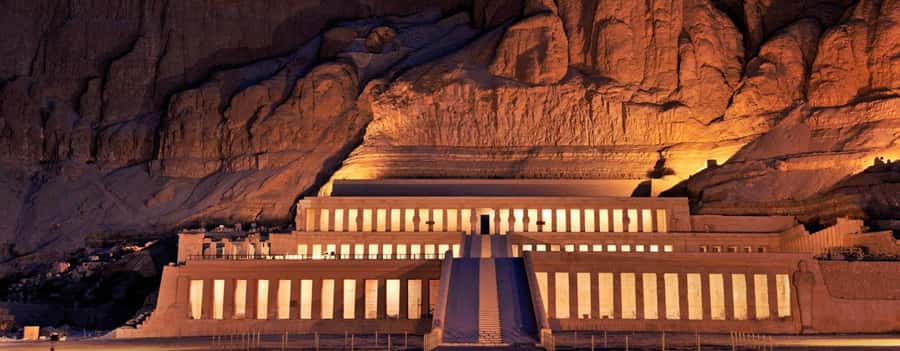
Then you visit El Deir el Bahari, home to the mortuary temple associated with Queen Hatshepsut. If you like when a site tells you how people lived and ruled, this is a highlight. Hatshepsut’s story is tied to power and legitimacy, and the temple’s setting makes that easier to grasp.
Your tour ends with a photo stop in front of the giant Memnon statues. This is one of those moments where you get a clear visual “wow” without needing to spend a long time walking. After that, you return to the cruise by noon for lunch.
In the afternoon, you start sailing and cross Esna Lock. It’s not glamorous, but it’s genuinely interesting to watch the Nile infrastructure at work—like seeing a moving part of daily life rather than a museum display.
Day 3: Edfu’s Horus Temple and Kom Ombo’s Two-God Plan
Day 3 has two big temple stops—both with very different vibes.
First up is the Temple of Horus in Edfu. When a temple centers on a single major deity, the building layout and symbolism tend to feel direct and focused. This is where a guide helps you slow down and notice details that you’d otherwise skim.
Then you sail on to Kom Ombo, where you visit the Temple of Kom Ombo shared by the two gods: Sobek and Haroeies. I like this stop because it teaches you to read the building like a map. When one temple serves two divine “sides,” you can feel the intentional symmetry and the way functions are split.
Lunch is onboard, which keeps the day from turning into a nonstop sprint. By the time you’re back on the river, you’ve got that satisfying rhythm: walk through history, eat, sail, repeat.
Day 4: Aswan High Dam and Philae Temple by Boat
Aswan day is a balance of modern engineering and ancient sacred space.
After breakfast, you explore Aswan with your guide. You’ll also hear the story of Nubian immigration, which gives important social context to the river region. The Nile isn’t just scenic—it’s influenced communities, relocation, and livelihoods over time.
Then you visit the High Dam, completed in 1960. It protects Egypt from floods and generates electricity. If you’re the type who likes understanding why things exist (not just what they look like), this is a strong counterweight to the temple days.
Next is Philae Temple, dedicated to Isis. You reach it by small motorboat, which adds a practical and atmospheric touch: the river ride makes the temple approach feel like part of the experience, not just transportation.
Later, you’re transferred to the airport to catch the flight back to Cairo, and then picked up in Cairo for transfer to your hotel. That end-to-end structure matters. You’re not left trying to find your way after a long, full day.
You can also read our reviews of more tours and experiences in Cairo


Day 5: Disembark in Aswan, Fly Back to Cairo, and Consider Abu Simbel
On the final day, you check out after breakfast. Then your representative accompanies you to Aswan airport for your flight to Cairo.
There’s an optional excursion to Abu Simbel Temple. This is a good option if you like epic distances and dramatic scale—because the trip to Abu Simbel is often the kind of thing people remember forever.
Even if you skip it, day 5 is designed to be straightforward: disembark, fly, and get back to Cairo without extra puzzle-solving.
Egyptologist Guidance and Small-Group Reality (What You Gain)
A big part of why this itinerary can feel smooth is the guiding style. You have a live English guide leading the sites, and the plan includes stops that benefit from explanations: Karnak’s long timeline, tomb context in the Valley of the Kings, and the modern-to-ancient contrast of High Dam then Philae.
The small group size (16 max) also helps at crowded temples. It’s easier for a guide to keep everyone together and for you to hear what’s being said without competing with a hundred side conversations.
You’ll also have onboard meals included (4 breakfasts, 4 lunches, 4 dinners). That matters more than it sounds. In a travel-heavy plan, not having to chase food choices removes friction, especially during long temple days.
One more included detail: a horse carriage is part of the program. That’s the kind of thing you’ll want to treat carefully—go with the flow, but be aware it’s a comfort-and-tradition moment, not a thrill ride.
The One Thing to Watch: Flight Timing and Meeting Points
Here’s the honest part: the most negative stories attached to this type of cruise aren’t about temples. They’re about coordination.
In feedback tied to this booking style, the recurring pain point was communication around flights and meeting times—especially when something changes close to departure and you’re asked to confirm quickly via WhatsApp. I can’t control airline schedules, but you can control your preparation.
Do this before you arrive:
- Confirm your flight times and your exact meeting location for transfers.
- Screenshot or save any messages you receive, especially if they’re sent on short notice.
- If you have a different flight plan in your own schedule, make sure it’s aligned with the tour’s timing.
On the bright side, there are also strong signals that certain guides can save the day. Names that came up as especially helpful include Mahmoud and Ahmed Shawky Ali—both described as professional and supportive. That kind of guide energy can turn a chaotic moment into a manageable one.
Price and Value: What You’re Really Paying For
At $1,540 per person, the headline number looks high—until you break down what’s bundled.
This price includes:
- Flights: Cairo → Luxor and Aswan → Cairo
- A 5-star cruise for 4 nights
- Cabin with all facilities
- An Egyptology-style live guide
- Major included tours across Luxor and Aswan
- Air-conditioned pickup and drop-off by mini bus
- Meals onboard (4x breakfast, 4x lunch, 4x dinner)
- Transfers aligned with the itinerary
What’s not included: entrance fees to the sites you visit.
So the value equation is mostly about convenience. You’re paying for a ready-made structure: transport, guide, meals, and a guided route between the biggest hits. If you’d otherwise spend time booking flights, coordinating guides, and mapping daily movement, this can feel like a smart trade.
If you’re the kind of traveler who loves DIY logistics, you might find ways to assemble a cheaper plan. But you’ll spend time—and you’ll still need a guide to get the most out of places like Karnak and the West Bank tomb system.
Who This Nile Cruise Is Best For
This is a great fit if you want:
- A guided first-timer route in Egypt
- Fewer logistics worries (flights and transfers handled)
- A mix of East Bank grandeur and West Bank tomb drama
- A comfortable place to regroup between tours (the ship)
It’s also a good match for couples or friends who like a small group pace and want to compare notes with others without dealing with large crowds.
If you’re extremely sensitive to schedule changes, or you’re traveling with a tight independent plan that depends on precise timing, then you’ll want to be extra proactive about flight reconfirmation.
Should You Book This Luxor to Aswan Nile Cruise?
I’d book it if your priority is a structured, guide-led experience that stitches together the big names—Karnak, Luxor Temple, Valley of the Kings, Hatshepsut, Edfu, Kom Ombo, High Dam, and Philae—while you sail in comfort between stops.
I’d pause if you hate uncertainty around transport coordination. Because your experience hinges on flights and meeting details, you’ll want to confirm everything early and keep receipts/screenshots of communications.
If you book, do it with one mindset: treat the itinerary as the backbone, but verify the timing like a pro. Then you can spend your energy where it belongs—looking closely at temple walls, understanding the stories behind the stones, and watching the Nile slide by as your “moving museum” does what it does best.
FAQ
How long is the Cairo to Luxor Nile cruise?
It’s a 5-day trip with 4 nights on the Nile cruise.
Does the tour include flights?
Yes. It includes flights from Cairo to Luxor and from Aswan back to Cairo.
Is the cruise a 5-star option?
Yes. The package includes a 5-star Nile cruise for 4 nights.
What meals are included?
The tour includes breakfast (4x), lunch (4x), and dinner (4x).
Are entrance fees included for the sightseeing?
No. Entrance fees to the mentioned sightseeing are not included.
Is there an Egyptology guide?
Yes. An Egyptology tour guide leads the visits, and the live tour guide language is English.
What group size is this?
It’s limited to a small group of up to 16 participants.
Does the program include a hot air balloon ride?
Yes. A hot air balloon ride of Luxor West is listed as a highlight.
Is horse carriage included?
Yes. Horse carriage is included in the tour inclusions.
Is Abu Simbel included or optional?
Abu Simbel Temple is listed as an optional excursion.