REVIEW · CAIRO
Grand Egyptian Museum Private Guided Tour(GEM)
Book on GetYourGuide →Operated by Ramses tours · Bookable on GetYourGuide
You’ll walk into Egypt’s future and past. This private Grand Egyptian Museum tour is built around tight, high-impact stops like the Tutankhamun collection and the Grand Staircase, with a guide keeping things clear and moving. I love that it starts with the museum’s landscaped gardens and then funnels you straight into the big “wow” rooms, instead of wandering. I also like that you’re paying for practical time: private transport, entrance fees, and a live guide so you spend less effort figuring it out and more time seeing the objects. One consideration: the museum is huge, so 5 hours can feel fast—especially if you want to linger on every label.
The structure makes sense. You’ll hit the Grand Hall, see major standouts like the Hanging Obelisk and the statue of Ramses II, then climb the Grand Staircase with royal statues and artifacts along the way. At the top, you’re taken through 12 galleries with over 5,000 artifacts spanning prehistoric to the Roman era, and then you get the centerpiece: the complete Tutankhamun display, shown together for the first time since its discovery. The possible drawback is language fit—if your preferred guide language isn’t available, you may rely more on the audio guide, and that’s a common make-or-break detail for some visitors.
If you want an efficient, guided plan that still leaves room to look closely, this tour fits. Just go in with the right expectation: this is about guided highlights and smart routing, not a museum marathon.
In This Review
- Key Things I’d Pay Attention To
- Grand Egyptian Museum in 5 Hours: What This Tour Actually Feels Like
- Getting There Without Losing Your Day
- First Stop: The Gardens and the Grand Hall’s Big First Impression
- The Grand Staircase: Where the Museum Tells a Timeline With Your Feet
- 12 Galleries and 5,000+ Artifacts: How to Not Get Lost
- Tutankhamun, Up Close: A Full Collection in One Place
- Private Tour Reality Check: You Still Need to Choose Your Pace
- Price and Value: Is $115 for 5 Hours Worth It?
- Who This Tour Suits Best (and Who Should Skip It)
- Small Tips That Make the Biggest Difference
- Should You Book This Grand Egyptian Museum Private Guided Tour?
- FAQ
- How long is the Grand Egyptian Museum private guided tour?
- What is the price per person?
- Is this tour private?
- Does it include skip-the-line entry?
- What languages are the live guides available in?
- Is an audio guide included, and in which languages?
- What are the main things you’ll see?
- What’s included in the tour price?
- What isn’t included?
Key Things I’d Pay Attention To

- Skip-the-line entry so you start seeing artifacts sooner
- Grand Hall + Hanging Obelisk + Ramses II as early anchors for your visit
- Grand Staircase climb where the museum’s layout becomes part of the story
- 12 galleries and 5,000+ artifacts across Egypt’s timeline
- Complete Tutankhamun collection shown together, including the golden mask and personal items
- Private format that lets your guide pace the visit instead of herding the group
Grand Egyptian Museum in 5 Hours: What This Tour Actually Feels Like
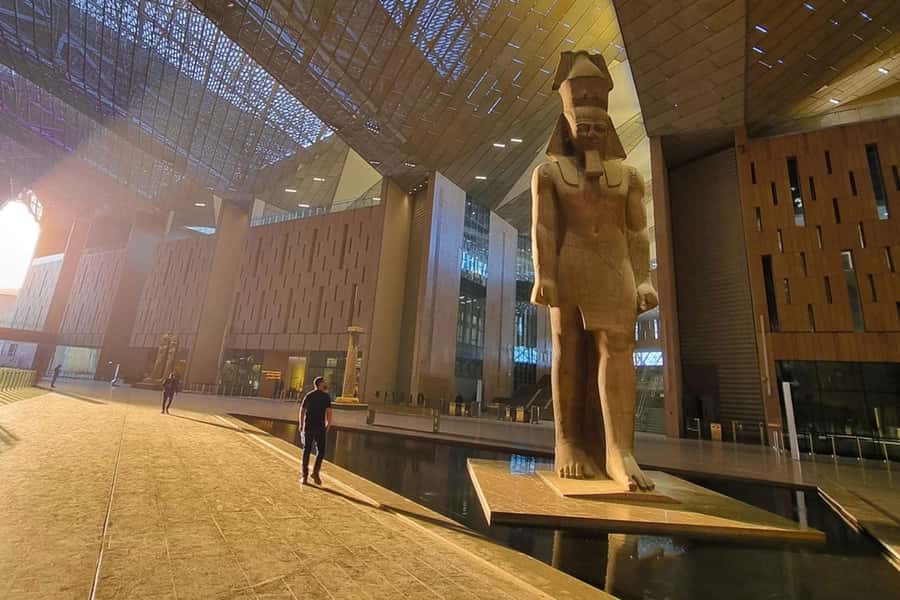
Five hours at the Grand Egyptian Museum can sound short—because it is. But the tour is designed like a good city walk: you don’t try to “cover everything.” You hit the major architectural and collection anchors, then you return to the most important theme—Tutankhamun—with enough context to make it meaningful.
I like that you’re not dropped into a giant building and told to figure it out. You get a live guide (Arabic, English, French, German, or Spanish) plus an audio guide option in a long list of languages. If your language isn’t available for the live guide, you’ll get help in English with audio support for your chosen language. That matters because a museum visit can go from interesting to frustrating fast if you can’t follow what you’re seeing.
Also, you get the boring stuff handled. Transfers are done by modern air-conditioned vehicle, and entrance fees and service charges are included. You’re not building your own puzzle after you land in Giza.
The pacing is still up to you. If you’re the type who reads every label, you’ll likely wish you had more time. If you’re the type who wants key objects explained clearly, you’ll probably feel satisfied.
You can also read our reviews of more guided tours in Cairo



Getting There Without Losing Your Day
This is a private tour with all transfers handled by a modern air-conditioned vehicle. That’s not just comfort—it’s time management. In this area, traffic and heat can drain your energy quickly, and museum visits go better when you’re not already tired before you enter.
You’ll also skip the ticket line, which helps a lot on a major attraction day. Even if the wait is short, skipping it means you can stay focused on the objects instead of watching other people queue.
The tour is private, so you’re not stuck waiting for strangers to find their shoes or decide whether they want to buy water first. Your guide can keep the flow tight, and you can set a reasonable pace.
First Stop: The Gardens and the Grand Hall’s Big First Impression
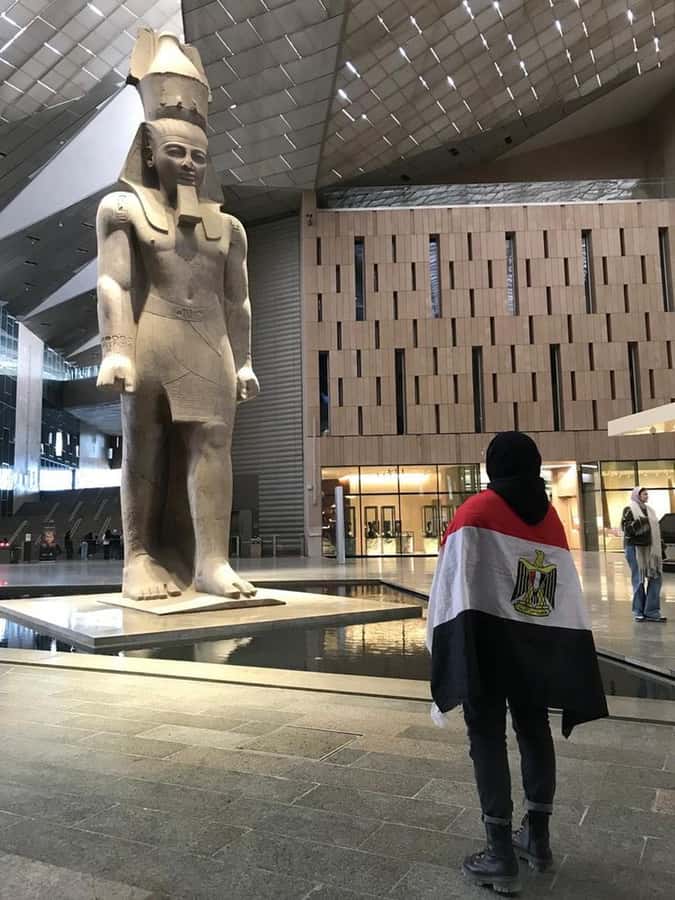
You start with a serene stroll through the museum’s gardens before entering the main showpieces. I like this start because it gives your eyes a break from the Egypt-cliché fatigue. You’re not immediately swamped by rooms and crowd noise. You get a moment to reset, and then—when you step into the Grand Hall—it lands harder.
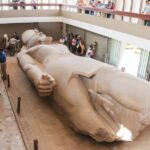
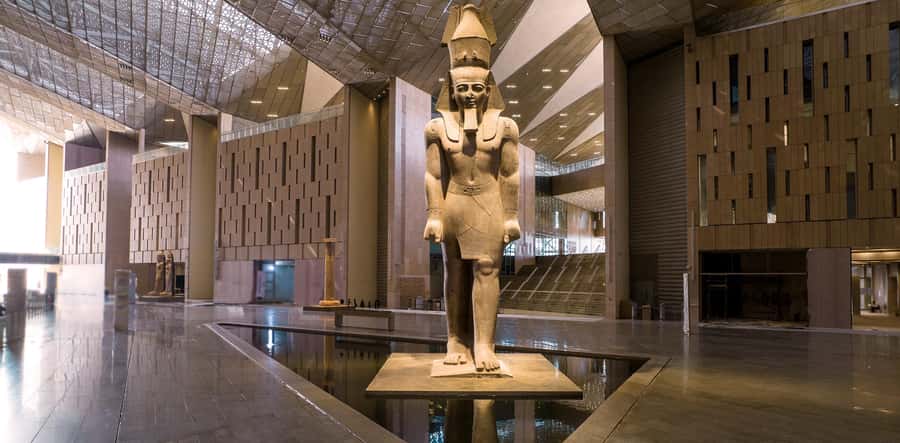
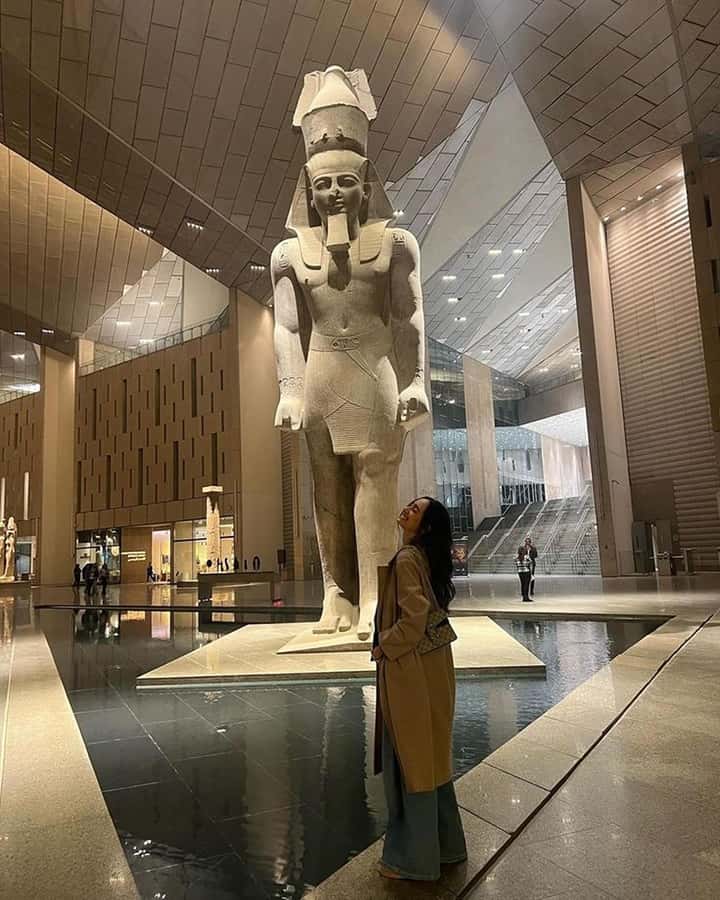
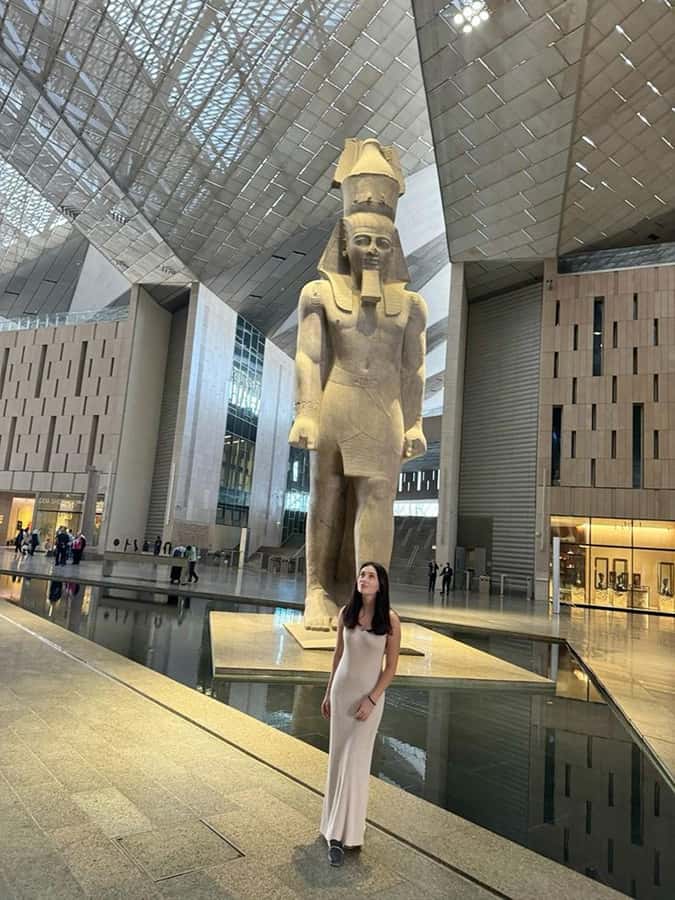
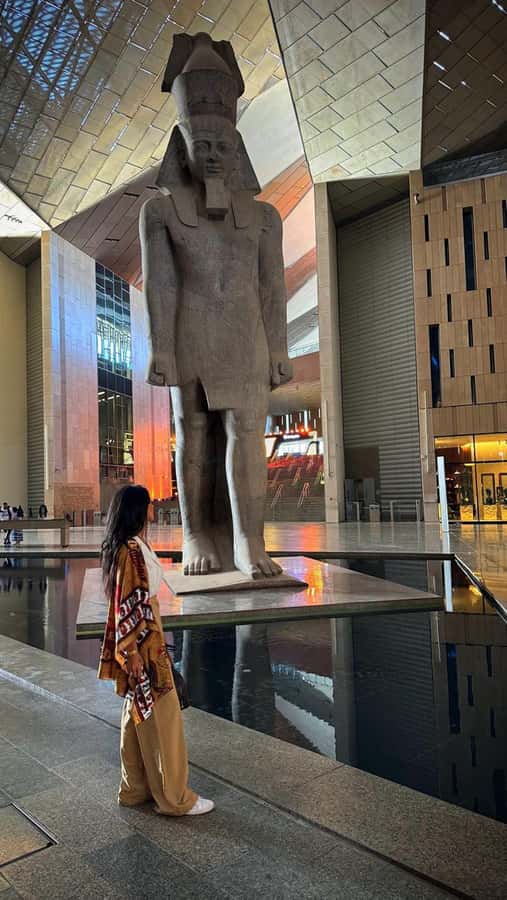
Then comes the architecture. The Grand Hall is where the museum announces itself as a modern, purpose-built space for ancient artifacts. You’ll be guided to major visual highlights including the Hanging Obelisk and the statue of Ramses II. These are the kinds of objects that instantly help you orient your mind. They also make it easier to understand why this museum is a big deal for Egypt’s storytelling: it’s not just storage of objects. It’s a designed experience where scale and placement matter.
A good guide here is worth their weight in gold. (No joke: you’ll see real gold later.) You want someone who can point out what you’re looking at and how it connects to the bigger timeline.
The Grand Staircase: Where the Museum Tells a Timeline With Your Feet
After the Grand Hall, you ascend the Grand Staircase, which is lined with royal statues and artifacts. This is one of those rare layouts where movement becomes part of the narrative. Instead of only looking at display cases, you’re climbing through a visual sequence that encourages you to think “dynasties, power, time.”
I like this portion because it prevents the common museum problem: staring at one room too long and losing the “why.” The staircase acts like a built-in transition. You feel like you’re progressing even if you’re not moving fast.
The key benefit of a guided approach here: your guide can point out what matters without you missing it. A museum staircase can be beautiful, but also easy to overlook details if you don’t know what to look for.
If you’re someone who likes photos, this is a strong point of the visit too. The staircase geometry and the placement of statues can create dramatic shots without needing to invent lighting or angles.
12 Galleries and 5,000+ Artifacts: How to Not Get Lost
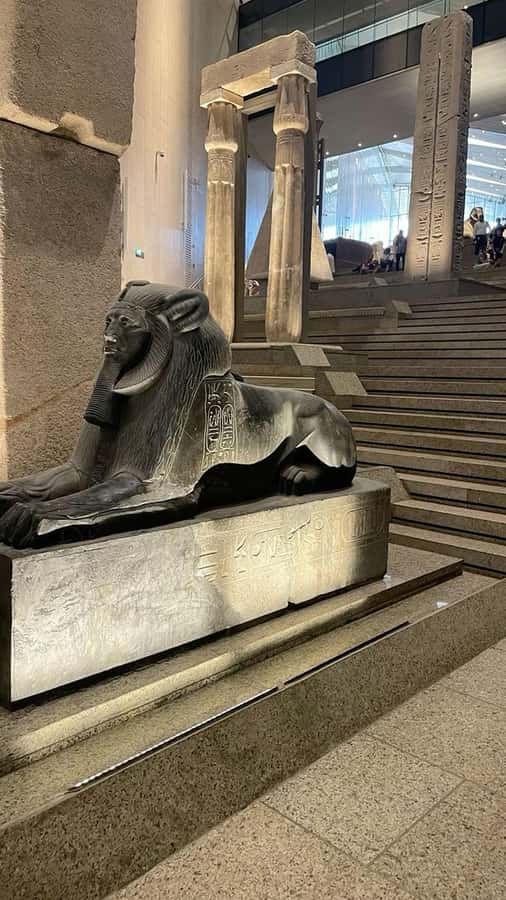
At the summit, you’ll explore 12 galleries containing over 5,000 artifacts from across Egypt’s history, from prehistoric times through the Roman era. That’s a lot of ground. The value of the tour is that it gives you a guided path through a museum that could easily swallow an entire day.
Here’s the practical way to enjoy this section: treat it like a guided timeline. Don’t try to remember every object. Instead, focus on the categories your guide highlights—how styles change, what themes repeat, and which artifacts show daily life versus monumental power.
If you’re a casual museum visitor, this is where you’ll appreciate how the guide filters information. With an audio guide only, you might spend time wandering between displays and still not feel sure why one gallery matters more than another. With a live guide, you leave each area with a clearer sense of the big picture.
One consideration: if you want to stop at every display, 5 hours can pinch. The museum is expansive, and even with a guide, you may not get time to read everything. That doesn’t mean it’s a bad tour—it just means you should choose your priorities before you walk in.
You can also read our reviews of more private tours in Cairo






Tutankhamun, Up Close: A Full Collection in One Place
The centerpiece is the complete Tutankhamun collection, displayed together for the first time since its discovery. This is the moment most people come for, and it’s handled in a way that keeps it from feeling like random object viewing.
You’ll see iconic highlights such as:
- the legendary golden mask
- ornate jewelry
- ceremonial chariots
- personal belongings tied to the boy king
What’s valuable here isn’t only the famous objects. It’s the way seeing them together adds context. The artifacts stop being “separate museum trophies” and start feeling like components of a single story: identity, status, ritual, and daily life packed into objects that were built to serve a purpose.
I especially like that your visit reaches Tutankhamun after you’ve been oriented by the Grand Hall and the staircase sections. That order helps your brain connect scale and symbolism. You’re not just staring at gold—you understand what kind of world produced it.
This part is also where your guide’s explanations matter most. If you’re serious about understanding, ask simple questions and use your guide like a translator for meaning, not just facts.
Private Tour Reality Check: You Still Need to Choose Your Pace
A private tour is great because it adapts to you. But it doesn’t remove the museum’s physical size and time limits. You’ll still be moving between spaces, and there’s still only so much you can cover in a 5-hour window.
A useful thing to know: the guide can explain more than you can absorb, and the museum contains more than any guide can fully “cover” in a short visit. That’s not a flaw—it’s just how museums work. If you enjoy reading labels and staying longer in a gallery, you may want to plan extra museum time outside the guided portion.
There’s also the language factor. The tour offers live guides in several languages, and it includes audio guide support in many more. Still, confirm your language preference early in the booking process. If a live guide in your language isn’t available, you’ll use English plus audio in your chosen language. For some people, that’s completely fine; for others, it can feel like the visit loses momentum.
Price and Value: Is $115 for 5 Hours Worth It?
At $115 per person, the value depends on what you care about.
This price includes:
- private tour format
- tour guide
- entrance fees
- all transfers by air-conditioned vehicle
- all service charges and taxes
So you’re not just paying for a person to talk. You’re paying for the full “access + navigation + guided focus” package. For many visitors, that’s the true cost of a museum trip: time spent coordinating transport, buying entry tickets, and figuring out where to go first. Here, that friction is reduced.
You also get skip-the-line entry, which can be surprisingly meaningful at major attractions. Your money isn’t buying magic; it’s buying fewer wasted minutes and a smoother start.
The best-fit scenario is when you want guided priorities—especially for Tutankhamun—and you prefer to spend your limited hours seeing rather than planning.
If you’re on a very tight budget, or if you’re the type who loves wandering without structure, you might decide to go independently. But if you’re trying to make the most of a first visit, $115 can feel reasonable because it covers the whole experience, not just the guide.
Who This Tour Suits Best (and Who Should Skip It)
This tour is a strong match for:
- first-timers at the Grand Egyptian Museum who want the main architectural hits and the Tutankhamun display explained
- people who prefer private guidance rather than joining a large group
- visitors who value efficiency—seeing major highlights in one sitting
- travelers who want practical help with transport and entry so the museum day feels smooth
It’s less ideal for:
- museum purists who want to spend most of the day reading and researching without any time pressure
- visitors who need very specific live-guide language and would feel let down if the live guide isn’t available in that language
Small Tips That Make the Biggest Difference
If you book, think like a photographer and a student at the same time:
- Wear comfortable shoes for the Grand Staircase climb.
- Keep your phone charged. The Hanging Obelisk and staircase areas can give strong photo angles.
- When you reach Tutankhamun, slow down. That section is the main reason many people come. Don’t treat it like a quick stop.
- If you care about language, double-check your preferred live guide language during booking. The tour also includes audio options, but your experience will be smoother when live guidance matches your needs.
Should You Book This Grand Egyptian Museum Private Guided Tour?
If you want a guided, high-impact first visit—Grand Hall, Hanging Obelisk, Ramses II, Grand Staircase, and the full Tutankhamun collection—then yes, this is worth considering. The mix of architecture plus collection highlights makes it feel like more than just “seeing artifacts.” It becomes a guided understanding of how the museum wants you to experience Egypt’s story.
I’d especially recommend it if this is your first time at GEM and your time in Giza is limited. The private format, included transfers, skip-the-line entry, and museum-focused pacing are all there to help you get the most from those 5 hours.
If your dream visit is to roam and read every label for hours, you might consider adding extra unguided time. But for most people, a structured private tour is the smartest way to get clarity and wow-factor fast.
FAQ
How long is the Grand Egyptian Museum private guided tour?
It runs for 5 hours.
What is the price per person?
The price is $115 per person.
Is this tour private?
Yes, it is a private group tour.
Does it include skip-the-line entry?
Yes, it includes skip the ticket line.
What languages are the live guides available in?
Live tour guidance is available in Arabic, English, French, German, and Spanish.
Is an audio guide included, and in which languages?
Yes. An audio guide is included in many languages, including English, Arabic, French, German, Spanish, and many others.
What are the main things you’ll see?
You’ll visit the museum’s gardens, the Grand Hall (including the Hanging Obelisk and the statue of Ramses II), climb the Grand Staircase, explore 12 galleries with over 5,000 artifacts, and see the complete Tutankhamun collection.
What’s included in the tour price?
Included are all transfers by modern air-conditioned vehicle, a private tour with a tour guide, entrance fees, and all service charges and taxes.
What isn’t included?
The tour does not include any extras not mentioned in the experience details, and tipping is not included.