REVIEW · CAIRO
Egypt: 7-Day Private Tour, Baloon, Flights and Nile Cruise
Book on GetYourGuide →Operated by Nice Tours · Bookable on GetYourGuide
A week in Egypt can feel like a puzzle. This one is built like a well-organized tour package, with the big moves handled for you—pickup, guides, flights, hotels, and a cruise. You get the headline stops, plus enough variety to keep it from feeling repetitive.
I especially like how the trip mixes iconic monuments with day-to-day experiences that feel more real, like the safari park animal encounters and the Nubian village lunch near Abu Simbel. The other big win is the private, professional English guide for the major temple days, so you’re not just walking in circles with a guidebook.
One drawback to keep in mind: entry fees and drinks aren’t included, and timing-heavy days (balloon and Abu Simbel) mean you’ll want to be ready for early starts and long drives. Also, like any package deal, hotel placement can make or break your comfort—one traveler reported being sent to a very remote Giza hotel in place of a more central Cairo stay.
In This Review
- Key Takeaways Before You Go
- A $900 Package That Trades Planning for Time
- Cairo Day 1: Pyramids First, Then the Egyptian Museum
- Cairo Night That Shifts Into Performance Mode
- Day 2 Safari Park + Flight to Luxor: A Fast Change of Planet
- Luxor West Bank: Valley of the Kings + Hatshepsut’s Temple
- Karnak Temple on the East Bank: Generations of Building in One Place
- Edfu and Kom Ombo: Two Distinct Temple Personalities
- Abu Simbel: One Early Morning Drive Worth the Fatigue
- Alexandria Day 6: Roman-Era Sites, a Modern Library, and a Citadel
- Day 7: Wrap-Up Transfer Back to Cairo/Giza
- Price and Logistics: What $900 Covers, and What Can Go Sideways
- Who Should Book This Tour (and Who Should Think Twice)
- Should You Book This “Cairo to Luxor Cruise” Package?
- FAQ
- FAQ
- What is included in the price?
- Are entry fees included?
- Are drinks included during the tour?
- Does the tour include internal flights?
- Where does the tour start and where does it end?
- How many nights are you on the Nile cruise?
- What hotel accommodations are included?
- Can I choose a guide in a language other than English?
Key Takeaways Before You Go
- Hot-air balloon over Luxor: a signature way to start the day before the West Bank tombs.
- Private Egyptologist-style guidance on Karnak, Edfu, and Kom Ombo, so the temples connect instead of feeling random.
- Two-night 5-star standard Nile cruise: you get sailing time plus real temple stops at Edfu and Kom Ombo.
- Abu Simbel by early morning road transfer: long day, but it’s the one temple that always earns the “wow” reaction.
- Cairo museum + Giza in one flow: pyramids first, then the Egyptian Museum for context.
- Sensible package value at $900 when you price out flights, hotels, transfers, and the cruise together.
A $900 Package That Trades Planning for Time
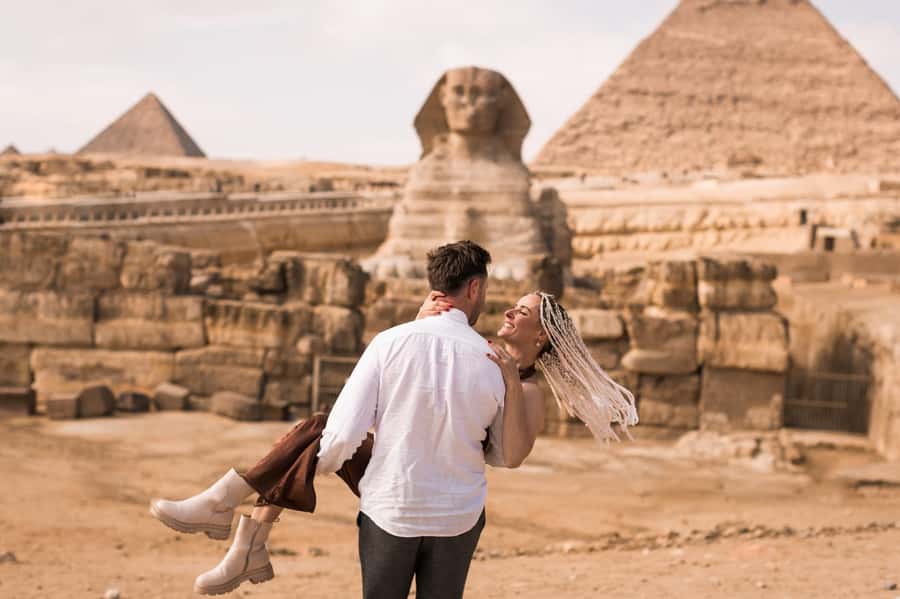
At $900 per person, this tour aims to solve the hard parts of Egypt travel: figuring out logistics, booking the right guides, and coordinating internal flights. If you’ve ever tried to DIY Cairo + Luxor + a Nile cruise + Alexandria, you know how fast that becomes paperwork and risk.
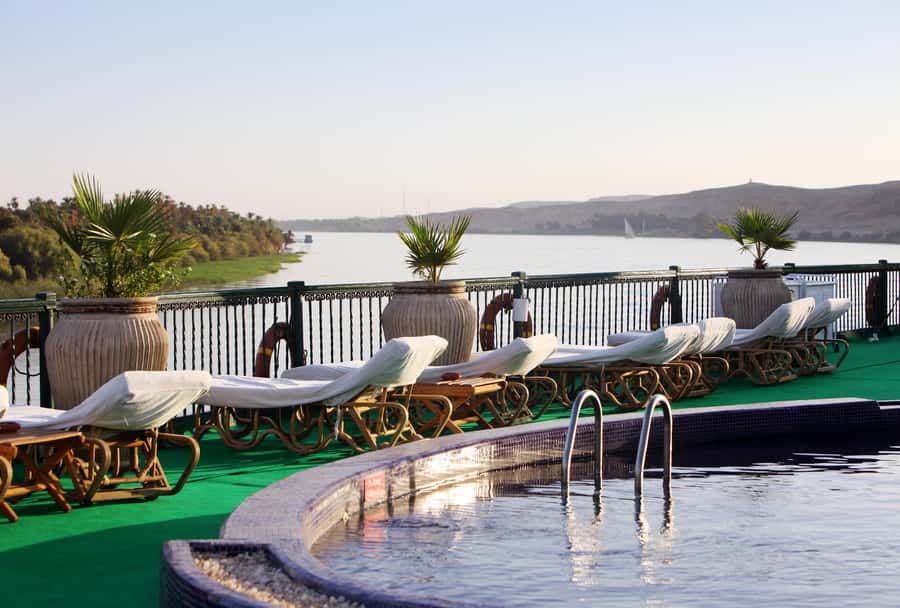
What makes it feel like good value is that it covers the expensive, time-consuming pieces: flight tickets, 3 nights in Cairo, 1 night in Luxor, and 2 nights on a 5-star standard Nile cruise. On top of that, you get hotel pickup/drop-off, private air-conditioned transport, and a guided program that hits Luxor, Cairo, Alexandria, and Abu Simbel.
The tradeoff is flexibility. This is a set 7-day rhythm, with fixed experiences like the balloon ride and the early drive to Abu Simbel. If you want to wander at your own pace every afternoon, this may feel structured. If you want your brain off-duty and your camera busy, it fits.
You can also read our reviews of more boat tours in Cairo



Cairo Day 1: Pyramids First, Then the Egyptian Museum
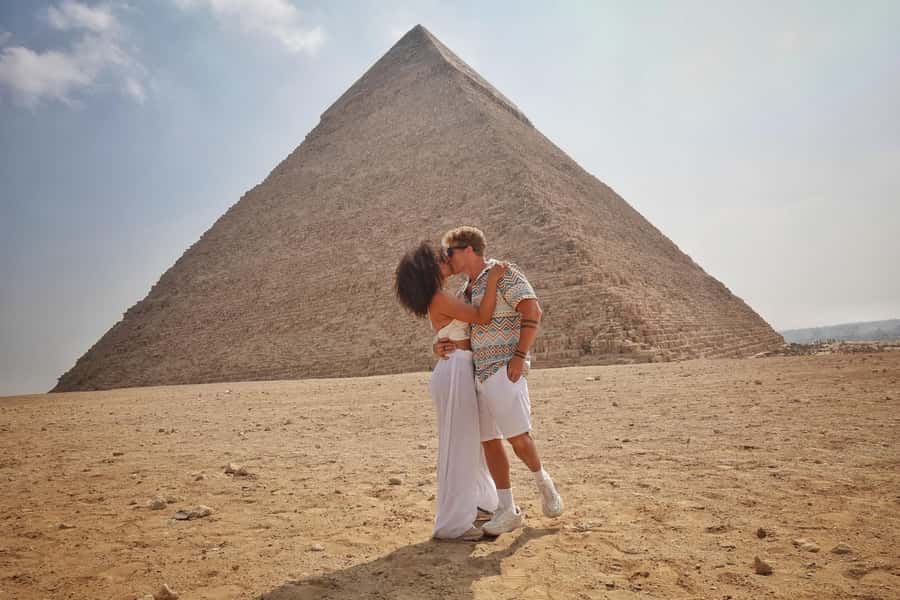
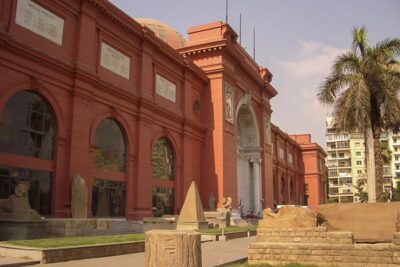
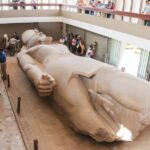
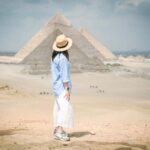
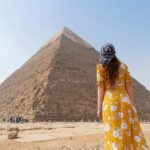
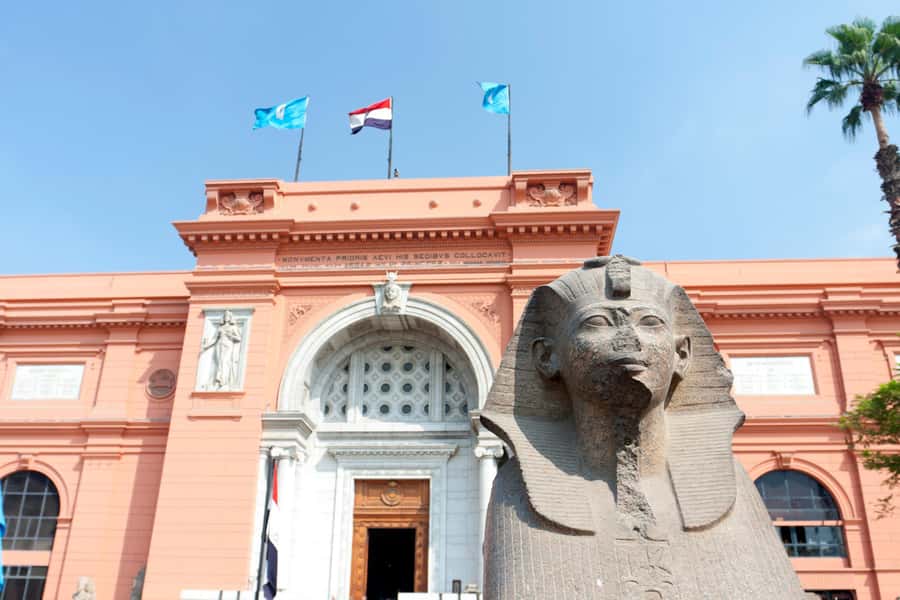
Your first full day runs through two Egypt essentials: the Giza Great Pyramids and then the Egyptian Museum. The order matters. Seeing the pyramids first gives you scale, while the museum helps you “translate” what you’re looking at with artifacts tied to named pharaohs.
At the museum, you’re not just looking at random treasures. You can see famous royal figures and collections, including mummies associated with Ramesses II, Seti I, and Hatshepsut. If you’re new to Egypt, that alone helps everything click later in the temples.
You’ll also have a dinner on a cruise ship with a folkloric show in the evening. It’s a nice way to keep the day from ending too quietly after Giza and the museum.
One practical note: the big-ticket sights usually have separate entry fees, and those aren’t included. So budget for them before you arrive, especially if you’re traveling at peak season.
Cairo Night That Shifts Into Performance Mode
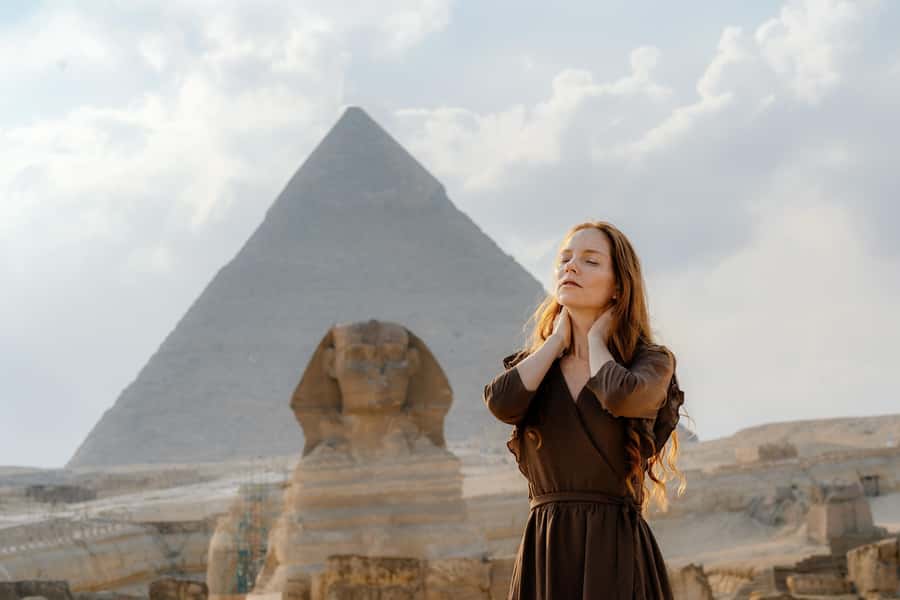
After your first temple-and-museum day, the dinner on a cruise ship is a fun reset. It gives you an evening scene—music and show—without adding another full excursion.
It also sets expectations for the cruise portion later. Once you’ve already experienced the idea of “time on the Nile” through this dinner setting, the actual Nile sailing days won’t feel like a surprise add-on. They feel like the main event.
If you tend to prefer quiet evenings, you might find the show a bit loud. It’s still short compared to the day-long temple blocks, and it’s included as part of the package flow.
Day 2 Safari Park + Flight to Luxor: A Fast Change of Planet
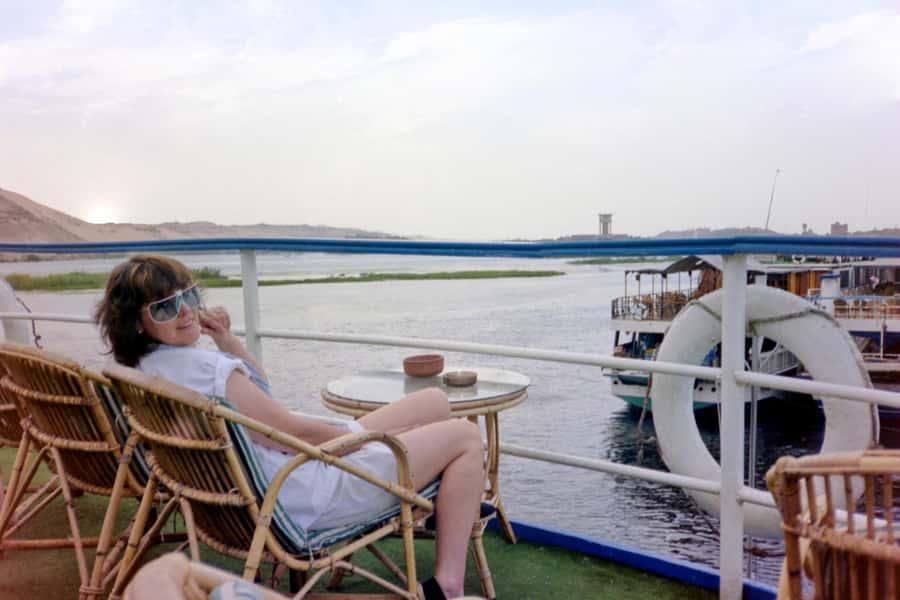
Day 2 starts with a big switch: the African Safari Park. The pitch here isn’t just viewing animals—it’s the sense of interaction, including animal feeding and touching in the context of a park built to simulate an environment. You’ll be in a private car, described as a jungle-style ride, and you can expect to see animals like zebra, reindeer, ostrich, bear, hippo, lion, among others.
This is one of the smartest inclusions for families and first-timers. It breaks the “all temples all day” pattern. It also helps kids and adults feel the trip beyond carved stone.
Then you head to the airport and fly to Luxor. That internal flight matters. Driving Cairo to Luxor can eat an entire day; the flight keeps the schedule realistic and lets you hit the next cultural block without arriving exhausted.
In Luxor, you’ll have an Egyptian dinner before check-in.
Luxor West Bank: Valley of the Kings + Hatshepsut’s Temple
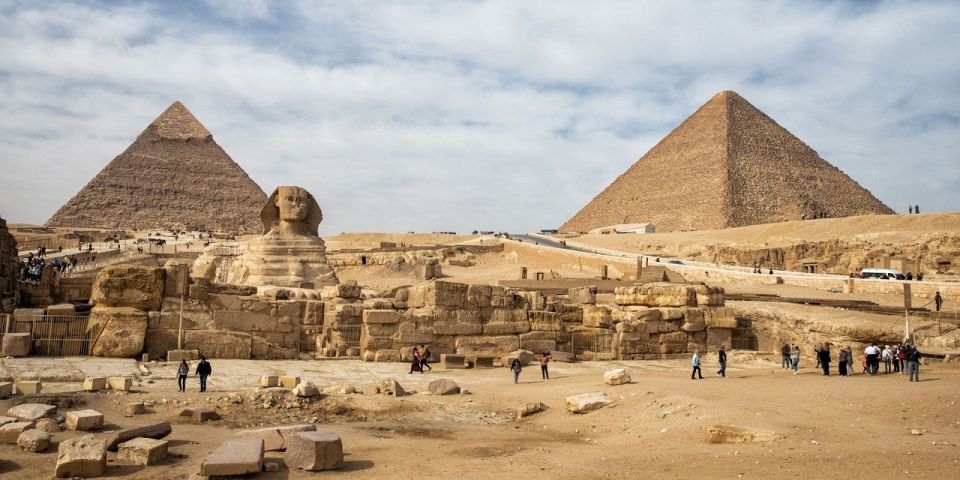
Luxor is where the tour becomes serious in the best way. You start with a hot-air balloon ride, then move into the West Bank temple zone.
The West Bank stops include:
- Valley of the Kings, known as the royal necropolis of the pharaohs, with many tombs.
- Mortuary Temple of Queen Hatshepsut, built to mirror an older temple complex on a larger scale, right next to the earlier structure it references.
- Colossi of Memnon, for quick photos.
The balloon ride is the headline moment, and for good reason. Even if you don’t love heights, seeing Luxor spread out gives you orientation for what you’re about to walk. It turns the tombs and temples from isolated stops into one connected landscape you can understand faster.
For Hatshepsut, the value isn’t just the size. It’s the story of design choices and political ambition—why she built this way and why the temple sits beside an older one. When a guide explains that comparison, the place stops being “just a temple” and starts being a clue to how power worked in ancient Egypt.
If you’re prone to motion sickness, remember balloon mornings can feel bumpy in the air. Nothing about the tour data suggests specific comfort gear, so it’s smart to plan like you would for a standard balloon ride: bring what you usually need to feel okay.
You can also read our reviews of more private tours in Cairo



Karnak Temple on the East Bank: Generations of Building in One Place
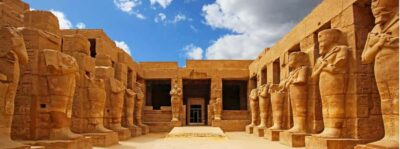
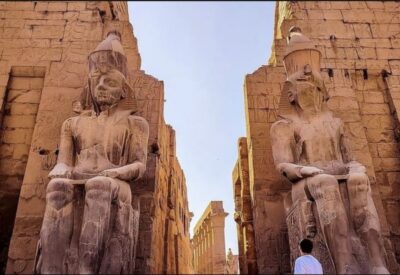
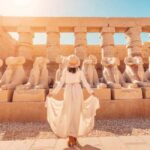
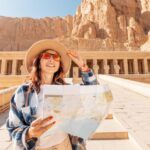
After the West Bank, you move to Luxor’s East Bank with Karnak Temple. This is the biggest temple stop in the Luxor section, with multiple main temples, smaller enclosed temples, and outer temples—built by generations over roughly 1500 years.
This is where a good guide earns their fee. Without context, Karnak can feel like a lot of stone and columns with no clear beginning. With context, it becomes a timeline you can walk through: different rulers, different additions, different reasons to keep building.
The tour also includes lunch on the cruise ship on this day. It’s practical. You’re coming off a long day of walking and sun exposure, and having your next meal already in place helps you avoid the “search for food” stress.
Edfu and Kom Ombo: Two Distinct Temple Personalities
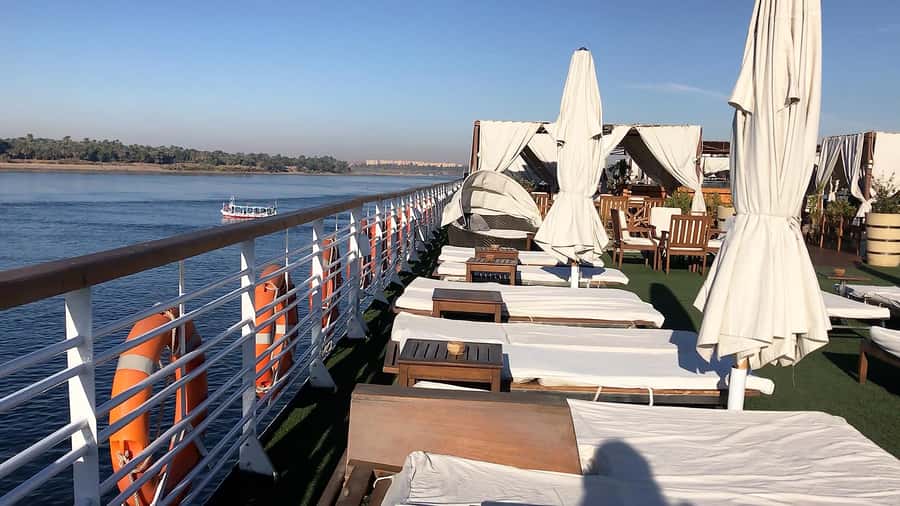
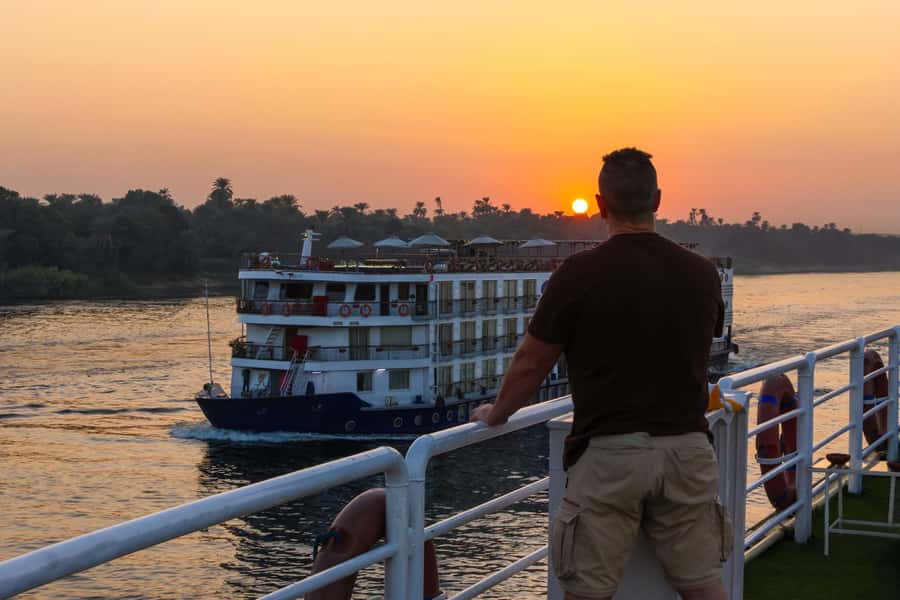
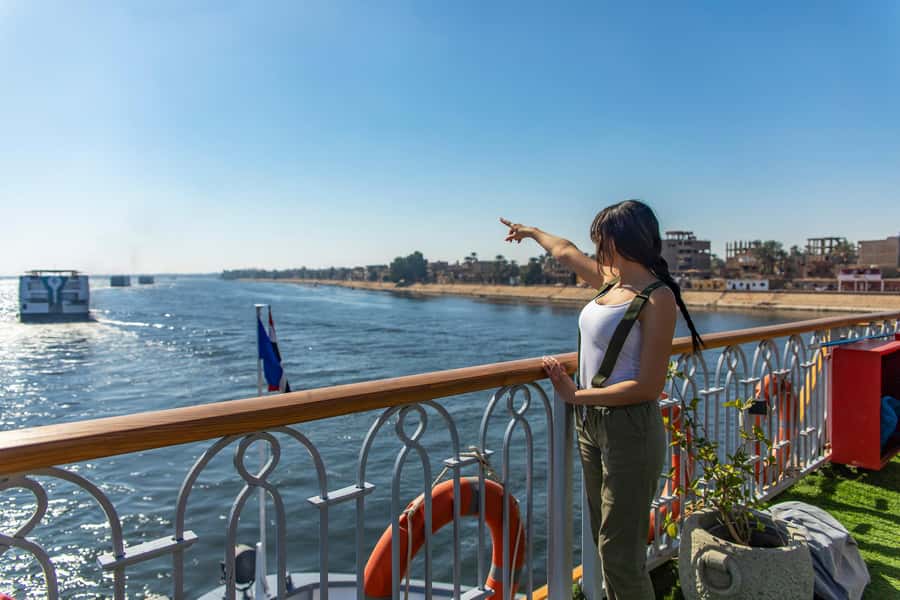
After Luxor, you shift into the Nile cruise part of the program. Day 4 is designed to pair temple visits with sailing time, which is a smart rhythm. Your eyes need a break between major ancient sites.
At Edfu, you’ll visit the Temple of Horus. The tour framing emphasizes the Ptolemaic dynasty perspective, and that’s useful. Ptolemaic Egypt often feels like it’s blending older traditions with later rulers, and Horus at Edfu is a clear example of that.
Then you sail to Kom Ombo, where you visit the Temple of Kom Ombo. The big point here is the temple’s dedication to two gods: Sobek (the crocodile god) and Haroeris (the falcon god Horus). Two gods in one complex is exactly the kind of detail that makes a temple feel more than just monumental. It tells you how ancient Egyptian belief shaped architecture and space.
This is one of the best-balanced days of the itinerary because you’re not rushing from place to place nonstop. You get walking blocks, then you get your sailing hours back.
Abu Simbel: One Early Morning Drive Worth the Fatigue
If you’ve heard the phrase most beautiful temple in Egypt, it usually points at Abu Simbel—and this itinerary gives you the full treatment.
Day 5 is an early morning pickup and a car transfer to the temple complex. From the description, the ride is in an air-conditioned vehicle, which matters because this is the kind of trip where comfort can keep you from getting cranky.
At Abu Simbel, the key storyline is Ramses II and the temple built into the mountain. The tour emphasizes that Ramses II dedicated it to Ptah, Ra, Amun, and to himself as a deified king—plus the fact that it’s a UNESCO World Heritage site. That’s exactly the type of “why it exists” explanation you want before you start taking photos.
After Abu Simbel, you return to the ship and visit a Nubian village, including an Egyptian lunch. This is a good contrast after the stone grandeur—more human scale, more present-day culture.
Finally, you collect your luggage and fly back to Cairo for your hotel stay and dinner.
The practical consideration here is simple: it’s early and it’s a long day. You’ll want to treat that morning like the centerpiece, not like a “one more stop.”
Alexandria Day 6: Roman-Era Sites, a Modern Library, and a Citadel
Day 6 brings you to Alexandria, described as the pearl of the Mediterranean and still a major historical city. The program is packed but not random.
You start with the Catacombs of Kom el Shoqafa, then head to the Bibliotheca Alexandrina, the modern library complex on the harbor area. You’ll learn more with your private Egyptologist, which helps connect the old city to what the library represents today.
Then you visit Fort Qaitbey (the Qaitbay Citadel), an important coastal fort and Islamic monument. It’s a nice reminder that Egypt’s story doesn’t stop at pharaohs.
Back in Cairo, the day doesn’t end with ancient stones. You also get a felucca ride on the Nile and an Egyptian lunch at a local restaurant. It’s a softer pace before you return to your hotel.
If you’re the type who wants your final day to be calm, this is the day that can feel long. It’s still manageable because the stops are clustered, but it’s not a slow stroll itinerary.
Day 7: Wrap-Up Transfer Back to Cairo/Giza
On Day 7, you check out and the driver takes you to your accommodation in Cairo/Giza. It’s a straightforward end, with no last-minute temple sprint.
That makes a difference if you’re flying out later. You want a clean finish, and this keeps the final day from turning into “find your way back” stress.
Price and Logistics: What $900 Covers, and What Can Go Sideways
This package is built for convenience. For $900, you’re paying for a bundled set of high-cost items: internal flights, multiple hotel stays, a Nile cruise, pickup/drop-off, private transport, and a guided program that includes a hot-air balloon and a multi-stop temple schedule.
So what’s not included?
- Entry fees
- Drinks, including water
That’s normal for tours, but it’s worth planning for. If you only look at the headline price, you might feel surprised on the ground.
Now the reality check. One participant shared a bad logistics experience with airport pickup: no name placard, a late pickup, and then being moved to a very remote Sofia Hotel in Giza. They also described issues with the safari park ticket being unpaid at the local park level, followed by smooth sailing during the Nile cruise portion.
You can’t eliminate every package risk, but you can reduce your odds of getting stuck. My practical advice:
- Confirm your pickup details in advance, including how you’ll be identified at the airport.
- Ask where the Cairo/Giza hotel is located before you commit, not just the hotel name.
- Carry a screenshot or proof of what’s included for any ticketed activities.
If your priorities include hotel location and flawless pickup, ask these questions early. If your priorities are monuments and smooth pacing, the package design is strong.
Who Should Book This Tour (and Who Should Think Twice)
This is a good fit if you:
- Want a first-time-friendly Egypt arc: Cairo, Luxor, Nile cruise temples, Abu Simbel, and Alexandria.
- Like structure and don’t want to book everything yourself.
- Will appreciate a balloon ride and a guided explanation at temple sites.
It’s a weaker fit if you:
- Are very sensitive to hotel location or prefer highly walkable areas.
- Want lots of unscheduled free time to wander alone every day.
- Hate early starts. Balloon and Abu Simbel are the kind of mornings you plan your whole trip around.
The sweet spot is travelers who like seeing major sites without turning the trip into a logistics project.
Should You Book This “Cairo to Luxor Cruise” Package?
I’d book it if you want Egypt’s top hits stitched into one schedule, especially the combination of Cairo + Luxor + Nile cruise + Abu Simbel + Alexandria. The value improves when you compare the included flights, cruise nights, and balloon ride against what those pieces cost separately.
I would also book it with one mindset: you’re buying convenience, so you should verify the key operational details—especially pickup identification and which Cairo/Giza hotel you’ll actually get. If that checks out, you’re set up for an efficient, memorable week.
FAQ
FAQ
What is included in the price?
The tour includes hotel pickup and drop-off, private transportation in an air-conditioned vehicle, a professional English guide (other languages cost extra), 3-night accommodation in Cairo, flight tickets, 2-night accommodation on a 5-star standard Nile cruise ship, a hot air balloon ride, and 1-night hotel accommodation in Luxor.
Are entry fees included?
No. Entry fees are not included.
Are drinks included during the tour?
No. Drinks, including water, are not included.
Does the tour include internal flights?
Yes. Flights are included as part of the itinerary, including the transfer to Luxor and the return to Cairo later.
Where does the tour start and where does it end?
It starts in Cairo, and on the final day you’ll be transferred to your accommodation in Cairo/Giza.
How many nights are you on the Nile cruise?
You’ll have 2 nights on a 5-star standard Nile cruise ship.
What hotel accommodations are included?
You get 3 nights in Cairo, 1 night in Luxor, and 2 nights on the Nile cruise ship.
Can I choose a guide in a language other than English?
Yes. Arabic, English, German, Spanish, and French are listed. If you need a Spanish, German, or French guide, there is an additional cost.