REVIEW · LUXOR
Luxor: Private West Bank Tour with Karnak Sound & Light Show
Book on GetYourGuide →Operated by Nice Tours · Bookable on GetYourGuide
Ancient Egypt in one full, well-paced day. A private Egyptologist guide and real time in the Valley of the Kings are the big wins here, so you get context, not just photos. The only real drawback to plan for is the 8-hour stretch of walking and stairs in heat and sun.
Your car picks you up from the East Bank, then you head into Luxor’s West Bank sites: tombs in the Valley of the Kings, the terraces of Queen Hatshepsut at Deir el-Bahari, and the towering Colossi of Memnon. Lunch is included at a local restaurant, and you can choose to be dropped back at your East Bank hotel (with an option to drop elsewhere on the East Bank).
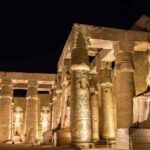
In the evening, your driver returns for the Karnak Temple Sound and Light Show. It’s a multimedia night experience that turns the temple grounds into a story of the people, beliefs, and rulers connected to Karnak.
West Bank first, Karnak at night: you see the history in daylight, then watch it reappear under lights.
Private, English-speaking guidance: one-on-one explanations make the tombs and temples easier to understand.
Valley of the Kings details matter: some tombs still show traces of the original paint.
Hatshepsut’s terraces are visual and personal: the setting in Deir el-Bahari is part of the point.
Colossi of Memnon gives you the big Nile-view moment: Amenhotep III’s statues still feel enormous.
Flexible pacing with your own time windows: time to move at your speed, plus lunch built into the day.
In This Review
- Why This Luxor West Bank + Karnak Night Show Mix Works
- Valley of the Kings: tomb art, afterlife beliefs, and the real-world walk
- Hatshepsut at Deir el-Bahari: why those terraces feel dramatic
- Colossi of Memnon: the Amenhotep III statues and that Nile-facing view
- Lunch and pacing with a private driver: where the day either clicks or drags
- Karnak Temple Sound and Light Show: how to make it feel worth your evening
- Price check: is $122 per person actually good value?
- Who this tour suits best (and who might feel it’s too much)
- Should you book this Luxor West Bank tour with Karnak’s Sound and Light Show?
- FAQ
- How long is the Luxor private West Bank tour?
- What sites are included in the West Bank part of the tour?
- Is the King Tutankhamun tomb included?
- Where does pickup and drop-off happen?
- Is a West Bank hotel pickup available?
- What’s included in the price?
- What language options are available for the guide?
- What should I bring for the day?
Why This Luxor West Bank + Karnak Night Show Mix Works
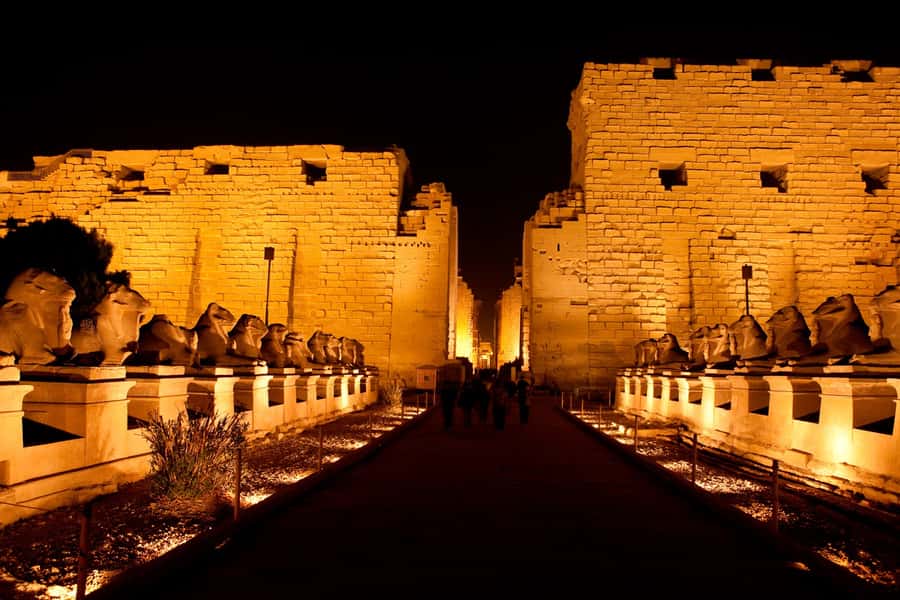
Luxor has a funny way of making time feel elastic. In the West Bank you’re surrounded by tombs and temple ruins that were built for eternity. Then at night at Karnak, you get the same place retold with sound, light, and narration. The result is a day that moves from discovery in daylight to atmosphere after dark.
I like that this tour is private. You’re not stuck in a line of people all hearing the same explanation at the same volume. With an Egyptologist guiding you, you can ask the questions that pop up when you’re staring at a wall carving and thinking, Wait, what am I actually looking at?
The biggest value is also the most practical: your driver and car are with you all day. That matters in Luxor because distances aren’t huge, but stops and waiting can be. Here, you spend the time where it counts: walking the key sites and settling into the show at Karnak.
Valley of the Kings: tomb art, afterlife beliefs, and the real-world walk
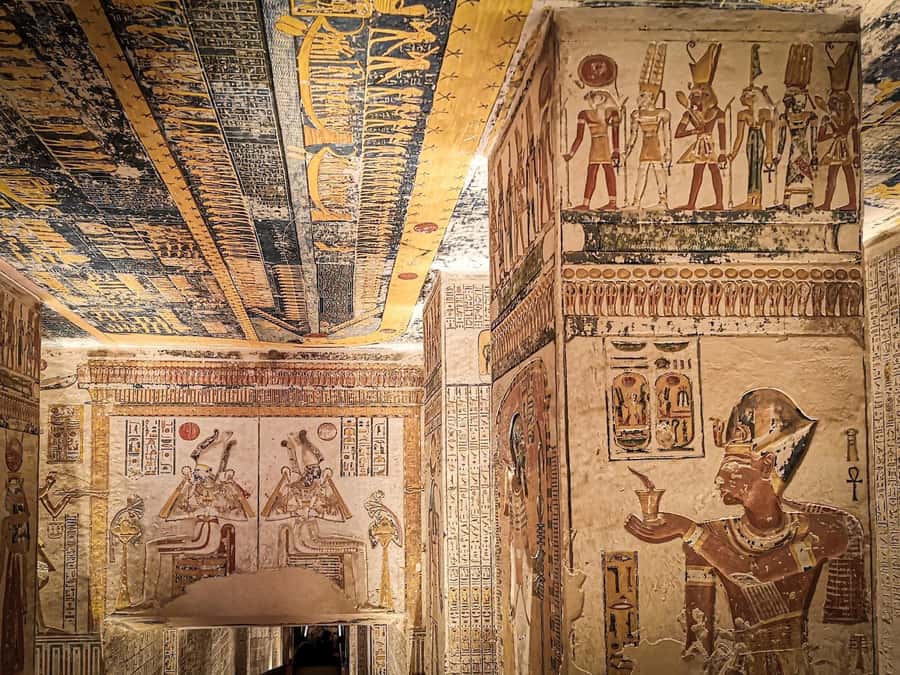
The day starts on Luxor’s West Bank with the Valley of the Kings, one of the most unforgettable collections of royal tombs anywhere. This is where you go to understand an Egyptian idea that can feel intense at first: the afterlife wasn’t treated as a vague hope. It was built into the architecture.
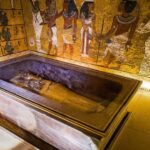
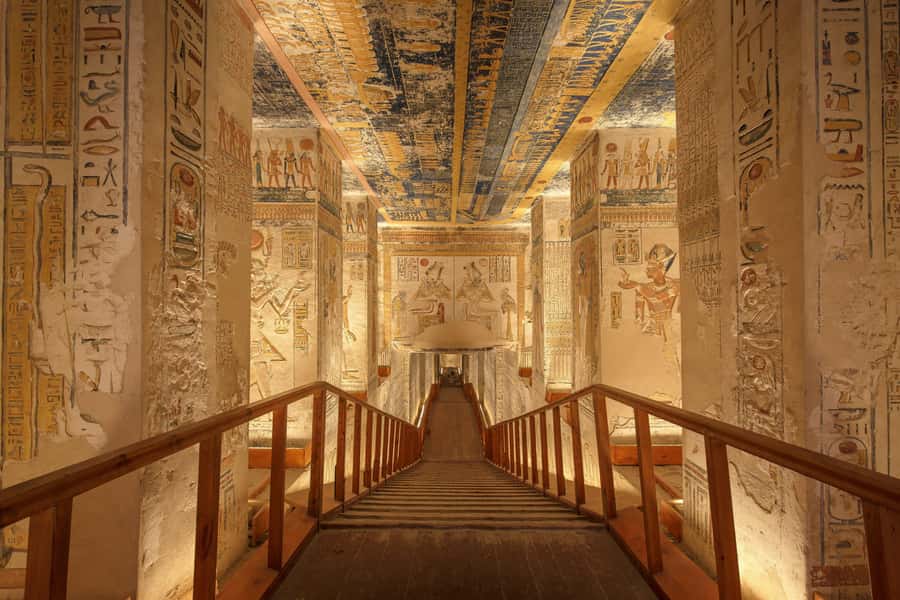
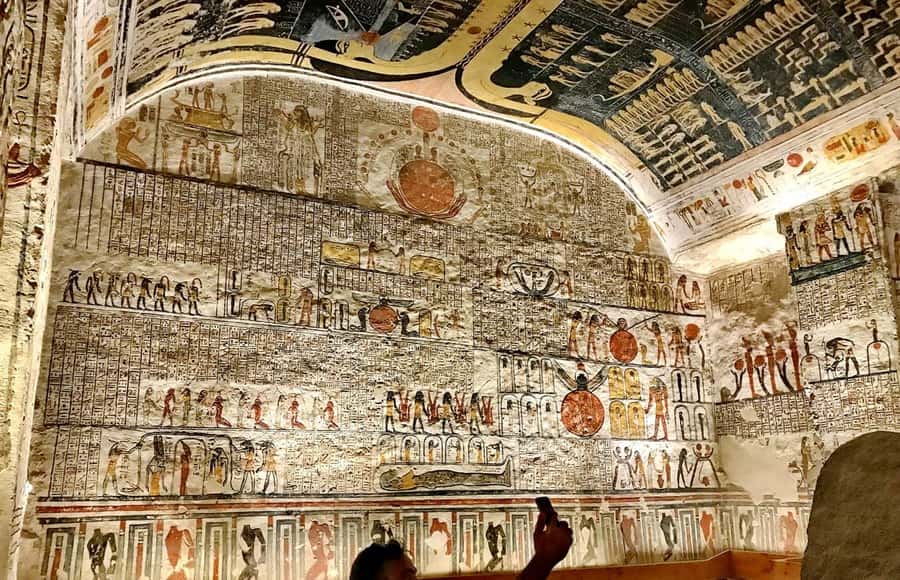
You’ll walk through the valley and into tombs connected to pharaohs. The tour focuses on the tomb interiors and how their decoration was meant to support beliefs about what came next. Even though the tombs were emptied of the famous treasures long ago, the carved walls and ceilings can still be a jaw-drop moment. The guide context is what makes it click, because you’re not just looking at symbols—you’re learning why those symbols mattered to the people who planned these spaces.
A useful detail: some tombs can still retain original paint on decorated walls. That’s not a guaranteed highlight everywhere, but when it’s visible it changes your experience. The carvings feel less like stone relics and more like the remains of something that was once meant to look vivid.
Practical tip: wear comfortable shoes and expect uneven, step-heavy movement. Even if you keep a slow pace, you’ll be on your feet for real. Sunglasses and a sun hat help too, because you’re often moving between shaded and bright patches.
You can also read our reviews of more private tours in Luxor
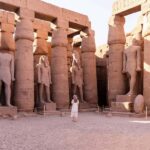
Hatshepsut at Deir el-Bahari: why those terraces feel dramatic
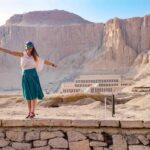
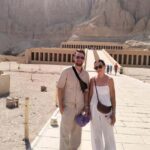
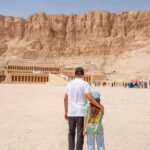
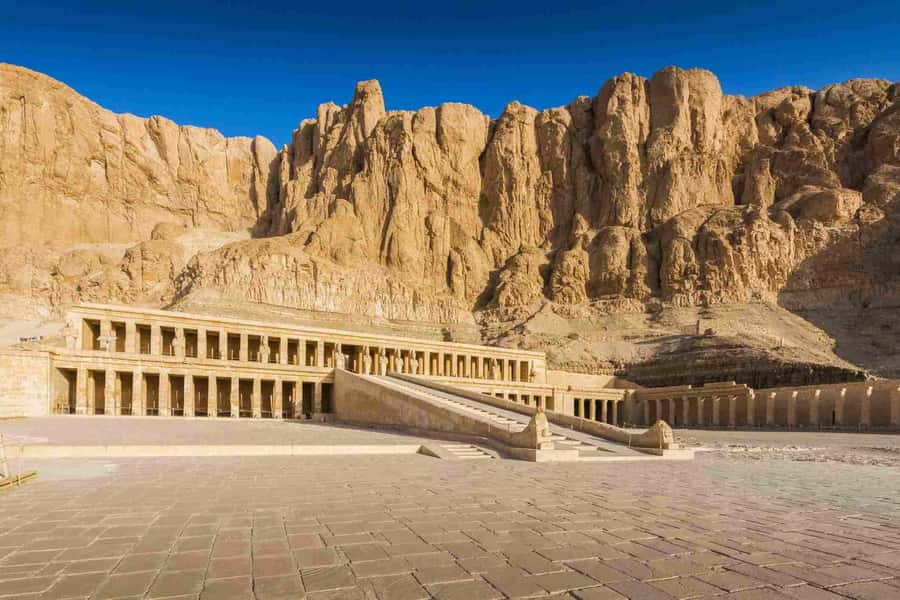
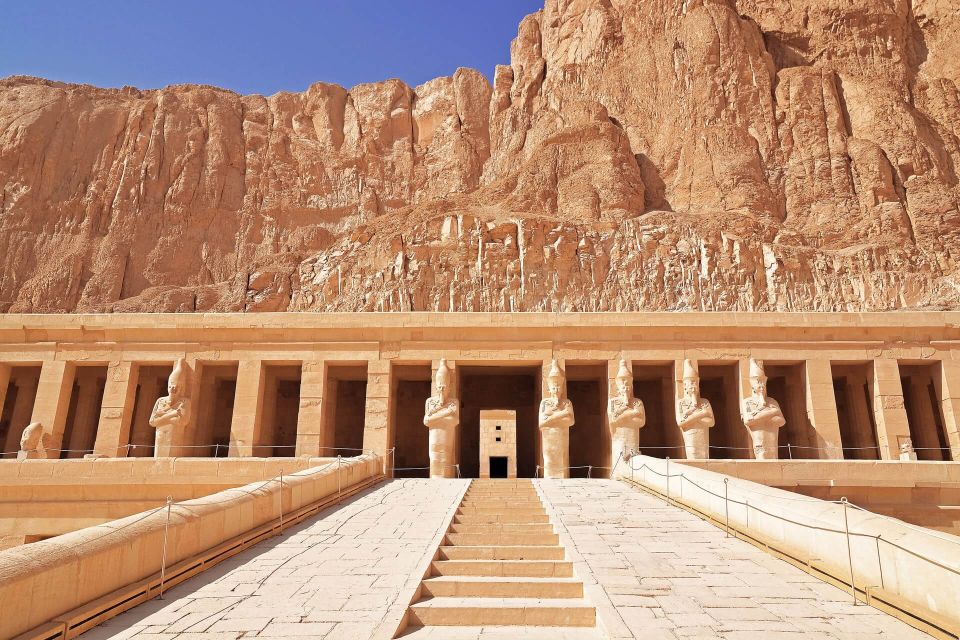
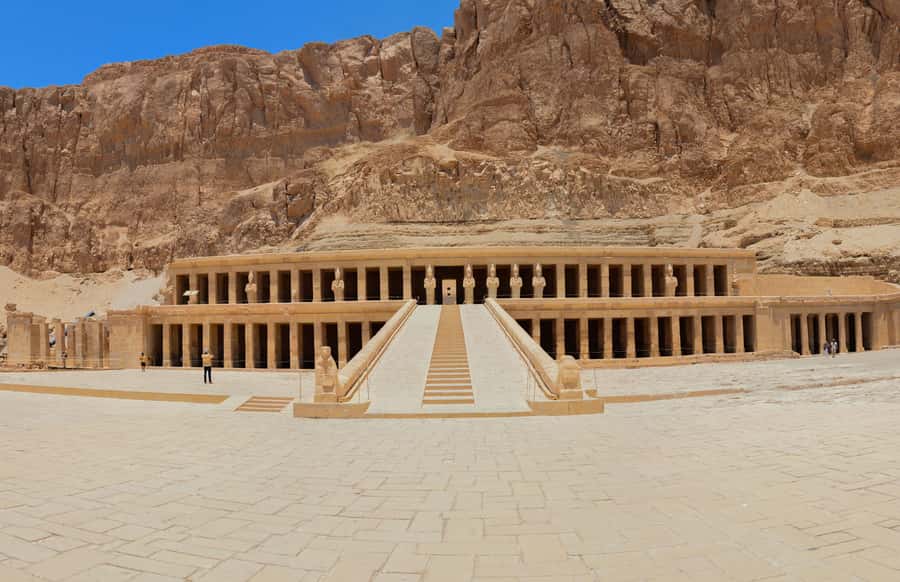
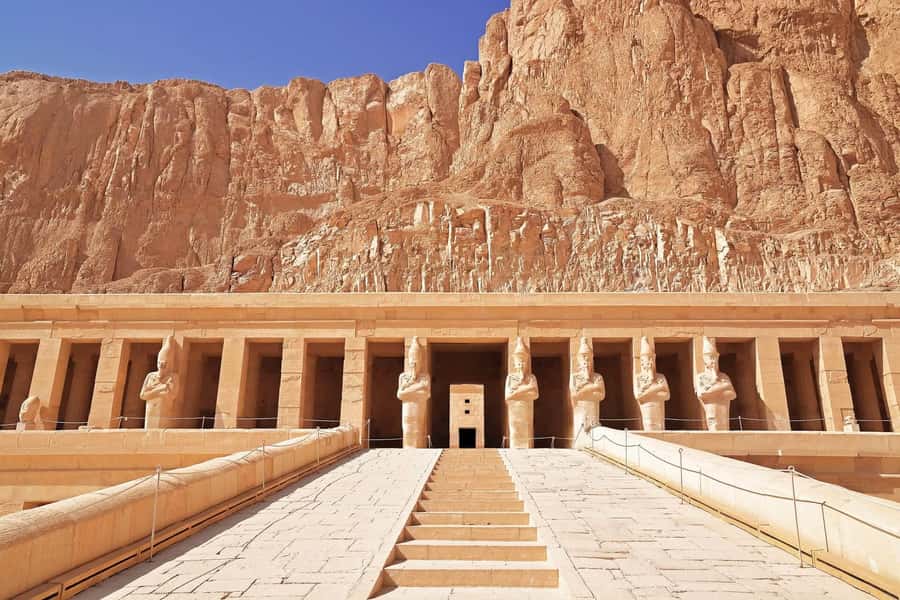
Next comes the mortuary temple of Queen Hatshepsut, built during the reign of Egypt’s only well-known female pharaoh. This stop is one of those places where the setting is part of the story. Deir el-Bahari isn’t just a temple location—it’s a cliffside backdrop that makes the architecture feel staged.
You’ll see the temple with its three massive terraces rising from the desert floor into the cliffs. Walking through (or around, depending on how you’re guided through the area) you get a strong sense of why this design works. It’s structured like a slow reveal. The higher you go, the more the temple visually separates from the plain world below.
What I like here is how the guide framing helps you connect the dots. Hatshepsut’s story isn’t only about a name in history. It’s about a ruler using architecture to project power, legitimacy, and permanence. When your guide explains what the complex represents and how it was intended to function within royal religious life, the terraces stop being just impressive—they become meaningful.
Again, this is not a stop where you can rush. If you want photos, you’ll likely want a couple different angles. If you want to take it in quietly, you’ll appreciate being able to slow down.
Colossi of Memnon: the Amenhotep III statues and that Nile-facing view
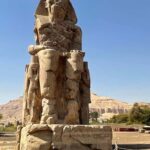
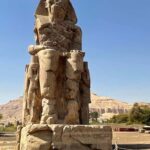
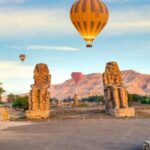
After Hatshepsut, you move to the Colossi of Memnon, towering sandstone statues connected to Amenhotep III. These statues are famous because they’re still standing—still big enough to make you feel small.
The tour also includes the nearby ruins of Amenhotep III’s mortuary temple. Even when the temple structures are broken, the statues keep their presence. A detail worth remembering: these monuments have been standing since around 1350 BC. That number can turn into a magic trick in your head if you don’t pair it with scale, so here’s the reality check: these are giant stone figures that have been looking across the Nile for a very long time.
The way they face the East Bank is part of the experience. You’re essentially looking across the river toward the ancient city of Thebes, which helps you understand Luxor as more than a set of ruins. It was a living civilization on both sides of the Nile.
Practical note: the Colossi area can be bright and exposed. Sunglasses and your hat aren’t optional accessories; they’re survival gear.
Lunch and pacing with a private driver: where the day either clicks or drags
At some point you’ll head for lunch at a local restaurant, which is included. This is a smart inclusion for a long day. Without it, you’d be forced to play timing games between sites, heat, and travel gaps.
Lunch can also be where you get small wins that make the tour feel smoother—like trying local tea. And with a private setup, you’re not forced into a strict schedule that ignores how long you actually want to sit and recover.
Here’s what I think makes the private format shine: your guide can tailor the pace. In this kind of tour, that matters because the Valley of the Kings and Deir el-Bahari don’t feel the same. One invites quiet concentration. The other invites visual scanning and photo stops. When the guide gets it right, you feel like you’re in control without doing all the logistics yourself.
Guide quality is a major part of the experience. Some guides have a reputation for deep explanations and patience. For example, Jackie is mentioned for detailed, structured explanations that keep you engaged instead of just hearing facts. Khaled Galal stands out for the level of knowledge and helpful, steady guidance, and Mina is praised for kindness, answers to questions, and letting people enjoy the moment with time for photos.
One consideration to keep in mind: there’s a risk with any private tour of upselling behavior or a guide that doesn’t match your expectations for site time. In one case, a guide was criticized for pushing an extra day and not staying with the group during walking parts. Your move: if you want full site time, be direct when you meet. Ask how the day will be structured and clarify that you want to walk the sites with the guide, not just stop for explanation in one place.
If you take that approach, the private format becomes the advantage it’s supposed to be.
Karnak Temple Sound and Light Show: how to make it feel worth your evening
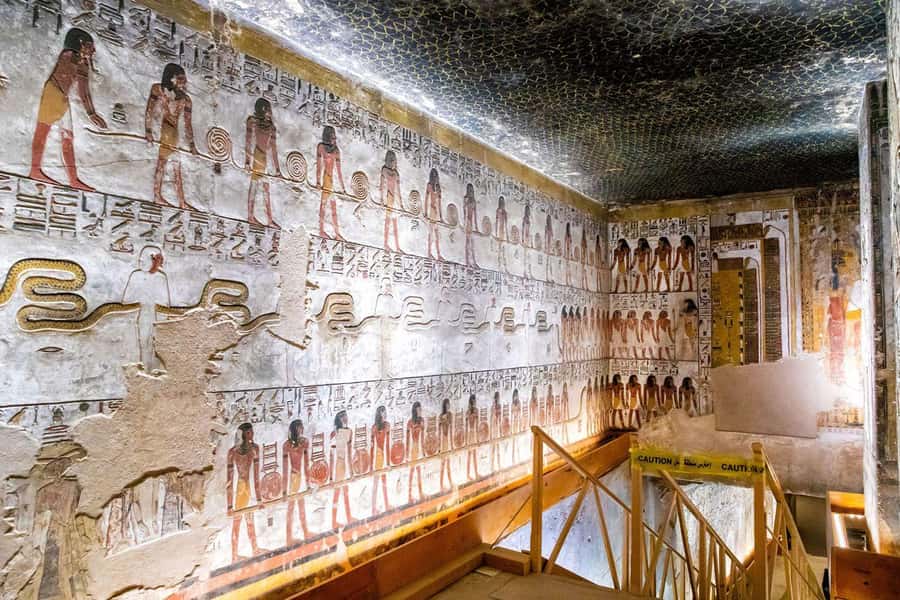
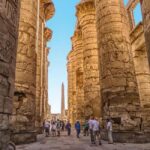
After lunch and the West Bank stops, you get an evening visit to Karnak Temple for the Sound and Light Show. This part is all about atmosphere. In daylight, Karnak can feel like “wow, big ruins.” At night, it becomes a staged narrative.
The show is described as an immersive, multimedia experience that takes you through the history of Karnak Temple. That matters because Karnak is huge, and when you’re just walking around on your own, it’s easy to miss the bigger picture. The show gives you a structure to hold onto while the temple grounds are lit up.
A practical way to get more out of it: focus on staying present during the narration. If you spend the whole time filming, you’ll miss the storyline that connects what you saw earlier to what you’re seeing now. Also, plan for night comfort. Luxor nights are calmer than midday, but the experience still happens at a real temple site, not a theater bubble.
Most importantly, this show is paired with the same day’s West Bank stops, which makes the contrast stronger. You go from tombs and mortuary temples designed for the afterlife to Karnak as a living religious center across centuries. That sequence is what makes the evening feel more than a random add-on.
You can also read our reviews of more tours and experiences in Luxor
Price check: is $122 per person actually good value?
At $122 per person for an 8-hour private day, the value depends on what you expect and what’s included for you.
What you get on paper:
- Hotel pickup and drop-off in the East Bank
- An English-speaking guide
- A private driver and car
- Lunch included
- Entrance fees if you choose the option that includes them
Then you have the extras to plan for:
- Entry to King Tutankhamun’s tomb is not included.
- Dinner is not included.
- West Bank hotel pickup is available for an extra $5 per person.
- If you want a Spanish, German, or French guide, it can be added as an add-on.
So is it worth it? If you’re the kind of traveler who likes to understand what you’re looking at, the combination of a private Egyptologist guide plus a day of transport is usually where the money goes. You’re paying for time, access, and explanations. If you’re only chasing quick photos and don’t care about context, a cheaper option might feel better. But if you want the tomb walls and temple terraces to make sense while you’re standing there, the price starts to look fair.
Two more practical cost notes:
- If King Tut’s tomb is a must for you, budget for it separately and talk to the guide about how it fits into your time.
- If you’re staying on the West Bank and want pickup there, ask about the extra pickup option early so you’re not surprised.
Also, you get the kind of cancellation flexibility that helps when your schedule is still being arranged. If your plans are fragile, that’s a low-stress benefit.
Who this tour suits best (and who might feel it’s too much)
This is a strong match if you want:
- A private day in Luxor with one-on-one guidance
- Clear explanations for the Valley of the Kings and the major temples
- A full day that ends with a night show at Karnak
- Flexibility to move at your own pace while still having a guide manage the flow
It’s also a good choice for couples and small groups because private tours usually feel less chaotic and more personal.
Who might hesitate:
- If you hate walking and stairs, the West Bank tomb and temple areas will feel like work.
- If you prefer a very light day with lots of downtime, an 8-hour schedule plus evening show could feel packed.
- If you expect a guide to be strictly hands-off and never suggest add-ons, you’ll want to be clear about your preferences from the start. Private tours can be great, but you still set expectations like you would with any service.
Should you book this Luxor West Bank tour with Karnak’s Sound and Light Show?
I’d book it if your ideal Luxor day includes both deep context and a memorable finish. The best part is the pairing: West Bank sites that demand attention, followed by Karnak at night, when the whole place feels like a story you can finally follow.
It’s not just a checklist. The tour is built around how the sites connect: afterlife beliefs in the tombs, royal legitimacy and architecture in Hatshepsut’s complex, royal monument scale at the Colossi, then the Karnak narrative in sound and light.
If you’re comfortable with walking and you want the day to feel smoother (private guide, private driver, lunch included), this is good value at $122. If you only want the highlights with minimal walking, you might prefer a shorter or more limited plan.
FAQ
How long is the Luxor private West Bank tour?
The duration is 8 hours, combining the West Bank sightseeing with the evening Karnak Sound and Light Show.
What sites are included in the West Bank part of the tour?
You’ll visit the Valley of the Kings, the Temple of Queen Hatshepsut, and the Colossi of Memnon.
Is the King Tutankhamun tomb included?
No. Entry to King Tutankhamun’s tomb is not included, and there’s an additional entry fee.
Where does pickup and drop-off happen?
Pickup and drop-off are included for hotels on the East Bank of Luxor.
Is a West Bank hotel pickup available?
Yes. West Bank pickup is available for an extra cost of $5 per person.
What’s included in the price?
The tour includes hotel pickup and drop-off in the East Bank, an English-speaking guide, a private driver, lunch, and entrance fees if the option is selected.
What language options are available for the guide?
Guides are available in Spanish, English, French, and German.
What should I bring for the day?
Bring comfortable shoes, sunglasses, a sun hat, and comfortable clothes.